
17 Years of Software Expertise — 500+ Happy Clients | Across 25+ Industries. EXPLORE NOW! 17 Years of Software Expertise — 500+ Happy Clients | Across 25+ Industries. EXPLORE NOW! 17 Years of Software Expertise — 500+ Happy Clients | Across 25+ Industries. 17 Years of Software Expertise — 500+ Happy Clients | Across 25+ Industries. EXPLORE NOW! 17 Years of Software Expertise — 500+ Happy Clients | Across 25+ Industries. EXPLORE NOW! 17 Years of Software Expertise — 500+ Happy Clients | Across 25+ Industries.
Our Services
500+Projects Delivered
40+Countries Served
200+Expert Developers
98%Client Satisfaction
Didn't find what you're looking for? Let us know your needs, and we'll tailor a solution just for you.

Don't see your industry? We serve every sector - let us know your needs and we'll tailor a solution.

Cryptocurrency Development: Complete 2026 Guide

person Varun Arora event18 Mar 2026

banner img
Cryptocurrency Development: Complete 2026 Guide banner

Introduction to Cryptocurrency Development

The global financial system is undergoing a structural shift, and at the center of this transformation is cryptocurrency development. What began as an experimental alternative to traditional banking has now evolved into a multi-trillion-dollar digital economy influencing payments, investments, supply chains, and enterprise systems. For founders, investors, and CTOs, the development of cryptocurrency is no longer a niche exploration—it is a strategic business decision.

In 2026, cryptocurrency development is accelerating at an unprecedented pace. Several converging factors are driving this growth. Institutional adoption has moved beyond experimentation into active deployment. Governments are establishing clearer regulatory frameworks, particularly in innovation-forward regions like the UAE. At the same time, advancements in blockchain scalability, interoperability, and security have made it significantly easier to build robust, production-ready crypto solutions.

From a market perspective, global cryptocurrency adoption continues to expand across both retail and enterprise segments. Businesses are integrating blockchain-based systems to reduce operational costs, improve transparency, and enable real-time transactions. In the UAE, initiatives around digital assets and regulatory bodies such as VARA have positioned the region as a global hub for crypto innovation. This creates a unique opportunity for companies looking to invest in cryptocurrency development with a forward-looking regulatory environment and access to high-value markets.

The development of cryptocurrency is no longer limited to launching a coin. It now encompasses a broader ecosystem that includes wallets, exchanges, decentralized finance (DeFi) platforms, NFT marketplaces, and automated trading systems. This evolution has opened the door for new business models that were not possible within traditional financial systems.

So, who should consider building a cryptocurrency?

  • Startups aiming to disrupt financial services or create decentralized platforms
  • Enterprises looking to integrate blockchain into existing operations
  • Fintech companies expanding into digital assets and Web3 ecosystems
  • Investors seeking to launch tokenized economies or community-driven platforms
  • Governments and institutions exploring digital currencies and asset tokenization

For these stakeholders, cryptocurrency development offers a combination of innovation, scalability, and long-term value creation.

The business opportunities in crypto apps are equally compelling. Companies are building crypto wallet applications that manage digital assets securely, trading platforms powered by advanced algorithms, and decentralized applications that eliminate intermediaries. The rise of automated trading systems, AI-integrated crypto platforms, and cross-chain solutions further expands the potential for revenue generation and market differentiation.

What makes this moment particularly significant is the convergence of technologies. Artificial intelligence, blockchain, and cloud computing are coming together to create highly intelligent, automated financial ecosystems. This not only reduces manual intervention but also enhances decision-making, security, and efficiency at scale.

In this guide, we will take a deep dive into every aspect of cryptocurrency development—from foundational concepts to advanced implementation strategies. Whether you are planning to launch a new digital currency, build a crypto application, or integrate blockchain into your business, this comprehensive resource is designed to provide clarity, direction, and actionable insights.

What is Cryptocurrency & How It Works

To truly understand cryptocurrency development, it is essential to first grasp what cryptocurrency is and how it functions at a foundational level. While many view cryptocurrencies simply as digital money, the underlying systems represent a far more advanced technological and economic framework. Understanding this framework not only clarifies how cryptocurrencies operate but also reveals how cryptocurrencies are made and sustained over time.

Definition of Cryptocurrency

A cryptocurrency is a form of digital or virtual currency that uses cryptographic techniques to secure transactions, control the creation of new units, and verify asset transfers. Unlike traditional currencies issued by central banks, cryptocurrencies operate on decentralized networks, removing the need for intermediaries such as banks or financial institutions.

At its core, cryptocurrency is built to enable peer-to-peer transactions in a secure, transparent, and immutable manner. Each transaction is recorded on a public ledger, ensuring accountability while maintaining user privacy through encrypted identities.

The development of cryptocurrency involves designing this digital asset along with its governing rules—such as supply limits, transaction validation methods, and economic incentives. These elements collectively define how a cryptocurrency behaves within its ecosystem.

Blockchain Technology Explained

Blockchain is the foundational technology that powers cryptocurrencies. It is a distributed ledger system that records all transactions across a network of computers, known as nodes. Instead of storing data in a centralized database, blockchain distributes the data across multiple participants, ensuring transparency and security.

Each transaction is grouped into a “block,” and these blocks are linked together in chronological order to form a “chain.” Once a block is added to the chain, it becomes nearly impossible to alter, creating a permanent and tamper-resistant record.

This structure is critical to the cryptocurrency process because it ensures:

  • Transparency: All transactions are publicly verifiable
  • Security: Data is protected through cryptographic hashing
  • Immutability: Records cannot be altered once confirmed
  • Decentralization: No single entity controls the network

In practical terms, blockchain eliminates the need for trust between parties. Instead of relying on intermediaries, users trust the system itself—validated by mathematics and distributed consensus.

Key Components of Cryptocurrency Systems

To understand how cryptocurrencies are made and how they function in real-world environments, it is important to break down the core components that define every cryptocurrency system.

Decentralization

Decentralization is the defining characteristic of cryptocurrency. Unlike traditional financial systems that rely on centralized authorities, cryptocurrencies operate on distributed networks where control is shared among participants.

This means:

  • No single entity can manipulate the system
  • Transactions are verified by multiple nodes
  • The network remains resilient even if parts of it fail

From a development perspective, decentralization requires careful design of network architecture and governance models. It ensures that the cryptocurrency remains secure, censorship-resistant, and globally accessible.

Cryptography

Cryptography is the backbone of security in cryptocurrency systems. It ensures that transactions are safe, identities are protected, and data integrity is maintained.

Key cryptographic elements include:

  • Public and Private Keys:
    Users have a pair of keys—one public (shared) and one private (kept secret). The private key is used to sign transactions, proving ownership of assets.
  • Hash Functions:
    These convert data into fixed-length strings, ensuring that even minor changes in input produce entirely different outputs. This is essential for securing blocks in the blockchain.
  • Digital Signatures:
    These validate that a transaction has been authorized by the rightful owner.

Without cryptography, the entire cryptocurrency process would be vulnerable to fraud and manipulation.

Consensus Mechanisms

Consensus mechanisms are protocols that ensure all participants in the network agree on the validity of transactions. They are critical to maintaining trust in a decentralized environment.

Some of the most widely used mechanisms include:

  • Proof of Work (PoW):
    Nodes (miners) solve complex mathematical problems to validate transactions and add new blocks. This method is highly secure but energy-intensive.
  • Proof of Stake (PoS):
    Validators are chosen based on the number of coins they hold and are willing to “stake.” This approach is more energy-efficient and scalable.
  • Delegated Proof of Stake (DPoS) and Hybrid Models:
    These offer improved performance and governance flexibility.

In the development of cryptocurrency, choosing the right consensus mechanism is a strategic decision. It impacts scalability, security, transaction speed, and overall network efficiency.

Bringing It All Together

When combined, decentralization, cryptography, and consensus mechanisms form the backbone of every cryptocurrency system. These components define how cryptocurrencies are made, how transactions are validated, and how trust is maintained without central authority.

For businesses and developers, understanding this structure is not just theoretical—it is foundational. Every decision in cryptocurrency development, from architecture to user experience, depends on how these elements are implemented.

As we move forward, the next step is to explore the different types of cryptocurrencies that can be built, each with its own purpose, architecture, and business potential.

Types of Cryptocurrencies You Can Build

types of cryptocurrencies you can build

One of the most critical decisions in cryptocurrency development is choosing the type of digital asset you want to create. This decision shapes everything—from the underlying architecture and cost to scalability, regulatory exposure, and long-term business viability. Many founders make the mistake of jumping straight into development without understanding the structural differences between coins, tokens, and their specialized variants.

In reality, the success of your project depends heavily on selecting the right model for your use case. Whether you are planning a full-scale crypto coin development initiative or launching a token within an existing ecosystem, each type of cryptocurrency serves a distinct purpose.

Below is a detailed breakdown of the primary types of cryptocurrencies you can build and when to choose each.

Coins (Bitcoin-like)

Coins are native digital currencies that operate on their own independent blockchain. The most well-known example is Bitcoin, but many other cryptocurrencies such as Ethereum and Solana also fall into this category.

In crypto coin development, building a coin means creating an entirely new blockchain from scratch or modifying an existing open-source blockchain protocol. This involves designing the network architecture, consensus mechanism, transaction validation rules, and economic model.

Key characteristics of coins:

  • Operate on their own blockchain
  • Used primarily as a medium of exchange or store of value
  • Require full network infrastructure (nodes, validators, miners)
  • Offer maximum control over system design

When to choose coin development:

  • You want full control over the blockchain ecosystem
  • You are building a large-scale platform or infrastructure project
  • Your business model requires custom consensus mechanisms or performance tuning

Challenges:

  • High development cost and time
  • Requires deep technical expertise
  • Needs strong community and adoption strategy

Coins are ideal for enterprises and startups aiming to build foundational blockchain ecosystems rather than just applications.

Tokens (ERC-20, BEP-20)

Tokens are digital assets built on top of existing blockchain platforms such as Ethereum or Binance Smart Chain. Unlike coins, tokens do not have their own blockchain; instead, they rely on the infrastructure of the host network.

Standards like ERC-20 (Ethereum) and BEP-20 (Binance Smart Chain) define how these tokens function, ensuring compatibility with wallets, exchanges, and decentralized applications.

Key characteristics of tokens:

  • Built on existing blockchains
  • Faster and more cost-effective to develop
  • Easily integrated with existing ecosystems
  • Highly flexible for various use cases

When to choose token development:

  • You want to launch quickly with lower investment
  • Your project focuses on applications rather than infrastructure
  • You need compatibility with DeFi platforms and exchanges

Use cases:

  • Fundraising (ICO, IDO)
  • Reward systems
  • Payment within platforms

For many businesses, token-based cryptocurrency development is the most practical starting point due to its speed, scalability, and lower entry barrier.

Stablecoins

Stablecoins are cryptocurrencies designed to maintain a stable value by being pegged to a reserve asset such as fiat currency (USD, AED), commodities (gold), or algorithmic mechanisms.

They play a crucial role in reducing volatility, making them highly suitable for payments, remittances, and financial applications.

Types of stablecoins:

  • Fiat-backed: Supported by reserves in banks
  • Crypto-backed: Collateralized with other cryptocurrencies
  • Algorithmic: Maintain stability through supply-demand algorithms

Key characteristics:

  • Price stability
  • High usability in financial systems
  • Strong regulatory considerations

When to build a stablecoin:

  • You are targeting fintech or payment solutions
  • You want to reduce volatility risks for users
  • Your business involves cross-border transactions

Stablecoins are a major driver of real-world adoption and are increasingly used by enterprises and governments.

Utility Tokens

Utility tokens are designed to provide access to a product or service within a specific ecosystem. They are not primarily intended as investments but as functional assets that enable users to interact with a platform.

Key characteristics:

  • Provide access to services or features
  • Often used within apps or platforms
  • Can incentivize user engagement

Examples of use cases:

  • Paying transaction fees within a platform
  • Unlocking premium features
  • Rewarding user participation

When to build utility tokens:

  • You are developing a platform or application
  • You want to create an internal economy
  • You aim to incentivize user behavior

From a business perspective, utility tokens are powerful tools for driving user adoption and retention. They are commonly used in SaaS platforms, gaming ecosystems, and decentralized applications.

Governance Tokens

Governance tokens empower users to participate in decision-making processes within a blockchain ecosystem. Holders of these tokens can vote on proposals, protocol upgrades, and changes to system parameters.

This model is central to decentralized governance and is widely used in DeFi platforms.

Key characteristics:

  • Enable voting rights
  • Promote decentralization
  • Align incentives between users and platform

When to build governance tokens:

  • You are creating a decentralized platform
  • You want community-driven decision-making
  • You aim to build a DAO (Decentralized Autonomous Organization)

Governance tokens are particularly valuable for projects that prioritize transparency, decentralization, and long-term community involvement.

Choosing the Right Cryptocurrency Type

Selecting the right type of cryptocurrency is not just a technical decision—it is a strategic one. It directly impacts your development timeline, cost, scalability, and market positioning.

  • Choose coins if you want full ecosystem control and long-term infrastructure ownership
  • Choose tokens for faster go-to-market and lower development complexity
  • Choose stablecoins for financial applications requiring stability
  • Choose utility tokens to power platform interactions
  • Choose governance tokens to enable decentralized decision-making

In many modern projects, these types are combined to create layered ecosystems. For example, a platform may use a utility token for transactions and a governance token for voting.

Understanding these distinctions is essential before moving forward in cryptocurrency development. In the next section, we will break down the complete cryptocurrency process step-by-step, giving you a clear roadmap from concept to launch.

Cryptocurrency Tech Stack Explained

cryptocurrency tech stack

A well-architected technology stack is the backbone of successful cryptocurrency development. While many discussions around crypto focus on tokens and market dynamics, the real differentiation happens at the technology level. The performance, security, scalability, and long-term sustainability of any crypto product depend heavily on the tools, languages, and infrastructure chosen during development.

For founders and CTOs, understanding the cryptocurrency tech stack is essential—not just for execution, but for making informed decisions about cost, timelines, and future scalability. Whether you are building a token, a full blockchain, or a crypto app, the underlying stack determines how efficiently your system will operate in real-world conditions.

Programming Languages (Solidity, Rust, Go)

The choice of programming language plays a critical role in defining how your cryptocurrency system is built and maintained. Each language serves a specific purpose depending on the blockchain platform and the type of application being developed.

Solidity

Solidity is the most widely used language for writing smart contracts, particularly on Ethereum and Ethereum-compatible blockchains. It is specifically designed for blockchain development and enables developers to create self-executing contracts that automate transactions and business logic.

  • Best suited for: Token development, DeFi platforms, NFT marketplaces
  • Key advantage: Strong ecosystem and community support
  • Limitation: Requires careful auditing due to security risks in smart contracts

Rust

Rust is gaining significant traction in modern blockchain ecosystems such as Solana and Polkadot. It is known for its performance, memory safety, and ability to handle high-throughput systems.

  • Best suited for: High-performance blockchain applications
  • Key advantage: Speed and security at the system level
  • Limitation: Steeper learning curve compared to Solidity

Go (Golang)

Go is widely used in blockchain infrastructure development. It powers several major blockchain clients, including parts of Ethereum’s implementation.

  • Best suited for: Building blockchain nodes, backend systems, and APIs
  • Key advantage: Simplicity, concurrency handling, and scalability
  • Limitation: Not commonly used for smart contracts

In practice, cryptocurrency development often involves a combination of these languages. For example, Solidity may be used for smart contracts, while Go or Rust handles backend services and network-level operations.

Frameworks & Tools

Beyond programming languages, frameworks and development tools significantly accelerate the cryptocurrency process. They provide pre-built modules, testing environments, and deployment pipelines that reduce development time and improve code reliability.

Smart Contract Development Frameworks:

  • Truffle: A popular framework for Ethereum development, offering testing, debugging, and deployment tools
  • Hardhat: Advanced development environment for compiling, testing, and deploying smart contracts with greater flexibility
  • Brownie: Python-based framework preferred by developers who want integration with Python ecosystems

Blockchain Development Platforms:

  • Substrate: A modular framework for building custom blockchains
  • Cosmos SDK: Enables the creation of interoperable blockchain networks
  • Hyperledger Fabric: Enterprise-grade blockchain framework designed for private networks

Testing & Security Tools:

  • Ganache (local blockchain testing)
  • Mythril (smart contract security analysis)
  • Slither (static analysis for vulnerabilities)

These tools are essential for ensuring that your cryptocurrency system is secure, scalable, and production-ready. In enterprise environments, especially when implementing solutions aligned with blockchain for fintech or building scalable platforms through Blockchain App Development for Enterprises, selecting the right frameworks becomes even more critical.

APIs & Integrations

No cryptocurrency system operates in isolation. APIs and integrations connect your blockchain application with external systems, enabling real-world functionality and user interaction.

Blockchain APIs:

  • Enable interaction with blockchain networks
  • Used for fetching transaction data, wallet balances, and smart contract execution

Wallet Integrations:

  • Integration with popular wallets allows users to store, send, and receive digital assets
  • Examples include MetaMask, Trust Wallet, and hardware wallets

Payment Gateways:

  • Enable crypto payments within applications
  • Support fiat-to-crypto and crypto-to-fiat conversions

Exchange Integrations:

  • Allow tokens to be listed and traded
  • Provide liquidity and market access

Oracles:

  • Connect blockchain systems with real-world data
  • Essential for DeFi applications, insurance platforms, and automated trading systems

Cloud & Infrastructure Services:

  • AWS, Google Cloud, and Azure for hosting nodes and backend systems
  • Node providers like Infura and Alchemy for scalable blockchain access

In modern cryptocurrency development, APIs play a crucial role in enhancing usability and scalability. They bridge the gap between decentralized systems and user-facing applications, making crypto solutions practical for everyday use.

Strategic Importance of the Tech Stack

Choosing the right tech stack is not just a technical decision—it is a business-critical one. A poorly chosen stack can lead to scalability issues, security vulnerabilities, and increased long-term costs. On the other hand, a well-optimized stack enables faster development, better performance, and easier integration with emerging technologies.

For example, fintech platforms leveraging blockchain for fintech solutions require high security, compliance readiness, and seamless integration with financial systems. Similarly, enterprises investing in Blockchain App Development for Enterprises need scalable architectures that support high transaction volumes and multi-user environments.

By aligning your tech stack with your business goals, you create a strong foundation for successful cryptocurrency development—one that can evolve with market demands and technological advancements.

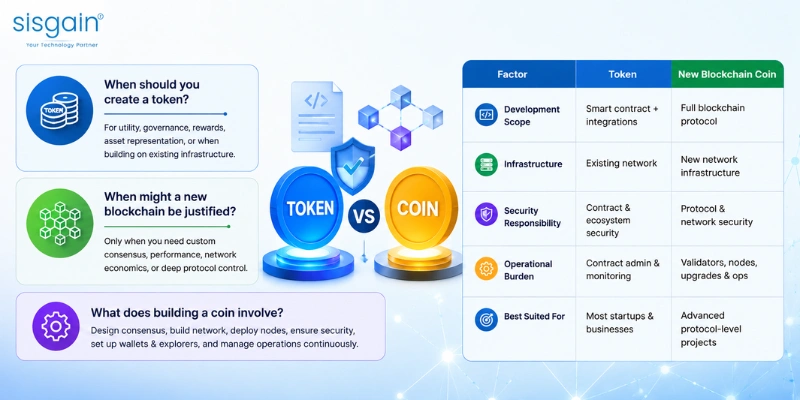
Building a Crypto Coin vs Token (Full Comparison)

One of the most important strategic decisions in cryptocurrency development is choosing between building a crypto coin or a token. While both are forms of digital assets, they differ significantly in terms of architecture, cost, time-to-market, scalability, and long-term control.

For founders and CTOs, this is not just a technical choice—it directly impacts your business model, investment requirements, and growth trajectory. Misalignment at this stage can lead to unnecessary costs, delays, or even project failure.

This section provides a detailed comparison to help you make an informed decision.

Understanding the Core Difference

Before diving into cost and timelines, it is important to clarify the fundamental distinction:

  • Crypto Coin:
    A coin operates on its own independent blockchain. Crypto coin development involves building or customizing a blockchain network, including its consensus mechanism, node infrastructure, and transaction validation system.
  • Token:
    A token is built on top of an existing blockchain (such as Ethereum or Binance Smart Chain). It leverages the underlying infrastructure of that blockchain, eliminating the need to build a network from scratch.

This difference is what drives all other variations in cost, complexity, and use cases.

Cost Difference

Cost is often the deciding factor for businesses entering cryptocurrency development.

Crypto Coin Development Cost:

Building a coin is significantly more expensive because it requires creating a full blockchain ecosystem.

Key cost components:

  • Blockchain architecture design
  • Consensus mechanism development
  • Node setup and network maintenance
  • Security implementation and auditing
  • Ongoing infrastructure costs

Estimated range:

High investment, typically suited for well-funded startups or enterprises.

Token Development Cost:

Tokens are far more cost-efficient because they utilize existing blockchain infrastructure.

Key cost components:

  • Smart contract development
  • Token standard implementation (ERC-20, BEP-20)
  • Basic security audits
  • Deployment fees

Estimated range:

Moderate to low cost, depending on complexity.

Key Insight:

If budget is limited or speed is a priority, token development is the practical choice. Crypto coin development, on the other hand, is a long-term investment in infrastructure ownership.

Time Required

Time-to-market is critical, especially in fast-moving industries like crypto.

Crypto Coin Development Timeline:

  • Blockchain design and architecture: Weeks to months
  • Development and testing: Several months
  • Network deployment and stabilization: Additional time

Total timeline:

Typically 6–18 months, depending on complexity

Token Development Timeline:

  • Smart contract creation: Days to weeks
  • Testing and deployment: 1–2 weeks
  • Integration with wallets and platforms: Short cycle

Total timeline:

As fast as 2–6 weeks for a basic token

Key Insight:

If your goal is rapid market entry or testing a business idea (MVP), tokens provide a clear advantage.

Use Cases

Choosing between a coin and a token should align with your business objectives.

Crypto Coin Use Cases:

  • Building a new blockchain ecosystem
  • Creating a decentralized payment network
  • Developing infrastructure platforms (e.g., smart contract platforms)
  • Projects requiring custom scalability or governance models

Coins are best suited for projects that aim to become platforms themselves.

Token Use Cases:

  • Launching decentralized applications (dApps)
  • Fundraising (ICO, IDO, STO)
  • Reward and loyalty systems
  • DeFi platforms and NFT ecosystems

Tokens are ideal for applications that operate within existing blockchain ecosystems.

When to Choose What

Making the right choice requires aligning your technical requirements with your business strategy.

Choose Crypto Coin Development If:

  • You need full control over your blockchain
  • Your project requires custom consensus mechanisms
  • You are building a large-scale infrastructure or platform
  • You have sufficient budget and long-term vision

Crypto coin development is best for organizations aiming to create foundational technology rather than just applications.

Choose Token Development If:

  • You want faster time-to-market
  • You are building an application or service
  • You prefer lower development costs
  • You want to leverage existing blockchain ecosystems

Token development is the most efficient route for startups and businesses entering the crypto space.

Strategic Perspective

In modern cryptocurrency development, many successful projects combine both approaches. For example, a company may start with a token to validate its idea and later transition into full crypto coin development once it achieves scale and funding.

This hybrid strategy reduces initial risk while preserving the option for long-term expansion.

Final Takeaway

There is no one-size-fits-all answer. The decision between a coin and a token depends on:

  • Your business goals
  • Budget and resources
  • Timeline expectations
  • Technical requirements

Understanding these differences allows you to approach cryptocurrency development with clarity and precision. Making the right choice at this stage sets the foundation for scalability, adoption, and long-term success.

Cryptocurrency Wallet Development

cryptocurrency wallet development

Cryptocurrency wallet development is a foundational component of any successful crypto ecosystem. While blockchain networks enable transactions, it is wallets that provide users with access, control, and usability. Without a well-designed wallet, even the most advanced cryptocurrency infrastructure fails to achieve real-world adoption.

From a business perspective, wallets are more than just storage tools—they are user interfaces for financial interaction. Whether you are building a standalone product or integrating wallet functionality into a larger crypto app, developing the best crypto wallet app requires a balance of security, performance, and user experience.

Types of Wallets

Understanding wallet types is critical before starting development. Each type serves different use cases and comes with its own trade-offs in terms of security, accessibility, and control.

Hot Wallets

Hot wallets are connected to the internet and are designed for convenience and frequent transactions. They are commonly used in mobile apps, web platforms, and exchange-based wallets.

Key characteristics:

  • Always online
  • Fast and easy access to funds
  • Ideal for daily transactions

Use cases:

  • Trading platforms
  • Payment applications
  • User-facing crypto apps

Advantages:

  • High usability
  • Real-time transactions
  • Seamless integration with apps

Risks:

  • More vulnerable to hacking
  • Requires strong security layers

Hot wallets are essential for businesses building scalable crypto applications where user interaction is frequent.

Cold Wallets

Cold wallets are offline storage solutions designed for maximum security. They are not connected to the internet, which significantly reduces the risk of cyberattacks.

Key characteristics:

  • Offline storage
  • High security
  • Limited accessibility

Types include:

  • Hardware wallets
  • Paper wallets
  • Air-gapped systems

Use cases:

  • Long-term asset storage
  • Institutional holdings
  • High-value transactions

Advantages:

  • Protection against online threats
  • Ideal for safeguarding large funds

Limitations:

  • Less convenient for daily use
  • Slower transaction process

Cold wallets are critical for enterprises and high-net-worth users who prioritize security over convenience.

Custodial vs Non-Custodial Wallets

This distinction is one of the most important in cryptocurrency wallet development, as it defines who controls the user’s funds.

Custodial Wallets:

  • Managed by a third party (such as exchanges)
  • Private keys are held by the service provider
  • Easier for beginners

Advantages:

  • Simplified user experience
  • Account recovery options
  • Integrated services

Risks:

  • Users do not have full control
  • Vulnerable to centralized breaches

Non-Custodial Wallets:

  • Users control their private keys
  • Full ownership of assets
  • No reliance on third parties

Advantages:

  • Complete control and privacy
  • Higher security if managed properly

Challenges:

  • No recovery if keys are lost
  • Requires user education

For businesses, the choice between custodial and non-custodial models depends on the target audience and regulatory requirements. Many modern platforms adopt hybrid approaches to balance usability and control.

Features of the Best Crypto Wallet App

Building the best crypto wallet app requires more than basic functionality. It demands a user-centric approach combined with enterprise-grade security and scalability. Below are the essential features that define a high-performing wallet.

Security

Security is the most critical aspect of any wallet. A single vulnerability can lead to significant financial loss and reputational damage.

Core security features:

  • End-to-end encryption
  • Multi-factor authentication (MFA)
  • Biometric authentication (fingerprint, facial recognition)
  • Secure private key storage
  • Backup and recovery mechanisms

Advanced security measures:

  • Multi-signature wallets
  • Hardware wallet integration
  • Real-time threat detection

For businesses working with a bitcoin app development company, security architecture should be a top priority from the initial design phase.

Multi-Currency Support

Modern users expect wallets to support multiple cryptocurrencies rather than being limited to a single asset.

Key capabilities:

  • Support for major coins and tokens
  • Cross-chain compatibility
  • Real-time portfolio tracking

This feature enhances user retention and expands the usability of the wallet across different ecosystems.

UI/UX (User Experience)

Even the most secure wallet will fail if it is difficult to use. UI/UX plays a crucial role in adoption, especially for non-technical users.

Essential UX elements:

  • Simple onboarding process
  • Clean and intuitive interface
  • Easy transaction flows
  • Clear balance and transaction history display

Advanced UX features:

  • One-click transactions
  • QR code payments
  • Integrated support and tutorials

A well-designed user experience is what differentiates an average wallet from the best crypto wallet app in a competitive market.

Strategic Importance of Wallet Development

Cryptocurrency wallet development is not just a technical requirement—it is a strategic asset. It directly impacts user acquisition, retention, and trust. In many cases, the wallet becomes the primary touchpoint between the user and the entire crypto ecosystem.

Businesses investing in cryptocurrency development must treat wallet development as a core product, not an add-on feature. Whether you are building a standalone wallet or integrating it into a broader crypto platform, the goal should be to deliver a secure, scalable, and user-friendly experience.

As the market evolves, wallets are also becoming gateways to advanced features such as decentralized finance, NFT management, and automated trading. This makes them central to the future of digital finance and a key driver of innovation in the crypto space.

Crypto App Development (Full Ecosystem)

Crypto app development has evolved far beyond simple wallet or exchange solutions. Today, it represents a complete digital ecosystem where users can store assets, trade in real time, invest through automated systems, and interact with decentralized platforms—all within a single interface.

For businesses, building a crypto app is no longer just about entering the blockchain space. It is about creating a scalable digital product that integrates finance, technology, and user experience into one unified system. This is why modern cryptocurrency development strategies focus on ecosystem-driven applications rather than isolated tools.

A well-designed crypto app acts as a gateway to multiple services, including trading, asset management, decentralized finance (DeFi), and digital ownership through NFTs. As competition increases, companies must build feature-rich platforms that deliver both performance and usability.

Types of Crypto Apps

Each category of crypto app serves a specific purpose within the ecosystem. Understanding these types helps businesses define their product strategy and identify revenue opportunities.

Exchange Apps

Exchange applications are the backbone of the cryptocurrency economy. They allow users to buy, sell, and trade digital assets in a secure and efficient environment.

Key features:

  • Real-time trading engine
  • Order book management
  • Liquidity integration
  • Fiat-to-crypto and crypto-to-crypto trading
  • Advanced charting tools

Types of exchanges:

  • Centralized exchanges (CEX)
  • Decentralized exchanges (DEX)

Business value:

  • High revenue potential through trading fees
  • Strong user engagement
  • Scalable business model

Exchange apps are ideal for businesses aiming to build high-volume platforms with recurring revenue streams.

Wallet Apps

Wallet applications are essential for storing, managing, and transferring digital assets. They often serve as the entry point for users into the crypto ecosystem.

Key features:

  • Secure storage of private keys
  • Multi-currency support
  • Transaction history and tracking
  • Integration with other crypto services

Business value:

  • High user retention
  • Opportunity to integrate additional services (staking, trading, payments)
  • Strong foundation for ecosystem expansion

Wallet apps are often combined with other functionalities to create all-in-one crypto platforms.

Trading Apps

Trading applications focus on enabling users to actively trade cryptocurrencies with advanced tools and automation capabilities. These apps are designed for both beginner and professional traders.

Key features:

  • Live market data and analytics
  • Technical indicators and charting tools
  • Portfolio management
  • Risk management features

A major advancement in this category is the rise of the automated crypto trading app. These platforms use algorithms and artificial intelligence to execute trades based on predefined strategies, market signals, and predictive analytics.

Business value:

  • Appeals to active traders and investors
  • Generates revenue through subscriptions or trading fees
  • High scalability with AI-driven features

The integration of AI Apps into trading platforms is transforming how users interact with financial markets, enabling faster and more accurate decision-making.

NFT Apps

NFT (Non-Fungible Token) applications enable users to create, buy, sell, and manage unique digital assets. These apps have expanded beyond art into gaming, real estate, and digital identity.

Key features:

  • NFT minting and listing
  • Marketplace functionality
  • Ownership verification
  • Integration with wallets and blockchains

Use cases:

  • Digital art and collectibles
  • Gaming assets
  • Tokenized real-world assets

Business value:

  • New revenue streams through commissions and minting fees
  • High engagement in niche communities
  • Opportunities for brand partnerships

NFT apps are particularly valuable for businesses looking to enter creative, gaming, or asset-tokenization markets.

build crypto apps

Building a Complete Crypto Ecosystem

Modern crypto app development is moving toward integrated ecosystems where multiple functionalities coexist within a single platform. Instead of building separate applications, companies are combining exchange, wallet, trading, and NFT capabilities into unified solutions.

Advantages of an ecosystem approach:

  • Increased user retention
  • Cross-selling opportunities
  • Higher lifetime value per user
  • Competitive differentiation

For example, a user may:

  • Store assets in a wallet
  • Trade them on an exchange
  • Use an automated crypto trading app for passive income
  • Purchase NFTs within the same platform

This level of integration creates a seamless user journey and significantly enhances platform value.

Technology Integration and Business Impact

Crypto apps are increasingly integrating advanced technologies to improve functionality and scalability. Artificial intelligence, in particular, is playing a major role in transforming trading, fraud detection, and user personalization. Businesses investing in AI Apps can build smarter platforms that adapt to user behavior and market conditions in real time.

Additionally, the overlap between crypto and financial technology is becoming more pronounced. Many platforms now function as full-scale financial systems, offering services such as lending, payments, and asset management. This is where fintech app development solutions come into play, enabling businesses to build compliant, scalable, and feature-rich financial applications powered by blockchain.

Strategic Takeaway

Crypto app development is no longer about building a single feature—it is about designing a comprehensive ecosystem that delivers value across multiple user touchpoints. Whether you are launching an exchange, a wallet, or an automated trading platform, the goal should be to create an integrated experience that drives engagement, scalability, and long-term growth.

As the market continues to mature, businesses that invest in ecosystem-driven crypto apps will be better positioned to capture market share and establish authority in the digital asset space.

Best Crypto Mining App Development Guide

Crypto mining remains one of the most fundamental pillars of the blockchain ecosystem. While the mechanics behind mining are highly technical, the rise of user-friendly applications has made it accessible to a much broader audience. Today, businesses are investing in mining platforms not just as infrastructure tools, but as scalable digital products that generate continuous revenue.

Developing the best crypto mining app requires a deep understanding of blockchain validation processes, resource optimization, and user-centric design. Whether targeting individual miners or enterprise-level operations, a well-built mining application must balance performance, transparency, and profitability.

How Mining Apps Work

At its core, crypto mining is the process of validating transactions and adding them to the blockchain. Mining apps act as an interface between users and the underlying mining infrastructure, enabling them to participate in this process without needing to manage complex systems manually.

Here’s how mining apps function:

  1. Transaction Collection:
    The blockchain network groups pending transactions into blocks.
  2. Validation Process:
    Miners compete to solve complex mathematical problems (in Proof of Work systems) to validate these transactions.
  3. Block Creation:
    Once a problem is solved, the block is added to the blockchain.
  4. Reward Distribution:
    The miner (or mining pool) receives rewards in the form of cryptocurrency.

A mining app simplifies this entire cryptocurrency process by providing:

  • A dashboard to monitor mining activity
  • Performance tracking tools
  • Reward distribution insights
  • Integration with wallets for payouts

For users, this removes the need to directly interact with blockchain protocols, making mining more accessible and scalable.

Hardware vs Cloud Mining

One of the most important considerations in crypto mining app development is deciding whether to support hardware-based mining, cloud mining, or both. Each model has its own advantages and business implications.

Hardware Mining

Hardware mining involves using physical devices such as GPUs (Graphics Processing Units) or ASICs (Application-Specific Integrated Circuits) to perform mining operations.

Key characteristics:

  • Requires dedicated hardware
  • High computational power
  • Direct participation in mining

Advantages:

  • Higher control over mining operations
  • Potentially greater profitability
  • No reliance on third-party providers

Challenges:

  • High upfront investment
  • Energy consumption and maintenance
  • Technical complexity

Mining apps designed for hardware users typically include advanced configuration options, performance monitoring, and hardware optimization tools.

Cloud Mining

Cloud mining eliminates the need for physical hardware by allowing users to rent mining power from remote data centers. The mining app acts as a platform where users can purchase contracts and monitor returns.

Key characteristics:

  • No hardware required
  • Subscription or contract-based model
  • Accessible to non-technical users

Advantages:

  • Low entry barrier
  • No maintenance or energy costs
  • Scalable business model

Challenges:

  • Lower control over operations
  • Dependency on service providers
  • Potential trust and transparency concerns

Cloud mining is particularly attractive for businesses aiming to build user-friendly platforms with recurring revenue models.

Features of the Best Mining Apps

To build the best crypto mining app, it is essential to go beyond basic functionality and focus on performance, transparency, and user experience. Below are the core features that define a high-quality mining platform.

Real-Time Monitoring Dashboard

Users should be able to track:

  • Hash rate performance
  • Mining efficiency
  • Earnings in real time

A clear and data-driven dashboard enhances trust and engagement.

Multi-Currency Mining Support

Modern mining apps should support multiple cryptocurrencies, allowing users to switch between assets based on profitability.

Benefits:

  • Flexibility for users
  • Increased engagement
  • Better revenue optimization

Mining Pool Integration

Mining pools allow multiple users to combine computational power and share rewards. Integration with mining pools is essential for improving success rates and ensuring consistent earnings.

Automated Profitability Optimization

Advanced mining apps include algorithms that automatically switch mining operations to the most profitable cryptocurrency based on market conditions.

This is a key differentiator for the best crypto mining app, as it maximizes user returns without manual intervention.

Secure Wallet Integration

Seamless integration with crypto wallets ensures:

  • Safe storage of mined rewards
  • Easy withdrawals and transfers
  • Transparent transaction tracking

Cloud Mining Management System

For cloud-based platforms, features should include:

  • Contract management
  • ROI tracking
  • Payment processing
  • User subscription management

Security and Transparency

Given the financial nature of mining, security is non-negotiable.

Essential measures:

  • Encrypted user data
  • Secure payment gateways
  • Transparent reward calculation
  • Anti-fraud systems

Strategic Business Perspective

Crypto mining app development is not just about enabling mining—it is about creating a sustainable business model. Companies can generate revenue through:

  • Subscription-based cloud mining services
  • Commission from mining pools
  • Premium features and analytics
  • Transaction and withdrawal fees

As the blockchain ecosystem evolves, mining apps are also integrating advanced technologies such as AI-driven optimization and predictive analytics. This allows platforms to improve efficiency, reduce costs, and enhance user profitability.

Final Takeaway

Building the best crypto mining app requires a combination of technical expertise, strategic planning, and user-focused design. Whether you choose hardware-based mining, cloud mining, or a hybrid model, the goal should be to deliver a platform that is secure, scalable, and easy to use.

For businesses entering cryptocurrency development, mining applications offer a strong opportunity to tap into continuous revenue streams while contributing to the backbone of blockchain networks.

Automated Crypto Trading App Development

The evolution of cryptocurrency markets has created a demand for speed, precision, and data-driven decision-making that far exceeds human capabilities. This is where automated crypto trading app development becomes a strategic advantage. Instead of relying on manual trading, businesses and investors are now leveraging intelligent systems that can analyze market conditions, execute trades instantly, and optimize returns with minimal human intervention.

An automated crypto trading app is not just a feature—it is a high-value product that combines financial engineering, artificial intelligence, and real-time data processing. For companies investing in cryptocurrency development, building such platforms opens up new revenue streams while positioning them at the forefront of financial innovation.

AI in Crypto Trading

Artificial intelligence is transforming how trading decisions are made in the crypto market. Unlike traditional systems that rely on static rules, AI-powered trading platforms continuously learn from market data, adapt to changing conditions, and improve performance over time.

Key applications of AI in crypto trading:

  • Predictive analytics:
    AI models analyze historical data, price patterns, and market indicators to forecast future price movements.
  • Sentiment analysis:
    Algorithms scan news, social media, and global events to understand market sentiment and its potential impact on prices.
  • Risk management:
    AI systems dynamically adjust trading strategies to minimize losses and protect capital.
  • Pattern recognition:
    Machine learning identifies trading opportunities that are difficult for humans to detect.

For businesses, integrating AI development into crypto trading apps significantly enhances performance and competitiveness. It enables platforms to offer smarter, faster, and more reliable trading experiences.

Algorithmic Trading Systems

Algorithmic trading forms the backbone of any automated crypto trading app. These systems execute trades based on predefined rules and mathematical models, eliminating emotional decision-making and ensuring consistency.

How algorithmic trading works:

  1. Define trading strategies (e.g., arbitrage, trend following, mean reversion)
  2. Set parameters such as entry/exit points, stop-loss, and profit targets
  3. Monitor market data in real time
  4. Execute trades automatically when conditions are met

Advantages of algorithmic trading:

  • High-speed execution
  • Reduced human error
  • Ability to handle large volumes of data
  • Consistent strategy implementation

Common strategies used:

  • Arbitrage trading (price differences across exchanges)
  • Market making (providing liquidity)
  • Momentum trading (following trends)
  • High-frequency trading (HFT)

In modern cryptocurrency development, algorithmic systems are often combined with AI models to create hybrid solutions that are both rule-based and adaptive.

Bots and Automation

Trading bots are the operational engines of automated crypto platforms. They are designed to execute trades continuously, 24/7, without fatigue or delay—something human traders cannot achieve.

Types of trading bots:

  • Arbitrage bots: Exploit price differences across platforms
  • Trend-following bots: Identify and act on market trends
  • Scalping bots: Execute multiple small trades for quick profits
  • Portfolio management bots: Automatically rebalance assets

Key features of advanced trading bots:

  • Real-time market monitoring
  • Multi-exchange integration
  • Customizable trading strategies
  • Backtesting capabilities
  • Automated risk controls

Automation extends beyond trading execution. Modern platforms also automate:

  • Portfolio tracking
  • Performance analytics
  • Risk assessment
  • Notifications and alerts

This level of automation significantly enhances user experience while improving efficiency and profitability.

Building a High-Performance Automated Trading Platform

To develop a successful automated crypto trading app, businesses must focus on both technical architecture and user-centric design.

Core components include:

  • High-speed trading engine
  • Secure API integrations with exchanges
  • AI and machine learning modules
  • Real-time data processing systems
  • Scalable cloud infrastructure

Security considerations:

  • Encrypted API keys
  • Secure authentication mechanisms
  • Protection against market manipulation and bot abuse

User-focused features:

  • Strategy customization
  • Performance dashboards
  • Risk management tools
  • Easy onboarding for non-technical users

Business Value and Market Opportunity

Automated trading platforms offer strong monetization potential through:

  • Subscription-based access
  • Commission on trades
  • Premium AI-driven strategies
  • Institutional trading solutions

As the crypto market operates 24/7, automation becomes not just an advantage but a necessity. Businesses that invest in automated crypto trading app development can tap into a global user base seeking efficiency, speed, and intelligent decision-making.

Strategic Takeaway

The future of cryptocurrency trading lies in automation and intelligence. By combining AI, algorithmic trading, and advanced bots, businesses can build platforms that outperform traditional systems and deliver consistent value to users.

For companies already involved in cryptocurrency development, integrating automated trading capabilities is a natural progression toward building a complete and competitive ecosystem.

Regulation is no longer a barrier to cryptocurrency innovation—it is a defining factor for long-term success. In 2026, the development of cryptocurrency is closely tied to compliance, especially in forward-thinking markets like the UAE. For founders, investors, and CTOs, understanding the legal landscape is essential not only to avoid risk but to build scalable, enterprise-grade crypto solutions.

The UAE has positioned itself as one of the most progressive jurisdictions for digital assets. With clear frameworks, dedicated regulatory bodies, and a pro-innovation approach, it offers a structured environment for businesses involved in cryptocurrency development. However, operating in this ecosystem requires strict adherence to compliance standards, licensing requirements, and governance protocols.

UAE Crypto Regulations

The UAE has developed a multi-layered regulatory framework that governs cryptocurrency activities across different emirates and financial zones. Unlike many regions where regulations remain uncertain, the UAE provides clarity, making it an attractive destination for crypto businesses.

Key regulatory characteristics:

  • Pro-innovation and business-friendly policies
  • Clear classification of digital assets
  • Strong emphasis on investor protection
  • Alignment with global financial standards

Different jurisdictions within the UAE have their own regulatory authorities:

  • Dubai (VARA): Focused on virtual asset regulation and innovation
  • Abu Dhabi (ADGM): Early adopter of crypto regulations with a comprehensive framework
  • DIFC: Focused on financial services and fintech innovation

These frameworks collectively support the growth of cryptocurrency development while ensuring that businesses operate within a secure and compliant environment.

VARA Compliance

Dubai’s Virtual Assets Regulatory Authority (VARA) is one of the most significant developments in global crypto regulation. It was established to oversee and regulate all virtual asset activities within Dubai (excluding DIFC), making it a central authority for crypto businesses.

What VARA regulates:

  • Crypto exchanges
  • Wallet providers
  • Token issuance
  • Trading platforms
  • Custody services

Key compliance requirements under VARA:

  • Registration and approval:
    Businesses must register and obtain approval before operating.
  • KYC (Know Your Customer):
    Mandatory identity verification for users to prevent fraud and illicit activities.
  • AML (Anti-Money Laundering):
    Systems must be in place to monitor and report suspicious transactions.
  • Risk management frameworks:
    Companies must implement internal controls to manage operational and financial risks.
  • Cybersecurity standards:
    Strong security infrastructure is required to protect user data and assets.

For businesses involved in cryptocurrency development, VARA compliance is not optional—it is a prerequisite for entering the Dubai market. However, it also acts as a credibility signal, increasing trust among investors and users.

Licensing Requirements

To legally operate a crypto-related business in the UAE, obtaining the appropriate license is mandatory. The type of license depends on the nature of your activities.

Common license categories:

  • Virtual asset service provider (VASP) license
  • Crypto trading and exchange license
  • Wallet and custody service license
  • Token issuance and fundraising approval

Licensing process typically involves:

  1. Business registration in the relevant jurisdiction
  2. Submission of detailed business plans
  3. Compliance framework documentation (KYC, AML, risk management)
  4. Technical architecture review
  5. Security audits
  6. Final regulatory approval

Key considerations:

  • Licensing timelines can vary depending on complexity
  • Regulatory scrutiny is higher for financial and trading platforms
  • Ongoing compliance and reporting are required even after approval

Strategic Importance of Compliance

Many startups view compliance as a cost center, but in reality, it is a competitive advantage. In markets like the UAE, regulatory alignment enables businesses to:

  • Attract institutional investors
  • Build long-term trust with users
  • Expand operations globally
  • Avoid legal and financial penalties

For enterprises, compliance also ensures seamless integration with traditional financial systems, which is critical for scaling operations.

UAE as a Global Crypto Hub

The UAE’s approach to regulation has positioned it as a global leader in the crypto space. By balancing innovation with oversight, it provides a stable environment for businesses to build and scale.

This creates a significant opportunity for companies investing in cryptocurrency development:

  • Access to a high-value market
  • Supportive regulatory ecosystem
  • Strong government backing for digital transformation

Final Takeaway

Legal and compliance frameworks are no longer secondary considerations in cryptocurrency development—they are foundational. In the UAE, clear regulations and structured licensing processes provide a roadmap for building secure, scalable, and globally competitive crypto solutions.

For businesses aiming to enter or expand in this market, aligning with UAE regulations and VARA compliance from the early stages is essential. It not only ensures legal operation but also strengthens credibility, positioning your platform for long-term success in the evolving digital asset economy.

Cost of Cryptocurrency Development in 2026

Understanding the cost of cryptocurrency development is essential for founders, CTOs, and investors planning to enter the digital asset space. In 2026, the cost structure has become more nuanced due to advancements in blockchain technology, increased regulatory requirements, and the growing demand for scalable, secure applications.

There is no fixed price for building a cryptocurrency solution. Costs vary significantly based on the type of project, the complexity of features, the technology stack, and compliance requirements. Whether you are building a simple token or a full-scale crypto ecosystem, a clear cost breakdown helps in budgeting, planning, and avoiding unexpected expenses.

For businesses evaluating overall investment, it is also important to align crypto budgets with broader benchmarks like App development cost in 2026 and software development cost in 2026, especially when integrating mobile apps, backend systems, and enterprise-grade infrastructure.

Cost Breakdown

A well-structured cryptocurrency project typically involves multiple cost layers. Each component contributes to the overall investment and must be planned strategically.

Blockchain Development

This is the most technically intensive and expensive part of cryptocurrency development, especially if you are building a custom blockchain.

Cost factors:

  • Blockchain architecture design
  • Consensus mechanism implementation
  • Node infrastructure setup
  • Scalability and performance optimization

Estimated cost range:

  • Custom blockchain: High investment (enterprise-level budgets)
  • Using existing blockchain (e.g., Ethereum): Significantly lower

Insight:

If your project does not require full control over the network, leveraging existing blockchains can reduce costs drastically.

Wallet Development

Wallets are essential for storing, sending, and receiving cryptocurrencies. Their complexity depends on features, security layers, and supported assets.

Cost factors:

  • Hot vs cold wallet architecture
  • Multi-currency support
  • UI/UX design
  • Integration with blockchain networks

Estimated cost range:

  • Basic wallet: Moderate investment
  • Advanced wallet with enterprise features: Higher cost

Insight:

Wallet development is a critical user-facing component, so cutting costs here can negatively impact adoption and trust.

Security

Security is one of the most crucial—and often underestimated—cost components in cryptocurrency development.

Cost factors:

  • Smart contract auditing
  • Penetration testing
  • Encryption protocols
  • Multi-signature and authentication systems

Estimated cost range:

  • Moderate to high, depending on project complexity

Insight:

Security should never be treated as optional. A single vulnerability can lead to financial losses far exceeding the development cost.

Deployment

Deployment involves launching your cryptocurrency or application into a live environment and ensuring it operates smoothly.

Cost factors:

  • Cloud infrastructure (AWS, Azure, etc.)
  • Node hosting and maintenance
  • API integrations
  • Ongoing monitoring and updates

Estimated cost range:

  • Ongoing operational expense rather than one-time cost

Insight:

Deployment costs continue beyond launch, making it important to plan for long-term scalability and maintenance.

Cost by Project Type

The total cost of cryptocurrency development varies significantly depending on the type of project you choose to build.

Token Development

Token development is the most cost-effective way to enter the crypto market.

What it includes:

  • Smart contract creation (ERC-20, BEP-20)
  • Basic deployment on an existing blockchain
  • Initial testing and integration

Estimated cost range:

  • Low to moderate

Best for:

  • Startups
  • MVP launches
  • Fundraising projects

Insight:

Tokens offer the fastest and most affordable route to market, making them ideal for validating business ideas.

Coin Development

Coin development involves building a new blockchain, making it significantly more expensive and time-consuming.

What it includes:

  • Full blockchain development
  • Consensus mechanism design
  • Network infrastructure
  • Ongoing maintenance

Estimated cost range:

  • High (enterprise-level investment)

Best for:

  • Large-scale platforms
  • Infrastructure-focused projects
  • Long-term ecosystem development

Insight:

Coin development is a strategic investment that provides full control but requires substantial resources.

Crypto App Development

Crypto apps combine multiple functionalities such as wallets, trading platforms, and analytics tools. Costs vary widely based on features and integrations.

What it includes:

  • Frontend and backend development
  • Blockchain integration
  • API and third-party integrations
  • Security and compliance features

Estimated cost range:

  • Moderate to high

Best for:

  • Exchanges
  • Trading platforms
  • NFT marketplaces
  • Fintech solutions

Insight:

Crypto apps often deliver the highest ROI due to their direct interaction with users and multiple monetization opportunities.

Key Factors Influencing Cost

Beyond the basic breakdown, several external factors influence the overall cost:

  • Complexity of features
  • Choice of blockchain platform
  • Regulatory compliance requirements
  • Development team expertise
  • Integration with AI or advanced technologies

Strategic Cost Planning

For businesses, the goal is not to minimize cost but to optimize investment. A well-planned cryptocurrency development strategy ensures that resources are allocated efficiently while maintaining quality and scalability.

Aligning your budget with industry benchmarks such as App development cost in 2026 and software development cost in 2026 helps in making informed decisions, especially when building integrated platforms that combine mobile apps, backend systems, and blockchain infrastructure.

Final Takeaway

The cost of cryptocurrency development in 2026 varies widely depending on the scope and complexity of the project. From affordable token launches to high-investment blockchain ecosystems, each approach comes with its own financial considerations.

For founders and enterprises, the key is to align cost with business goals. Investing strategically in the right components—blockchain, wallet, security, and deployment—ensures not only a successful launch but also long-term scalability and profitability.

Timeline to Build a Cryptocurrency

timeline to build cryptocurrency

The timeline for cryptocurrency development depends heavily on the scope, complexity, and type of product being built. A simple token can be launched within weeks, while a full-scale blockchain ecosystem or crypto app may take several months to over a year.

Understanding realistic timelines is critical for founders and CTOs to plan budgets, align teams, and set go-to-market strategies.

MVP Timeline

An MVP (Minimum Viable Product) focuses on launching quickly with essential features to validate the idea and capture early users.

Typical MVP timeline: 4 to 12 weeks

What an MVP includes:

  • Basic token or smart contract deployment
  • Simple wallet integration
  • Core functionality (send/receive, basic transactions)
  • Minimal UI/UX for user interaction
  • Initial security checks

Breakdown:

  • Planning & architecture: 1–2 weeks
  • Development: 2–6 weeks
  • Testing & deployment: 1–2 weeks

Best for:

  • Startups validating a concept
  • Fundraising (ICO/IDO)
  • Early market entry

Insight:

Launching an MVP allows businesses to test the cryptocurrency process in real market conditions, gather feedback, and iterate before making large-scale investments.

Full-Scale Product Timeline

A full-scale cryptocurrency product involves advanced features, enterprise-grade security, scalability, and regulatory compliance.

Typical timeline: 4 to 12 months (or more)

What a full product includes:

  • Advanced blockchain or token architecture
  • Scalable infrastructure
  • Multi-platform apps (web + mobile)
  • High-level security (audits, encryption, compliance)
  • Integration with exchanges, APIs, and third-party services

Breakdown:

  • Research & planning: 3–6 weeks
  • Design & architecture: 4–8 weeks
  • Development: 3–6 months
  • Testing, security audits & compliance: 1–3 months
  • Deployment & scaling: ongoing

Best for:

  • Enterprises
  • Large fintech platforms
  • Long-term crypto ecosystems

Insight:
The development of cryptocurrency at this level requires a strategic roadmap, experienced development teams, and continuous iteration even after launch.

Key Factors That Impact Timeline

  • Complexity of features
  • Type of cryptocurrency (coin vs token vs app)
  • Security and compliance requirements
  • Team size and expertise
  • Integration with AI, trading systems, or external APIs

Strategic Takeaway

Speed to market is important, but in cryptocurrency development, quality and security cannot be compromised. Businesses should aim for a phased approach—starting with an MVP and scaling into a full ecosystem.

Challenges in Cryptocurrency Development

While the opportunities in cryptocurrency development are vast, the journey is not without challenges. From technical limitations to regulatory complexities, businesses must navigate multiple obstacles to build successful and scalable crypto solutions.

Understanding these challenges early helps in risk mitigation and better decision-making.

Scalability

Scalability remains one of the biggest challenges in the cryptocurrency process. As user adoption grows, systems must handle increased transaction volumes without compromising speed or cost.

Key issues:

  • Limited transactions per second (TPS)
  • Network congestion
  • High transaction fees during peak usage

Solutions:

  • Layer 2 scaling solutions
  • Sharding and sidechains
  • High-performance blockchain protocols

Insight:
Without proper scalability planning, even the most innovative cryptocurrency can fail under user demand.

Security Risks

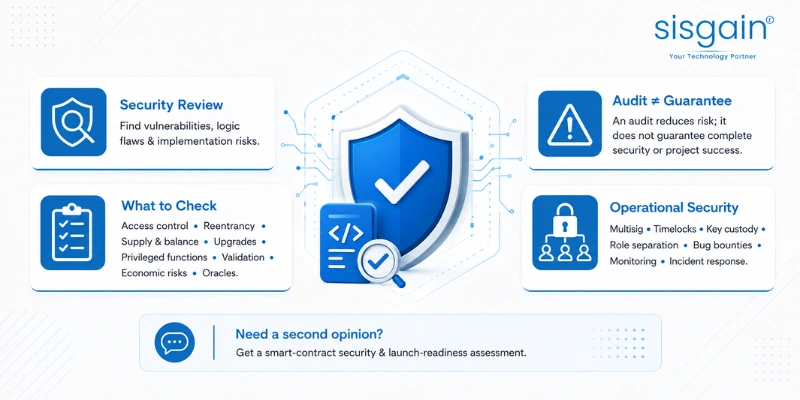
Security is a critical concern in cryptocurrency development due to the high value of digital assets and the irreversible nature of blockchain transactions.

Common risks:

  • Smart contract vulnerabilities
  • Exchange hacks
  • Phishing attacks
  • Private key breaches

Preventive measures:

  • Regular smart contract audits
  • Multi-signature authentication
  • End-to-end encryption
  • Secure key management systems

Insight:

Security is not a one-time task—it is an ongoing process that must evolve with emerging threats.

Adoption Barriers

Despite growing popularity, mainstream adoption of cryptocurrencies still faces several hurdles.

Challenges include:

  • Lack of user awareness
  • Complex user interfaces
  • Trust issues among new users
  • Volatility of crypto assets

Solutions:

  • User-friendly app design
  • Educational onboarding experiences
  • Transparent operations
  • Stablecoin integration for reduced volatility

Insight:

User experience plays a crucial role in adoption. Even technically strong platforms can fail if they are not easy to use.

Regulatory Issues

Regulation is both an opportunity and a challenge in the development of cryptocurrency. While clear frameworks (like in the UAE) support growth, navigating compliance can be complex.

Key challenges:

  • Varying regulations across countries
  • Licensing requirements
  • KYC and AML compliance
  • Taxation policies

Solutions:

  • Early legal consultation
  • Compliance-first development approach
  • Integration of regulatory frameworks into system design

Insight:

Ignoring regulatory requirements can lead to legal complications, fines, or even shutdown of operations.

Final Takeaway

Cryptocurrency development is a high-reward but complex domain. Scalability, security, adoption, and regulation are the four pillars that determine success or failure.

Businesses that proactively address these challenges during the cryptocurrency process are better positioned to build resilient, scalable, and future-ready crypto platforms.

future trends in cryptocurrency

The next phase of cryptocurrency development is being shaped by the convergence of emerging technologies, regulatory maturity, and evolving user expectations. As we move deeper into 2026 and beyond, the development of cryptocurrency is no longer just about creating digital assets—it is about building intelligent, decentralized, and interoperable ecosystems that redefine how value is created and exchanged.

For founders, CTOs, and investors, understanding these future trends is essential to staying competitive and identifying high-growth opportunities.

AI + Blockchain

The integration of artificial intelligence with blockchain is one of the most transformative trends in cryptocurrency development. While blockchain provides transparency, immutability, and decentralization, AI adds intelligence, automation, and predictive capabilities.

Key use cases:

  • Smart trading systems powered by machine learning
  • Fraud detection and anomaly identification
  • Automated portfolio management
  • Predictive analytics for market trends

AI also enhances blockchain efficiency by optimizing consensus mechanisms, reducing energy consumption, and improving scalability.

For businesses building next-generation platforms, combining blockchain with AI Apps is becoming a strategic necessity rather than an optional enhancement. This convergence enables the creation of self-learning financial systems that adapt in real time to market conditions.

Web3 Evolution

Web3 represents the decentralized internet, where users have control over their data, identity, and digital assets. Cryptocurrency development plays a foundational role in this ecosystem by enabling trustless transactions and decentralized ownership.

Key characteristics of Web3:

  • Decentralized applications (dApps)
  • Token-based economies
  • Self-sovereign identity systems
  • Peer-to-peer interactions without intermediaries

As Web3 matures, we are seeing the rise of:

  • Decentralized social platforms
  • Blockchain-based gaming ecosystems
  • Tokenized digital economies

Impact on businesses:

  • New revenue models through tokenization
  • Direct user engagement without intermediaries
  • Greater transparency and trust

Insight:

The development of cryptocurrency within Web3 is shifting power from centralized platforms to users, creating a more open and equitable digital economy.

Central Bank Digital Currencies (CBDCs)

Governments and central banks worldwide are actively exploring or launching Central Bank Digital Currencies (CBDCs). Unlike decentralized cryptocurrencies, CBDCs are state-backed digital currencies designed to modernize financial systems.

Key objectives of CBDCs:

  • Enhance payment efficiency
  • Reduce transaction costs
  • Improve financial inclusion
  • Strengthen monetary control

Countries in the Middle East, including the UAE, are investing heavily in digital currency initiatives, signaling strong future demand for blockchain expertise.

Impact on cryptocurrency development:

  • Increased regulatory clarity
  • Greater institutional adoption
  • Hybrid financial ecosystems combining centralized and decentralized systems

Insight:

CBDCs will not replace cryptocurrencies but will coexist, creating a more diverse and robust financial landscape.

DeFi 2.0

Decentralized Finance (DeFi) is entering its next phase—often referred to as DeFi 2.0. While early DeFi platforms focused on basic lending, borrowing, and trading, the new generation is addressing key limitations such as scalability, security, and sustainability.

Key advancements in DeFi 2.0:

  • Improved liquidity management
  • Protocol-owned liquidity models
  • Enhanced security frameworks
  • Cross-chain interoperability

Emerging opportunities:

  • Decentralized insurance platforms
  • Advanced yield optimization strategies
  • Tokenized real-world assets

Impact on businesses:

  • Creation of new financial products
  • Reduced reliance on traditional banking systems
  • Increased accessibility to global financial services

Insight:

DeFi 2.0 is making decentralized finance more stable, secure, and scalable—paving the way for mainstream adoption.

Strategic Takeaway

The future of cryptocurrency development lies in integration, intelligence, and decentralization. AI-powered systems, Web3 ecosystems, government-backed digital currencies, and next-generation DeFi platforms are collectively shaping a new digital economy.

For businesses, the opportunity is clear: those who align early with these trends will not only stay relevant but lead the next wave of innovation. By investing in advanced technologies and forward-thinking strategies, companies can build future-ready platforms that deliver long-term value in an increasingly decentralized world.

Why Businesses Are Investing in Crypto Apps

The surge in cryptocurrency development is not driven by hype alone—it is fueled by tangible business outcomes. From startups to large enterprises, organizations are increasingly investing in crypto app ecosystems to unlock new revenue streams, enhance operational efficiency, and future-proof their digital strategy.

In 2026, crypto apps are no longer experimental products. They are strategic assets that enable businesses to participate in a rapidly evolving digital economy.

ROI Potential

One of the primary reasons businesses are investing in crypto apps is the strong return on investment potential. Unlike traditional applications, crypto platforms often generate revenue through multiple channels simultaneously.

Key revenue streams:

  • Transaction fees on exchanges and wallets
  • Trading commissions and spreads
  • Subscription-based premium features
  • Token issuance and ecosystem monetization
  • Staking and yield-based services

Why ROI is higher in crypto:

  • Global market access (no geographical limitations)
  • 24/7 operational capability
  • High user engagement in financial activities
  • Scalable infrastructure with lower marginal costs

Insight:

A well-executed crypto app can achieve profitability faster than traditional fintech platforms due to its decentralized and automated nature.

Market Demand

The demand for crypto apps continues to grow across both retail and institutional segments. Users are no longer limited to trading—they are actively engaging with wallets, DeFi platforms, NFT marketplaces, and automated trading systems.

Demand drivers:

  • Increasing adoption of digital assets globally
  • Growth of Web3 ecosystems
  • Rising interest in decentralized finance
  • Institutional entry into crypto markets

Regional advantage (UAE):

  • Strong government support for blockchain innovation
  • Clear regulatory frameworks
  • High concentration of fintech startups and investors

Insight:

Market demand is shifting from basic crypto usage to advanced, feature-rich platforms, creating opportunities for businesses to differentiate through innovation.

Case-Based Reasoning

Real-world use cases demonstrate why businesses are aggressively investing in crypto apps.

Example scenarios:

  • Fintech startup launching a trading platform:
    By integrating an automated crypto trading app, the company increases user retention and transaction volume.
  • Enterprise integrating blockchain payments:
    Reduces transaction costs and eliminates intermediaries, improving operational efficiency.
  • Investment firm launching a tokenized ecosystem:
    Enables fractional ownership and new fundraising models.
  • E-commerce platform adopting crypto payments:
    Expands global reach and attracts tech-savvy users.

Insight:

The development of cryptocurrency-based applications is no longer theoretical—it is delivering measurable business outcomes across industries.

Strategic Takeaway

Crypto apps are becoming a core component of digital transformation strategies. Businesses investing early in cryptocurrency development are not only capturing immediate opportunities but also positioning themselves for long-term dominance in the decentralized economy.

Choosing the Right Cryptocurrency Development Company

Selecting the right development partner is one of the most critical decisions in your cryptocurrency journey. The success of your project depends heavily on the expertise, technical capability, and strategic approach of the company you choose.

A reliable IT software development company with proven blockchain expertise can significantly reduce risks, accelerate timelines, and ensure a high-quality product.

What to Look For

Experience

Experience in cryptocurrency development is non-negotiable. The company should have a deep understanding of blockchain protocols, token standards, and crypto ecosystems.

What to evaluate:

  • Years of experience in blockchain development
  • Number of crypto projects delivered
  • Expertise in different blockchain platforms (Ethereum, BNB Chain, etc.)

Insight:

An experienced team can anticipate challenges and provide solutions proactively, saving time and cost.

Security Expertise

Security is the backbone of any crypto platform. A single vulnerability can lead to significant financial and reputational damage.

Key capabilities to look for:

  • Smart contract auditing
  • Secure architecture design
  • Data encryption and key management
  • Compliance with global security standards

Insight:

Choose a company that prioritizes security at every stage of development, not just as a final step.

Tech Stack

The technology stack determines the scalability, performance, and future readiness of your crypto solution.

What to assess:

  • Programming languages (Solidity, Rust, Go)
  • Frameworks and development tools
  • Integration capabilities (APIs, third-party services)
  • Ability to incorporate AI and advanced technologies

Working with skilled mobile app developers ensures that your crypto application delivers a seamless user experience across devices.

Insight:

A modern, flexible tech stack enables faster innovation and easier scalability.

Portfolio

A strong portfolio is a clear indicator of a company’s capabilities and reliability.

What to review:

  • Past crypto projects (wallets, exchanges, tokens)
  • Case studies with measurable outcomes
  • Client testimonials and reviews

You should also evaluate whether the company has experience in building solutions similar to your requirements.

Strategic Fit and Regional Expertise

For businesses targeting markets like the UAE, it is essential to partner with a company that understands local regulations and market dynamics.

In addition, Choose the Best Mobile App Development Company in UAE that can help in identifying the right partner with regional expertise and proven delivery capabilities.

Final Takeaway

Choosing the right cryptocurrency development company is not just about technical execution—it is about finding a strategic partner who understands your business goals and can translate them into a scalable, secure, and high-performing solution.

By evaluating experience, security expertise, tech stack, and portfolio, businesses can make informed decisions and significantly increase their chances of success in the competitive world of cryptocurrency development.

Cryptocurrency Creation Service

In today’s competitive digital economy, launching a successful crypto product requires more than just technical execution—it demands strategic planning, deep industry expertise, and a full-spectrum approach. This is where a professional cryptocurrency creation service becomes critical.

Businesses are no longer looking for isolated development tasks. They need end-to-end solutions that cover the entire lifecycle of cryptocurrency development—from idea validation to post-launch scaling. A comprehensive service ensures faster time-to-market, reduced risks, and a product that is both secure and scalable.

End-to-End Cryptocurrency Development Services

A robust cryptocurrency creation service typically includes the following stages:

Consulting

Every successful crypto project begins with a strong foundation. Consulting focuses on transforming your idea into a viable, scalable business model.

Key activities:

  • Market research and competitor analysis
  • Tokenomics and business model design
  • Blockchain selection (Ethereum, BNB Chain, etc.)
  • Regulatory and compliance guidance

Outcome:

A clear roadmap aligned with your business goals and market opportunities.

Development

This is the core phase where your cryptocurrency or crypto app is built using advanced technologies and best practices.

Key services:

  • Token or coin development
  • Smart contract creation and auditing
  • Wallet and exchange development
  • Integration of advanced features like DeFi or trading systems

Outcome:

A secure, high-performance product tailored to your requirements.

Deployment

Once development is complete, the product is deployed into a live environment with full operational readiness.

Key activities:

  • Blockchain deployment and configuration
  • Cloud infrastructure setup
  • API integrations and exchange listings
  • Performance testing and optimization

Outcome:

A fully functional cryptocurrency platform ready for users.

Maintenance

Post-launch support is essential to ensure long-term success and scalability.

Key services:

  • Continuous monitoring and updates
  • Security patches and upgrades
  • Feature enhancements
  • Technical support and performance optimization

Outcome:

A stable, evolving platform that adapts to market changes.

Why Choose a Full-Service Approach

  • Faster development cycles
  • Reduced technical and operational risks
  • Seamless integration across components
  • Long-term scalability and support

Final Takeaway

A reliable cryptocurrency creation service acts as a strategic partner, guiding you through every stage of the development of cryptocurrency. For businesses aiming to build impactful, future-ready crypto solutions, choosing an end-to-end service provider is the most efficient and scalable approach.

Real-World Use Cases of Cryptocurrency

The true value of cryptocurrency development lies in its real-world applications. Beyond trading and speculation, cryptocurrencies and blockchain technology are transforming multiple industries by improving transparency, efficiency, and security.

Finance

The financial sector is the most mature and widely adopted use case for cryptocurrency.

Applications:

  • Cross-border payments with reduced fees and instant settlement
  • Decentralized finance (DeFi) platforms for lending and borrowing
  • Tokenized assets and digital investments
  • Automated trading systems

Impact:

  • Eliminates intermediaries
  • Reduces transaction costs
  • Increases financial inclusion

Healthcare

Cryptocurrency and blockchain are solving critical challenges in healthcare, particularly in data management and security.

Applications:

  • Secure patient data sharing
  • Blockchain-based medical records
  • Transparent billing and insurance processing
  • Tokenized healthcare ecosystems

Impact:

  • Enhanced data privacy
  • Improved interoperability
  • Reduced fraud and errors

Logistics

In logistics and supply chain management, cryptocurrency development enables greater transparency and efficiency.

Applications:

  • Real-time shipment tracking
  • Smart contracts for automated payments
  • Inventory and supply chain visibility
  • Fraud prevention and verification

Impact:

  • Improved operational efficiency
  • Reduced delays and disputes
  • Enhanced trust among stakeholders

Gaming

The gaming industry is rapidly adopting cryptocurrency to create decentralized and player-driven economies.

Applications:

  • Play-to-earn (P2E) models
  • In-game asset ownership via tokens and NFTs
  • Decentralized gaming platforms
  • Cross-game asset interoperability

Impact:

  • New revenue streams for players and developers
  • True ownership of digital assets
  • Increased user engagement

Strategic Takeaway

Cryptocurrency is no longer limited to financial use cases. Its integration across industries like healthcare, logistics, and gaming demonstrates its transformative potential.

For businesses investing in cryptocurrency development, these real-world applications provide clear direction on where to innovate, differentiate, and capture long-term value.

Conclusion

Cryptocurrency development has evolved from a disruptive concept into a foundational pillar of the modern digital economy. Throughout this guide, we have explored every critical aspect—from understanding how cryptocurrencies are made and the complete cryptocurrency process, to selecting the right tech stack, managing costs, ensuring compliance, and building scalable applications.

The key takeaway is clear: the development of cryptocurrency is no longer optional for forward-thinking businesses. It is a strategic investment that enables organizations to unlock new revenue streams, improve operational efficiency, and gain a competitive edge in a rapidly transforming market.

From crypto coin development and wallet ecosystems to automated trading platforms and full-scale crypto apps, the opportunities are vast. At the same time, success depends on making the right decisions—choosing the appropriate architecture, prioritizing security, aligning with regulations, and partnering with the right development team.

Why Now is the Best Time to Invest

The timing for entering the crypto space has never been more favorable.

  • Market maturity: Cryptocurrency adoption is at an all-time high across both retail and institutional segments
  • Regulatory clarity: Regions like the UAE are providing structured frameworks that support innovation
  • Technological advancements: AI, blockchain scalability, and Web3 are enabling more powerful and efficient solutions
  • Growing demand: Users are actively seeking secure, user-friendly crypto platforms

Businesses that act now are positioning themselves ahead of the curve, while those who delay risk falling behind in an increasingly decentralized economy.

Build Your Cryptocurrency Product with Confidence

start building your cryptocurrency today

If you are planning to launch a crypto coin, develop a crypto app, or build a complete blockchain ecosystem, the right execution strategy makes all the difference.

A professional cryptocurrency creation service can help you:

  • Validate your idea and define a scalable roadmap
  • Develop secure, high-performance blockchain solutions
  • Ensure compliance with evolving regulations
  • Launch faster with reduced risk
  • Scale your platform for long-term growth

Build Cryptocurrency Applications

The future of digital finance is being built today—and cryptocurrency development is at its core.

If you are serious about entering this space, now is the time to act. Whether you are a startup exploring new opportunities or an enterprise looking to transform your business model, investing in cryptocurrency development today can define your success tomorrow.

Partner with experts who understand both technology and business strategy, and take the first step toward building a powerful, future-ready crypto solution.

Frequently Asked Questions

The cost of cryptocurrency development depends on the type of project, features, and complexity. A basic token can cost significantly less, while a custom blockchain or full crypto app with advanced security, compliance, and integrations requires a higher investment.

Building a crypto coin can take anywhere from 3 to 12 months depending on the complexity of the blockchain, consensus mechanism, and required infrastructure. Simpler tokens can be launched within a few weeks.

The best blockchain depends on your use case. Ethereum is widely used for tokens and smart contracts, BNB Chain offers cost efficiency, while Solana and Polygon provide high scalability and speed for advanced applications.

Yes, anyone can create their own cryptocurrency with the right technical expertise or by partnering with a cryptocurrency development company. You can either build a coin from scratch or create a token on an existing blockchain.

A coin operates on its own blockchain, while a token is built on an existing blockchain like Ethereum. Coin development is more complex and expensive compared to token creation.

Cryptocurrency development is legal in many countries, including the UAE, but it requires compliance with local regulations, licensing, and KYC/AML policies depending on the type of project.

The cryptocurrency process includes planning, blockchain selection, development, testing, deployment, and ongoing maintenance. Each step is critical to ensure performance, security, and scalability.

Cryptocurrencies are made by developing blockchain protocols or creating smart contracts on existing networks. This involves coding, defining consensus mechanisms, and ensuring secure transaction validation.

Blockchain acts as the underlying technology that ensures transparency, security, and decentralization. It records all transactions and eliminates the need for intermediaries.

Yes, a crypto wallet is essential for storing, sending, and receiving digital assets. It also plays a key role in user experience and security.

The best crypto wallet app offers strong security, multi-currency support, user-friendly design, and seamless integration with blockchain networks. The choice depends on your business needs and target users.

While basic tools exist, building a scalable and secure crypto app requires technical expertise. Partnering with experienced developers is recommended for professional results.

Major challenges include scalability, security risks, regulatory compliance, and user adoption. Addressing these early is essential for long-term success.

Yes, crypto app development can be highly profitable due to multiple revenue streams such as transaction fees, subscriptions, and trading commissions, especially in a growing market.

A modern crypto app should include secure authentication, real-time transactions, multi-currency support, analytics dashboards, and integration with trading or DeFi features.

Director of Innovation & Growth specializing in AI solutions, digital transformation, healthcare software, product engineering, consulting, and emerging technologies.

View full profile
‹ Prev Next ›
Our Technology Experts are Change Catalysts

Book a Free Consultation Call with Our Experts Today

Connect with our team

For Business & Service Inquiries

Sales Team

Project quotes, partnerships, implementation

For business and project inquiries only. Job or career-related queries sent here will be automatically rejected.
For Career, Job Application & Verification

HR & Talent

Open roles, referrals, campus hiring