
Artificial intelligence is no longer an experimental technology reserved for tech giants. In 2026, organizations across industries are leveraging AI to streamline operations, automate repetitive tasks, improve customer experiences, and unlock data-driven decision-making. From finance and healthcare to manufacturing and logistics, enterprise AI adoption has become a strategic priority for businesses seeking to remain competitive in an increasingly digital marketplace.
However, implementing AI at an enterprise scale is far more complex than deploying a standalone AI tool. Many organizations struggle with unclear objectives, poor data quality, integration challenges, security concerns, and a lack of long-term planning. As a result, even promising AI initiatives often fail to deliver the expected business outcomes or return on investment (ROI).
This is why a structured Enterprise AI Development process is essential. Successful enterprises approach AI with a clear strategy, scalable architecture, robust governance frameworks, and a well-defined implementation roadmap. Rather than focusing solely on technology, they align AI initiatives with business goals, operational requirements, and measurable performance metrics.
The organizations achieving the greatest success with Enterprise AI Solutions are those that view AI as a business transformation initiative rather than just a technology project. By combining the right data, infrastructure, talent, and deployment strategy, they create sustainable competitive advantages while accelerating innovation and operational efficiency.
In this guide, we will explore 10 proven ways to make your Enterprise AI Development process more successful. You will learn how to build a strong Enterprise AI Strategy, identify high-value AI use cases, design scalable AI architectures, implement AI responsibly, and maximize the long-term value of your AI investments. Whether you are planning your first AI initiative or scaling existing solutions, these best practices will help your organization achieve measurable and lasting results.
Why Enterprise AI Development Matters in 2026
Artificial intelligence has become one of the most transformative technologies driving business growth across industries. As organizations increasingly adopt AI-powered solutions, understanding AI Development Cost in Dubai has become a critical factor for strategic planning and digital transformation initiatives. In 2026, businesses are under constant pressure to improve operational efficiency, reduce costs, enhance customer experiences, and accelerate innovation. The AI Development Cost in Dubai varies depending on factors such as project complexity, data requirements, technology stack, integration needs, and the level of customization involved. While initial investment may vary, AI solutions often deliver significant long-term value through automation, predictive analytics, intelligent decision-making, and improved business performance. From machine learning models and generative AI applications to intelligent automation platforms and AI-powered enterprise systems, businesses across Dubai are leveraging advanced technologies to gain a competitive edge. Understanding AI Development Cost in Dubai helps organizations allocate resources effectively, evaluate return on investment, and choose the right development approach for their specific objectives.
The Rise of Enterprise-Wide AI Adoption
The adoption of artificial intelligence is accelerating at an unprecedented pace. What was once considered an experimental technology used by a handful of innovative companies has now become a strategic investment for enterprises of all sizes. Organizations across industries are embracing AI to improve efficiency, enhance decision-making, and unlock new opportunities for growth.
AI Is Expanding Across Every Business Function
One of the most significant developments in recent years is the widespread adoption of AI across multiple business functions. Enterprises are no longer limiting AI to IT departments or isolated innovation teams. Instead, they are integrating AI into customer service, marketing, finance, operations, human resources, cybersecurity, and supply chain management.
For example, customer support teams use AI-powered virtual assistants to resolve inquiries faster, while marketing departments leverage predictive analytics to better understand customer behavior and personalize campaigns. Finance teams utilize AI for fraud detection, risk assessment, and forecasting, while HR departments apply AI to streamline recruitment and workforce planning. This enterprise-wide integration ensures that AI delivers value across the entire organization rather than within a single department.
Enterprises Are Moving Beyond Experimental AI Projects
Many organizations initially approached AI through small pilot programs designed to test feasibility and potential business impact. While these experiments provided valuable insights, enterprises are now moving toward large-scale AI implementation. Business leaders increasingly recognize that isolated AI initiatives cannot deliver the transformational benefits that enterprise-wide deployment can achieve.
Organizations are developing structured Enterprise AI Implementation Roadmaps that guide the transition from experimentation to production. These roadmaps focus on building scalable infrastructure, establishing governance frameworks, and integrating AI into core business processes. As a result, enterprises are achieving higher returns on investment and creating sustainable competitive advantages through AI adoption.
Competitive Pressure Is Accelerating AI Investments
Market competition is another major factor driving enterprise AI adoption. Businesses that successfully leverage AI can improve efficiency, deliver better customer experiences, and respond more quickly to market changes. This creates pressure on competitors to adopt similar capabilities or risk falling behind.
Industry leaders are increasingly viewing AI as a business necessity rather than a technology trend. Organizations that delay AI adoption may struggle to compete with companies that can automate processes, analyze data more effectively, and innovate faster. Consequently, AI investment has become a strategic priority for enterprises seeking long-term growth and market leadership.
How AI Is Transforming Business Operations
Artificial intelligence is fundamentally changing how organizations operate. By combining advanced analytics, machine learning, natural language processing, and automation technologies, AI is helping businesses become more efficient, data-driven, and customer-focused.
Automating Repetitive and Resource-Intensive Processes
One of the most immediate benefits of AI is its ability to automate repetitive and time-consuming tasks. Many business operations involve routine activities such as data entry, document processing, invoice management, report generation, and customer support. These tasks often consume valuable employee time and can lead to errors when performed manually.
AI-powered business process automation allows organizations to streamline these workflows and improve operational efficiency. Automated systems can process information faster, maintain greater accuracy, and operate continuously without interruption. This enables employees to focus on strategic initiatives that require creativity, critical thinking, and human expertise.
Enabling Smarter and Faster Decision-Making
Modern enterprises generate vast amounts of data every day. However, collecting data alone does not create value. Organizations need the ability to analyze information quickly and extract meaningful insights that support decision-making.
AI systems excel at identifying patterns, detecting anomalies, and generating predictions from large datasets. Business leaders can use these insights to forecast demand, optimize inventory, identify risks, improve customer engagement, and allocate resources more effectively. As a result, AI helps organizations make faster, more informed decisions that drive better business outcomes.
Increasing Productivity and Operational Efficiency
Productivity remains a key objective for every enterprise, and AI is becoming one of the most effective tools for achieving it. By automating repetitive tasks, optimizing workflows, and providing actionable insights, AI reduces operational bottlenecks and improves overall performance.
Organizations can use AI to optimize scheduling, manage resources, streamline communication, and enhance collaboration between departments. These improvements lead to greater efficiency, lower operating costs, and increased organizational agility. Businesses that leverage AI effectively can accomplish more with existing resources while maintaining high levels of quality and customer satisfaction.
The Competitive Advantage of Enterprise AI Solutions
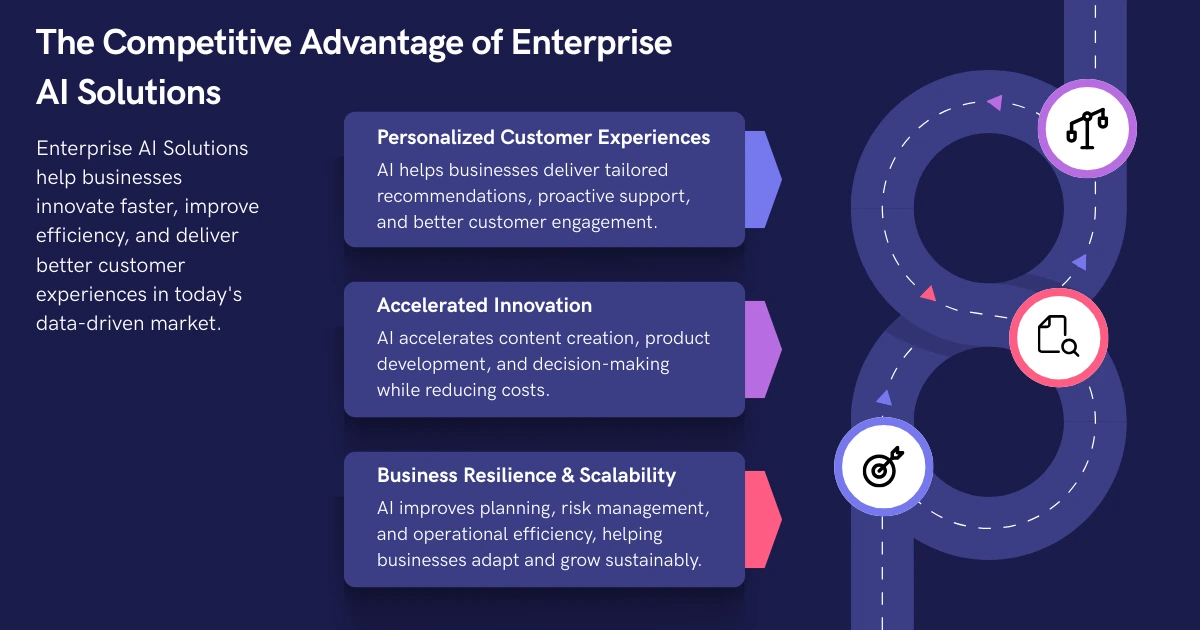
Enterprise AI Solutions provide organizations with a powerful competitive advantage in an increasingly digital and data-driven business environment. Companies that successfully implement AI are often able to innovate faster, operate more efficiently, and deliver superior customer experiences compared to their competitors.
Delivering Highly Personalized Customer Experiences
Customer expectations continue to rise, and businesses must deliver personalized experiences to remain competitive. AI enables organizations to analyze customer preferences, behaviors, and interactions in real time, allowing them to provide tailored recommendations, personalized communications, and proactive support.
These capabilities help businesses build stronger customer relationships, increase engagement, and improve customer retention. Organizations that consistently deliver relevant and personalized experiences are more likely to earn customer trust and loyalty.
Accelerating Innovation Across Products and Services
Innovation is essential for long-term business growth, and AI is helping organizations develop new products, services, and business models more efficiently. By analyzing market trends, customer feedback, and operational data, AI can identify opportunities that might otherwise go unnoticed.
Generative AI technologies are also enabling businesses to accelerate content creation, software development, product design, and knowledge management. This allows organizations to bring new ideas to market faster while reducing development costs and improving overall innovation capabilities.
Building Long-Term Business Resilience and Scalability
Perhaps the greatest advantage of Enterprise AI is its ability to help organizations remain resilient in a rapidly changing business environment. Market conditions, customer expectations, and industry regulations continue to evolve, requiring businesses to adapt quickly and efficiently.
AI provides the agility needed to respond to these changes by supporting predictive planning, risk management, and continuous optimization. Organizations with a strong Enterprise AI Architecture can scale operations more effectively, manage uncertainty with greater confidence, and maintain sustainable growth over the long term. As AI technologies continue to advance, enterprises that invest strategically today will be better positioned to lead their industries tomorrow.
What Is Enterprise AI Development?
As organizations continue to embrace digital transformation, Enterprise AI Development has emerged as a critical strategy for improving efficiency, innovation, and decision-making at scale. Unlike standalone AI applications designed to perform a single task, enterprise AI focuses on integrating artificial intelligence across an entire organization to solve complex business challenges and create measurable value. From automating repetitive workflows and enhancing customer experiences to optimizing operations and generating predictive insights, enterprise AI enables businesses to become more intelligent, agile, and competitive.
Modern enterprises generate enormous volumes of data every day. However, without the right systems and technologies, much of that data remains underutilized. Enterprise AI Development helps organizations transform this data into actionable intelligence by leveraging technologies such as machine learning, natural language processing, computer vision, generative AI, and predictive analytics. By combining these capabilities with existing business systems, organizations can build scalable Enterprise AI Solutions that drive sustainable growth and operational excellence.
ALSO READ- How Artificial Intelligence Is Transforming Modern Industries in 2026
Definition of Enterprise AI Development
Understanding Enterprise AI Development
Enterprise AI Development refers to the process of designing, building, deploying, and managing artificial intelligence solutions specifically tailored to meet the needs of large organizations. These solutions are developed to support enterprise-wide objectives such as improving productivity, reducing operational costs, increasing revenue, enhancing customer experiences, and enabling data-driven decision-making.
Unlike consumer-focused AI applications, enterprise AI systems are designed to operate within complex business environments that involve large datasets, multiple departments, strict security requirements, and integration with existing enterprise software. The goal is not simply to automate individual tasks but to create intelligent systems that can continuously learn, adapt, and deliver business value across the organization.
Why Enterprise AI Development Is Important
As businesses become increasingly data-driven, the ability to analyze information and act on insights quickly has become a major competitive advantage. Enterprise AI Development allows organizations to process large amounts of structured and unstructured data, identify patterns, forecast outcomes, and automate decision-making processes.
Organizations that invest in enterprise AI can improve efficiency, reduce human error, accelerate innovation, and respond more effectively to changing market conditions. This makes AI a strategic asset rather than just another technology investment.
Key Components of Enterprise AI Solutions
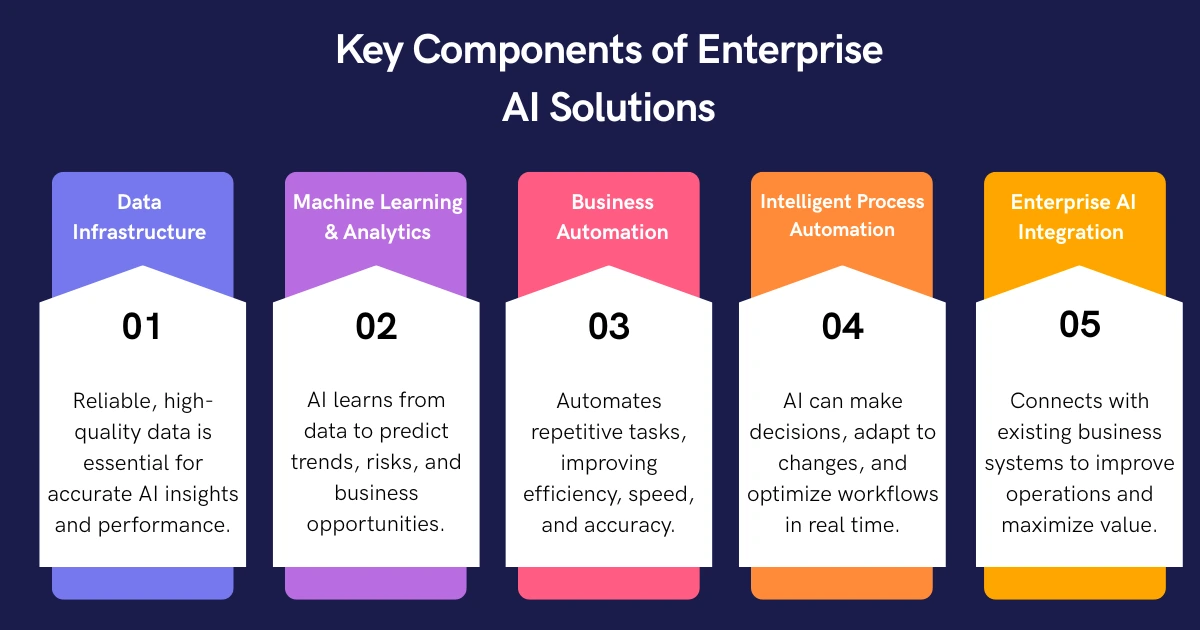
Successful Enterprise AI Solutions are built on multiple interconnected components that work together to deliver reliable, scalable, and measurable business outcomes. Understanding these components is essential for organizations planning to implement AI at an enterprise level.
Data Infrastructure and Management
Data serves as the foundation of every successful AI initiative. Enterprise AI systems rely on high-quality, accurate, and well-governed data to generate meaningful insights and predictions. Organizations must establish strong data collection, storage, processing, and governance practices to ensure AI models can operate effectively.
Without reliable data infrastructure, even the most advanced AI models will struggle to deliver accurate results. This is why leading enterprises prioritize data quality and accessibility before implementing AI solutions.
Machine Learning and Predictive Analytics
Machine learning enables AI systems to learn from historical data and improve performance over time without explicit programming. Predictive analytics uses these learning capabilities to forecast future trends, customer behaviors, operational risks, and business opportunities.
By leveraging machine learning, enterprises can make proactive decisions rather than simply reacting to events after they occur. This improves strategic planning, operational efficiency, and overall business performance.
AI Solutions for Business Automation
One of the most valuable applications of enterprise AI is automation. AI Solutions for Business Automation help organizations eliminate repetitive manual tasks and streamline complex workflows across departments.
Examples include automated document processing, intelligent customer support, invoice management, employee onboarding, compliance monitoring, and workflow orchestration. These solutions reduce operational costs while increasing speed, accuracy, and scalability.
AI-Powered Business Process Automation
AI-Powered Business Process Automation goes beyond traditional workflow automation by introducing intelligence into business operations. Instead of following fixed rules, AI systems can analyze information, make decisions, adapt to changing conditions, and continuously optimize performance.
For example, AI can automatically prioritize support tickets, detect fraudulent transactions, recommend actions based on customer behavior, and optimize supply chain operations in real time. This level of intelligent automation enables organizations to achieve greater efficiency and agility.
Enterprise AI Integration and Deployment
A successful Enterprise AI Solution must integrate seamlessly with existing business systems such as CRM platforms, ERP software, customer service tools, data warehouses, and cloud infrastructure. Effective integration ensures that AI capabilities become part of everyday business operations rather than isolated technology projects.
Organizations that prioritize AI integration can maximize adoption, improve collaboration across departments, and accelerate time-to-value from their AI investments.
Enterprise AI vs Traditional Automation
Many organizations mistakenly assume that artificial intelligence and automation are the same. While both aim to improve efficiency and reduce manual effort, Enterprise AI and traditional automation differ significantly in their capabilities, flexibility, and business impact.
Traditional Automation Follows Predefined Rules
Traditional automation relies on fixed workflows and predefined rules to perform repetitive tasks. These systems execute instructions exactly as programmed and cannot adapt when conditions change.
For example, a traditional automation system may automatically route customer inquiries based on specific keywords. However, if the inquiry falls outside predefined parameters, human intervention is typically required.
While traditional automation can improve efficiency, its capabilities are limited when dealing with complex, dynamic, or unpredictable scenarios.
Enterprise AI Learns and Adapts Continuously
Enterprise AI systems use machine learning and advanced analytics to learn from data, identify patterns, and improve performance over time. Unlike traditional automation, AI can adapt to changing business conditions, understand context, and make intelligent recommendations.
For instance, an AI-powered customer service platform can analyze conversation history, understand customer intent, recommend personalized responses, and continuously improve accuracy based on previous interactions. This adaptability makes enterprise AI far more powerful for solving complex business challenges.
Enterprise AI Delivers Strategic Business Value
Traditional automation primarily focuses on improving operational efficiency by reducing manual work. Enterprise AI, however, delivers broader strategic benefits by enabling innovation, improving decision-making, generating predictive insights, and supporting business growth.
Organizations that implement Enterprise AI Solutions gain the ability to anticipate customer needs, identify market opportunities, optimize operations, and create competitive advantages that extend far beyond simple task automation.
As businesses continue to evolve in a rapidly changing digital landscape, Enterprise AI Development is becoming the foundation for intelligent operations, scalable growth, and long-term success. Companies that move beyond basic automation and embrace enterprise AI will be better positioned to innovate, adapt, and lead in the AI-driven economy of the future.
1. Start with a Clear Enterprise AI Strategy
One of the biggest reasons enterprise AI projects fail is the absence of a well-defined strategy. Many organizations invest in AI technologies because of industry trends or competitive pressure without clearly understanding how those solutions will support their business objectives. While AI has the potential to transform operations and create significant value, success depends on having a structured Enterprise AI Strategy that aligns technology investments with organizational goals.
A strong strategy serves as the foundation for every stage of Enterprise AI Development. It helps businesses identify priorities, allocate resources effectively, reduce implementation risks, and establish measurable success metrics. Organizations that approach AI strategically are more likely to achieve sustainable results, maximize return on investment, and scale AI initiatives successfully across departments.
Define Business Objectives First
Before selecting AI tools, platforms, or technologies, organizations must clearly identify the business challenges they want to solve. AI should never be implemented simply because it is innovative or popular. Instead, it should address specific organizational goals that deliver measurable value.
For example, a company may want to reduce customer service response times, improve demand forecasting, increase operational efficiency, automate repetitive processes, or enhance fraud detection capabilities. Defining these objectives early helps organizations focus their AI investments on initiatives that directly contribute to business growth and performance improvements.
A clear understanding of business objectives also prevents organizations from pursuing AI projects that may be technically impressive but fail to generate meaningful business outcomes.
Align AI Goals with Organizational KPIs
Once business objectives are established, organizations should connect their AI initiatives to measurable key performance indicators (KPIs). This ensures that AI projects remain aligned with broader business priorities and can be evaluated based on tangible results.
For example, if the objective is to improve customer satisfaction, relevant KPIs may include customer retention rates, support resolution times, or Net Promoter Scores (NPS). If the goal is operational efficiency, organizations may track cost savings, productivity improvements, process completion times, or resource utilization metrics.
Aligning AI goals with KPIs creates accountability, improves decision-making, and allows stakeholders to clearly measure the impact of Enterprise AI Solutions on overall business performance.
Build Executive Stakeholder Support
Executive leadership plays a critical role in the success of Enterprise AI initiatives. Without strong support from senior decision-makers, AI projects often struggle with budget limitations, organizational resistance, and a lack of strategic direction.
Business leaders must understand how AI supports organizational goals and contributes to long-term growth. This requires clear communication regarding expected benefits, implementation plans, potential risks, and projected ROI.
Many organizations leverage Enterprise AI Consulting Services to help executives develop AI roadmaps, evaluate opportunities, and establish governance frameworks. By securing stakeholder alignment early in the process, businesses can accelerate adoption, improve collaboration, and create a culture that supports innovation and continuous improvement.
2. Identify High-Impact Enterprise AI Use Cases
A successful AI strategy begins with selecting the right problems to solve. While artificial intelligence offers countless possibilities, not every opportunity will deliver equal value. Organizations that focus on high-impact Enterprise AI Use Cases are more likely to achieve faster results, stronger ROI, and greater organizational adoption.
Rather than attempting to transform every business function simultaneously, enterprises should prioritize use cases that address significant operational challenges, improve customer experiences, or generate measurable financial benefits. Identifying the right opportunities creates momentum and establishes a strong foundation for future AI expansion.
Prioritize Business Problems Worth Solving
The most successful AI initiatives address real business challenges rather than hypothetical opportunities. Organizations should evaluate existing inefficiencies, bottlenecks, and pain points that significantly affect performance or profitability.
For example, customer service teams may struggle with increasing support volumes, finance departments may spend excessive time processing invoices, or supply chain teams may face forecasting challenges. These operational issues often represent ideal opportunities for AI implementation because improvements can be measured and directly linked to business outcomes.
By focusing on meaningful challenges, enterprises can ensure that AI investments generate tangible value and solve problems that matter most to stakeholders.
Evaluate ROI Potential
Not all AI projects offer the same return on investment. Before allocating resources, organizations should evaluate the expected benefits, implementation complexity, required investment, and potential risks associated with each use case.
A high-value AI initiative typically offers clear financial or operational benefits such as cost reduction, revenue growth, improved efficiency, enhanced customer satisfaction, or reduced risk exposure. Organizations should prioritize projects that can deliver measurable results within a realistic timeframe while supporting broader business objectives.
Conducting ROI assessments early helps enterprises make informed investment decisions and focus on opportunities with the greatest potential impact.
Industry-Specific AI Opportunities
Different industries have unique operational requirements and challenges, making industry-specific AI implementation essential for maximizing value.
Customer Support
AI-powered chatbots, virtual assistants, sentiment analysis tools, and automated ticket routing systems help businesses provide faster and more personalized customer experiences. These solutions improve response times, reduce support costs, and enhance customer satisfaction.
Finance
Financial institutions use AI for fraud detection, credit risk assessment, regulatory compliance, forecasting, and intelligent document processing. AI enables faster decision-making while improving accuracy and reducing operational risks.
Healthcare
Healthcare providers leverage AI for medical imaging analysis, patient monitoring, diagnosis support, treatment recommendations, and administrative automation. These applications improve patient outcomes while reducing administrative burdens on healthcare professionals.
Manufacturing
Manufacturers use AI to optimize production schedules, improve quality control, predict equipment failures, and enhance supply chain visibility. These capabilities increase operational efficiency while minimizing downtime and waste.
Logistics
The logistics sector continues to experience significant transformation through artificial intelligence. Businesses implementing AI can optimize delivery routes, improve warehouse operations, forecast demand more accurately, and enhance inventory management. Organizations exploring the role of ai in logistics are discovering how intelligent systems can reduce costs, improve delivery performance, and create more resilient supply chain networks.
3. Build a Scalable Enterprise AI Architecture
Even the most promising AI initiatives can fail without a strong technical foundation. As organizations expand their AI capabilities, they require a scalable Enterprise AI Architecture that supports growth, performance, security, and long-term sustainability.
Enterprise AI architecture serves as the backbone of AI implementation by connecting data sources, AI models, infrastructure, business applications, and governance frameworks. A well-designed architecture ensures that AI solutions can evolve alongside changing business requirements without creating operational bottlenecks.
Core Components of Enterprise AI Architecture
A modern Enterprise AI Architecture consists of several interconnected components that work together to support AI development and deployment.
These components typically include data storage systems, data processing pipelines, machine learning platforms, model management tools, integration frameworks, monitoring systems, and governance controls. Together, these technologies create a centralized ecosystem that enables organizations to develop, deploy, and manage AI solutions efficiently.
Organizations that invest in a robust architecture can accelerate AI adoption while reducing technical complexity and implementation risks.
Cloud, Hybrid, and On-Premise AI Infrastructure
Selecting the right infrastructure model is a critical architectural decision that affects scalability, security, cost, and performance.
Cloud-based AI environments offer flexibility, scalability, and faster deployment capabilities. They allow organizations to access advanced computing resources without significant upfront infrastructure investments.
Hybrid architectures combine cloud and on-premise resources, providing greater flexibility while maintaining control over sensitive data and critical applications. Many enterprises prefer this approach because it balances scalability with regulatory and security requirements.
On-premise infrastructure remains valuable for organizations operating in highly regulated industries where strict data governance and compliance requirements necessitate greater control over AI environments.
The optimal infrastructure model depends on business objectives, regulatory considerations, security requirements, and long-term AI deployment strategies.
Ensuring Scalability and Security
Scalability and security are essential considerations for every Enterprise AI initiative. As AI adoption expands, systems must be capable of handling increasing data volumes, user demands, and model complexity without compromising performance.
Organizations should design architectures that support horizontal scaling, automated resource allocation, continuous monitoring, and seamless integration with existing business systems. At the same time, robust security controls must protect sensitive data, AI models, and business operations from unauthorized access and cyber threats.
Key security measures include encryption, identity and access management, compliance monitoring, threat detection, and AI governance frameworks. By prioritizing both scalability and security, enterprises can build a reliable AI foundation capable of supporting future growth and innovation.
4. Invest in High-Quality Data Governance
Data is the foundation of every successful artificial intelligence initiative. No matter how advanced an AI model may be, its effectiveness ultimately depends on the quality, consistency, and reliability of the data it uses. Many enterprise AI projects fail not because of poor technology but because organizations underestimate the importance of data governance. Inaccurate, incomplete, duplicated, or poorly managed data can significantly reduce AI performance and limit the value generated from AI investments.
As enterprises continue to scale their AI capabilities, establishing strong Enterprise Data Governance practices becomes increasingly important. A well-defined governance framework ensures that data remains accurate, secure, accessible, and compliant with regulatory requirements. Organizations that prioritize data governance are better positioned to develop reliable AI systems, improve decision-making, and achieve sustainable business outcomes.
Why Data Quality Determines AI Success
Artificial intelligence systems learn from data. Every prediction, recommendation, automation process, and business insight generated by AI depends on the quality of the underlying information. If the data is inaccurate or biased, the AI model will produce unreliable results regardless of how sophisticated the technology may be.
High-Quality Data Improves AI Model Accuracy
AI models identify patterns and relationships within datasets to make predictions and decisions. When data is clean, complete, and representative of real-world scenarios, AI systems can generate more accurate and trustworthy outcomes. High-quality data directly contributes to improved AI model accuracy, better forecasting capabilities, and more reliable business intelligence.
For example, a customer analytics model trained on accurate customer behavior data will produce more meaningful insights than one trained on incomplete or outdated information. The quality of the input data directly influences the quality of the output.
Poor Data Leads to Poor Business Decisions
Organizations often focus heavily on selecting AI technologies while overlooking data quality issues. However, AI systems trained on inconsistent or biased datasets can generate inaccurate recommendations, increase operational risks, and negatively impact customer experiences.
Poor data quality can result in forecasting errors, compliance issues, inefficient automation processes, and incorrect strategic decisions. Investing in data quality management helps organizations avoid these costly mistakes and maximize the effectiveness of their AI initiatives.
Data Governance Creates Long-Term AI Reliability
As AI adoption expands across departments, maintaining data consistency becomes increasingly challenging. Enterprise Data Governance establishes standards, policies, and procedures that ensure data remains accurate and reliable throughout its lifecycle.
Strong governance practices improve data integrity, reduce duplication, support collaboration, and create a trusted foundation for enterprise-wide AI deployment.
Data Collection Best Practices
Collecting and managing high-quality data requires a structured approach. Organizations should develop clear processes for gathering, validating, storing, and maintaining information that supports AI development and business objectives.
Collect Relevant and Purpose-Driven Data
One of the most common mistakes organizations make is collecting excessive amounts of data without a clear purpose. Effective AI initiatives focus on gathering information that directly supports specific business goals and use cases.
By identifying the data required for each AI application, organizations can reduce complexity, improve efficiency, and ensure that AI systems are trained on relevant information.
Standardize Data Across Business Systems
Enterprise environments often contain multiple systems that store information in different formats. Without standardization, integrating data from these sources becomes difficult and can negatively impact AI performance.
Organizations should establish consistent data formats, naming conventions, and validation processes to improve interoperability and ensure data accuracy across departments.
Continuously Monitor and Improve Data Quality
Data quality is not a one-time initiative. As business operations evolve, organizations must continuously monitor data for inaccuracies, inconsistencies, and gaps.
Regular audits, automated validation processes, and quality control mechanisms help maintain reliable datasets and support long-term AI success.
Security, Compliance, and Privacy Requirements
As enterprises collect and process larger volumes of data, security and compliance become critical considerations. AI systems often interact with sensitive customer, financial, operational, and employee information, making robust governance practices essential.
Protecting Sensitive Business and Customer Data
Organizations must implement comprehensive security measures to safeguard data from unauthorized access, breaches, and cyber threats. Encryption, access controls, identity management, and continuous monitoring help protect valuable information assets while maintaining trust with customers and stakeholders.
Strong security frameworks also reduce operational risks and support responsible AI deployment.
Achieving Compliance Readiness
Regulatory requirements continue to evolve as governments and industry bodies establish new standards for data privacy and AI governance. Organizations must ensure that their AI initiatives align with applicable regulations and industry-specific compliance requirements.
Compliance readiness involves maintaining transparent data practices, documenting AI processes, managing consent requirements, and implementing appropriate governance controls. Businesses that proactively address compliance challenges can reduce legal risks and build stronger stakeholder confidence.
Building Trust Through Responsible Data Management
Trust is a critical factor in successful AI adoption. Employees, customers, and business partners are more likely to support AI initiatives when organizations demonstrate responsible data management practices.
By prioritizing privacy, transparency, and ethical data usage, enterprises can strengthen their reputation and create a solid foundation for sustainable AI innovation.
5. Choose Custom Enterprise AI Solutions Instead of One-Size-Fits-All Tools
As enterprise AI adoption continues to grow, organizations are faced with an important decision: should they rely on generic AI platforms or invest in customized solutions tailored to their specific business needs? While off-the-shelf AI tools may provide quick access to basic functionality, they often lack the flexibility, scalability, and industry-specific capabilities required for long-term success.
Custom Enterprise AI Solutions are designed around an organization's unique objectives, processes, data environment, and operational requirements. Rather than forcing businesses to adapt their workflows to fit generic software, custom solutions are built to support existing business strategies and deliver greater value over time.
Organizations that prioritize customization often achieve stronger performance, higher user adoption, and a better return on their AI investments.
Benefits of Custom AI Development
Custom AI development provides enterprises with the flexibility, control, and scalability needed to achieve long-term business success. Unlike generic AI platforms designed for a broad audience, custom AI solutions are built around an organization's specific goals, workflows, industry requirements, and operational challenges. This tailored approach ensures that AI becomes a strategic business asset rather than just another technology tool.
Solutions Designed Around Business Objectives
Every organization has unique challenges, workflows, and strategic priorities. Custom AI solutions are developed specifically to address these requirements rather than providing generic functionality that may only partially meet business needs.
This alignment ensures that AI initiatives support measurable business outcomes and contribute directly to organizational goals.
Greater Scalability and Flexibility
Business requirements evolve over time, and AI systems must be capable of adapting to changing demands. Custom solutions provide greater flexibility for adding new features, integrating emerging technologies, and supporting organizational growth.
Unlike standardized platforms, custom AI systems can be continuously optimized and expanded as business needs change.
Improved Integration with Existing Systems
Many enterprises operate complex technology ecosystems that include CRM platforms, ERP systems, data warehouses, and business applications. Custom AI solutions can be designed to integrate seamlessly with these systems, creating a unified environment that supports efficient operations and data sharing.
This level of integration improves productivity, reduces implementation challenges, and accelerates the realization of business value.
When Off-the-Shelf AI Falls Short
Off-the-shelf AI platforms can provide a quick and cost-effective starting point for organizations exploring artificial intelligence. However, as businesses grow and AI initiatives become more complex, these solutions often reveal significant limitations that can restrict innovation, scalability, and long-term value creation.
Limited Customization Capabilities
Generic AI platforms are designed to serve a broad audience, which means they may lack features required for specialized business processes or industry-specific requirements. Organizations often find themselves adapting workflows to fit the software rather than leveraging AI in ways that maximize operational efficiency.
Challenges with Complex Enterprise Environments
Large enterprises typically manage diverse systems, extensive datasets, and complex regulatory requirements. Off-the-shelf solutions may struggle to integrate effectively within these environments, creating technical limitations and operational inefficiencies.
As AI adoption expands, these limitations can hinder scalability and reduce overall return on investment.
Reduced Competitive Differentiation
When multiple organizations use the same AI platform, competitive advantages become difficult to maintain. Custom solutions allow enterprises to develop unique capabilities, proprietary processes, and differentiated customer experiences that competitors cannot easily replicate.
Industry-Specific AI Customization
Different industries face unique operational challenges, regulatory requirements, and customer expectations. As a result, industry-specific customization is often essential for maximizing AI effectiveness.
Tailoring AI for Industry Requirements
Healthcare organizations may require AI systems that support clinical decision-making and patient privacy regulations, while financial institutions need advanced fraud detection and risk management capabilities. Manufacturing companies often focus on predictive maintenance and quality control, whereas logistics providers prioritize route optimization and supply chain visibility.
Custom AI development ensures that solutions align with these industry-specific needs and deliver meaningful business outcomes.
Supporting Advanced Generative AI Capabilities
Many organizations are also exploring how Generative AI Development Services can enhance productivity, automate knowledge work, improve content creation, and support intelligent decision-making. Custom generative AI solutions can be trained on proprietary business data, enabling organizations to create highly specialized AI assistants, knowledge management systems, and workflow automation tools.
By combining industry expertise with customized AI development, enterprises can create solutions that deliver greater accuracy, stronger business alignment, and long-term strategic value.
Creating Sustainable Competitive Advantages
Ultimately, the goal of Custom Enterprise AI Solutions is not simply to implement AI but to create measurable business advantages that competitors cannot easily duplicate. Customized systems provide organizations with greater control, improved performance, and the flexibility needed to innovate continuously in an increasingly AI-driven marketplace.
As enterprise AI becomes a core component of business strategy, organizations that invest in tailored solutions will be better positioned to scale innovation, improve operational efficiency, and achieve sustainable growth.
6. Create a Practical Enterprise AI Implementation Roadmap
Even the most innovative AI strategy can fail without a structured execution plan. Many organizations rush into AI adoption without clearly defining implementation stages, resource requirements, success metrics, or deployment timelines. This often leads to budget overruns, project delays, poor adoption rates, and disappointing results. To maximize the value of artificial intelligence investments, businesses need a well-defined Enterprise AI Implementation Roadmap that provides a clear path from initial planning to enterprise-wide deployment.
A successful roadmap helps organizations reduce risk, improve stakeholder alignment, allocate resources effectively, and ensure that AI initiatives remain connected to business objectives. Rather than attempting large-scale transformations immediately, enterprises should follow a phased approach that allows them to validate results, refine processes, and scale AI solutions strategically.
Assessment Phase
The assessment phase serves as the foundation of the entire AI implementation journey. Before developing AI models or investing in technology platforms, organizations must evaluate their current capabilities, business requirements, and readiness for AI adoption.
Evaluate Organizational Readiness
Businesses should begin by assessing their existing technology infrastructure, data quality, workforce capabilities, and operational processes. Understanding current strengths and limitations helps identify potential obstacles before implementation begins.
Organizations should examine questions such as:
-
Is the available data accurate and accessible?
-
Are existing systems capable of supporting AI workloads?
-
Do employees possess the skills required to work with AI technologies?
-
Are governance and security frameworks already in place?
Answering these questions helps organizations create realistic implementation plans and avoid costly mistakes later in the process.
Identify High-Value Opportunities
Not every business process requires artificial intelligence. During the assessment phase, organizations should identify use cases that offer measurable value and align with strategic objectives.
Potential opportunities may include customer service automation, predictive maintenance, intelligent forecasting, fraud detection, document processing, and supply chain optimization. Prioritizing high-impact opportunities increases the likelihood of early success and stronger ROI.
Define Success Metrics
Clear performance indicators are essential for measuring the effectiveness of AI initiatives. Organizations should establish KPIs related to operational efficiency, cost reduction, customer satisfaction, productivity improvements, and revenue growth.
Defining measurable goals early ensures that AI projects remain focused on delivering business value rather than simply implementing technology.
Pilot Project Development
Once opportunities have been identified, organizations should begin with controlled pilot projects rather than attempting full-scale implementation immediately. Pilot initiatives allow businesses to test AI solutions in real-world environments while minimizing risk and investment.
Start Small and Validate Results
Pilot projects should focus on a specific business challenge with clearly defined objectives. Limiting scope enables teams to gather insights, evaluate performance, and identify areas for improvement before expanding deployment.
For example, an organization might deploy an AI-powered customer support assistant within a single department before extending the solution across the enterprise.
Gather Feedback and Optimize Performance
Pilot programs provide valuable opportunities to collect user feedback, evaluate adoption rates, and monitor system performance. Organizations should continuously analyze outcomes and refine AI models based on real-world data.
This iterative approach improves accuracy, enhances user experience, and increases confidence among stakeholders.
Build Organizational Confidence
Successful pilot projects demonstrate the practical value of AI and help secure executive support for future investments. Early wins create momentum and encourage broader adoption across departments.
By proving ROI during the pilot phase, organizations can reduce resistance to change and establish a strong foundation for scaling AI initiatives.
Enterprise-Wide Rollout
After validating AI solutions through pilot programs, organizations can begin expanding deployment across the enterprise. This stage focuses on scalability, governance, integration, and long-term optimization.
Scale Proven AI Solutions
Enterprise-wide deployment should prioritize AI applications that have already demonstrated measurable success. Organizations can replicate proven solutions across departments while adapting them to different operational requirements.
This approach reduces implementation risks and accelerates value creation.
Establish Ongoing Governance and Monitoring
AI systems require continuous monitoring to maintain performance, accuracy, and compliance. Organizations should establish governance frameworks that oversee model management, security controls, ethical considerations, and performance optimization.
Regular monitoring helps ensure that AI continues to deliver value as business conditions evolve.
Create a Culture of Continuous Improvement
AI implementation is not a one-time project. Enterprises that achieve long-term success continuously evaluate new opportunities, refine existing systems, and invest in innovation.
By treating AI as an ongoing strategic initiative rather than a temporary technology project, organizations can sustain competitive advantages and maximize long-term returns.
7. Prioritize AI Integration Across Business Systems
Artificial intelligence delivers the greatest value when it becomes an integrated part of everyday business operations. Many organizations invest in advanced AI technologies but fail to connect them effectively with existing systems, creating isolated solutions that provide limited impact. Successful enterprises understand that AI must work seamlessly across the entire technology ecosystem to drive meaningful business outcomes.
Enterprise AI Integration Services help organizations connect AI capabilities with customer relationship management platforms, enterprise resource planning systems, workflow automation tools, cloud applications, and operational databases. This integration enables businesses to unlock the full potential of AI while improving efficiency, collaboration, and decision-making.
CRM Integration
Customer relationship management platforms contain valuable customer data that can significantly enhance AI performance. Integrating AI with CRM systems enables organizations to create more personalized and efficient customer experiences.
Improving Customer Insights
AI can analyze customer interactions, purchasing behavior, communication history, and engagement patterns to generate actionable insights. These insights help businesses better understand customer needs and deliver more relevant experiences.
Enhancing Sales and Marketing Performance
Integrated AI solutions can identify sales opportunities, predict customer behavior, recommend next-best actions, and automate lead qualification processes. This allows sales and marketing teams to focus their efforts on high-value activities.
Delivering Personalized Customer Experiences
By combining CRM data with AI capabilities, organizations can provide tailored recommendations, targeted marketing campaigns, and proactive customer support that improve engagement and customer satisfaction.
ERP Integration
Enterprise Resource Planning systems serve as the operational backbone of many organizations. Integrating AI with ERP platforms enables businesses to optimize operations, improve forecasting, and streamline decision-making processes.
Enhancing Operational Visibility
AI-powered analytics can process ERP data in real time, providing deeper insights into inventory levels, production schedules, financial performance, and resource allocation.
Improving Forecasting Accuracy
Organizations can leverage AI to predict demand fluctuations, identify supply chain risks, and optimize inventory management. This improves planning accuracy and supports more efficient operations.
Automating Complex Business Processes
AI integration enables ERP systems to automate routine tasks such as invoice processing, procurement workflows, financial reporting, and resource planning, reducing manual effort and increasing efficiency.
Workflow Automation Integration
Workflow automation becomes significantly more powerful when combined with artificial intelligence. Rather than simply executing predefined rules, AI-enabled workflows can make intelligent decisions, adapt to changing conditions, and continuously improve performance.
Streamlining Cross-Departmental Processes
AI can automate approval workflows, document processing, customer onboarding, compliance reviews, and task prioritization across multiple business functions. This improves collaboration while reducing delays and inefficiencies.
Supporting Intelligent AI Applications
Many modern businesses are incorporating intelligent Ai Apps into their operations to automate tasks, improve customer engagement, and enhance productivity. Effective AI integration ensures these applications can access relevant business data and deliver greater value across the organization.
Enabling End-to-End Digital Transformation
Organizations pursuing broader digital transformation initiatives often combine AI integration with enterprise technology modernization efforts. Businesses investing in software development dubai services or partnering with a mobile app development company in dubai can further enhance operational efficiency by embedding AI capabilities directly into custom business applications and digital platforms.
8. Implement Responsible AI Governance and Risk Management
As artificial intelligence becomes increasingly integrated into critical business operations, organizations must ensure that AI systems operate responsibly, transparently, and ethically. While AI offers significant opportunities for innovation and efficiency, it also introduces risks related to bias, privacy, security, compliance, and accountability.
A strong AI governance framework helps organizations manage these risks while maintaining stakeholder trust and regulatory compliance. Responsible AI governance ensures that AI systems align with organizational values, business objectives, and legal requirements throughout their lifecycle.
Ethical AI Development
Ethics should be a core consideration in every stage of AI development and deployment. Organizations must ensure that AI systems are designed to benefit users while minimizing potential harm.
Promoting Fairness and Accountability
AI systems should make decisions based on objective criteria rather than discriminatory patterns or biased assumptions. Organizations must establish accountability mechanisms that clearly define responsibilities for AI development, deployment, and oversight.
Building Trust Through Transparency
Transparency is essential for maintaining trust among customers, employees, and stakeholders. Businesses should communicate how AI systems operate, what data they use, and how decisions are made whenever appropriate.
Transparent AI practices help organizations demonstrate responsibility while encouraging greater adoption and acceptance.
Supporting Human Oversight
Although AI can automate many tasks, human oversight remains essential for managing risks and addressing unexpected outcomes. Organizations should establish processes that allow people to review, validate, and intervene in critical AI-driven decisions when necessary.
Bias Detection and Mitigation
AI models learn from historical data, which means they can inadvertently inherit biases present within datasets. Without proper safeguards, biased AI systems may generate unfair outcomes that negatively impact individuals and business performance.
Identifying Bias in Data and Models
Organizations should regularly audit datasets and AI models to identify potential biases that could affect predictions, recommendations, or automated decisions.
Comprehensive testing helps ensure that AI systems perform fairly across different user groups and scenarios.
Implementing Continuous Monitoring
Bias management is an ongoing process rather than a one-time activity. Continuous monitoring allows organizations to detect emerging issues, evaluate model behavior, and make necessary adjustments as business conditions evolve.
Improving Explainability
Organizations should prioritize explainability by ensuring that AI systems can provide understandable reasons for their outputs and recommendations. Explainable AI helps stakeholders trust AI-driven decisions and supports effective governance practices.
Compliance and Regulatory Readiness
The regulatory landscape surrounding artificial intelligence continues to evolve as governments and industry bodies introduce new standards for AI governance and data protection.
Establishing an AI Governance Framework
A comprehensive AI governance framework defines policies, procedures, controls, and accountability mechanisms that guide responsible AI development and deployment. This framework serves as the foundation for risk management and regulatory compliance.
Ensuring Compliance Readiness
Organizations should proactively evaluate AI initiatives against applicable legal, regulatory, and industry requirements. This includes data privacy regulations, security standards, ethical guidelines, and sector-specific compliance obligations.
Maintaining compliance readiness helps reduce legal risks while supporting sustainable AI adoption.
Protecting Organizational Reputation
Responsible AI governance is not only a compliance requirement but also a business imperative. Organizations that demonstrate ethical AI practices, transparency, explainability, and strong risk management are more likely to earn customer trust, strengthen brand reputation, and achieve long-term success in an AI-driven economy.
9. Adopt Agentic AI and Generative AI Strategically
Artificial intelligence is evolving far beyond traditional automation and predictive analytics. In 2026, organizations are increasingly adopting advanced AI technologies that can reason, plan, create content, make decisions, and execute complex workflows with minimal human intervention. Two of the most transformative innovations driving this shift are Agentic AI and Generative AI.
Businesses that strategically embrace these technologies are gaining significant advantages in productivity, operational efficiency, customer engagement, and innovation. However, successful implementation requires more than simply deploying AI tools. Organizations must identify high-value use cases, establish governance frameworks, and ensure alignment with business objectives. Companies that approach AI strategically can unlock new opportunities while avoiding common implementation challenges.
What Is Agentic AI?
Agentic AI represents the next generation of intelligent systems capable of independently performing tasks, making decisions, and executing multi-step workflows to achieve specific objectives. Unlike traditional AI models that respond only to prompts or predefined instructions, Agentic AI systems can proactively analyze situations, determine actions, and adapt their behavior based on changing conditions.
How Agentic AI Differs from Traditional AI
Traditional AI typically performs isolated tasks such as answering questions, generating reports, or analyzing datasets. Agentic AI extends these capabilities by enabling systems to take action on behalf of users.
For example, instead of simply recommending actions, an Agentic AI assistant could automatically schedule meetings, analyze project risks, assign tasks, generate reports, and coordinate workflows across multiple business systems.
Organizations exploring the differences between AI Agents vs AI Chatbots are discovering that agentic systems provide far greater autonomy and business value than conventional conversational AI tools.
Why Agentic AI for Enterprises Is Gaining Momentum
As businesses seek higher levels of automation, Agentic AI for Enterprises is becoming increasingly valuable. These systems can manage complex workflows, reduce manual intervention, improve decision-making speed, and support enterprise-wide productivity improvements.
Common enterprise applications include:
-
Autonomous customer service management
-
Intelligent project coordination
-
Automated business process orchestration
-
Supply chain optimization
-
IT operations management
-
Financial analysis and reporting
-
Enterprise knowledge management
By enabling AI systems to act rather than simply respond, organizations can achieve greater efficiency and scalability.
Benefits of Agentic AI Adoption
Enterprises implementing Agentic AI solutions often experience:
-
Faster operational execution
-
Reduced manual workload
-
Improved decision-making consistency
-
Increased productivity across departments
-
Enhanced customer experiences
-
Greater business agility
As AI technologies continue to mature, agentic systems are expected to become a core component of enterprise digital transformation strategies.
Enterprise Generative AI Applications
Generative AI has rapidly become one of the most impactful technologies in modern business environments. Unlike traditional AI systems that primarily analyze existing information, Generative AI creates new content, insights, recommendations, and solutions based on user inputs and organizational data.
Transforming Knowledge Work
Enterprise Generative AI Solutions are helping organizations automate tasks that traditionally required significant human effort. Employees can use generative AI to create reports, draft proposals, summarize documents, generate code, develop marketing content, and answer complex business questions.
This significantly improves productivity while reducing the time required to complete routine knowledge-based tasks.
Enhancing Customer Experiences
Generative AI enables organizations to deliver highly personalized customer interactions at scale. Businesses can generate tailored communications, product recommendations, support responses, and self-service experiences that improve engagement and customer satisfaction.
By leveraging enterprise data, generative AI systems can provide more relevant and context-aware interactions than traditional automation tools.
Accelerating Software and Product Development
Many organizations are using Enterprise Generative AI Solutions to accelerate software development, product innovation, and digital transformation initiatives. AI-assisted coding, automated testing, documentation generation, and intelligent development workflows enable teams to deliver projects more efficiently.
Businesses working with a specialized generative ai development company in dubai are increasingly integrating generative AI capabilities into custom applications, enterprise platforms, and internal business systems to drive innovation and operational efficiency.
Future Trends in Enterprise Automation
The future of enterprise automation will be driven by the convergence of Agentic AI, Generative AI, machine learning, and intelligent workflow orchestration. Organizations are moving beyond simple task automation toward autonomous systems capable of managing complex business operations.
Autonomous Business Operations
Future AI systems will be capable of monitoring workflows, identifying issues, making decisions, and executing corrective actions with minimal human involvement. This will significantly improve operational efficiency and reduce administrative overhead.
Human-AI Collaboration
Rather than replacing employees, advanced AI systems will increasingly function as intelligent collaborators that assist teams with research, analysis, planning, and decision-making. This partnership will enable organizations to achieve higher levels of productivity and innovation.
AI-Driven Enterprise Ecosystems
As AI adoption expands, organizations will create interconnected ecosystems where AI agents, business applications, data platforms, and automation systems work together seamlessly. These intelligent environments will support continuous optimization and real-time business agility.
Enterprises that strategically adopt Agentic AI and Generative AI today will be better positioned to lead their industries and capitalize on future technological advancements.
10. Partner with an Experienced Enterprise AI Development Company
Implementing enterprise AI successfully requires more than selecting the right technology. Organizations must navigate complex challenges involving strategy, data management, infrastructure, integration, governance, compliance, and change management. For many businesses, partnering with an experienced Enterprise AI Development Company is the most effective way to reduce risk and accelerate results.
The right AI partner brings technical expertise, industry knowledge, implementation experience, and strategic guidance that can significantly improve the likelihood of project success. Rather than learning through costly trial and error, organizations can leverage proven methodologies and best practices developed through years of enterprise AI implementation experience.
Why Expertise Matters
Artificial intelligence initiatives often involve significant investments of time, money, and resources. Without the necessary expertise, organizations may encounter technical obstacles, implementation delays, security risks, and poor adoption rates.
Accelerating AI Implementation
Experienced AI development partners understand the complexities of enterprise environments and can help organizations move from concept to deployment more efficiently. Their expertise reduces implementation timelines and helps businesses achieve faster time-to-value.
Avoiding Common AI Mistakes
Many AI projects fail because of poor planning, inadequate data preparation, unrealistic expectations, or weak governance practices. Experienced consultants can identify potential risks early and develop strategies to mitigate them before they become costly problems.
Accessing Specialized Talent
Building an internal AI team often requires significant investment in recruiting, training, and retaining specialized talent. Partnering with an Enterprise AI Development Company provides immediate access to AI engineers, data scientists, solution architects, and industry experts.
Organizations seeking AI innovation opportunities often look to emerging technology hubs where ai innovations for dubai continue to drive enterprise adoption and digital transformation across multiple industries.
Evaluating AI Development Partners
Choosing the right AI partner is a critical decision that can significantly influence project outcomes. Organizations should evaluate potential partners based on technical capabilities, industry expertise, and proven implementation experience.
Review Industry Experience
A strong AI partner should have experience working within your industry and understand the unique challenges, regulations, and business requirements involved. Industry-specific expertise often leads to more effective solutions and faster implementation.
Assess Technical Capabilities
Organizations should evaluate a partner's expertise in machine learning, generative AI, cloud platforms, enterprise integration, data engineering, automation technologies, and AI governance frameworks.
The ability to deliver end-to-end AI solutions is often a strong indicator of long-term success.
Examine Previous Success Stories
Case studies, client testimonials, and documented project outcomes provide valuable insights into a partner's capabilities. Successful implementations demonstrate the ability to deliver measurable business results.
Businesses evaluating providers often compare regional expertise and innovation capabilities when selecting an AI development company in dubai or other enterprise technology partners.
Common Mistakes That Derail Enterprise AI Projects
Despite the growing adoption of artificial intelligence, a significant number of enterprise AI initiatives fail to achieve their intended outcomes. While AI technologies continue to become more powerful and accessible, success depends on far more than selecting the right tools or platforms. Organizations must establish a strong foundation that includes strategy, data management, governance, stakeholder alignment, and long-term planning.
Many businesses approach AI with high expectations but underestimate the complexity involved in enterprise-scale implementation. As a result, projects often experience delays, budget overruns, poor adoption rates, and disappointing returns on investment. Understanding the most common mistakes that derail Enterprise AI projects can help organizations avoid costly setbacks and significantly improve their chances of success.
Lack of Strategic Planning
One of the most common reasons AI projects fail is the absence of a clear and well-defined strategy. Many organizations invest in artificial intelligence because competitors are adopting it or because leadership views AI as a necessary trend. However, implementing AI without a clear business objective often leads to confusion, wasted resources, and limited business value.
Focusing on Technology Instead of Business Outcomes
Organizations frequently become overly focused on AI technologies, models, and platforms while overlooking the business problems they are trying to solve. Successful AI initiatives begin with clearly defined objectives and measurable outcomes rather than technology selection.
Before investing in AI, businesses should identify specific challenges they want to address, such as improving customer experiences, reducing operational costs, increasing productivity, or enhancing decision-making capabilities.
Lack of Clear Success Metrics
Without measurable goals, organizations struggle to determine whether AI initiatives are delivering value. Many projects fail because teams cannot demonstrate meaningful business impact or justify continued investment.
Establishing clear KPIs from the beginning helps organizations evaluate progress, measure ROI, and ensure alignment with broader business objectives.
Poor Alignment Between Stakeholders
AI initiatives often involve multiple departments, including IT, operations, finance, marketing, and executive leadership. Without stakeholder alignment, organizations may face conflicting priorities, communication challenges, and resistance to implementation.
A comprehensive AI strategy ensures that all stakeholders understand project goals, responsibilities, and expected outcomes.
Poor Data Quality
Artificial intelligence is only as effective as the data it uses. Even the most advanced AI models will struggle to generate accurate insights if they are trained on incomplete, inconsistent, outdated, or biased data.
Poor data quality remains one of the most significant obstacles to successful AI implementation and is responsible for countless project failures across industries.
Inaccurate Data Produces Inaccurate Results
AI systems learn patterns from historical data. If that data contains errors or inconsistencies, the resulting predictions and recommendations will likely be unreliable.
For example, inaccurate customer data can lead to ineffective personalization efforts, while incomplete financial data may produce flawed forecasting models. Poor-quality inputs almost always result in poor-quality outputs.
Data Silos Limit AI Effectiveness
Many enterprises store information across multiple disconnected systems. These data silos make it difficult for AI models to access comprehensive datasets, reducing their ability to generate meaningful insights.
Organizations should prioritize data integration and establish centralized data management practices that support enterprise-wide AI initiatives.
Weak Data Governance Creates Long-Term Risks
Without proper governance, data quality issues tend to worsen over time. Organizations must establish policies, standards, and monitoring processes that ensure data remains accurate, consistent, secure, and accessible throughout its lifecycle.
Strong data governance serves as the foundation for successful and scalable AI adoption.
Unrealistic Expectations
Artificial intelligence offers tremendous potential, but it is not a magic solution capable of solving every business challenge instantly. Unrealistic expectations often lead to disappointment, reduced stakeholder confidence, and project abandonment.
Expecting Immediate Results
Many organizations assume that AI will deliver significant business value immediately after deployment. In reality, successful AI implementation requires planning, testing, optimization, and continuous improvement.
Businesses should view AI as a long-term strategic investment rather than a quick fix for operational challenges.
Overestimating AI Capabilities
While AI can automate tasks, generate insights, and support decision-making, it still has limitations. Organizations that expect AI to operate perfectly without human oversight often encounter performance issues and unexpected outcomes.
Successful enterprises understand that AI works best when combined with human expertise, governance, and continuous monitoring.
Underestimating Resource Requirements
AI projects require investments in data infrastructure, talent, training, security, governance, and ongoing optimization. Organizations that fail to allocate sufficient resources often struggle to scale their initiatives effectively.
Realistic planning helps ensure that AI projects receive the support needed for long-term success.
Ignoring Change Management
Even technically successful AI implementations can fail if employees do not adopt or trust the new systems. Change management is often overlooked during AI projects, yet it plays a critical role in determining organizational success.
Employee Resistance to New Technologies
Many employees fear that AI will replace jobs or disrupt existing workflows. Without proper communication and education, these concerns can create resistance and slow adoption.
Organizations should clearly communicate how AI will support employees, improve productivity, and create new opportunities rather than simply focusing on automation.
Insufficient Training and Support
Introducing AI-powered systems without adequate training often leads to confusion and underutilization. Employees need guidance on how to interact with AI tools, interpret outputs, and incorporate AI into daily workflows.
Comprehensive training programs help increase confidence and improve adoption rates.
Lack of Organizational Buy-In
Successful AI transformation requires support from leadership, managers, and frontline employees. When stakeholders are not actively engaged throughout the implementation process, adoption challenges become more likely.
Organizations should involve key stakeholders early and encourage collaboration throughout the AI journey.
Weak AI Governance
As AI systems become more influential in business operations, governance becomes increasingly important. Organizations that fail to establish proper oversight mechanisms may face compliance issues, ethical concerns, security vulnerabilities, and reputational risks.
Absence of a Formal AI Governance Framework
Many organizations deploy AI without creating clear policies for development, monitoring, accountability, and risk management. This lack of structure increases the likelihood of operational and compliance issues.
A formal AI governance framework helps ensure that AI initiatives remain secure, transparent, and aligned with organizational values.
Failure to Address Bias and Fairness
AI models can unintentionally inherit biases from training data, leading to unfair outcomes and potential legal risks. Organizations must regularly evaluate AI systems to identify and mitigate bias throughout the model lifecycle.
Conclusion
Enterprise AI is no longer a future initiative—it is a strategic necessity for organizations seeking long-term growth, innovation, and operational excellence. Businesses that develop a clear AI strategy, invest in quality data, build scalable architectures, adopt responsible governance, and leverage emerging technologies such as Agentic AI and Generative AI will be better positioned for success. By taking a structured approach to Enterprise AI transformation and continuously optimizing their initiatives, organizations can create sustainable competitive advantages and unlock lasting business value in an increasingly AI-driven world.