Our Cloud Migration Services for UAE Businesses
SISGAIN's cloud migration services in UAE cover infrastructure, applications, databases and storage, alongside networking and hybrid environments. We plan and execute migrations built around each organization's workloads, dependencies and compliance requirements — not a one-size-fits-all playbook.
Cloud Migration Consulting
Our cloud migration consulting UAE engagements start with an assessment of your current environment, followed by a migration strategy, workload prioritization and a phased roadmap. Enterprises get an architecture plan and risk assessment before a single workload moves.
Cloud Readiness Assessment
We audit your infrastructure, applications and dependencies to determine cloud readiness. The assessment covers security posture, compliance exposure and total cost of ownership, giving IT leaders a clear picture before committing to a migration timeline or budget.
Infrastructure Migration Services
Our infrastructure migration services move physical servers, virtual machines, storage and networking to the cloud, along with identity, backup and disaster recovery configurations. We plan around your existing on-premises infrastructure to reduce downtime during cutover.
Application Migration Services
We migrate legacy and enterprise applications alongside cloud-native workloads, choosing rehosting, replatforming or refactoring based on each application's architecture. The goal is functional continuity first, with legacy system modernization opportunities identified for a later phase where it makes sense.
Database Migration Services
SISGAIN migrates SQL Server, MySQL, PostgreSQL, Oracle and MongoDB databases to managed cloud database services. Every migration includes schema validation, data integrity checks and post-migration testing to confirm the target database performs as expected under production load.
Hybrid & Multi-Cloud Migration
For organizations that need on-premise systems to keep running alongside cloud workloads, we design hybrid and multi-cloud migrations across AWS, Azure and Google Cloud — connecting environments securely without forcing a single-vendor lock-in decision before you're ready.
Our AWS Cloud Migration Services in Dubai & UAE
SISGAIN's AWS cloud migration in Dubai covers assessment, landing zone design, workload migration and post-migration optimization. As an AWS migration services UAE provider, we work across EC2, RDS and VPC to build environments suited to enterprise workloads.

AWS Migration Assessment
We inventory your servers, applications and databases using discovery tooling and map dependencies before migration begins. This produces a workload-by-workload plan showing which systems are ready to move, and which need remediation first.

AWS Landing Zone Design
We design a multi-account AWS landing zone with VPC segmentation, IAM roles and guardrails in place before workloads arrive. This gives enterprises a secure, governed foundation instead of a single flat account holding every environment.

AWS Server & Workload Migration
Using AWS Migration Hub and AWS Application Migration Service, we replicate on-premises servers to EC2 with minimal downtime. Workloads are cut over in planned waves, so production systems keep running while migration progresses in the background.

AWS Database Migration
We use AWS Database Migration Service to move databases to Amazon RDS or Aurora with continuous replication, reducing cutover windows. Schema conversion and data validation are performed before the source database is decommissioned.

AWS Application Migration
Applications move to AWS through rehosting on EC2, replatforming onto managed services, or refactoring for cloud-native patterns. The right approach depends on the application's age, dependencies and how much change the business can absorb at once.

AWS Modernization
Once workloads are stable on AWS, we identify opportunities for application modernization — containerizing applications, adopting managed databases, or introducing auto-scaling. Modernization is scoped as a distinct phase so migration timelines aren't held up by it.

AWS Security & Compliance
We configure IAM policies, VPC security groups and CloudWatch monitoring as part of every AWS migration, not as an afterthought. Compliance requirements are addressed based on your industry and the data types involved.

AWS Cost Optimization
Post-migration, we review instance sizing, storage tiers and reserved capacity options against actual usage patterns. AWS cost optimization is an ongoing exercise, not a one-time task completed at go-live.
Our Microsoft Azure Cloud Migration Services
SISGAIN plans Azure migrations for UAE enterprises running Windows-centric or hybrid environments, using Azure Migrate for assessment and workload replication. We work with Azure Virtual Machines, Azure SQL and Azure Storage, alongside networking and identity configuration.
Azure Migration Assessment
Azure Migrate scans your on-premises servers and databases to build a right-sizing and cost estimate before migration starts, identifying which workloads are compatible with Azure as-is and which need adjustment first.
Azure Virtual Machine & Workload Migration
We replicate on-premises servers to Azure Virtual Machines with staged cutover, keeping production systems live during the transition. Networking and identity are configured to match your existing access model where possible.
Azure SQL & Database Migration
Databases move to Azure SQL Database or Managed Instance using continuous data sync, minimizing the cutover window. We validate data integrity and query performance before the legacy database is retired.
Azure Hybrid Integration
For organizations keeping some infrastructure on-premises, we configure Azure hybrid networking and identity so on-premises and cloud systems authenticate and communicate securely as one environment rather than two disconnected ones.
Our Google Cloud Migration Services
SISGAIN supports Google Cloud migrations covering Compute Engine, Cloud Storage and managed databases, with a particular focus on containerized and Kubernetes-based workloads. We help teams already using GKE extend or migrate workloads without disrupting existing deployment pipelines.
Google Cloud Migration Assessment
We assess application and data workloads for Google Cloud compatibility, mapping dependencies and identifying which systems benefit most from Compute Engine, Cloud Storage or managed database services versus a lift-and-shift approach.
Compute & Kubernetes Migration
Workloads move to Compute Engine or Google Kubernetes Engine depending on whether they're already containerized. For teams building toward Kubernetes, we plan the migration path so containerization and cloud migration happen in a coordinated sequence.
Google Cloud Database & Storage Migration
Data and databases migrate to Cloud SQL, Cloud Storage or BigQuery based on workload type, with validation steps confirming data integrity and application connectivity before the original environment is decommissioned.
Our 7R Cloud Migration Strategy
Not every workload should move the same way. SISGAIN evaluates each application against the 7R framework — rehost, replatform, refactor, repurchase, retire, retain or relocate — to match migration effort to business value and technical constraints.
Rehost
Move a workload to the cloud with minimal changes. Suited to applications on a tight timeline or those without an immediate case for architectural change.
Replatform
Make targeted optimizations, such as moving to a managed database, without rewriting the application. A middle ground when full refactoring isn't justified yet.
Refactor
Rearchitect the application for cloud-native patterns. Appropriate when scalability, cost or performance limitations in the current architecture are actively hurting the business.
Repurchase
Replace the application with a SaaS alternative. Makes sense when the underlying software is outdated and a modern commercial product now covers the same function.
Retire
Decommission applications no longer in active use. A common outcome once discovery reveals systems still running but no longer needed.
Retain
Keep certain workloads on-premises for now, due to compliance, latency or dependency constraints that make cloud migration impractical in the current phase.
Relocate
Move virtual machines to the cloud using hypervisor-level migration without converting the underlying infrastructure stack, useful for large VMware estates.
Our Cloud Migration Process
SISGAIN follows a structured, eight-stage migration process built to reduce risk and keep business operations running throughout. Each stage produces a concrete deliverable — an assessment report, an architecture diagram, a tested workload — before the next begins.
Discovery & Assessment
We inventory servers, applications, databases and dependencies across your environment, documenting what exists before deciding what moves and in what order.
Migration Strategy & Roadmap
Based on the discovery findings, we assign a 7R strategy to each workload and sequence them into a roadmap that accounts for dependencies and business priorities.
Architecture & Landing Zone
We design the target cloud architecture & infrastructure — accounts, networking, identity and security controls — so the environment is governed and secure before any workload arrives.
Pilot Migration
A low-risk workload migrates first to validate the process, tooling and rollback plan, surfacing issues early rather than during a production cutover.
Workload Migration
Remaining workloads migrate in planned waves, sequenced to limit the blast radius of any single migration and to keep dependent systems moving together.
Testing & Validation
Each migrated workload is tested for functionality, performance and data integrity against defined acceptance criteria before it's approved for cutover.
Cutover & Go-Live
Traffic and operations shift to the cloud environment during a planned cutover window, with a rollback plan in place should validation reveal an issue.
Optimization & Support
After go-live, we review cost, performance and security configuration, and provide ongoing support as workloads settle into normal operation.
Secure Cloud Migration for UAE Enterprises
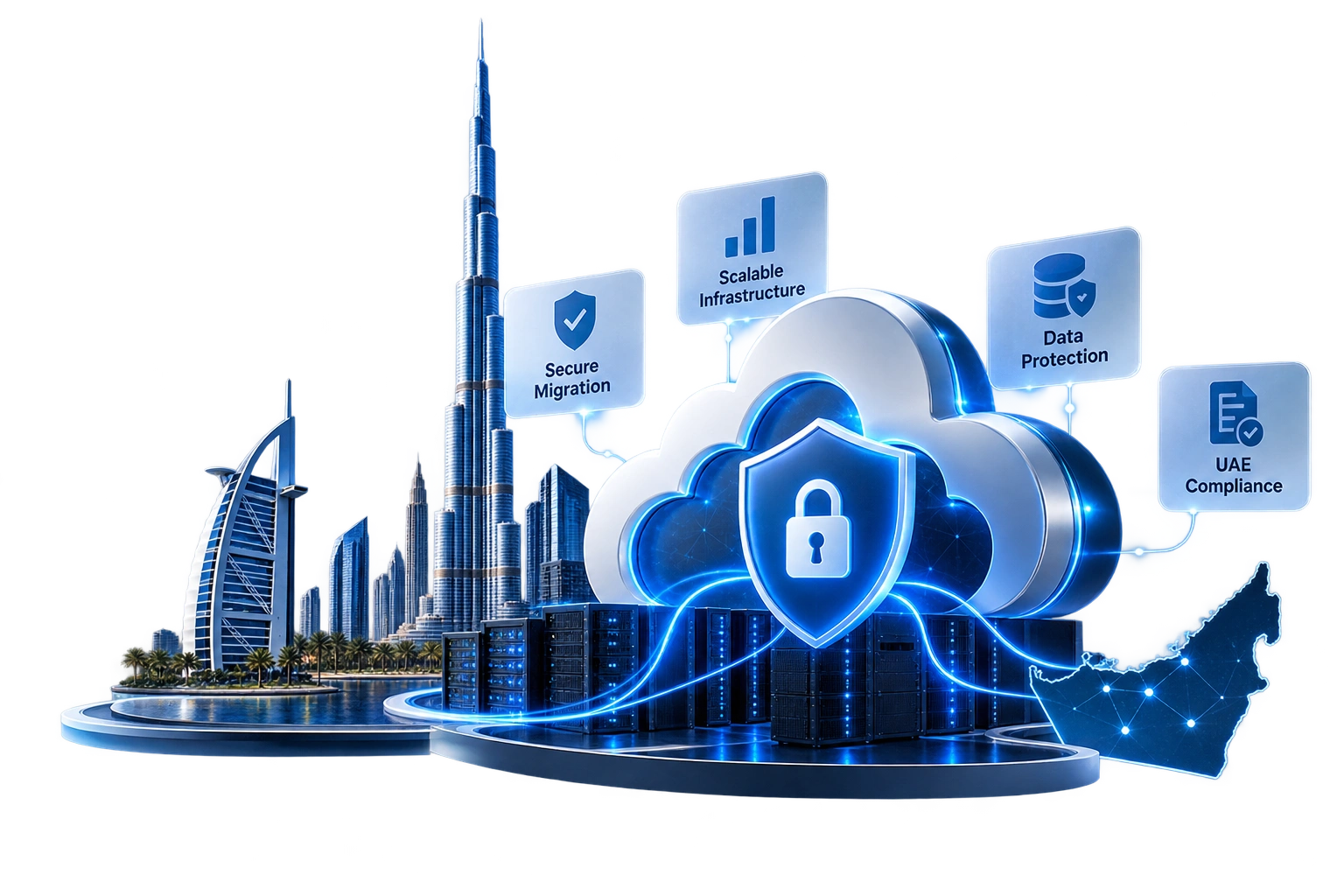
Security is planned into the migration itself, not applied afterward. We configure encryption in transit and at rest, IAM and access controls, network segmentation, monitoring and backup as part of the target architecture from day one.
Compliance requirements vary by industry, data classification and the specific regulations that apply to your organization — there's no single checklist that covers every UAE enterprise. We work with your compliance and legal teams to identify what applies to your migration and design controls accordingly, rather than assuming a generic security baseline is sufficient.
How Much Does Cloud Migration Cost in UAE?
Cloud migration cost in UAE depends on workload volume, data volume, application complexity and the migration strategy chosen for each system. There's no fixed price — a rehost of ten servers costs very differently from refactoring a legacy application estate.
| Cost Factor | Why It Matters |
|---|---|
| Number of servers & VMs | More assets to inventory, replicate and cut over increases project scope |
| Data volume | Larger datasets need more transfer time, bandwidth and validation effort |
| Application complexity | Applications with many dependencies require more testing and coordination |
| Database architecture | Schema complexity and database size affect migration tooling and timeline |
| Migration strategy (7R) | Rehosting is typically faster and cheaper than refactoring |
| Security & compliance requirements | Regulated data may require additional controls, adding to scope |
| Downtime tolerance | Near-zero downtime migrations require more replication tooling and planning |
| Modernization scope | Bundling modernization with migration extends timeline and cost |
| Cloud platform | AWS, Azure and Google Cloud pricing models differ for compute, storage and data transfer |
| Ongoing support | Post-migration monitoring and optimization is typically a separate, recurring cost |
Cloud Migration Services for UAE Industries
SISGAIN delivers industry-focused cloud migration services across the UAE, aligning migration strategy with your applications, data, compliance requirements and operational priorities. From healthcare and fintech to aviation, logistics and government, we help organizations modernize infrastructure, reduce migration risks and move critical workloads to scalable cloud environments.
Healthcare
Healthcare organizations need secure, resilient cloud environments for patient records, medical imaging, clinical applications and connected healthcare systems. SISGAIN plans migrations around clinical operations, prioritizing data integrity, availability, security and controlled cutovers while helping healthcare providers build scalable infrastructure for digital health services.
Fintech
Fintech companies require cloud infrastructure capable of supporting transaction-heavy applications, financial data, APIs and real-time services. SISGAIN designs migration strategies around security, scalability, performance and regulatory requirements, helping fintech businesses modernize legacy infrastructure while maintaining application availability and operational continuity.
Aviation
Aviation businesses depend on highly available systems for flight operations, fleet management, MRO, passenger services and enterprise applications. SISGAIN enables structured cloud migrations that account for complex integrations, operational dependencies and availability requirements, helping aviation organizations modernize infrastructure without disrupting mission-critical operations.
Real Estate
Real estate organizations increasingly rely on CRM platforms, property management systems, customer portals, document repositories and analytics applications. SISGAIN helps migrate these workloads to scalable cloud environments while improving accessibility, integration capabilities, performance and infrastructure flexibility across property portfolios and distributed teams.
Logistics
Logistics companies require continuously available systems for fleet tracking, warehouse management, route optimization, shipment visibility and supply chain operations. SISGAIN uses phased migration strategies to protect operational continuity, minimize downtime and create scalable cloud infrastructure capable of supporting growing transaction and tracking volumes.
Gaming
Gaming businesses need high-performance infrastructure capable of handling unpredictable traffic, real-time interactions, player data and content delivery. SISGAIN helps gaming companies migrate applications and supporting workloads to scalable cloud environments designed for performance, availability, security and rapid expansion across growing user bases.
Food & Beverages
Food and beverage businesses depend on POS, inventory, procurement, ordering, delivery and ERP systems that connect multiple locations and operational teams. SISGAIN migrates these workloads to scalable cloud platforms, helping businesses improve system availability, centralized management, integration and infrastructure performance across their operations.
Travel
Travel companies operate booking platforms, customer applications, payment systems, APIs and partner integrations that require reliable infrastructure and scalability. SISGAIN helps travel businesses migrate these workloads securely while improving performance, availability and flexibility to handle seasonal demand and rapidly changing transaction volumes.
Fitness
Fitness businesses increasingly depend on mobile applications, membership platforms, scheduling systems, connected devices and customer data. SISGAIN provides cloud migration strategies that improve scalability, system availability and integration, helping gyms, fitness chains and digital wellness platforms support growing memberships and connected experiences.
eCommerce
eCommerce platforms require cloud infrastructure that can scale rapidly during campaigns, seasonal peaks and high-volume transactions. SISGAIN migrates storefronts, databases, inventory systems and supporting applications while prioritizing performance, availability, security and scalability for seamless customer experiences and continued online revenue generation.
Government Sector
Government organizations manage citizen services, legacy applications, databases and interconnected departmental platforms requiring strong security and controlled migration processes. SISGAIN helps government entities modernize infrastructure through structured cloud migration strategies focused on availability, data protection, system integration and scalable digital service delivery.
Mining
Mining companies operate complex environments connecting enterprise applications, fleet systems, operational data and remote-site infrastructure. SISGAIN helps migrate suitable workloads to secure, scalable cloud environments, enabling centralized visibility, stronger infrastructure resilience and improved access to data across geographically distributed mining operations.
Media & Entertainment
Media and entertainment companies manage large content libraries, streaming platforms, digital production workflows and audience-facing applications. SISGAIN enables cloud migration strategies designed for high-volume data, rapid content delivery and variable demand, helping businesses improve scalability, performance and infrastructure flexibility.
Hospitality
Hospitality organizations depend on property management systems, booking engines, guest applications, POS platforms and third-party integrations. SISGAIN helps hotels and hospitality groups migrate these systems to scalable cloud environments while improving availability, integration, operational visibility and infrastructure performance across multiple properties.
Education
Educational institutions manage learning platforms, student information systems, digital classrooms, collaboration tools and large data repositories. SISGAIN helps migrate these workloads to scalable cloud infrastructure, improving accessibility, performance and reliability while supporting remote learning, digital administration and growing technology requirements.
Telecommunications
Telecommunications companies require resilient infrastructure for customer platforms, network applications, billing systems, analytics and high-volume data processing. SISGAIN provides structured cloud migration strategies that support scalability, integration and operational continuity while helping telecom organizations modernize infrastructure and optimize technology environments.
Sports
Sports organizations increasingly rely on fan engagement platforms, ticketing systems, performance analytics, streaming services and mobile applications. SISGAIN helps migrate these workloads to scalable cloud infrastructure, enabling organizations to handle traffic spikes, improve application performance and deliver connected digital experiences to audiences.
Retail
Retail businesses depend on POS, inventory, ERP, customer applications and eCommerce integrations that must remain available throughout business operations. SISGAIN provides cloud migration services that improve infrastructure scalability, centralized management and application performance while helping retailers support omnichannel growth and changing customer demand.
Agribusiness
Agribusiness organizations use ERP, supply chain, farm management, IoT and analytics platforms to manage distributed operations. SISGAIN helps migrate suitable workloads to scalable cloud environments, improving data accessibility, system integration and operational visibility while creating infrastructure capable of supporting technology-driven agricultural growth.
Utilities
Utilities require reliable infrastructure for asset management, customer platforms, monitoring systems, analytics and operational applications. SISGAIN helps utility organizations modernize suitable workloads through structured cloud migrations focused on resilience, scalability, data accessibility and integration while maintaining continuity across critical business operations.
Cloud Migration Technology Stack
Technologies and platforms relevant to our cloud migration engagements include the following. Specific tools used on any engagement depend on the target platform, existing environment and workload requirements identified during assessment.


Why Choose SISGAIN as Your Cloud Migration Provider in Dubai?
Choosing a cloud migration provider in Dubai means evaluating actual migration capability, not marketing language. SISGAIN's approach centers on structured assessment, security-first architecture and workload-specific planning — the factors that determine whether a migration succeeds or stalls.
Enterprise Cloud Migration Expertise
We plan migrations around enterprise-scale complexity — multiple applications, interdependent systems and legacy infrastructure — rather than treating every migration as a simple lift-and-shift exercise.
AWS, Azure & Google Cloud Capability
Our team works across all three major cloud platforms, which means the target platform is chosen based on your workloads and existing investments, not limited to whichever platform we happen to specialize in.
Security-First Migration Planning
Identity, network segmentation and encryption are designed into the target architecture from the start of the engagement, not bolted on after workloads have already moved.
Minimal Business Disruption
Migrations are sequenced in phases with pilot testing and rollback plans, so production systems keep running while the migration is in progress rather than requiring extended downtime windows.
Cloud Modernization Beyond Lift-and-Shift
Once workloads are stable in the cloud, we identify realistic modernization opportunities — managed services, containerization, auto-scaling — scoped as a distinct phase rather than bundled in blindly.
Cost & Performance Optimization
Post-migration, we review instance sizing, storage tiers and reserved capacity against actual usage data, leveraging FinOps for cloud cost control and treating cost optimization as an ongoing discipline rather than a one-time exercise.
Post-Migration Support
Migration doesn't end at cutover. We provide comprehensive managed cloud services, ongoing monitoring and support so issues surfacing after go-live are addressed by the team that already understands the environment.
UAE-Based Business Understanding
Operating in Dubai means our team understands the regulatory environment, business hours and operational context UAE enterprises work within, which shapes how we plan cutover windows and support schedules.
What Makes SISGAIN a Strong AWS Cloud Migration Company in Dubai?
Evaluating an AWS cloud migration company in Dubai comes down to a few concrete factors, not slogans. UAE enterprises should assess partners on documented methodology, security practices and what happens after go-live — the details that separate a completed migration from a stalled one.
When evaluating an AWS migration partner, look for:
- AWS platform expertise — familiarity with EC2, RDS, VPC, IAM and AWS-native migration tooling, not just general cloud knowledge
- A documented migration methodology — a repeatable assessment-to-cutover process, not an ad hoc approach decided project by project
- Security-first architecture — IAM, network segmentation and encryption designed in from the start
- Automation capability — using AWS Migration Hub, Application Migration Service and Infrastructure as Code to reduce manual error
- Cost optimization discipline — reviewing instance sizing and reserved capacity after migration, not just at initial sizing
- Modernization guidance — the ability to identify when refactoring or containerization genuinely adds value, versus recommending it by default
- Post-migration support — a plan for monitoring and troubleshooting after cutover, not a handoff the moment workloads move
- Industry understanding — familiarity with the compliance and operational constraints specific to your sector
SISGAIN's AWS migration approach is built around these criteria — structured assessment, secure architecture and support that continues past go-live.
Real Business Results Delivered Across the UAE
Explore how SISGAIN Technologies helps organizations accelerate digital transformation through AI, custom software, cloud modernization, and enterprise solutions that deliver measurable business outcomes.
AkosMD
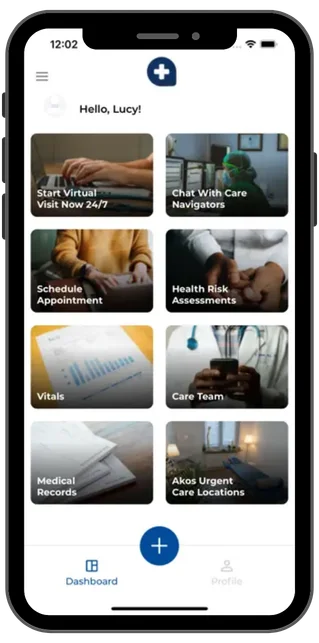
Developed a unified healthcare platform combining EMR, telemedicine, and remote patient monitoring to streamline patient care. Doctors can access real-time medical records, vitals, and treatment history from a centralized database while providing 24/7 telehealth services.
- Centralized Electronic Medical Records (EMR)
- 24/7 video & chat telemedicine consultations
- Real-time patient vitals monitoring
- Secure doctor-patient data access
- Treatment history tracking across visits
HealthNeutron
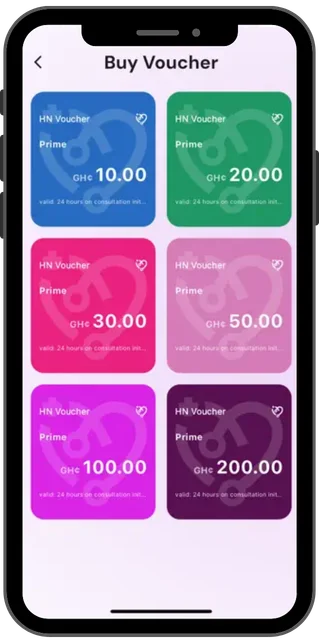
Built a comprehensive digital health platform integrating telemedicine, mobile lab services, and preventive health screening. Patients can consult doctors through video, voice, or chat while also scheduling home lab sample collection.
- Video, voice & chat doctor consultations
- On-demand home lab sample collection
- Preventive health screening programs
- Digital health records management
- Appointment scheduling & reminders
Tawuniya
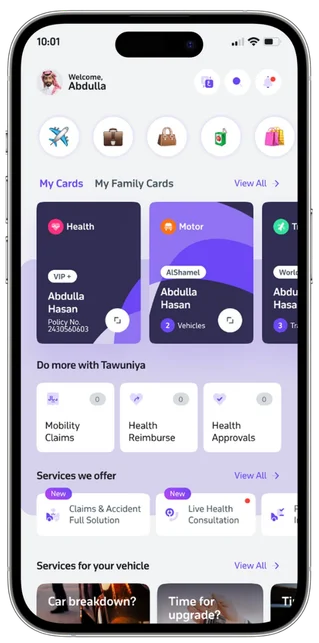
Developed a telemedicine platform integrated with the insurance ecosystem, allowing members to access virtual healthcare directly through their insurance policies while automating claims processing and policy management.
- Insurance-integrated virtual healthcare access
- Automated claims processing workflows
- Policy management dashboard for members
- Direct provider-insurer data sync
- Faster reimbursement turnaround
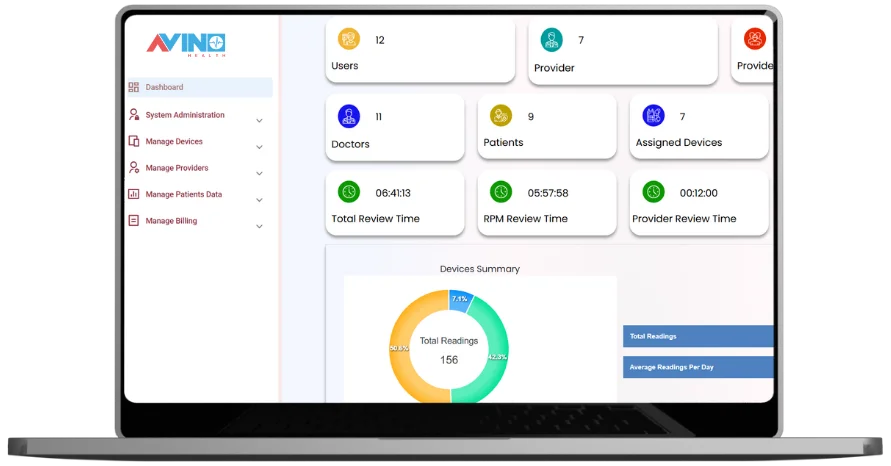
AvinoHealth
Created a cross-platform Remote Patient Monitoring (RPM) application enabling continuous vitals tracking through cellular-enabled medical devices. Clinicians receive real-time alerts when patient readings cross risk thresholds, enabling faster medical intervention.
- Continuous remote vitals tracking
- Cellular-enabled medical device integration
- Real-time clinician risk alerts
- EHR system synchronization
- Cross-platform mobile & web access
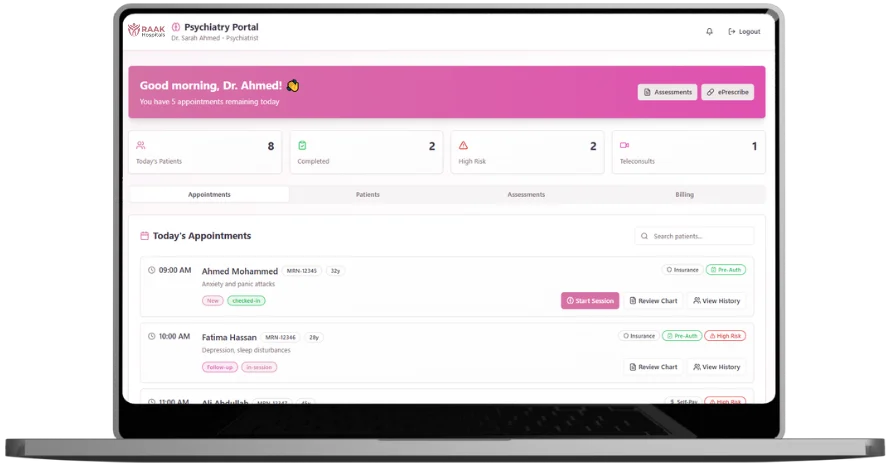
RAK Hospital
Designed a comprehensive Hospital Information System (HIS) to unify clinical, operational, and administrative workflows across departments. The platform integrates modules for patient records, lab management, pharmacy, billing, scheduling, and inventory.
- Unified clinical & administrative workflows
- Lab, pharmacy & billing module integration
- Centralized patient records system
- AI-powered resource utilization insights
- Department-wide scheduling & inventory
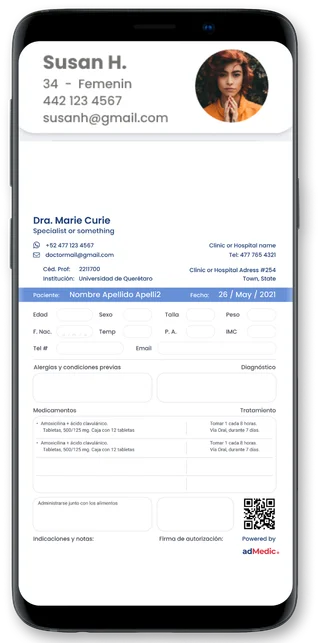
adMedic
Developed an advanced Remote Patient Monitoring platform integrated with OxiTone devices enabling continuous health tracking with automated alerts for abnormal readings.
- OxiTone device integration
- Continuous vitals health tracking
- Automated abnormal reading alerts
- Patient health history dashboard
- Secure cloud-based data storage
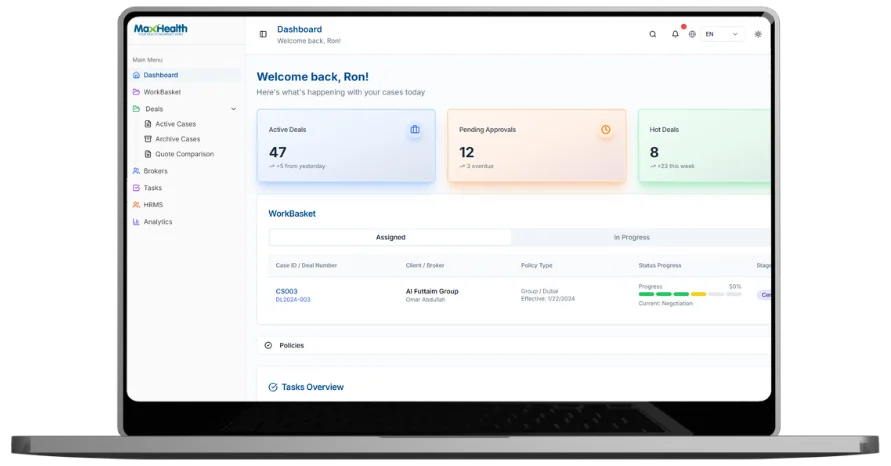
MaxHealth CRM
Built a customized CRM platform to manage business projects, sales pipelines, and client relationships in a centralized system. The solution replaced fragmented spreadsheets with real-time dashboards and automated workflows.
- Centralized sales pipeline management
- Real-time performance dashboards
- Automated lead & proposal tracking
- Client communication logs in one place
- Milestone & project tracking tools
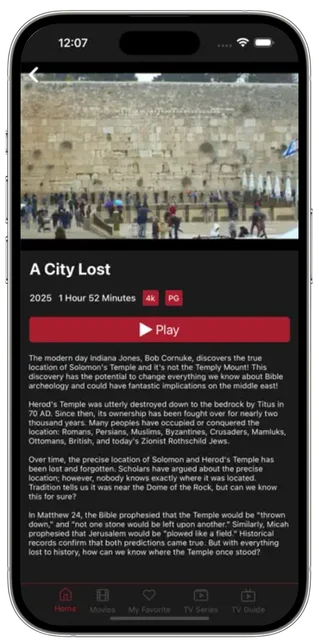
ReDiscover TV
Developed an OTT streaming platform bringing live TV and on-demand content into a single interface supporting Smart TVs, mobile apps, and Android devices.
- Live TV & on-demand content in one app
- Smart TV, mobile & Android support
- Personalized content recommendations
- Multi-device synced viewing experience
- Scalable cloud streaming infrastructure

TELUS TV+
Created a scalable OTT platform delivering live TV, on-demand content, and third-party streaming integrations across multiple devices with cloud-based architecture.
- Live TV with on-demand content library
- Third-party streaming app integrations
- Cloud-based scalable architecture
- Cross-device playback continuity
- High-availability content delivery
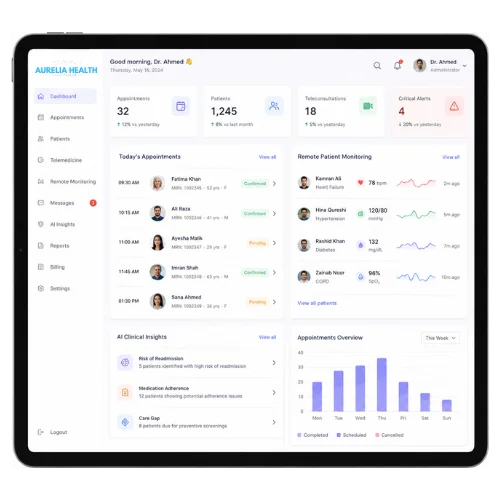
CareCloud
Developed a cloud-native healthcare ecosystem integrating EMR, telemedicine, patient engagement, remote monitoring, and AI-powered clinical insights to improve care coordination and operational efficiency.
- Cloud-native EMR & telemedicine suite
- AI-powered clinical insights engine
- Remote patient monitoring tools
- Improved care coordination workflows
- Patient engagement portal
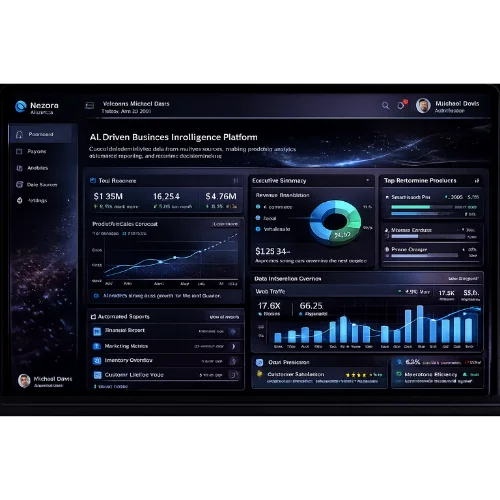
Nexora Analytics
Built an AI-driven business intelligence platform that consolidated enterprise data from multiple sources, enabling predictive analytics, automated reporting, and real-time decision-making across departments.
- Multi-source enterprise data consolidation
- AI-powered predictive analytics
- Automated reporting workflows
- Real-time decision-making dashboards
- Department-wide data visibility
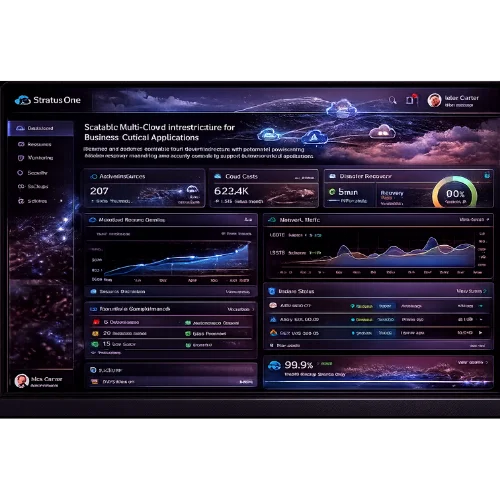
StratusOne
Designed and deployed a scalable multi-cloud infrastructure with automated provisioning, disaster recovery, monitoring, and security controls to support business-critical applications with high availability.
- Multi-cloud scalable infrastructure
- Automated provisioning & deployment
- Disaster recovery & failover systems
- 24/7 infrastructure monitoring
- Enterprise-grade security controls
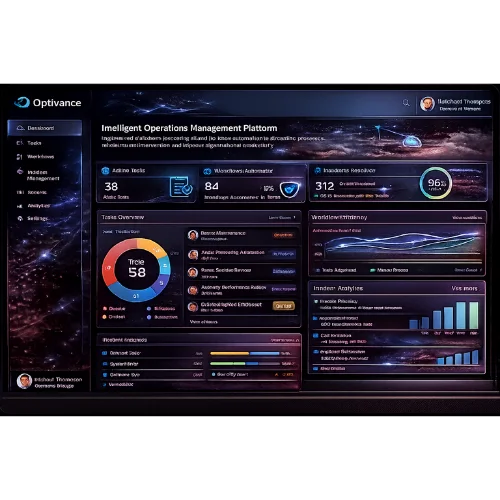
Optivance
Implemented an intelligent operations management platform leveraging AI and workflow automation to streamline processes, reduce manual intervention, and improve organizational productivity.
- AI-powered workflow automation
- Reduced manual process intervention
- Operations performance dashboards
- Cross-team productivity tracking
- Streamlined process management
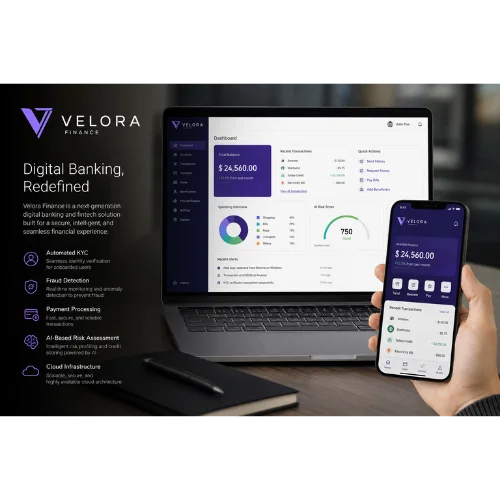
Velora Finance
Developed a secure digital banking and fintech solution featuring automated KYC, fraud detection, payment processing, AI-based risk assessment, and cloud-hosted infrastructure for seamless scalability.
- Automated KYC verification
- AI-based fraud detection engine
- Secure payment processing
- AI-driven risk assessment models
- Cloud-hosted scalable banking infra
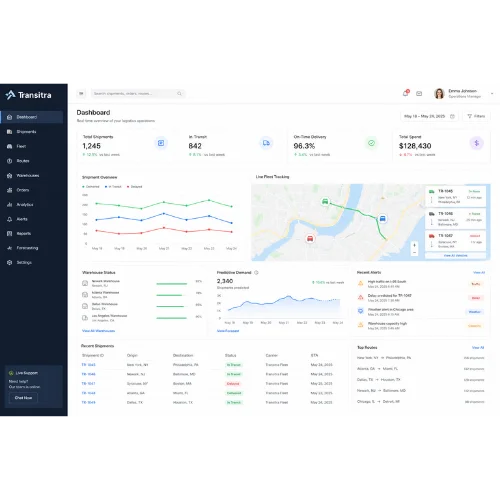
Transitra
Created an end-to-end logistics and supply chain management platform with route optimization, fleet tracking, warehouse automation, predictive demand forecasting, and real-time operational visibility.
- AI-driven route optimization
- Real-time fleet tracking
- Automated warehouse operations
- Predictive demand forecasting
- End-to-end supply chain visibility
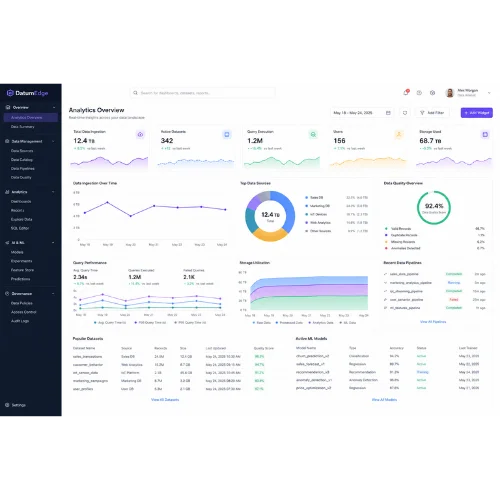
DatumEdge
Implemented a centralized data lake and analytics platform enabling organizations to collect, process, and visualize large-scale business data while supporting AI and machine learning initiatives.
- Centralized enterprise data lake
- Large-scale data processing pipelines
- Interactive data visualization dashboards
- ML & AI model integration support
- Scalable cloud data architecture
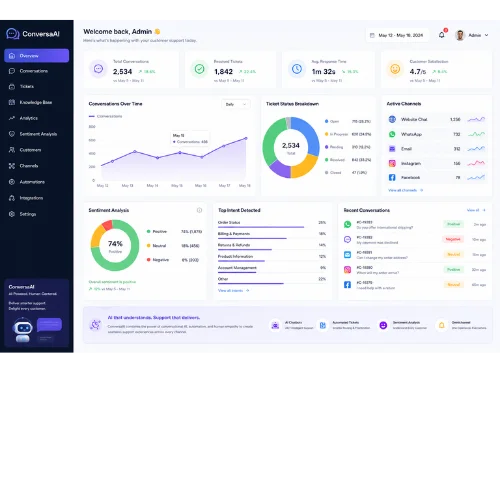
ConversaAI
Created an AI-powered customer support ecosystem featuring conversational chatbots, automated ticket management, sentiment analysis, and omnichannel communication to improve service delivery.
- AI conversational chatbot support
- Automated ticket routing & management
- Real-time sentiment analysis
- Omnichannel customer communication
- Faster service resolution times
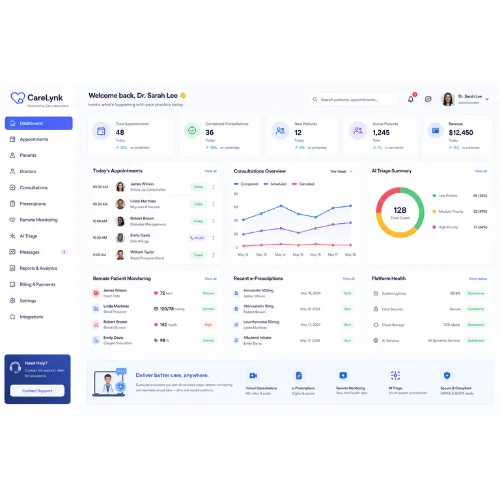
CareLynk
Designed a telehealth platform combining virtual consultations, electronic prescriptions, remote patient monitoring, AI-assisted triage, and secure cloud hosting for healthcare providers.
- Virtual doctor consultations
- Electronic prescription management
- AI-assisted patient triage
- Remote patient monitoring tools
- Secure cloud-hosted infrastructure
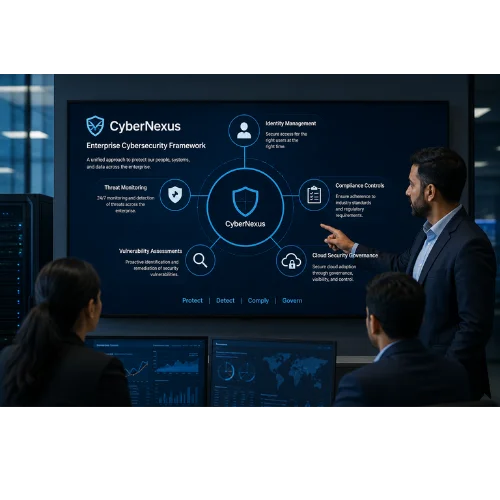
CyberNexus
Established an enterprise cybersecurity framework incorporating identity management, threat monitoring, vulnerability assessments, compliance controls, and cloud security governance.
- Identity & access management
- 24/7 threat monitoring
- Regular vulnerability assessments
- Regulatory compliance controls
- Cloud security governance framework
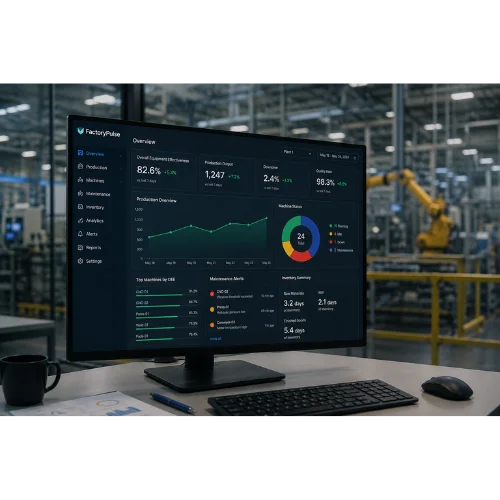
FactoryPulse
Built a smart manufacturing solution integrating IoT devices, production monitoring, predictive maintenance, inventory optimization, and AI-driven operational analytics.
- IoT-connected production monitoring
- Predictive maintenance alerts
- Real-time inventory optimization
- AI-driven operational analytics
- Factory-wide performance dashboard
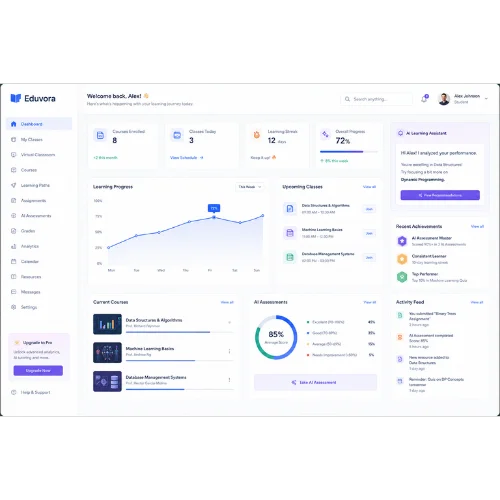
Eduvora
Developed a modern learning platform featuring virtual classrooms, adaptive learning paths, AI-powered assessments, student analytics, and cloud-based content delivery.
- Live virtual classroom sessions
- Adaptive personalized learning paths
- AI-powered student assessments
- Detailed student performance analytics
- Cloud-based content delivery
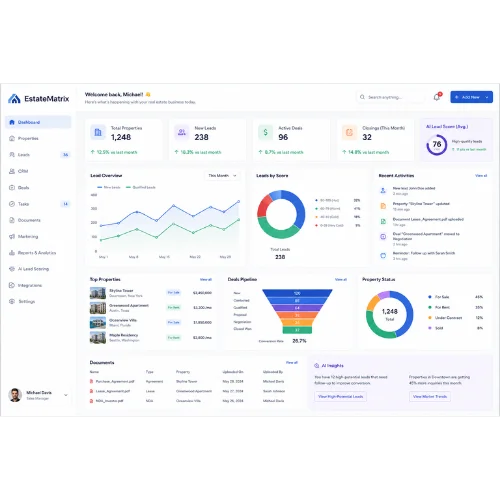
EstateMatrix
Created a real estate management ecosystem supporting property listings, CRM, document management, AI-powered lead scoring, and analytics for enhanced sales performance.
- Centralized property listings management
- Built-in CRM for sales teams
- AI-powered lead scoring
- Digital document management
- Sales performance analytics
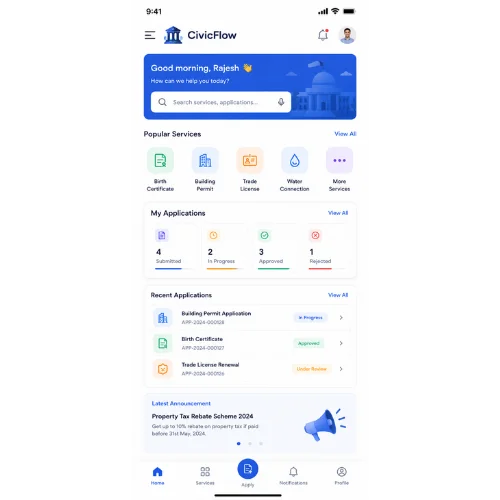
CivicFlow
Implemented a digital transformation platform for public sector organizations, streamlining citizen services, workflow automation, document management, and cloud-based governance systems.
- Streamlined citizen service delivery
- Government workflow automation
- Digital document management
- Cloud-based governance systems
- Improved public sector transparency

PipelineX
Established a CI/CD-driven DevOps framework with automated testing, containerization, Kubernetes orchestration, infrastructure as code, and cloud deployment pipelines for faster software releases.
- Automated CI/CD pipelines
- Containerization & Kubernetes orchestration
- Infrastructure as code (IaC) setup
- Automated testing frameworks
- Faster, reliable software releases
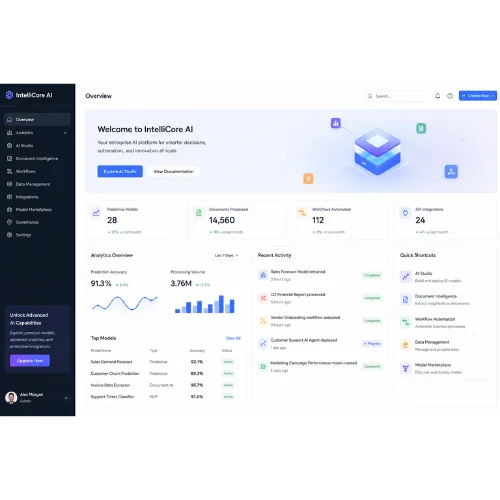
IntelliCore AI
Developed an enterprise AI platform enabling predictive analytics, generative AI integrations, intelligent document processing, and workflow automation across business functions.
- Predictive analytics engine
- Generative AI integrations
- Intelligent document processing
- Cross-functional workflow automation
- Enterprise-wide AI adoption support
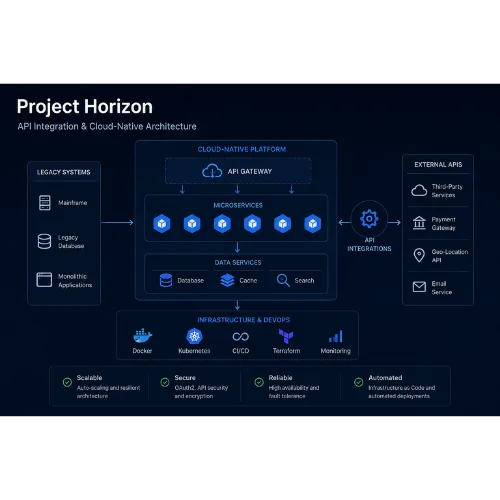
Project Horizon
Transformed legacy systems into scalable cloud-native applications using microservices architecture, API integrations, containerized deployments, and automated infrastructure management.
- Legacy to cloud-native migration
- Microservices architecture design
- Seamless API integrations
- Containerized application deployments
- Automated infrastructure management
Ready to Migrate Your Infrastructure to the Cloud?
If your organization is planning a move to AWS, Azure or Google Cloud, SISGAIN can help you assess readiness, build a migration roadmap and execute a secure migration with minimal disruption to your UAE or Dubai operations.

Frequently Asked Questions About Cloud Migration
The right strategy depends on your applications, infrastructure, budget, compliance requirements and modernization goals. SISGAIN assesses workloads and recommends approaches such as rehost, replatform, refactor, repurchase, retain or retire based on business and technical priorities.
The 7 Rs commonly include rehost, replatform, refactor, repurchase, retire, retain and relocate. A professional cloud migration consulting service in UAE evaluates each workload individually to determine the approach that provides the best balance of cost, risk, performance and modernization.
Rehosting, or lift-and-shift, can be suitable when organizations need to move workloads quickly without significant application changes. Cloud migration services in UAE can assess application dependencies and determine whether rehosting provides sufficient business value or whether modernization would be more beneficial.
Not necessarily. Replatforming involves making limited changes to take advantage of cloud capabilities, while rehosting focuses primarily on moving existing workloads. A cloud migration provider in Dubai can compare both approaches based on performance, cost, complexity and long-term objectives.
Yes. SISGAIN can structure a migration roadmap around your existing infrastructure, applications, databases, dependencies, business priorities and target cloud platform. The roadmap can define migration waves, architecture requirements, testing, cutover planning and post-migration optimization.
Yes. Not every legacy workload needs complete modernization before migration. Infrastructure migration services can prioritize workloads for rehosting, replatforming or modernization while identifying systems that should remain temporarily on-premises or be replaced.
SISGAIN provides cloud migration services covering infrastructure, servers, virtual machines, applications, databases, storage, data, networking and disaster recovery environments. Migration strategies can support AWS, Microsoft Azure, Google Cloud and hybrid or multi-cloud architectures.
Infrastructure migration focuses on moving servers, virtual machines, networks, storage and supporting environments. Application migration focuses on moving or modernizing software applications and their dependencies. Both may be required as part of a complete enterprise cloud migration.
Yes. Database migration can include platforms such as Oracle, SQL Server, PostgreSQL, MySQL and MongoDB. Migration planning considers compatibility, replication, data integrity, downtime requirements, security and the target database architecture.
Yes. AWS migration services in UAE can cover discovery, readiness assessment, landing-zone planning, server and application migration, database migration, security configuration, testing, cutover and post-migration optimization.
Yes. Businesses can migrate selected workloads while retaining others in existing data centers or different cloud environments. Hybrid and multi-cloud strategies can help organizations address application requirements, compliance considerations, resilience and technology dependencies.
Yes. Cloud migration services in Dubai can support cloud-to-cloud migrations where there is a valid business or technical reason to move workloads between AWS, Azure, Google Cloud or other environments. The migration approach depends on workload compatibility, architecture and dependencies.
Cloud migration costs vary according to workload volume, infrastructure complexity, applications, databases, data volume, migration strategy and required modernization. A professional assessment provides a more accurate project estimate based on your current environment and target architecture.
Cloud migration can reduce certain infrastructure expenses by shifting from owned hardware toward consumption-based services and by optimizing compute, storage and database resources. However, savings depend on architecture, workload utilization, licensing and ongoing cloud management.
ROI depends on factors including infrastructure savings, operational efficiency, application performance, scalability and reduced maintenance requirements. A cloud migration consulting service in UAE can model expected costs and benefits before migration to support investment decisions.
A strong business case should compare current infrastructure costs with projected cloud costs while considering productivity, modernization, scalability, security, resilience and operational benefits. SISGAIN can help organizations evaluate workloads and develop a migration roadmap aligned with business objectives.
AWS migration can be cost-effective when workloads are properly assessed, architected and optimized. AWS cloud migration in Dubai should include workload sizing, licensing considerations, architecture planning, storage optimization and ongoing cost management rather than simply moving existing infrastructure to AWS.
Start by inventorying servers, applications, databases, storage, network dependencies and licensing requirements. A migration assessment can then identify workload complexity, migration strategy and estimated cloud resources to develop a more realistic project and operating-cost model.
Common risks include data loss, unexpected downtime, application compatibility issues, security gaps, integration failures, cost overruns and insufficient testing. A structured migration plan reduces these risks through dependency mapping, backups, testing, phased migration and controlled cutover procedures.
Downtime can be minimized through phased migration, replication, parallel environments, testing and carefully planned cutovers. The appropriate approach depends on application architecture and business requirements. Critical workloads may require specific high-availability and rollback strategies.
Data protection can include encryption in transit and at rest, secure connectivity, access controls, backups, identity management, monitoring and validation procedures. Migration controls should be designed around the sensitivity of the data and applicable organizational and regulatory requirements.
Cloud migration can support strong security controls when the target architecture is properly designed. Security should cover identity, network segmentation, encryption, logging, monitoring, vulnerability management and access policies throughout discovery, migration and post-migration operations.
Potentially, depending on the workload, applicable regulations and target architecture. AWS cloud migration in Dubai should incorporate appropriate security, access, data-handling, audit and governance controls based on the organization's regulatory and contractual obligations.
Migration plans can incorporate backups, replication, validation checkpoints and rollback procedures. Before production cutover, applications and databases should be tested against defined acceptance criteria so teams have a controlled recovery path if issues occur.
A typical process includes discovery, infrastructure assessment, dependency mapping, migration strategy, target architecture, pilot migration, workload migration, testing, cutover and post-migration optimization. The exact sequence varies according to workload complexity and business requirements.
There is no universal timeline. A small workload may migrate relatively quickly, while enterprise environments with hundreds of applications, complex databases and legacy dependencies require phased migration programs. An assessment provides a more realistic timeline based on actual infrastructure.
The assessment typically reviews infrastructure, applications, databases, dependencies, utilization, security requirements, technical compatibility and business priorities. The findings help determine migration readiness, suitable migration strategies, target architecture and the recommended migration sequence.
Yes. Cloud migration services in Dubai can cover assessment, strategy, architecture, infrastructure migration, application and database migration, testing, cutover and post-migration optimization. The scope can be tailored around individual workloads or broader enterprise transformation programs.
Evaluate providers based on technical expertise, migration methodology, cloud-platform capabilities, security practices, experience with similar workloads, communication processes and post-migration support. A strong cloud migration provider in Dubai should be able to explain both the technical roadmap and expected business outcomes.
SISGAIN approaches cloud migration around business objectives, workload requirements and technical dependencies rather than using a one-size-fits-all model. The team can support assessment, strategy, infrastructure migration, application modernization and optimization across major cloud environments.