17 Years of Software Expertise — 500+ Happy Clients | Across 25+ Industries. EXPLORE NOW! 17 Years of Software Expertise — 500+ Happy Clients | Across 25+ Industries. EXPLORE NOW! 17 Years of Software Expertise — 500+ Happy Clients | Across 25+ Industries. 17 Years of Software Expertise — 500+ Happy Clients | Across 25+ Industries. EXPLORE NOW! 17 Years of Software Expertise — 500+ Happy Clients | Across 25+ Industries. EXPLORE NOW! 17 Years of Software Expertise — 500+ Happy Clients | Across 25+ Industries.
Our Services
500+Projects Delivered
40+Countries Served
200+Expert Developers
98%Client Satisfaction
Didn't find what you're looking for? Let us know your needs, and we'll tailor a solution just for you.

Don't see your industry? We serve every sector - let us know your needs and we'll tailor a solution.

Computer Vision Solutions Company

Transform images and videos into actionable business intelligence with enterprise-grade computer vision solutions powered by AI, deep learning, and real-time analytics.

  • Custom Computer Vision Development
  • OCR & Document Intelligence
  • Image & Video Analytics
  • Facial Recognition Systems
  • Object Detection & Recognition
  • Industrial Vision Automation
City street with vehicles and pedestrians analyzed by computer vision AI
LIVE FEED 00:00:00
Vehicle 0.97
Vehicle 0.94
Person 0.92
Person 0.89
Object Detection
Vehicles 0
People 0
Bicycles 0
Face Recognition

face recognition
Match Confidence 0%
Analytics Overview
Detections / hr0
ModelYOLOv11
StatusRunning
Inference24 ms
FPS48
GPU92%
Healthcare
Retail
Manufacturing
Logistics
Smart Cities


Trusted by startups, enterprises and government organizations worldwide.

Akos
Avino
CMC Limited
GSS
Health Neutron
i-Billed
Indie Chain
Mahindra
Maxcare Health
Model Craft Group
Niros
Tawuniya
Tawuniya Logo
Akos
Avino
CMC Limited
GSS
Health Neutron
i-Billed
Indie Chain
Mahindra
Maxcare Health
Model Craft Group
Niros
Tawuniya
Tawuniya Logo

What Are Computer Vision Solutions?

Computer vision solutions are AI systems that interpret visual information — images, video, scanned documents — and convert it into structured data a business can act on automatically. Instead of a person watching a camera feed or manually checking a form, a trained model identifies objects, reads text, detects anomalies, or tracks movement in real time.

At its core, computer vision combines three technical layers that work together to produce a usable business outcome.

Raw Image
AI Processing
Deep Learning
Business Output

AI Image Processing

Before any analysis happens, raw images and video frames are cleaned, normalized, and prepared — adjusting for lighting, resolution, noise, and camera angle. This preprocessing step determines how reliable every downstream prediction will be.

Deep Learning Vision Models

Modern computer vision relies on deep learning — neural networks trained on large volumes of labeled images to recognize patterns far more reliably than handcrafted rules, powering everything from facial recognition to defect detection.

Video Intelligence

Video intelligence extends image-level analysis across time, tracking objects, counting movement, and recognizing activities across a continuous stream — essential for queue management, security monitoring, and traffic analytics.

Business Applications

In practice, this technology replaces slow, manual visual inspection with consistent, automated, and auditable decision-making — from inventory counts to abnormal scan flags to defective unit detection.

Our Computer Vision Development Services

SISGAIN offers full-cycle computer vision development services in Dubai — from early feasibility assessment through production deployment and ongoing model maintenance. Each engagement is scoped around a specific business outcome rather than a generic AI proof of concept.

Custom Computer Vision Development

We build models trained specifically on your environment, your cameras, and your data — not generic pretrained models repackaged for your use case.

Object Detection & Tracking

Our object detection systems identify and track multiple items simultaneously across video frames, supporting vehicle counting, shelf monitoring, and perimeter security.

Facial Recognition Solutions

We develop facial recognition systems for access control, attendance management, and personalized customer experiences, architected to align with regional privacy regulations.

OCR & Intelligent Document Processing

Our OCR solutions extract structured data from invoices, ID documents, medical forms, and logistics paperwork — including multilingual and handwritten content.

Image Classification

We train classification models that sort images into business-relevant categories automatically, such as product condition grading, medical image triage, or content moderation.

Video Analytics

Our video analytics platforms turn live camera feeds into dashboards showing footfall, dwell time, queue length, and safety compliance, integrating with existing CCTV infrastructure.

Quality Inspection Automation

We build machine vision systems for manufacturing lines that detect surface defects, dimensional inconsistencies, and assembly errors at production speed.

Medical Image Analysis

Our teams develop diagnostic support tools for radiology, pathology, and ophthalmology, ensuring clinical-grade accuracy and compliance.

Retail Vision Solutions

We deliver shelf-monitoring, checkout automation, and customer analytics solutions that help retailers reduce out-of-stock incidents and understand in-store behavior.

Industrial Vision Systems

Our industrial vision systems support predictive maintenance, safety monitoring, and process automation, often deployed at the edge for low-latency decisions.

Ready to scope your computer vision project?

Computer Vision Capabilities

Beyond full solutions, SISGAIN provides modular computer vision capabilities that can be combined or deployed independently depending on the business requirement.

  • Image RecognitionIdentifies objects, products, or scenes within an image
  • Face DetectionLocates and verifies human faces within images or video
  • Pose EstimationMaps human body position and movement for safety or sports analysis
  • Object CountingTracks volume of items, people, or vehicles passing through a zone
  • Activity RecognitionIdentifies specific human actions or behaviors in video streams
  • Defect DetectionFlags surface, structural, or assembly defects on production lines
  • Barcode RecognitionReads barcodes and QR codes in variable lighting and angles
  • OCRConverts printed or handwritten text in images into structured data
  • Scene UnderstandingInterprets full scene context, including multiple objects and their relationships
Live factory feed analyzed by computer vision dashboard
Objects Detected1,246
Accuracy98.7%
Alerts3

Each capability above can be embedded into a broader AI vision system or delivered as a standalone microservice through our APIs, depending on your integration needs.

Industries We Serve

Our computer vision development services in Dubai support a broad range of sectors, each with distinct accuracy, compliance, and latency requirements.

Healthcare professional reviewing diagnostic imaging

Healthcare

Healthcare providers use computer vision for diagnostic imaging support, patient monitoring, and surgical assistance. We build models that flag anomalies in X-rays, MRIs, and pathology slides for clinician review. Every deployment is built around HIPAA and GDPR-aligned data handling, with HL7 and FHIR integration support.

Retail store shelves monitored by vision systems

Retail

Retailers deploy vision systems for shelf monitoring, checkout automation, and customer footfall analytics. Our models help identify out-of-stock shelves in real time without relying on personally identifiable tracking, reducing lost sales across multi-location chains.

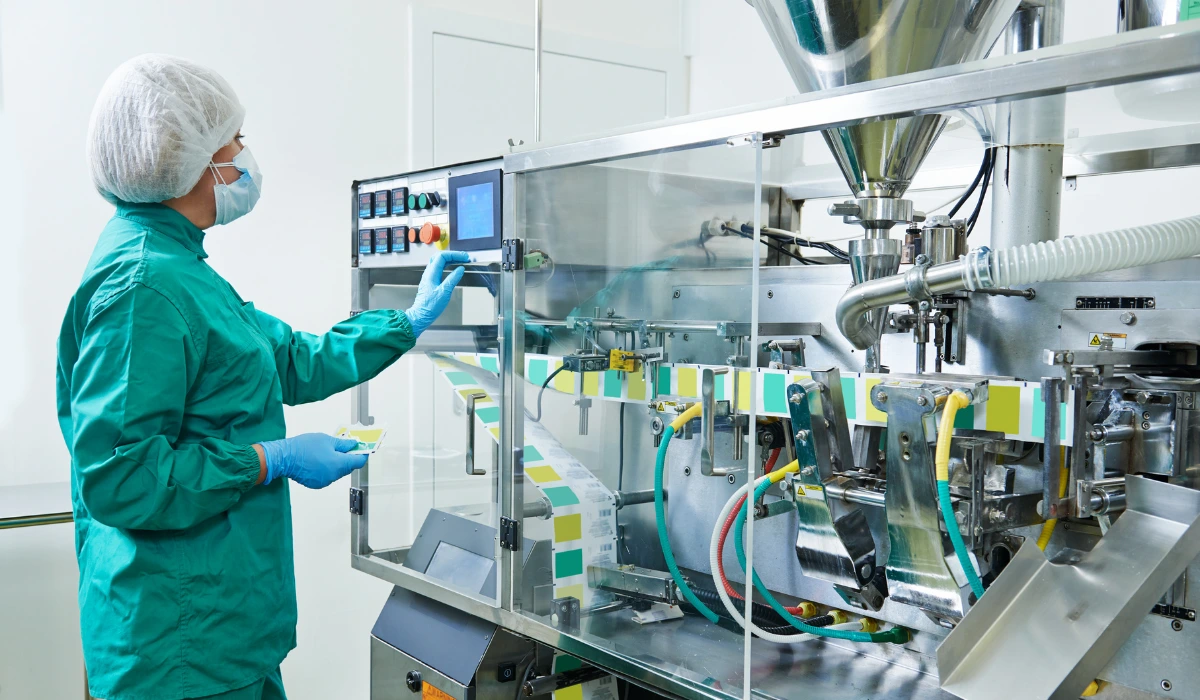
Manufacturing production line with quality inspection

Manufacturing

On the production floor, computer vision automates quality inspection, catching defects human inspectors miss at high line speeds. We integrate machine vision cameras with existing PLCs and MES systems, reducing scrap rates and warranty costs.

Automotive assembly line component verification

Automotive

Automotive manufacturers use computer vision for assembly verification, paint defect detection, and component traceability, plus driver monitoring and ADAS testing — optimized through edge AI for millisecond-level inference.

Drone monitoring crop health from above

Agriculture

Agricultural operations apply computer vision for crop health monitoring, pest detection, and yield estimation using drone and ground-level imagery, identifying disease patterns early to reduce crop loss.

Construction site safety monitoring

Construction

Construction firms use vision systems for site safety monitoring, equipment tracking, and progress verification, detecting missing PPE and unsafe zone entry in real time to reduce incident rates.

Warehouse logistics sorting and inventory

Logistics

Logistics and warehousing operations rely on computer vision for package sorting, damage detection, and automated inventory counts, integrating with conveyor and robotic sorting infrastructure.

Security surveillance camera monitoring a perimeter

Security

Security teams use vision systems for perimeter monitoring, intrusion detection, and access control verification, tuned to minimize false positives in night vision and crowded environments.

Education campus with students

Education

Educational institutions use computer vision for attendance automation, campus security, and accessibility tools for visually impaired students, designed with strict consent and data minimization principles.

Sports performance and player tracking analytics

Sports

Sports organizations use pose estimation and activity recognition for performance analytics, injury prevention, and automated highlight generation, supporting elite-level coaching decisions.

Government building and public infrastructure

Government

Government bodies deploy computer vision for traffic management, public safety monitoring, and smart infrastructure programs, aligned with public-sector compliance and data sovereignty requirements.

Dubai skyline representing smart city infrastructure

Smart Cities

Smart city programs use computer vision across traffic flow optimization, public space monitoring, and environmental sensing integrated with IoT infrastructure across the UAE and wider Gulf region.

Business Benefits of Computer Vision

Organizations adopt computer vision not for the technology itself, but for the measurable operational improvements it delivers.

Reduced manual labor costs

Automating visual inspection and monitoring tasks that previously required dedicated staff.

Higher accuracy and consistency

Eliminating fatigue-driven errors common in manual visual checks.

Faster decision-making

Real-time detection enables immediate action instead of delayed manual review.

Improved safety compliance

Continuous monitoring catches hazards that periodic human checks miss.

Better customer experience

Faster checkout, personalized service, and reduced wait times.

Stronger audit and compliance trails

Every detection event is logged, timestamped, and reviewable.

Scalability across locations

A trained model can be deployed across multiple sites without retraining staff.

Data-driven operational insight

Visual data becomes structured, analyzable business intelligence rather than unused footage.

Our Computer Vision Development Process

Every engagement follows a structured process designed to reduce delivery risk and ensure the final system performs reliably in production, not just in testing.

1. Discovery

Understanding the business problem and success criteria before discussing technical approach.

2. Requirement Analysis

Defining accuracy targets, latency requirements, and integration points.

3. Data Collection

Assessing existing visual data and sourcing or labeling additional training data.

4. Model Development

Selecting and adapting the most suitable architecture for your use case.

5. Training

Training on annotated datasets with iterative evaluation against benchmarks.

6. Testing

Rigorous testing against lighting variation, occlusion, and critical edge cases.

7. Deployment

Deploying to cloud, on-premise, or edge devices with staged rollout.

8. Monitoring

Tracking model performance against live data to catch accuracy drift.

9. Continuous Optimization

Structured retraining cycles to keep accuracy consistent over time.

Technologies We Use

We select technologies based on the specific performance, scalability, and compliance needs of each project rather than defaulting to a fixed stack.

AI & Deep Learning Frameworks
TensorFlowPyTorchOpenCVYOLO Detectron2MediaPipeSAMMMDetection

TensorFlow, PyTorch, and OpenCV form the backbone of most of our vision models, chosen for their flexibility across classification, detection, and segmentation tasks.

Cloud Platforms
AWSAzureGoogle Cloud

Scalable training infrastructure and managed AI services for large-scale model development and deployment.

Programming Languages
PythonC++JavaNode.js

Python remains our primary language, with C++ used for performance-critical inference components.

Deployment & Edge AI
DockerKubernetesEdge AI NVIDIA JetsonONNXIntel OpenVINO

Docker and Kubernetes package and scale vision models across cloud and on-premise environments, while NVIDIA Jetson and Intel OpenVINO enable real-time inference directly on cameras or local devices.

AI Models We Work With

Different vision tasks require different model architectures, and selecting the right one significantly affects both accuracy and cost.

CNNs (Convolutional Neural Networks)

The foundational architecture for most image classification and feature extraction tasks.

YOLO (You Only Look Once)

Ideal for real-time object detection where inference speed is critical, such as security and traffic monitoring.

Vision Transformers (ViT)

Used for complex scene understanding tasks requiring broader contextual awareness across an image.

U-Net & Segmentation Models

Applied in medical imaging and industrial inspection where pixel-level precision matters.

OCR Models

Tesseract and custom transformer-based OCR used for document automation across fonts, languages, and handwriting.

Pose Estimation Models

OpenPose and MediaPipe applied in sports analytics, safety monitoring, and accessibility applications.

Generative Models for Synthetic Data

Used to expand limited training datasets for rare defect types or edge cases.

Computer Vision Use Cases

The following examples illustrate how computer vision is applied across specific enterprise scenarios we have direct experience building for.

Medical Imaging

Automated flagging of abnormalities in radiology scans for clinician review.

Autonomous Vehicles

Object and lane detection supporting testing and validation environments.

Smart Manufacturing

Real-time defect detection integrated with automated reject sorting.

Warehouse Automation

Automated inventory counting and misplaced-item detection.

Retail Checkout

Vision-based checkout that identifies items without manual scanning.

Inventory Monitoring

Shelf-level stock monitoring that triggers restocking alerts.

Traffic Monitoring

Vehicle counting, congestion detection, and violation monitoring.

Smart Surveillance

Intrusion detection across large camera networks with low false positives.

Sports Analytics

Player tracking and movement analysis for coaching evaluation.

Drone Vision

Aerial inspection of infrastructure, crops, and construction sites.

Agriculture Monitoring

Crop health and pest detection to guide intervention timing.

Document Automation

OCR-driven extraction of structured data from invoices and contracts.

Why Choose SISGAIN?

Experienced AI Engineers
Industry Expertise
Custom Solutions
Secure AI Development
Cloud Native Deployment
End-to-End Support
Agile Methodology
Global Delivery

Proven Enterprise Delivery Experience

We have delivered AI and software systems across healthcare, manufacturing, and logistics, giving us practical understanding of the operational constraints enterprises actually face.

Compliance-First Engineering

Every computer vision system we build is architected with data privacy, security, and regulatory compliance considered from day one.

Custom Models, Not Generic Templates

We train models specifically on your data and environment, which consistently outperforms generic pretrained models in real-world accuracy.

Full-Stack AI Capability

Beyond computer vision, our teams support AI Development, Machine Learning Development, AI Agent Development, and MLOps Services for integrated systems.

Transparent Engagement Model

Clients receive clear milestones, regular progress reporting, and direct access to engineering leads throughout the project.

Long-Term Partnership Approach

We support models after deployment with monitoring, retraining, and optimization to keep accuracy consistent over time.

Success Stories

Manufacturing

Automated Quality Inspection for a Manufacturing Plant

Challenge

A regional manufacturing facility relied on manual visual inspection for surface defects, resulting in inconsistent quality grading and a high rate of post-shipment returns.

Solution

SISGAIN deployed a custom defect detection system using high-resolution line-scan cameras integrated with a trained CNN model, deployed at the edge for real-time inspection.

Business Outcome

Defect escape rates reduced significantly within the first quarter, freeing inspection staff for higher-value quality assurance tasks.

View Case Study
Healthcare

Diagnostic Support System for a Healthcare Network

Challenge

A multi-facility healthcare network faced growing radiology workloads and longer turnaround times for routine scan review, creating bottlenecks in patient care.

Solution

We built an AI-assisted triage system flagging scans with potential abnormalities for priority radiologist review, integrated with existing PACS infrastructure under HIPAA-aligned data handling.
Business Outcome

Average turnaround time for urgent case identification improved substantially, with radiologists reporting higher confidence in prioritization.

View Case Study
Retail

Retail Footfall and Shelf Monitoring for a Multi-Location Retailer

Challenge

A retail chain lacked visibility into shelf availability and customer movement patterns across stores, leading to recurring out-of-stock incidents.

Solution

SISGAIN implemented a video analytics platform integrated with existing CCTV infrastructure, providing real-time shelf-monitoring alerts and anonymized footfall analytics.

Business Outcome

The retailer reduced out-of-stock incidents and gained consistent, store-by-store visibility into customer traffic without additional hardware.

View Case Study

Build Secure, Compliant, and Responsible Computer Vision Solutions

Computer vision systems process sensitive visual data — patient images, customer footage, employee activity, and proprietary production processes — which makes compliance and security foundational, not optional. SISGAIN builds every deployment with regulatory alignment and data protection considered from the architecture stage onward.

Healthcare Compliance

Patient data handled, stored, and transmitted in accordance with required clinical data governance frameworks.

  • HIPAA
  • HITECH
  • GDPR
  • HL7
  • FHIR

Enterprise Security

Covering everything from secure infrastructure configuration to application-level vulnerability management.

  • ISO 27001
  • SOC 2
  • PCI DSS (where applicable)
  • OWASP Secure Development Practices

AI Governance

Responsible AI principles applied throughout the model lifecycle.

  • Responsible AI Principles
  • Explainable AI (XAI)
  • Human-in-the-Loop Review
  • AI Model Monitoring
  • Bias Detection & Mitigation
  • Model Version Control
  • Data Lineage
  • Audit Logging

Data Privacy

Controls covering every stage of data handling and access.

  • End-to-End Encryption
  • Secure Data Storage
  • Role-Based Access Control (RBAC)
  • Identity & Access Management (IAM)
  • Multi-Factor Authentication (MFA)
  • Consent Management
  • Data Anonymization
  • Data Retention Policies
Deployment Security

Secure deployment across any environment with continuous monitoring.

  • Private Cloud
  • Hybrid Cloud
  • On-Premise Deployment
  • Edge AI Deployment
  • Secure API Integrations
  • Continuous Security Monitoring

Frequently Asked Questions

What is computer vision, and how is it different from regular image processing?

Computer vision goes beyond basic image processing by training AI models to interpret and understand visual content — identifying objects, reading text, or recognizing patterns — rather than simply enhancing or transforming images.

How long does it take to develop a custom computer vision solution?

Timelines vary by complexity, but most enterprise projects take between 3 and 6 months from discovery through production deployment, depending on data availability and integration requirements.

Do we need to provide our own training data?

Not necessarily. While existing data accelerates development, our team can source, annotate, or generate synthetic data where gaps exist, often through our dedicated data annotation services.

Can computer vision systems run without sending data to the cloud?

Yes. We frequently deploy models using edge AI hardware, allowing inference to happen locally on cameras or local servers, which reduces latency and keeps sensitive data on-premise.

How accurate are computer vision models in real-world conditions?

Accuracy depends on training data quality and environmental variability, but well-engineered models typically achieve high accuracy rates once tuned to your specific lighting, camera angles, and object types.

Is computer vision suitable for small and mid-sized businesses, or only large enterprises?

While enterprise deployments often involve multiple locations and systems, computer vision solutions can be scoped appropriately for smaller operations with a single use case, such as a single production line or storefront.

How do you ensure compliance for healthcare-related computer vision projects?

We architect healthcare deployments around HIPAA, GDPR, HL7, and FHIR requirements from the start, including encryption, access controls, and audit logging built into the system design.

What happens after the computer vision system is deployed?

We provide ongoing monitoring to track accuracy over time, along with structured retraining cycles to maintain performance as conditions or data patterns shift.

Can computer vision integrate with our existing software and cameras?

In most cases, yes. We design integrations to work with existing CCTV infrastructure, ERPs, and operational software wherever feasible, minimizing the need for costly hardware replacement.

Why should we choose a Dubai-based computer vision consulting partner over an offshore provider?

A regionally based computer vision consulting partner like SISGAIN brings direct understanding of UAE data regulations, business operating conditions, and faster collaboration across time zones for enterprise stakeholders based in the region.

Ready to Build AI-Powered Computer Vision Solutions?

Partner with SISGAIN to develop scalable, secure, and intelligent computer vision applications tailored to your business goals. Let's discuss your use case, your data, and the outcome you're trying to achieve — and build a solution engineered specifically for it.

Our Technology Experts are Change Catalysts

Book a Free Consultation Call with Our Experts Today

Connect with our team

For Business & Service Inquiries

Sales Team

Project quotes, partnerships, implementation

For business and project inquiries only. Job or career-related queries sent here will be automatically rejected.
For Career, Job Application & Verification

HR & Talent

Open roles, referrals, campus hiring