HL7 Integration Expertise in Dubai for Hospitals, Labs, and Health Networks. Connect your EMR, HIS, LIS, RIS, PACS, insurers, and government health exchanges through secure, DHA-, DoH-, and MOHAP-aligned interoperability — engineered for NABIDH, Malaffi, and Riayati. We are a trusted HL7 software development company in UAE, helping hospitals, clinics, laboratories, and health networks move clinical data safely, accurately, and in real time — without disrupting patient care.
Most healthcare interoperability initiatives don't fail because of bad intentions — they fail because of underestimated complexity. As a healthcare system integrator working across Dubai and the wider UAE, we see the same problems repeat across hospital groups, laboratories, and insurers:
Legacy HL7 feeds can't talk to modern FHIR platforms, creating silos between old and new systems.
Patient data is scattered across EMR, LIS, RIS, PACS, and billing systems, with no single source of truth.
Government exchange requirements keep evolving — NABIDH, Malaffi, and Riayati specifications are updated faster than most internal IT teams can track.
Manual reconciliation introduces clinical and financial risk, from duplicate patient records to billing errors.
In-house teams underestimate interface complexity, leading to delayed go-lives and budget overruns.
This is exactly where SISGAIN's HL7 integration services in Dubai are built to help — with the standards knowledge, regulatory experience, and engineering depth to get interoperability right the first time.
HL7 integration is the process of enabling healthcare systems — such as EMRs, EHRs, HIS, LIS, RIS, PACS, and billing platforms — to exchange clinical, administrative, and financial data using HL7 standards, including HL7 v2, HL7 v3, CDA, and FHIR.
In the UAE, HL7 integration is commonly used to connect provider systems with NABIDH, Malaffi, and Riayati for compliant, standards-based health information exchange.
Whether you're a hospital modernizing legacy interfaces or a health-tech startup building an API-first platform, our HL7 FHIR interface software development services in UAE are designed to meet both clinical workflow needs and regulatory mandates.
Build secure, scalable, and interoperable healthcare ecosystems with our HL7 interface services in Dubai and HL7 FHIR interface software development services in UAE. We develop standards-compliant healthcare interfaces that enable seamless data exchange across EHRs, EMRs, laboratories, pharmacies, insurance systems, and hospital platforms.
Develop secure, high-performance HL7 FHIR interfaces that enable real-time healthcare data exchange between clinical systems, ensuring interoperability, faster communication, and improved patient outcomes.
Our HL7 interface services in Dubai connect hospitals, laboratories, imaging centers, pharmacy systems, and healthcare applications through reliable, standards-based integrations that reduce manual workflows and improve operational efficiency.
We provide HL7 FHIR interface software development services in UAE for hospitals, clinics, healthtech startups, and enterprises, creating secure APIs, SMART on FHIR applications, and custom interoperability solutions tailored to your healthcare ecosystem.
Enable secure data sharing across EMR, EHR, LIS, RIS, PACS, billing, insurance, and telemedicine platforms using industry-standard HL7, FHIR, REST APIs, JSON, XML, and modern interoperability frameworks.
| Standard | Best For | UAE Relevance |
|---|---|---|
| HL7 v2 | ADT, ORU, SIU messaging | Common in legacy hospital systems across the UAE |
| HL7 v3 / CDA | Structured clinical documents | Still used in many legacy integrations |
| FHIR R4 | APIs, modern interoperability | Critical for NABIDH, Malaffi & Riayati exchange initiatives |
| SMART on FHIR | Third-party healthcare apps | Powers provider and patient-facing applications |
Need HL7-to-FHIR migration? Talk to our interoperability architects and get a clear, no-obligation roadmap for your systems.
Talk to an Interoperability ArchitectTransform fragmented healthcare systems into a unified digital ecosystem with our HL7 integration services in Dubai and advanced HL7 software in UAE. We design secure, scalable, and standards-compliant interfaces that automate clinical workflows, improve data accuracy, and enable real-time communication across every healthcare platform.
Convert, validate, and map HL7 messages between EMR, EHR, LIS, RIS, PACS, and third-party healthcare systems while ensuring accurate, standardized, and error-free clinical data exchange.
Ensure every healthcare interface performs flawlessly through comprehensive message validation, protocol testing, error handling, and compatibility checks across LLP, MLLP, TCP/IP, REST APIs, and FHIR environments.
Implement secure, high-speed messaging solutions supporting ADT, ORM, ORU, SIU, DFT, MDM, SCH, and other HL7 message types to streamline patient care, clinical operations, and healthcare interoperability.
Regulatory alignment isn't an afterthought in our integration architecture — it's built in from day one. As a healthcare integrator with direct experience across UAE health authorities, we design every interface to support:
Every project begins with a compliance mapping exercise so you know exactly how your architecture satisfies each requirement — before a single interface goes live.
Accelerate healthcare interoperability with a trusted HL7 software development company in UAE delivering secure, scalable, and standards-compliant solutions. Our HL7 interface services in Dubai help hospitals, clinics, laboratories, and healthcare providers exchange clinical data seamlessly while improving operational efficiency and patient outcomes.
Connect EMR, EHR, PMS, laboratory, pharmacy, and billing systems through secure HL7 interfaces that enable accurate clinical data exchange and eliminate disconnected healthcare workflows.
Design and develop high-performance HL7 interfaces that automate communication between healthcare applications, reduce manual intervention, and ensure reliable interoperability across enterprise healthcare ecosystems.
Integrate leading healthcare platforms, interface engines, laboratory systems, imaging software, insurance portals, and external clinical applications using secure HL7 standards and modern integration frameworks.
Develop centralized healthcare data platforms that collect, normalize, manage, and securely exchange patient information across multiple healthcare systems for faster clinical decision-making.
Build scalable HIE platforms that enable hospitals, clinics, laboratories, and government healthcare networks to securely exchange real-time patient information while maintaining regulatory compliance.
Integrate PACS, DICOM viewers, radiology systems, and diagnostic imaging platforms with existing healthcare applications to streamline medical imaging workflows and improve clinical collaboration.
Healthcare organizations rely on multiple software systems that must communicate flawlessly to deliver quality patient care. Our integration experts connect clinical, operational, financial, and diagnostic platforms into a secure, interoperable ecosystem that eliminates data silos, improves workflow efficiency, and enables real-time healthcare information exchange.

Integrate leading electronic medical record and electronic health record platforms, including Epic, Oracle Health, Cerner, InterSystems, and custom healthcare applications to enable secure, real-time patient data exchange across your organization.
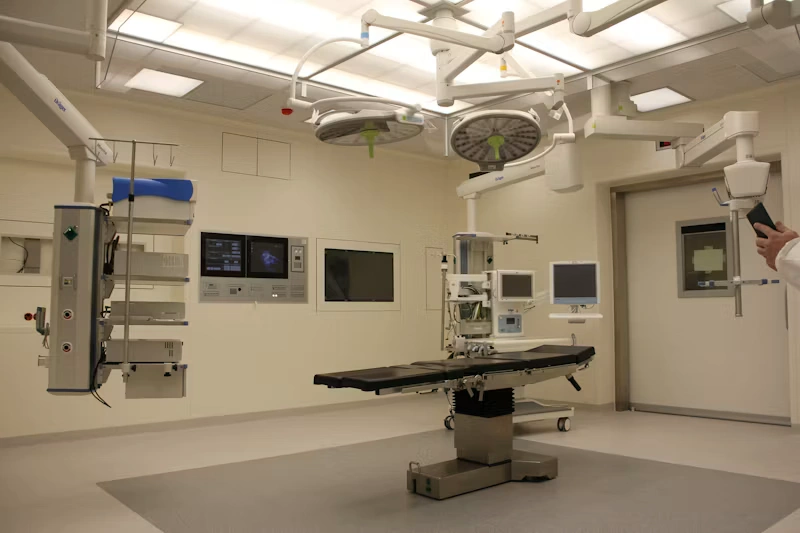
Unify clinical, administrative, financial, and operational workflows by connecting hospital information systems, allowing departments to access consistent, up-to-date information through a centralized healthcare infrastructure.

Automate laboratory workflows by connecting diagnostic equipment, physician portals, and hospital systems, enabling faster test orders, accurate result reporting, and seamless laboratory data synchronization.

Integrate Radiology Information Systems (RIS), PACS, and DICOM imaging platforms to streamline imaging requests, diagnostic reporting, image storage, and clinician access for faster, more informed clinical decisions.

Connect insurance providers, billing systems, claims processing, payment gateways, and revenue cycle management platforms to automate eligibility verification, claims submission, reimbursements, and financial workflows with greater accuracy.

Enable secure connectivity between patient monitoring devices, bedside equipment, wearable health devices, diagnostic instruments, and healthcare applications to deliver continuous, real-time clinical data for better patient monitoring.
Successful healthcare integration depends on more than connecting systems—it requires an architecture that validates, transforms, secures, and delivers accurate clinical data at every stage. Our interoperability framework follows globally accepted HL7 and FHIR standards, creating a scalable foundation for hospitals, clinics, laboratories, and healthcare networks across the UAE.
We securely capture clinical and operational data from EMR, EHR, HIS, LIS, RIS, PACS, pharmacy, billing, insurance, telemedicine platforms, medical devices, and other healthcare applications without disrupting existing workflows.
Standardized HL7, FHIR, REST APIs, DICOM, XML, and custom interface connectors establish secure communication between disparate healthcare systems while ensuring continuous and reliable data exchange.
Our integration engine intelligently routes, monitors, and processes healthcare messages in real time, providing centralized control over every interface while reducing manual intervention and communication failures.
Incoming healthcare data is normalized, mapped, validated, and enriched according to HL7 and FHIR standards, ensuring consistent data quality before it reaches downstream applications.
A centralized Master Patient Index accurately matches patient identities across multiple healthcare systems, eliminating duplicate records, reducing clinical risks, and improving patient safety.
Validated healthcare information is stored within a secure, FHIR-compliant repository that supports standardized APIs, future scalability, and seamless interoperability with modern healthcare applications.
Our architecture is designed to support secure connectivity with UAE healthcare exchanges, including NABIDH, Malaffi, and Riayati, enabling compliant, standardized, and real-time health information sharing.
Physicians, nurses, laboratories, radiology departments, patient portals, mobile healthcare apps, and administrative teams receive synchronized, real-time healthcare data for faster clinical decisions and improved patient experiences.
Unlike traditional point-to-point integrations that become difficult to manage as healthcare systems grow, our layered interoperability architecture creates a secure, scalable, and future-ready integration environment. Every healthcare message is validated, standardized, and monitored before reaching its destination, ensuring higher data accuracy, stronger security, and long-term system reliability.
Every successful healthcare integration starts with a well-defined strategy—not just development. Our structured implementation methodology minimizes project risks, accelerates deployment, and ensures every interface is secure, standards-compliant, and built for long-term reliability. From planning to post-launch support, we manage every stage with complete transparency and technical precision.
We begin by analyzing your existing healthcare ecosystem, including EMR, EHR, HIS, LIS, RIS, PACS, billing systems, third-party applications, and clinical workflows. Our experts identify integration gaps, data dependencies, interoperability challenges, and technical requirements to create a clear implementation roadmap.
Our architects design secure HL7 and FHIR interface specifications, data mappings, transformation logic, routing workflows, API integrations, and validation rules tailored to your healthcare infrastructure while ensuring future scalability and regulatory compliance.
Our engineers develop robust interface connectors, message routing workflows, transformation engines, API integrations, and interoperability services that enable accurate, secure, and real-time communication between healthcare systems with minimal operational disruption.
Before deployment, every interface undergoes comprehensive functional testing, HL7 conformance validation, FHIR compatibility testing, performance optimization, message verification, and security assessments to ensure reliable data exchange in production environments.
After successful validation, we deploy your integration with a controlled go-live strategy, rollback planning, continuous interface monitoring, proactive issue resolution, performance optimization, and long-term technical support to keep healthcare operations running without interruption.
Whether you're modernizing a hospital network, scaling a healthcare startup, or connecting national health systems, SISGAIN delivers secure, standards-based interoperability solutions tailored to your operational, clinical, and regulatory requirements.
Connect EMR, HIS, LIS, RIS, PACS, pharmacy, billing, and third-party applications through enterprise-grade interoperability that supports multi-facility healthcare networks while improving clinical workflows and patient data accessibility.
Enable seamless communication between clinical systems, diagnostic platforms, appointment scheduling, billing, and patient engagement solutions to deliver coordinated outpatient and specialty care experiences.
Automate laboratory order management, specimen tracking, result reporting, and healthcare system integration with reliable, high-volume interfaces that improve turnaround times and reduce manual data entry.
Streamline claims processing, eligibility verification, prior authorization, payment workflows, and secure healthcare data exchange between providers, insurers, and third-party healthcare platforms.
Support national and regional digital health initiatives with standards-based interoperability, regulatory compliance, secure data exchange, and scalable integration frameworks for public healthcare ecosystems.
Launch interoperable healthcare products faster with API-first architecture, HL7 and FHIR integration, cloud-native connectivity, and scalable healthcare interfaces designed to support rapid business growth.
Healthcare data demands more than compliance—it requires security engineered into every layer of your integration. As a trusted provider of HL7 integration services in Dubai, we design every interface with enterprise-grade protection, governance, and resilience to safeguard sensitive patient information while supporting uninterrupted clinical operations.
Talk to our HL7 and FHIR interoperability architects about your EMR, LIS, RIS, PACS, or government exchange integration — get a clear, no-obligation roadmap built around NABIDH, Malaffi, and Riayati requirements.
Our HL7 integration experts in Dubai work with the industry's leading interoperability standards, integration engines, cloud platforms, and APIs to deliver secure, scalable, and future-ready healthcare connectivity. Instead of replacing your existing infrastructure, we integrate seamlessly with the technologies your organization already uses—reducing implementation time, minimizing disruption, and protecting your technology investment.
Healthcare organizations choose SISGAIN because our integration solutions improve interoperability without interrupting patient care. From hospitals and laboratories to diagnostic centers and healthcare networks, our team delivers secure, standards-based integrations that simplify complex healthcare ecosystems.
"We needed to connect our EMR, LIS, RIS, PACS, and billing applications while maintaining uninterrupted clinical operations. SISGAIN delivered a seamless HL7 integration, ensured regulatory alignment, and completed the deployment with exceptional technical expertise. Their team exceeded our expectations."
Chief Information OfficerLeading Multi-Specialty Hospital Group, Dubai, UAE"SISGAIN demonstrated deep knowledge of HL7 messaging, FHIR APIs, and healthcare interoperability standards. They modernized our legacy interfaces, reduced integration complexity, and completed the implementation significantly faster than previous vendors. Communication and project execution were excellent throughout."
IT DirectorSpecialty Healthcare Network, Abu Dhabi, UAE"Our laboratory systems required secure real-time data exchange with multiple hospital platforms. SISGAIN designed scalable interfaces that improved reporting speed, eliminated manual data transfer, and strengthened interoperability across our healthcare network."
Head of Digital TransformationRegional Diagnostic Laboratory, UAE"From interface planning to deployment, SISGAIN managed every stage professionally. Their expertise in HL7 integration services in Dubai and healthcare interoperability helped us connect multiple clinical applications while maintaining data accuracy and security."
Director of Information SystemsPrivate Healthcare Organization, UAE"We required secure interoperability between our EMR, pharmacy, radiology, laboratory, and insurance systems. SISGAIN designed a reliable integration framework using HL7 and FHIR standards that improved data accuracy, reduced manual intervention, and streamlined clinical workflows across our facilities."
Head of Health Information SystemsIntegrated Healthcare Provider, Sharjah, UAE"SISGAIN's technical team understood both our legacy infrastructure and future digital transformation goals. Their healthcare integration expertise helped us build scalable interfaces, improve real-time patient data exchange, and ensure seamless communication between multiple healthcare applications with minimal downtime."
Digital Transformation ManagerPrivate Medical Group, Dubai, UAEHealthcare interoperability projects demand far more than technical expertise—they require deep healthcare domain knowledge, regulatory understanding, and flawless execution. At SISGAIN, we help hospitals, laboratories, imaging centers, and digital health providers build secure, scalable, and standards-compliant healthcare integrations that improve clinical workflows, data exchange, and patient outcomes.
Our certified interoperability specialists have successfully delivered complex healthcare integration projects involving HL7 v2/v3, FHIR, DICOM, CDA, REST APIs, LIS, RIS, PACS, HIS, EMR, and EHR systems. We design reliable interfaces that ensure accurate, real-time clinical data exchange while minimizing implementation risk and operational disruption.
From strategy and architecture to interface development, testing, deployment, monitoring, and ongoing optimization, SISGAIN provides complete healthcare interoperability services under one roof. Our experts simplify complex system integrations while ensuring maximum scalability, reliability, and long-term performance.
Patient data protection is embedded into every integration we deliver. We implement secure interoperability architectures using encryption, role-based access controls, comprehensive audit logging, secure API management, and healthcare security best practices to safeguard sensitive clinical information and support regulatory compliance requirements.
Healthcare never stops—and neither do we. Our dedicated interoperability support team continuously monitors critical healthcare interfaces, proactively resolves issues, minimizes downtime, and ensures uninterrupted data exchange across your healthcare ecosystem every hour of every day.
See how hospitals, laboratories, and healthcare organizations have modernized complex interoperability environments through our HL7 integration expertise. Each engagement reflects measurable improvements in system connectivity, data accuracy, operational efficiency, and uninterrupted clinical workflows while maintaining strict healthcare compliance standards.
Get a 30-minute architecture review with our healthcare interoperability specialists — no obligation, just clarity on what your integration project actually requires.
Book Architecture Review Speak to an Integration ExpertEvery healthcare environment has different systems, workflows, and compliance requirements. That's why we offer flexible engagement models tailored to your organization's size, technical complexity, and long-term interoperability goals—whether you need a single HL7 interface or a large-scale enterprise integration program.
| Engagement Type | Best For |
|---|---|
| Single HL7 Interface Implementation | Ideal for clinics, diagnostic centers, and laboratories that need fast, secure integration between two healthcare systems. |
| Multi-System Integration Program | Designed for hospitals connecting EMR, LIS, RIS, PACS, pharmacy, billing, and other clinical applications. |
| Enterprise Interoperability Platform | Built for healthcare groups, government organizations, and enterprise networks requiring scalable, standards-based interoperability. |
| Managed HL7 Integration Services | Best for organizations that need continuous interface monitoring, maintenance, issue resolution, upgrades, and long-term support. |
Tell us about your healthcare infrastructure, integration goals, and compliance requirements. Our experts will prepare a customized implementation plan with the right engagement model, project timeline, and delivery approach—without unnecessary complexity.
Request a Tailored ProposalHL7 integration connects healthcare systems like EMRs, HIS, LIS, RIS, and PACS so they can exchange clinical, administrative, and financial data using HL7 standards such as v2, v3, CDA, and FHIR. It ensures accurate, real-time data flow across your entire healthcare IT ecosystem, reducing manual work and clinical risk.
HL7 v2/v3 are older messaging and document standards still widely used in legacy hospital systems. FHIR (Fast Healthcare Interoperability Resources) is the modern, API-based standard built for web and mobile interoperability. Most UAE health authorities now require FHIR R4 compliance for new exchange initiatives.
Yes. We have hands-on experience integrating with Epic, Cerner, Oracle Health, InterSystems, and custom-built EMR/EHR platforms. Our team designs interfaces that respect each system's native data structures while ensuring standards-compliant output.
Yes. We design and implement NABIDH-ready architectures for Dubai-based healthcare providers, covering data submission, retrieval, and FHIR-based record unification in line with Dubai Health Authority requirements.
Yes. Our team builds Malaffi-compliant integrations for Abu Dhabi providers, enabling secure clinical data sharing across hospitals, clinics, and labs in line with DoH standards.
Yes. We build interfaces aligned with Riayati, the UAE's national unified medical record initiative, ensuring your systems meet federal-level interoperability requirements.
Timelines vary by scope, but most single-facility integrations take 8–14 weeks from discovery to go-live. Multi-facility or enterprise programs typically run 4–9 months, depending on the number of interfaces and legacy system complexity.
Yes. HL7-to-FHIR migration is one of our core specializations. We map existing v2 message types to FHIR resources, validate against conformance profiles, and run parallel testing before cutover to avoid clinical disruption.
We build every integration with end-to-end encryption, role-based access control, full audit trails, and PHI protection protocols — aligned with UAE PDPL, ADHICS, and ISO 27001 standards from the outset.
Yes. Our managed integration services include round-the-clock monitoring, proactive alerting, and rapid-response support to keep your interfaces running without interruption.
Yes. Our architecture supports hybrid environments, connecting on-premise HIS/LIS/RIS systems with cloud-based platforms on Azure or AWS, without compromising performance or security.
We typically need a list of source and target systems, current interface types (HL7 v2, v3, or FHIR), approximate message volumes, and any specific compliance requirements (NABIDH, Malaffi, Riayati). This lets us scope accurately within one consultation.