








Quality Engineering & Software Testing — Dubai

QA & Testing Services in Dubai

SISGAIN delivers Quality Engineering and Software Testing Consulting services in Dubai, helping enterprises release faster, reduce risk, and ensure compliance. Beyond finding defects, we build scalable quality strategies, automation, and governance that protect business performance across the entire software delivery lifecycle.

Live Quality Pipeline

Trusted by conglomerates, enterprises and startups alike

The Business Challenges Enterprises Face Without Mature QA

Organizations rarely fail because they lack testers. They fail because quality gets treated as a phase, not an engineering discipline. Here's what that looks like in practice.

Production Defects

Every defect that escapes to production costs more than the fix itself — emergency hotfixes, engineering time pulled off the roadmap, customer-facing failures, and in regulated industries, possible compliance reporting. Your production defect rate tells you exactly how well your QA process catches systemic risk, not just broken buttons.

Manual Testing Bottlenecks

Manual regression doesn't scale. As the application grows, test cycles grow with it — until testing eats more calendar time than the sprint that produced the code.

Slow Release Cycles

When testing can't keep pace with development, you either slow down releases or ship with less confidence. In a competitive digital market, neither is acceptable.

Poor Automation Coverage

A lot of "automation" is brittle scripts covering a thin slice of the app, disconnected from CI/CD, abandoned the moment the UI changes. Coverage gaps quietly bring manual effort — and regression risk — right back.

Performance Issues

An app that's never been load-tested against real concurrency and peak traffic tends to fail exactly when it matters most: sale events, enrollment periods, public launches.

Security Vulnerabilities

Functional testing won't catch injection flaws, broken auth, or an exposed API endpoint. Without dedicated security testing, you find out about vulnerabilities the expensive way — in production, or worse.

Compliance Failures

UAE PDPL, DHA/DOH healthcare rules, GDPR, HIPAA — generic testing doesn't cover any of it. Compliance gaps found post-launch cost far more than the ones caught during validation.

Regression Failures

Without disciplined regression automation, every release risks silently breaking something that already worked. It's one of the most preventable — and most repeated — categories of defect out there.

Integration Issues

Enterprise environments are ecosystems: APIs, legacy systems, third-party services, cloud platforms. Integration gaps show up exactly where it's hardest to trace who's responsible — at the seams.

Poor User Experience

Working software isn't the same as usable software. Skip structured usability, accessibility, and cross-device testing, and you risk shipping something technically correct that nobody wants to use.

High Maintenance Costs

Badly architected test suites — manual or automated — get more expensive to maintain over time. When your team spends more time maintaining tests than expanding coverage, that's a sign your QA architecture isn't sustainable.

Lack of Testing Strategy

The root issue behind almost everything above: testing without a strategy that ties coverage to business risk. Effort gets allocated by habit, not by what actually matters — leaving critical functions under-tested and low-risk areas over-tested.

How QA Consulting Fixes This

All twelve of these trace back to the same root cause: quality treated as a downstream activity instead of an engineering discipline built in from architecture through production. Adding a few more manual testers or running an occasional pen test treats symptoms, not the structure underneath. SISGAIN's QA consulting services in Dubai fix the structure — building risk-based test strategy, automation architecture, security and performance validation, and compliance governance directly into your delivery pipeline. That's what turns quality from an unpredictable cost center into a measurable, governable engineering discipline.

Business Impact

Why QA & Testing Matters for Business Performance

Enterprise quality engineering isn't measured by defects found. It's measured by risk avoided and velocity gained.

Risk Avoided Fewer, less severe incidents across every release
VS
Velocity Gained Mature automation compresses validation cycles

Ten measurable ways enterprise quality engineering pays for itself — from release speed to long-term scalability.

  • 01Better software quality

    systematic, risk-based testing beats ad hoc validation, every time

  • 02Reduced operational risk

    fewer, less severe incidents disrupting revenue and operations

  • 03Faster releases

    mature automation compresses validation cycles without cutting confidence

  • 04Improved customer experience

    reliability and performance shape retention directly

  • 05Lower maintenance costs

    well-built automation and disciplined regression stay cheap to run as you scale

  • 06Better ROI

    every defect caught pre-production costs a fraction of one caught after

  • 07Compliance readiness

    continuous validation keeps you audit-ready, not audit-scrambling

  • 08Higher software reliability

    validated across functional, performance, and security dimensions

  • 09Continuous improvement

    quality metrics feed back into engineering practice

  • 10Long-term scalability

    coverage grows with your application instead of becoming its bottleneck

What We Deliver

Our QA & Testing Services

Full-spectrum enterprise quality engineering, from strategy through specialized technical validation.

01
Service 01 / 10

QA Strategy & Consulting

What it is

Risk-based test strategy aligned to your business-critical functions, architecture, and regulatory obligations.

Why it matters

Every testing investment you make afterward is only as good as this strategy.

Business benefits

No wasted effort on low-risk areas. Critical functions get proportionate depth. Leadership gets shared visibility into quality risk.

Enterprise use cases

Pre-transformation quality assessments, M&A technical due diligence, standing up a Testing Center of Excellence.

Outcomes

Less testing waste, clearer risk visibility, faster onboarding of new QA capacity.
02
Service 02 / 10

Functional Testing

What it is

Systematic validation that your application does what the business and technical requirements say it should.

Business benefits

Confirms behavior before customers see it. Cuts post-release defect volume. Validates business logic in financial and healthcare systems where accuracy isn't optional.

Enterprise use cases

Core banking transactions, insurance claims logic, e-commerce checkout, government service portals.

Outcomes

Higher release confidence, fewer customer-reported defects, protected transaction accuracy.

03
Service 03 / 10

Test Automation

What it is

Scalable automated regression, functional, and API suites built directly into CI/CD.

Business benefits

Cuts regression cycles from days to hours. Enables continuous testing alongside continuous deployment. Lowers long-term cost per release.

Enterprise use cases

High-frequency release environments, large ERP/CRM regression suites, multi-platform portfolios.

Outcomes

Faster release cadence, less manual-testing dependency, coverage that holds as the app scales.

04
Service 04 / 10

Performance Testing

What it is

Load, stress, and scalability validation against real-world and peak-demand conditions.

Business benefits

Stops performance failures before they happen on your biggest traffic day. Validates infrastructure scaling assumptions before real users test them for you.

Enterprise use cases

Retail flash sales, banking peak-transaction periods, government portal launches, ticketing platforms.

Outcomes

Verified capacity under peak load, less revenue-impacting downtime, data-driven scaling decisions.

05
Service 05 / 10

Security Testing

What it is

Structured vulnerability assessment across application, API, and infrastructure — aligned to OWASP and enterprise security frameworks.

Business benefits

Finds exploitable vulnerabilities before attackers do. Supports regulatory security obligations. Reduces breach and data-exposure risk.

Enterprise use cases

Banking platforms, healthcare systems handling patient data, government services, e-commerce payments.

Outcomes

Smaller attack surface, stronger regulatory posture, measurably fewer exploitable vulnerabilities at release.

06
Service 06 / 10

API Testing

What it is

Validation of API functionality, contract compliance, security, performance, and error handling.

Business benefits

Protects the integration layer where most modern failures actually start. Validates third-party integrations and backward compatibility across versions.

Enterprise use cases

Microservices architectures, open banking APIs, HL7 FHIR healthcare interoperability, partner integration ecosystems — related to our API development & integration work.

Outcomes

Fewer integration failures, validated contract compliance, faster detection of breaking changes.

07
Service 07 / 10

Mobile Application Testing

What it is

Functional, performance, usability, and compatibility testing across iOS and Android, matched to real device and network fragmentation.

Business benefits

Protects app store ratings and retention. Validates performance across variable networks and device tiers.

Enterprise use cases

Banking and payment apps, healthcare patient apps, retail and loyalty apps — see our mobile app development capability.

Outcomes

Higher app store ratings, fewer device-specific defects, better mobile retention.

08
Service 08 / 10

Web Application Testing

What it is

Cross-browser, cross-device, functional, and performance validation, plus accessibility and usability assessment.

Business benefits

Consistent experience across browser/device combinations. Validated accessibility. Protected conversion journeys.

Enterprise use cases

Enterprise portals, e-commerce platforms, government citizen services — tied to our web application development practice.

Outcomes

Consistent cross-browser experience, improved accessibility, less UX-driven drop-off.

09
Service 09 / 10

Cloud Application Testing

What it is

Validation of application behavior, scalability, resilience, and configuration across cloud-native and hybrid environments.

Business benefits

Confirms cloud infrastructure assumptions before production load hits. Validates failover and resilience configs. Supports cloud migration and cloud application development quality gates.

Enterprise use cases

Cloud migration validation, multi-region deployment testing, disaster recovery validation.

Outcomes

Verified resilience, validated auto-scaling behavior, lower migration risk.

10
Service 10 / 10

AI-Powered Testing

What it is

AI applied to test case generation, self-healing automation, predictive defect analysis, and test optimization — plus dedicated validation of AI/ML application behavior.

Business benefits

Less automation maintenance through self-healing scripts. Faster test case generation from requirements. Earlier visibility into high-risk defect areas.

Enterprise use cases

Large regression suites with high UI volatility, organizations building AI software, teams looking to cut automation maintenance cost.

Outcomes

Lower test maintenance effort, faster automation builds, earlier defect-risk detection.

Quality Engineering Lifecycle

We structure every engagement around one lifecycle — quality engineered from business discovery through continuous production monitoring, never bolted on before release.

Business Discovery → Quality Assessment → Test Strategy → Planning → Environment Setup → Automation → Execution → Performance Validation → Security Validation → Release Readiness → Continuous Quality Monitoring

1

Business Discovery

Map business-critical functions, revenue-impacting workflows, and regulatory obligations so we know where risk actually concentrates.

2

Quality Assessment

Baseline your current test coverage, automation maturity, defect trends, and architecture.

3

Test Strategy

Allocate testing depth to risk, not habit.

4

Planning

Line up resourcing, timelines, tooling, and coverage targets against your release schedule.

5

Environment Setup

Build stable, production-representative environments and test data.

6

Automation

Build suites for maintainability and CI/CD integration, not just short-term coverage.

7

Execution

Run functional, regression, and exploratory testing against defined acceptance criteria.

8

Performance Validation

Confirm the app holds up under realistic and peak-load conditions.

9

Security Validation

Run vulnerability assessment aligned to OWASP and regulatory frameworks.

10

Release Readiness

Consolidate quality metrics and defect status into a clear go/no-go decision.

11

Continuous Quality Monitoring

Extend visibility into production, feeding the next cycle.

QA Assessment Framework

Before we recommend anything, we assess your quality posture across 16 dimensions. Each one surfaces a category of risk generic testing engagements routinely miss.

D01

Requirements

Ambiguous requirements are the leading root cause of downstream defects and rework

D02

Architecture

Determines where integration risk and single points of failure concentrate

D03

Test Coverage

Coverage gaps reveal where critical functionality is under-validated

D04

Automation

Determines whether regression can scale with release frequency

D05

Performance

Establishes whether the system can support real-world traffic and growth

D06

Security

Determines exposure to breach, data loss, and regulatory penalty

D07

Compliance

Determines audit readiness and legal exposure

D08

DevOps

Determines how fast quality gates can be embedded into delivery

D09

Infrastructure

Stability directly affects the reliability of test results and production behavior

D10

Data

Test data quality determines the validity of test outcomes

D11

APIs

Contract stability determines integration reliability enterprise-wide

D12

Cloud Readiness

Determines resilience, scalability, and migration risk

D13

AI Readiness

Determines the need for specialized model validation and governance

D14

Release Readiness

Prevents premature or under-validated deployments

D15

Quality Metrics

Enables objective, data-driven quality decisions

D16

Technical Debt

Directly increases long-term defect rates and maintenance cost

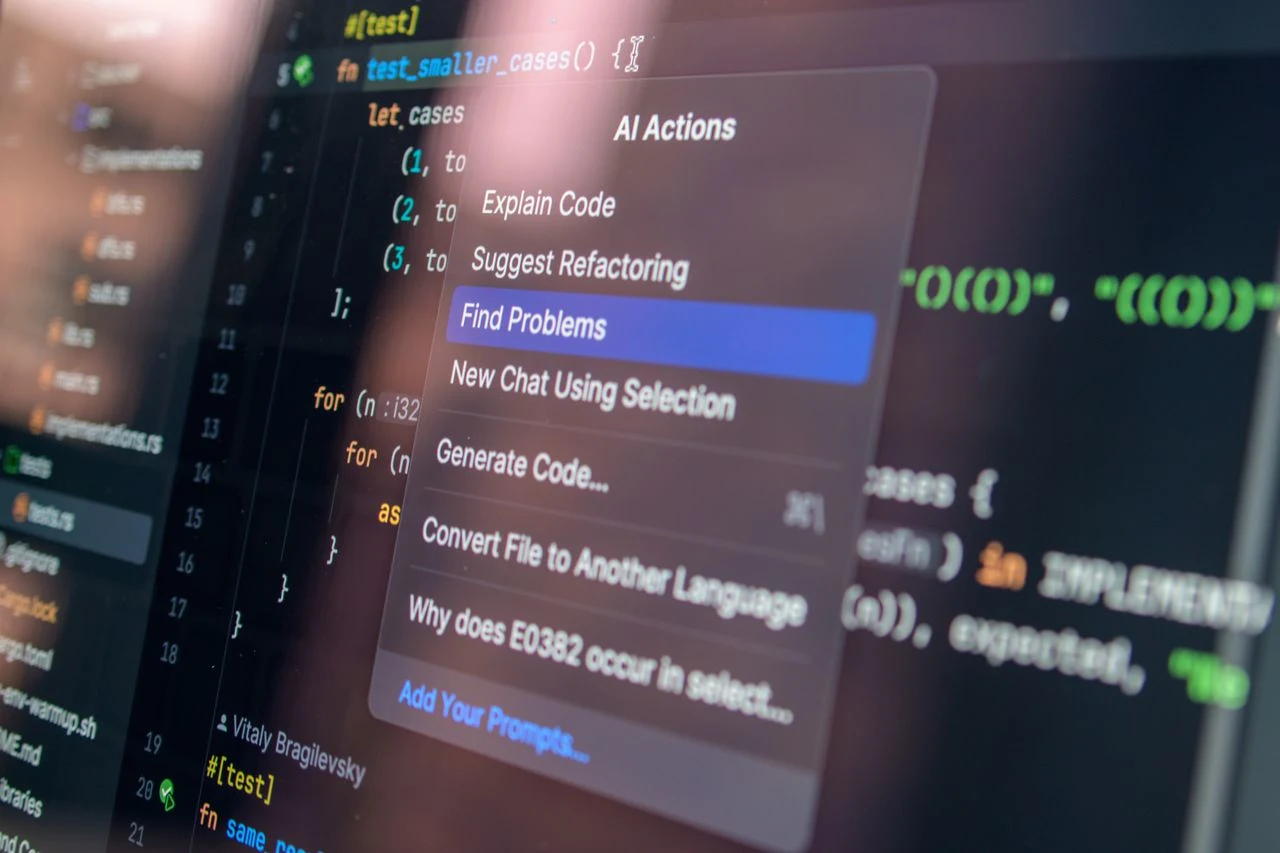
Dark code editor and terminal output on screen, representing software testing workflows

Testing Types

Functional Testing — validates features against specified business requirements
Regression Testing — confirms new changes haven't broken what already worked
Smoke Testing — quick check that a build is stable enough for further testing
Sanity Testing — focused validation that a specific fix works as intended
Integration Testing — validates behavior across connected systems and APIs
System Testing — end-to-end validation of the complete integrated system
User Acceptance Testing — business stakeholder sign-off on real-world usage
Compatibility Testing — consistent behavior across browsers, devices, OS, screen sizes
Accessibility Testing — compliance with accessibility standards like WCAG
Performance Testing — responsiveness, stability, and resource use under expected load
Load Testing — behavior under expected and peak concurrent user volumes
Stress Testing — identifies breaking points beyond normal capacity
Security Testing — vulnerabilities across app, API, and infrastructure layers
API Testing — functionality, security, and performance of API endpoints
Database Testing — data integrity, transaction accuracy, query performance
Mobile Testing — functionality and performance across devices, OS versions, networks
Cloud Testing — behavior, scaling, and resilience in cloud environments
AI Testing — model accuracy, bias, explainability, and behavioral consistency

Industries We Serve

Generic QA fails in regulated, high-stakes industries — each carries its own risk profile, compliance load, and performance bar. We build industry-specific strategy, not a one-size template.

Healthcare

validation aligned to DHA, DOH, MOHAP, NABIDH, and Malaffi interoperability standards, plus HIPAA and HL7 FHIR for patient data integrity.

Healthcare →

Fintech

transaction accuracy validation, fraud-resistant security testing, and performance testing under high concurrency, aligned to financial regulatory expectations and open banking standards.

Fintech →

Aviation

validation of safety-critical booking and operations systems, real-time data integration across airline and airport platforms, and rigorous performance testing under peak travel-season load.

Aviation →

Real Estate

property management platform validation, transaction workflow accuracy, and CRM and listing system integration.

Real Estate →

Logistics

real-time tracking validation, route optimization accuracy, and integration testing across multi-party platforms.

Logistics →

Gaming

performance under high concurrency, in-app payment security, and cross-platform compatibility validation.

Gaming →

Food & Beverages

order management and delivery platform validation, inventory and supply chain data accuracy, and payment and loyalty system integration testing.

Food & Beverages →

Travel

real-time inventory and pricing accuracy, payment gateway testing, and integration across global distribution systems.

Travel →

Fitness

membership and booking system validation, wearable device integration, and payment processing accuracy.

Fitness →

eCommerce

peak-load performance for sales events, payment gateway security, and omnichannel consistency across web, mobile, and in-store.

eCommerce →

Government Sector

rigorous security testing, accessibility compliance, and high-availability validation for citizen-facing services under strict uptime and data sovereignty rules.

Government Sector →

Mining

validation of industrial monitoring and safety-critical systems, integration testing across SCADA and enterprise data platforms, and reliability testing for remote-site connectivity conditions.

Mining →

Media & Entertainment

content delivery performance, streaming quality, and digital rights management integration accuracy.

Media & Entertainment →

Hospitality

booking system performance, payment security, and integration across property and channel management systems.

Hospitality →

Education

accessibility compliance, scalability for concurrent exam and enrollment periods, and data privacy for student information systems.

Education →

Telecommunications

high-availability validation, billing accuracy testing, and network-integrated performance under massive concurrent load.

Telecommunications →

Sports

ticketing platform load testing, real-time scoring validation, and fan engagement performance under event-driven spikes.

Sports →

Retail

omnichannel inventory accuracy, point-of-sale integration testing, and performance validation across web, mobile, and in-store checkout systems.

Retail →

Agribusiness

IoT sensor data integration, supply chain traceability, and mobile application reliability in low-connectivity field conditions.

Agribusiness →

Utilities

billing accuracy, smart-metering data integration, and high-availability testing for critical infrastructure.

Utilities →

A fintech platform and a hospitality booking engine might run on similar tech stacks — but the cost of a defect is nothing alike. Regulatory penalty versus a missed reservation. Our industry consultants bring that context into every engagement so testing depth reflects real business consequence, not a uniform checklist.

Coverage

Testing Platforms & Solutions

Enterprise Applications

rigorous regression and integration validation at scale

SaaS Platforms

multi-tenant architecture, subscription billing accuracy, scalability testing

Web Applications

cross-browser, performance, and security validation

Mobile Applications

device-fragmentation-aware functional and performance testing

ERP

complex process validation across finance, procurement, HR, supply chain

CRM

data integrity, workflow automation, integration validation

Healthcare Software

compliance-driven validation aligned to clinical safety standards

IoT Platforms

device connectivity, data integrity, real-time processing validation

AI Applications

model accuracy, bias, and behavioral consistency validation

APIs

contract, security, and performance validation across the integration layer

Cloud Applications

scalability, resilience, and configuration validation

Microservices

service-level and cross-service integration testing

Data Platforms

pipeline accuracy, transformation validation, reporting integrity

Test Automation Frameworks

Framework choice is a business decision, not just a technical one — it shapes maintenance cost, execution speed, and team scalability long after launch. We evaluate against enterprise fit, not popularity.

Framework Best Use Case Advantages Limitations Enterprise Fit

Selenium

Cross-browser web automation at scale Broad language/browser support, mature ecosystem Slower execution, more flaky-test maintenance High — large legacy web portfolios

Playwright

Modern web app automation Fast execution, auto-waiting, strong cross-browser parity Newer, smaller community than Selenium Very High — modern web architectures

Cypress

Frontend-heavy SPAs Fast feedback loop, strong dev experience Limited multi-tab/cross-origin support Moderate–High — SPA-centric teams

Appium

Cross-platform mobile automation One framework for iOS and Android Slower execution, complex setup High — enterprise mobile portfolios

Robot Framework

Keyword-driven automation Readable syntax, accessible to non-devs Less flexible for complex logic Moderate — readability-first teams

JUnit

Java unit/integration testing Deep Java ecosystem integration, CI/CD-friendly Java only High — Java-based backends

TestNG

Java functional/regression testing Advanced config, parallel execution Java only, steeper learning curve High — complex Java suites

PyTest

Python-based automation Simple syntax, powerful fixtures Python only High — Python-based platforms

Postman

API testing, exploratory validation Fast setup, strong collaboration Limited scalability for complex CI/CD Moderate — early-stage API validation

Rest Assured

Java-based API automation Deep Java integration, strong assertions Java only High — enterprise API regression

JMeter

Load and performance testing Mature, widely supported, protocol-flexible Resource-heavy at very high scale High — traditional performance testing

k6

Modern performance/load testing Dev-friendly scripting, CI/CD-native, efficient Smaller enterprise-reporting ecosystem than JMeter Very High — cloud-native performance testing

Technology Stack Expertise

We don't recommend tools by default. Every recommendation comes from your architecture, your team's skills, your release cadence, and your risk profile.

Layer Technologies
Frontend
R React A Angular V Vue N Next.js
Backend
.N .NET J Java N Node.js Py Python P PHP Go Go
Mobile
F Flutter RN React Native S Swift K Kotlin
Cloud
AWS AWS Az Azure GC Google Cloud
DevOps
D Docker K8 Kubernetes T Terraform GH GitHub Actions DO Azure DevOps
Databases
Pg PostgreSQL My MySQL Mo MongoDB Re Redis SQ SQL Server
Testing Tools
Se Selenium Pw Playwright Cy Cypress Ap Appium JM JMeter Po Postman k6 k6 BS BrowserStack LT LambdaTest

QA Delivery Models

Different organizations need different engagement structures. We don't force a single model on everyone.

Delivery ModelBest Use CaseAdvantagesLimitationsEnterprise Fit
Dedicated QA TeamLong-term, ongoing QA capacityDeep product knowledge over time, team continuityHigher fixed commitmentHigh — continuous product development
Independent Testing ServicesObjective third-party validationUnbiased assessment, independent from dev pressureNeeds strong coordination with dev teamsHigh — regulated/audit-sensitive environments
Embedded QA EngineersAgile teams needing integrated QATight collaboration, fast feedbackLess independent perspectiveHigh — fast-moving agile teams
Managed Testing ServicesFull outsourcing of the QA functionLess internal management overhead, predictable deliveryNeeds strong SLA/governance definitionHigh — orgs without internal QA leadership
Testing Center of Excellence (TCoE)Enterprise-wide QA standardizationConsistent standards, shared tooling and best practicesNeeds organizational buy-inVery High — large multi-team enterprises
Continuous TestingCI/CD-integrated, high release frequencyTesting keeps pace with deploymentNeeds mature automation infrastructureVery High — DevOps-mature organizations
QA as a Service (QaaS)Flexible, on-demand testing capacityScales with business need, no fixed headcountLess long-term product contextHigh — variable/seasonal testing demand

Why Choose SISGAIN

Dimension Traditional Testing Company SISGAIN
Engagement Focus Executes test cases against a fixed spec Consults on business risk and designs strategy around it
Automation Approach Added after manual testing is established Architected from day one
Security Separate, optional add-on Embedded by default
Compliance Generic checklist Deep expertise in UAE, healthcare, and international frameworks
Tooling Fixed toolchain regardless of context Vendor-neutral, requirements-driven
Engagement Length Project-based, transactional Long-term partnership
Reporting Defect counts, pass/fail Business risk metrics tied to release readiness and ROI

Business-First Consulting

every engagement starts with business risk, not test-case volume.

Automation-First Strategy

automation is a first-class engineering discipline, not a manual-testing supplement.

Enterprise Quality Engineering

systems-level thinking about architecture, integration risk, and scalability.

Security-First Testing

embedded by default, because functional correctness without security validation is an incomplete job.

Vendor-Neutral Recommendations

driven by your architecture and business need, never a fixed toolchain.

End-to-End Engagement

from business discovery through continuous production monitoring.

Long-Term Partnership

quality engineering is an ongoing discipline, not a one-off project.

Measurable Impact

Business Outcomes

01

Fewer production defects — structured, risk-based testing cuts volume and severity

02

Faster releases — mature automation compresses validation cycles

03

Reduced testing costs — sustainable automation lowers cost per release

04

Increased automation coverage — deliberate strategy expands coverage sustainably

05

Improved application performance — scalability constraints resolved before users hit them

06

Better customer satisfaction — fewer defects, stronger performance, better retention

07

Stronger security — embedded testing reduces exploitable vulnerabilities

08

Higher software quality — multi-dimensional validation, measurably more reliable software

09

Reduced business risk — proactive testing lowers operational, financial, regulatory exposure

10

Improved ROI — every defect prevented pre-production compounds into real savings

Compliance & Governance

The UAE regulatory landscape is dense and moving. We build compliance and governance into every engagement — not as a separate audit exercise bolted on at the end.

UAE Compliance

  • UAE PDPL — validation of data handling, consent, and processing against UAE's federal data protection law
  • Dubai Electronic Security Center (DESC) — alignment with Dubai's information security standards for government and critical infrastructure
  • UAE Government Digital Initiatives — validation aligned to national digital transformation and e-government standards

Healthcare Compliance

  • DHA — compliance for Dubai Health Authority regulated systems
  • DOH — alignment with Department of Health Abu Dhabi standards
  • MOHAP — compliance against UAE Ministry of Health and Prevention regulations
  • NABIDH — interoperability testing aligned to Dubai's health information exchange
  • Malaffi — integration and data-exchange validation for Abu Dhabi's health information exchange
  • HIPAA — validation of patient data protection controls
  • HL7 FHIR — interoperability testing for healthcare data exchange standards
  • GDPR — data protection validation for organizations handling EU resident data

Software Security

  • Secure SDLC — security built into every development phase, not just release
  • OWASP Top 10 — systematic testing against the most critical web app risks
  • SAST — static application security testing on source code before deployment
  • DAST — dynamic application security testing on running applications
  • Secure Code Review — manual and tool-assisted review beyond automated scans
  • Threat Modeling — structured analysis of attack vectors during design
  • API Security Testing — dedicated checks on authentication, authorization, and data exposure

Information Security

  • ISO 27001 — international information security management alignment
  • ISO 27701 — privacy information management extending ISO 27001
  • ISO 9001 — quality management system alignment
  • ISO 20000 — IT service management alignment
  • SOC 2 — service organization control reporting support
  • NIST — alignment with NIST security frameworks

DevSecOps Governance

  • Continuous Testing — quality gates run consistently on every pipeline execution
  • CI/CD Governance — policy-driven controls for compliant, validated builds
  • Infrastructure as Code — configuration validation for security and consistency
  • Secrets Management — confirming credentials never leak into code or logs
  • Disaster Recovery Testing — recovery procedures validated under simulated failure
  • Backup Validation — confirming backup and restore actually works
  • Business Continuity — testing aligned to organizational continuity planning

AI Governance

  • Responsible AI — validation frameworks aligned to ethical usage principles
  • AI Model Validation — accuracy, robustness, and behavioral consistency testing
  • AI Risk Management — structured assessment of operational and reputational risk
  • Explainable AI — validation supporting transparency of AI-driven decisions
  • Data Privacy — ensuring AI training and inference comply with data protection obligations
  • Human Oversight — confirming human review checkpoints stay in place

Governance isn't a final checklist here — it's built into test strategy, automation design, and release criteria from day one. That's what keeps you audit-ready continuously, instead of scrambling reactively.

Frequently Asked Questions

They cover the strategic and technical validation of software quality, security, and performance across your application portfolio — needed to cut production risk, meet regulatory obligations, and keep release velocity up in a competitive market.
We're a quality engineering consulting partner, not a transactional testing vendor. We engage from business discovery through continuous production monitoring, with automation, security, and compliance built in by default — not sold as add-ons.
Healthcare, banking, government, insurance, retail, manufacturing, logistics, education, and more — each with a tailored strategy reflecting sector-specific risk and compliance.
Automation strategy and ROI assessment, framework selection, CI/CD integration, and long-term maintenance architecture — across functional, regression, API, and performance automation.
A risk-based QA assessment covering business criticality, architecture complexity, regulatory obligation, and existing coverage gaps — not a fixed checklist applied to everyone.
Yes — OWASP-aligned vulnerability assessment, SAST, DAST, and API security testing are core to every engagement, not optional extras.
Yes. Our compliance and governance framework covers UAE PDPL, DESC alignment, and healthcare regulations including DHA, DOH, MOHAP, NABIDH, and Malaffi, alongside GDPR and HIPAA.
Dedicated QA Teams, Independent Testing Services, Embedded QA Engineers, Managed Testing Services, Testing Center of Excellence, Continuous Testing, and QA as a Service — matched to your maturity and needs.
We use AI to speed up test case generation, enable self-healing automation, and support predictive defect analysis — and we validate AI/ML application accuracy, bias, and explainability for organizations deploying AI systems.
Yes. Our Testing Center of Excellence and end-to-end consulting model are built for multi-year, multi-team programs requiring standardized quality governance.
Based entirely on your architecture, team capability, and business requirements. Vendor-neutral, always — never a fixed toolchain by default.
Start with a QA assessment covering current coverage, automation maturity, and compliance posture. That's what shapes your tailored strategy and delivery model recommendation.