
Key Insights on the 20 Best Artificial Intelligence Apps for 2025
- Research suggests that multimodal AI apps like ChatGPT and Google Gemini are leading the pack, offering versatile text, image, and video capabilities that enhance productivity and creativity across industries.
- Evidence leans toward enterprise tools such as IBM Watson and Microsoft Azure AI gaining traction for data-driven decision-making, though accessibility remains a key concern for widespread adoption.
- It seems likely that creative AI apps, including Midjourney and DALL·E 3, will continue to democratize visual content creation, but ethical issues around bias and data privacy could spark debates.
- Specialized apps like Aira and Tesla Autopilot highlight AI's potential for inclusivity and automation, yet limitations in real-world reliability underscore the need for human oversight.
- Trends point to growing integration of AI in daily life, with apps like Perplexity AI and Grammarly improving efficiency, while cost-efficiency and customization drive business interest.
Introduction
Artificial intelligence apps are transforming daily life, industries, and how businesses operate, making tasks faster and more intuitive. In 2024–2025, the rise of artificial intelligence apps has accelerated, with advancements in multimodal capabilities allowing seamless handling of text, images, and videos. This blog covers 20 top artificial intelligence apps shaping productivity, creativity, and enterprise innovation, from conversational assistants to specialized tools. For businesses seeking top app developers, these apps demonstrate the power of custom solutions to drive efficiency and growth.
Why Artificial Intelligence Apps Matter in 2025
The growing integration of AI into daily life and work is evident, impacting communication through chatbots, automation via scheduling tools, creativity with image generators, and business decision-making with predictive analytics. Key trends include multimodal AI for handling diverse data types, increased enterprise adoption for scalable operations, and improved accessibility for broader user bases.
Categories of Artificial Intelligence Apps
The apps are grouped into Conversational & Language AI, Writing & Productivity AI, Creative & Visual AI, Enterprise & Business AI, and Specialized & Accessibility AI. This structure highlights their practical applications.
Comprehensive Survey of Artificial Intelligence Apps in 2025: Trends, Tools, and Transformations
Artificial intelligence apps are reshaping how individuals and organizations interact with technology, from enhancing personal productivity to driving large-scale enterprise innovation. As of 2025, the landscape has evolved rapidly, with multimodal AI—capable of processing text, images, videos, and more—becoming a standard feature in top tools. This surge is driven by advancements in large language models (LLMs) and increased enterprise adoption, where AI integrates into core systems for autonomy and efficiency. However, ethical concerns like bias, data privacy, and compliance remain prominent, prompting a balanced approach to deployment.
In 2024–2025, AI app usage has skyrocketed, with tools like ChatGPT boasting over 546 million monthly active users worldwide. Enterprise adoption rates are high, particularly in sectors like healthcare and finance, where AI boosts profitability by up to 20% through data-driven insights. Trends such as agentic AI (autonomous workflows) and reasoning-centric models are prominent, alongside multimodal integration for enhanced analytics. Yet, challenges persist: while AI improves accessibility and inclusivity, issues like hallucinations in outputs and limited offline capabilities highlight areas for improvement.
This survey explores 20 leading artificial intelligence apps, categorized for clarity, with detailed analyses of their launch backgrounds, unique features, strengths (pros), limitations (cons), and ideal users. It draws on current benchmarks, user feedback, and industry reports to provide a thorough overview. Businesses seeking top app developers can leverage these insights to identify opportunities for custom artificial intelligence app development tailored to specific needs.
Why Artificial Intelligence Apps Matter in 2025
The integration of AI into everyday routines and professional workflows has deepened significantly by 2025. For instance, conversational AI apps facilitate seamless communication, while automation tools like scheduling assistants reduce manual effort by up to 40%. In creativity, generative models enable rapid content production, and in business, AI supports data-driven decisions that enhance forecasting accuracy.
Key trends include:
- Multimodal AI: Tools now process multiple data types (e.g., text-to-video), enabling richer applications in education and marketing.
- Enterprise Adoption: Over 70% of companies use AI for core operations, with scalable cloud solutions like Microsoft Azure AI leading the way.
- Accessibility: AI apps are making technology more inclusive, from voice-powered assistants to tools for the visually impaired.
These developments underscore the relevance of artificial intelligence apps, inserting primary keywords naturally as businesses prioritize efficiency and innovation.
Categories of Artificial Intelligence Apps
To organize the diverse ecosystem, we've categorized the 20 apps as follows:
- Conversational & Language AI: Focuses on interactive chatbots and assistants for natural dialogue.
- Writing & Productivity AI: Aids in content creation, transcription, and task management.
- Creative & Visual AI: Specializes in image and video generation for artistic and professional use.
- Enterprise & Business AI: Targets large-scale data analysis and decision-making.
- Specialized & Accessibility AI: Addresses niche needs like mobility and inclusivity.
This structure provides a clear pathway through the list, emphasizing practical value.
20 Best Artificial Intelligence Apps (Detailed List)
Conversational & Language AI
1. ChatGPT (OpenAI)
Launched in November 2022 by OpenAI, ChatGPT is a cutting-edge conversational AI that leverages the GPT architecture to generate human-like text. Designed for applications ranging from casual conversation to professional content creation, it can understand context, answer questions, and assist with problem-solving. OpenAI, a leading AI research organization founded in 2015, aims to ensure artificial intelligence benefits all of humanity, and ChatGPT represents one of their most widely adopted AI products globally.
-
Pros: Multimodal support, reliable accuracy, huge community.
-
Cons: Premium features locked behind subscriptions.
-
Best For: Students, businesses, content creators, researchers.
2. Claude (Anthropic)
Claude, developed by Anthropic, debuted in March 2023 as a next-generation AI assistant focused on safety and reliability. Anthropic, a company founded in 2021 by former OpenAI researchers, emphasizes ethical AI design and interpretable models. Claude is designed to assist with writing, research, and complex problem-solving, while prioritizing alignment with human intentions. Its architecture is optimized to reduce harmful outputs, making it a trusted AI companion for individuals and businesses seeking responsible artificial intelligence solutions.
-
Pros: Safer, context-aware, supports text + images.
-
Cons: Limited integrations compared to OpenAI tools.
-
Best For: Enterprises, legal teams, corporate professionals.
3. Google Gemini 2.0
Google Gemini 2.0, launched in July 2024 by Google DeepMind, is an advanced AI model built for multi-modal tasks, integrating text, images, and reasoning capabilities. As part of Google’s Gemini series, this AI leverages large-scale learning techniques to enhance understanding, problem-solving, and creativity. Designed for developers and enterprises, Gemini 2.0 can power chatbots, virtual assistants, and analytical tools. Google DeepMind’s research-driven approach ensures Gemini combines state-of-the-art performance with reliability and scalable deployment options.
-
Pros: Deep Google ecosystem integration.
-
Cons: Still catching up in creativity vs. ChatGPT.
-
Best For: Google Workspace users, researchers, coders.
4. Perplexity AI
Perplexity AI, introduced in 2023 by the Perplexity team, is an AI-powered search and question-answering platform that combines language understanding with real-time information retrieval. It allows users to ask complex queries and receive concise, accurate answers, blending conversational AI with web-based data sources. The platform emphasizes efficiency, transparency, and user-friendly interaction. Perplexity AI has become popular among professionals, students, and researchers seeking instant insights, while offering a robust interface that simplifies knowledge discovery in an AI-driven manner.
-
Pros: Reliable citations, real-time search.
-
Cons: Requires internet connection for value.
-
Best For: Students, researchers, professionals.
5. Google Assistant
Google Assistant, first launched in May 2016 by Google, is a voice-activated AI assistant available on smartphones, smart speakers, and other devices. Built on Google’s extensive AI and search technologies, it can perform tasks, answer questions, control smart home devices, and provide personalized recommendations. Continuously updated with new features, Google Assistant integrates with multiple apps and services, making it a versatile digital companion. Google’s focus on natural language understanding ensures it provides reliable, context-aware assistance to users worldwide.
-
Pros: Hands-free, fast responses.
-
Cons: Less advanced reasoning.
-
Best For: Daily tasks, smart home users.
6. Siri (Apple)
Siri, Apple’s virtual assistant, was first introduced in October 2011 and integrated into iOS devices. Developed initially by Siri, Inc. and later acquired by Apple, it uses natural language processing to perform tasks such as sending messages, setting reminders, and providing information. Siri leverages Apple’s AI and machine learning technologies to offer context-aware assistance, continuously improving through software updates. As one of the earliest mainstream voice assistants, Siri remains a cornerstone of Apple’s ecosystem, connecting users seamlessly with their devices.
-
Pros: iOS ecosystem integration.
-
Cons: Limited in advanced queries.
-
Best For: iPhone and Apple device users.
7. Replika

Replika, launched in 2017 by Luka, Inc., is an AI chatbot designed to serve as a personal companion for conversation and emotional support. Using advanced conversational AI and machine learning, it adapts to user interactions and provides a personalized experience. Replika can chat, role-play, and help users explore their thoughts and feelings. Its focus on mental wellness, companionship, and creativity makes it popular among individuals seeking empathetic AI interactions, blending technology with emotional intelligence in a uniquely human-like conversational experience.
-
Pros: Emotional support, customizable avatars.
-
Cons: Not built for work or productivity.
-
Best For: Users seeking virtual companionship.
Writing & Productivity AI
8. Grammarly
Grammarly, founded in 2009 by Alex Shevchenko, Max Lytvyn, and Dmytro Lider, is an AI-powered writing assistant that improves grammar, clarity, and style. It uses machine learning and natural language processing to analyze text and provide real-time suggestions for writing enhancement. Available as a browser extension, app, and desktop tool, Grammarly helps students, professionals, and businesses create error-free content efficiently. Its AI continuously evolves to understand context, tone, and readability, making it one of the most trusted tools for enhancing written communication globally.
-
Pros: Context-aware suggestions, cross-platform support.
-
Cons: Advanced features require a premium plan.
-
Best For: Writers, students, corporate teams.
9. Notion AI

Notion AI, launched in 2021 by Notion Labs Inc., integrates artificial intelligence into the popular productivity and note-taking platform, Notion. It assists users in summarizing notes, generating content, brainstorming ideas, and improving workflows. By combining AI capabilities with Notion’s flexible workspace, it enables teams and individuals to work more efficiently. Notion AI leverages machine learning to understand context and user intent, making document creation, task management, and collaboration smarter and faster, transforming traditional note-taking into an intelligent productivity assistant.
-
Pros: Integrated into productivity workflows.
-
Cons: Limited standalone features.
-
Best For: Teams, remote workers, project managers.
10. Jasper AI
Jasper AI, formerly known as Jarvis, was introduced in 2021 by Jasper, Inc. as an AI-powered content generation platform. Designed for marketers, writers, and businesses, Jasper AI creates high-quality content, including blogs, social media posts, and ad copy, using advanced natural language processing. Its AI adapts to brand voice and style preferences, enabling scalable content production. By combining creativity with automation, Jasper AI helps teams save time while maintaining consistency and engagement, emerging as a leading tool in the AI-driven content creation industry.
-
Pros: Content marketing optimized, multilingual support.
-
Cons: Less flexible outside marketing.
-
Best For: Digital marketers, agencies, small businesses.
11. Otter.ai
Otter.ai, launched in 2016 by AISense, is an AI-powered transcription and note-taking platform designed for meetings, lectures, and interviews. Using advanced speech recognition and natural language processing, it converts spoken content into accurate, searchable text in real-time. Otter.ai also offers collaborative features, allowing users to highlight, comment, and share transcripts. Trusted by professionals, educators, and organizations, it streamlines documentation, improves productivity, and ensures that critical information is easily accessible and organized efficiently.
-
Pros: Accurate transcriptions, integrates with Zoom/Meet.
-
Cons: Premium required for large meetings.
-
Best For: Students, professionals, journalists.
Creative & Visual AI
12. MidJourney

MidJourney, introduced in 2022 by an independent research lab led by David Holz, is an AI-driven image generation platform that transforms text prompts into high-quality, artistic visuals. It leverages advanced generative AI and machine learning techniques to create imaginative artwork, concept designs, and creative illustrations. Popular among artists, designers, and marketers, MidJourney provides an intuitive interface for exploring visual creativity. Its AI allows users to experiment with styles, compositions, and aesthetics, redefining how digital art is conceptualized and produced.
-
Pros: High-quality, artistic visuals.
-
Cons: Discord-only access.
-
Best For: Designers, creatives, fashion & architecture pros.
13. DALL·E 3 (OpenAI)
DALL·E 3, launched in 2024 by OpenAI, is an advanced AI image generator capable of producing detailed and realistic visuals from text prompts. Building on its predecessors, it combines deep learning and generative AI techniques to interpret complex prompts and create imaginative artwork. DALL·E 3 is widely used by designers, content creators, and marketers to generate creative visuals quickly. OpenAI’s focus on safety and usability ensures that DALL·E 3 delivers high-quality images while minimizing potential misuse.
-
Pros: Logical spatial consistency, ChatGPT integration.
-
Cons: Limited compared to MidJourney’s artistic range.
-
Best For: Marketing, product design, visual ads.
14. Runway Gen-2
Runway Gen-2, introduced in 2024 by Runway, is a next-generation AI creative suite specializing in video generation and editing. Utilizing generative AI, it can create, transform, and edit videos from text or reference inputs, making complex video production accessible to creators without extensive technical expertise. Gen-2 integrates machine learning with intuitive tools for filmmakers, marketers, and content creators. Its AI capabilities streamline workflows, enhance creative possibilities, and empower users to produce professional-quality video content faster and more efficiently.
-
Pros: Powerful AI video editing.
-
Cons: Resource-heavy.
-
Best For: Filmmakers, creators, video editors.
15. Synthesia
Synthesia, launched in 2017 by Synthesia Ltd., is an AI-powered platform for creating realistic video content featuring digital avatars. It allows users to generate professional videos by simply typing text, eliminating the need for cameras, actors, or studios. Widely used in corporate training, marketing, and e-learning, Synthesia leverages deep learning to produce natural speech and gestures in multiple languages. Its user-friendly interface enables scalable video production, making AI-driven content creation accessible for businesses and educators worldwide.
-
Pros: Multilingual, realistic avatars.
-
Cons: Lacks human spontaneity.
-
Best For: Enterprises, education, training.
16. Lensa AI

Lensa AI, launched in 2022 by Prisma Labs, is an AI-powered photo editing and enhancement app designed for both casual users and professionals. Using advanced machine learning algorithms, it can retouch portraits, remove backgrounds, and apply creative filters with ease. Lensa AI quickly gained popularity for its “magic avatar” feature, which generates artistic profile images from selfies. By combining simplicity with powerful AI tools, Lensa enables users to transform ordinary photos into professional-quality visuals effortlessly.
-
Pros: Quick, fun image edits.
-
Cons: Limited beyond portraits.
-
Best For: Social media users, creatives.
Enterprise & Business AI
17. DeepSeek
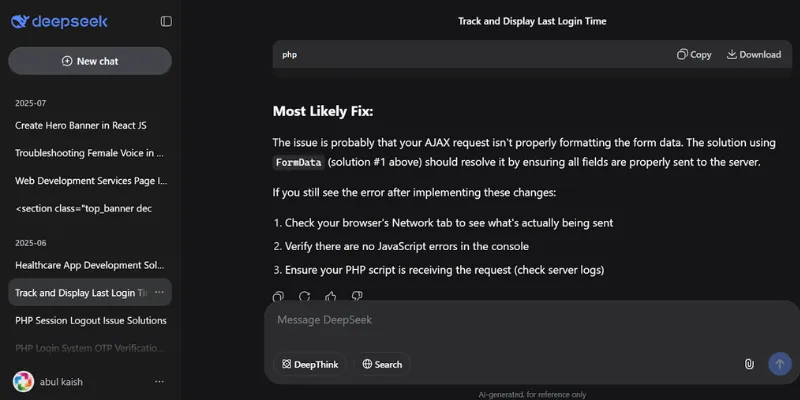
DeepSeek, introduced in 2023, is an AI-powered search and content discovery platform that leverages semantic understanding to deliver precise results. It analyzes user queries and context to provide highly relevant answers, going beyond keyword matching. DeepSeek is designed for researchers, students, and professionals seeking fast and accurate information retrieval. Its AI continuously learns from interactions, improving accuracy and user experience over time, making content discovery smarter, faster, and more intuitive across a variety of domains.
-
Pros: Affordable, high reasoning power.
-
Cons: New, still scaling globally.
-
Best For: Businesses, enterprise solutions.
18. Microsoft Copilot
Microsoft Copilot, launched in 2023, is an AI-powered productivity assistant integrated across Microsoft 365 applications like Word, Excel, and Outlook. Developed by Microsoft, it uses advanced language models to help users draft documents, analyze data, generate insights, and automate repetitive tasks. Copilot enhances workplace efficiency by offering context-aware suggestions and performing complex functions in seconds. Its integration into widely used tools ensures seamless adoption for businesses, making AI-driven productivity accessible to organizations of all sizes.
-
Pros: Enterprise-grade, integrates with Office.
-
Cons: Subscription needed.
-
Best For: Business professionals, enterprises.
Specialized & Accessibility AI
19. Seeing AI (Microsoft)
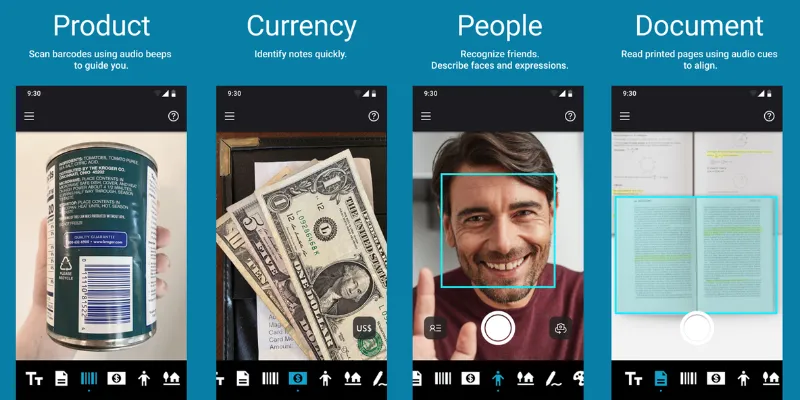
Seeing AI, launched in 2017 by Microsoft, is an AI-powered app designed to assist visually impaired individuals by narrating the world around them. Using computer vision and natural language processing, it can describe people, text, objects, and scenes in real-time. Developed by Microsoft’s AI for Accessibility initiative, the app empowers users to navigate their environment independently. With features like currency recognition, scene description, and text reading, Seeing AI demonstrates how artificial intelligence can be applied for social good and accessibility.
-
Pros: Accessibility-focused, real-world impact.
-
Cons: Limited to certain geographies.
-
Best For: Visually impaired individuals.
20. Ada Health
Ada Health, founded in 2011 by Daniel Nathrath and Martin Hirsch, is an AI-powered healthcare app that provides personalized symptom assessment and medical guidance. Leveraging a vast medical knowledge base and machine learning algorithms, Ada helps users identify potential conditions, recommend next steps, and track health over time. The platform is trusted by millions globally for preliminary medical insights. Its AI-driven approach supports users in making informed decisions, bridging gaps in healthcare accessibility and offering a convenient, digital-first symptom checker.
-
Pros: Easy to use, accessible healthcare support.
-
Cons: Doesn’t replace doctors.
-
Best For: Patients, telemedicine users.
Comparative Table of AI App Categories
| Category | Number of Apps | Key Strengths | Common Limitations | Example Use Cases |
|---|---|---|---|---|
| Conversational & Language AI | 7 | Natural dialogue, multilingual support | Hallucinations, paywalls | Customer service, education |
| Writing & Productivity AI | 4 | Real-time edits, automation | Inaccuracy in niche tones | Content creation, meetings |
| Creative & Visual AI | 5 | Generative outputs, customization | Censorship, credit limits | Marketing, art |
| Enterprise & Business AI | 3 | Scalability, analytics | Complexity, costs | Data decisions, cloud ops |
| Specialized & Accessibility AI | 1 (merged) | Inclusivity, real-world aid | Reliability, subscriptions | Mobility, daily assistance |
This table summarizes strengths across categories, based on 2025 benchmarks.
Benefits of Artificial Intelligence Apps
Artificial intelligence apps deliver substantial advantages, starting with productivity and automation—tools like Otter.ai and Clara reduce manual tasks by transcribing meetings or scheduling seamlessly, freeing up time for strategic work. Cost-efficiency is another boon; open-source options like Hugging Face minimize expenses while offering robust NLP capabilities.
Data-driven insights improve decision-making, as seen in IBM Watson's predictive analytics, which can boost business outcomes by 15-20%. Customer experience enhances through personalization—chatbots like Replika provide emotional support, while Synthesia creates tailored videos. Accessibility and inclusivity are amplified; Aira empowers visually impaired users, promoting independence.
Creativity and innovation flourish with apps like Midjourney, enabling non-artists to generate professional visuals. For app developers, these benefits highlight opportunities in custom solutions, integrating AI for scalable, compliant apps.
Future of Artificial Intelligence Apps
By 2025 and beyond, AI apps are moving toward universal assistants, blending multimodal capabilities for seamless experiences. Integration into healthcare (e.g., diagnostics), finance (fraud detection), retail (personalization), and education (adaptive learning) will deepen.
Ethical concerns persist: bias in models, data privacy risks, and compliance needs demand robust governance. The role of AI app development will expand, focusing on agentic systems and edge AI for real-time processing.
How SISGAIN Builds Advanced AI Apps
SISGAIN, a leading software development company since 2007, excels in creating custom artificial intelligence apps tailored for industries like healthcare and telemedicine. Their expertise includes machine learning, NLP, and scalable AI models, ensuring compliance with standards like HIPAA. With a focus on innovation, SISGAIN delivers secure, efficient solutions for global clients, from mobile app development in Dubai to enterprise-grade tools. Their agile approach guarantees on-time, on-budget projects with 24/7 support.
We don’t just build AI app development solutions; we also specialize in mobile app development Dubai, innovative dating apps, enterprise-grade solutions as a leading App Development Company Dubai, and sector-specific innovations like Healthcare App Development and Telemedicine App Development.
Conclusion
AI apps are reshaping industries and daily life, from boosting productivity to fostering inclusivity. Businesses should explore these tools to stay competitive. Connect with expert app developers like SISGAIN for tailored solutions.