
MVP App Development for Startups in Abu Dhabi
An MVP, or minimum viable product, is the smallest version of an app that solves one real problem well enough for real users to try it, pay for it, and give honest feedback. For founders in Abu Dhabi, an MVP is usually the fastest and most cost-controlled way to test a business idea before committing to a full build. This guide explains what MVP app development involves, what it costs, how long it takes, and how to choose the right partner, with a focus on the regulatory and market realities of the UAE. If you are still at the idea stage, you may first want to read our guide on how to build a minimum viable product, which walks through the basics before you reach the Abu Dhabi specifics below.
Why Abu Dhabi Startups Need MVP App Development
Abu Dhabi has built a strong startup ecosystem around programs such as Hub71 and a financial services hub anchored by ADGM. Founders here have access to capital, government support, and a growing base of enterprise customers. That access also raises expectations. Investors and early customers want evidence that an idea works before they put money behind it.
An MVP provides that evidence. Instead of spending twelve months building a full platform, a founder can build the core workflow in a few months, put it in front of target customers, and measure what they actually do. Usage data, drop-off points, and willingness to pay are far more reliable than assumptions made in a pitch deck.
For regulated sectors, starting small also reduces compliance exposure. An MVP can be designed with data protection in mind from the first sprint, so that compliance does not become an expensive retrofit later. This matters in the UAE, where privacy obligations apply to how personal data is collected, stored, and processed. Our team also covers Mobile app security UAE PDPL compliance Abu Dhabi requirements as part of early planning, so the product is built correctly from the outset.
MVP App Development Services for Abu Dhabi Startups
A strong MVP partner covers the full path from idea to live product. The best engagements are not just coding. They include strategy, design, development, testing, and post-launch learning, all tied to a clear business goal. Our mobile app development services in Abu Dhabi are structured in this way, so each phase builds on the one before it.
MVP Product Discovery and Strategy
Discovery turns a broad idea into a focused product. This stage defines the target user, the core problem, the one job the app must do, and the metrics that will show whether it works. A good discovery process also identifies assumptions that need testing, so the team knows what the first release must prove.
UI/UX Design and Prototyping
Design for an MVP should be simple, clear, and fast to validate. Clickable prototypes let founders and early users test the flow before any code is written. Good MVP design focuses on the first-time user experience, because if people cannot complete the core action in the first session, the product will not get a second chance.
Custom MVP App Development
Custom development builds the core features chosen during discovery. For most MVPs, this means a limited set of screens, a reliable back end, secure authentication, and analytics from day one. Choosing a technology stack should depend on the product’s needs, team skills, and future scaling plans, not on trends alone.
AI-Powered MVP Development
Many founders now want AI features in their first release, such as recommendations, document processing, chat-based support, or predictive insights. AI can be a strong differentiator, but it should earn its place. The right approach is to test whether the AI feature changes user behavior, then invest in improving it. If you are considering this path, our work on ai mobile apps Abu Dhabi projects shows how AI features can be validated early without inflating the first release.
MVP Testing and Launch
Testing for an MVP covers functionality, performance, security, and usability on the devices your customers actually use. Launch planning includes app store submission, beta testing with a small group, and a feedback loop that connects user reports to the product backlog.
Post-Launch Support and Scaling
After launch, the work shifts to learning and improving. This includes bug fixes, performance monitoring, feature refinement based on usage data, and architecture changes that prepare the product for growth. A well-built MVP should be able to scale without a full rewrite, which is why early technical decisions matter.
Industry-Specific MVP Development Solutions in Abu Dhabi
Different sectors have different requirements, so a single template rarely fits. Abu Dhabi’s startup landscape includes several areas where MVP development needs specialized planning.
MVP Development for Hub71 Startups
Hub71 companies often work in technology, health, energy, and digital services, and many aim to reach regional and global markets from the start. An MVP for a Hub71 startup should be built with international scalability in mind, including multi-language support where relevant, flexible back-end architecture, and integration readiness for partner systems.
Fintech MVP Development for ADGM Startups
Financial products carry strict expectations around security, identity verification, transaction integrity, and audit trails. A fintech MVP for an ADGM business should define these controls early, including how user data is stored, who can access it, and how every transaction is logged. Early compliance planning shortens the path to regulatory conversations and investor due diligence.
AI and SaaS MVP Development
SaaS and AI products need to prove value quickly, usually through a single workflow that saves measurable time or money. The MVP should focus on that workflow, with clean onboarding, usage tracking, and a clear path to subscription billing. For AI products, the team should also define how model outputs will be checked and how errors are handled.
MVP Development for SMEs
Small and medium enterprises often want to digitize an internal process or launch a customer-facing app without a large technology budget. For SMEs, the most valuable MVP is usually the one that replaces a manual task, such as bookings, approvals, inventory tracking, or customer requests. Keeping scope tight is the key to keeping cost and timelines predictable.
MVP App Development Process: From Idea to Launch
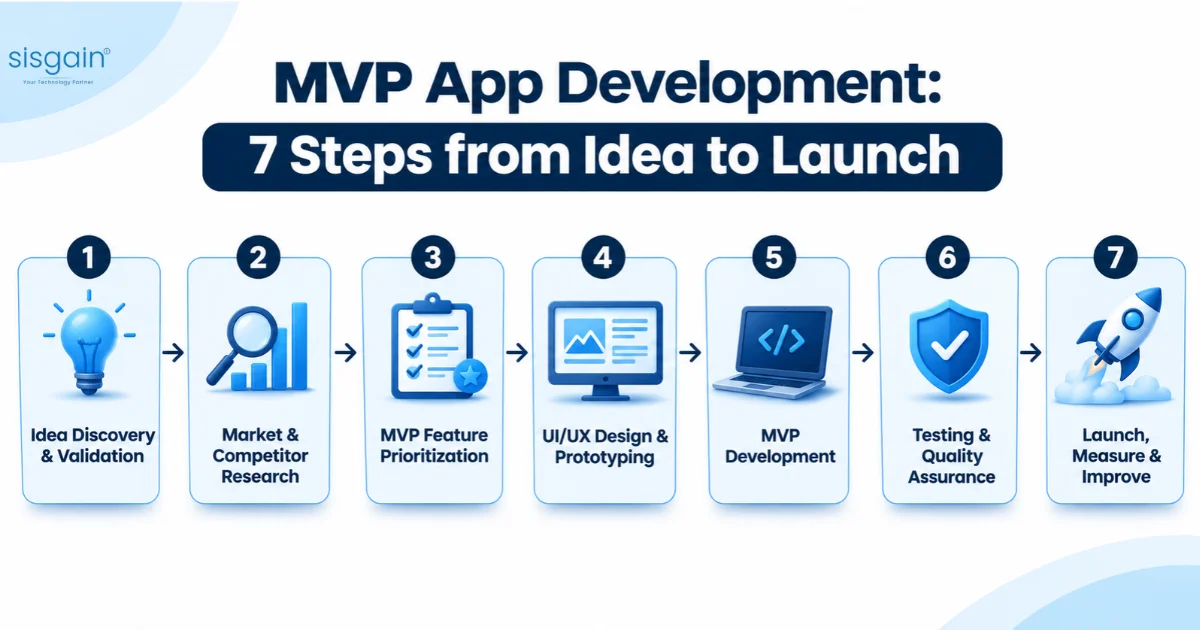
A structured process reduces risk. The steps below reflect how most effective MVP projects move from concept to market.
Step 1 – Idea Discovery and Validation
Start by writing down the problem in one sentence, the user who has it, and why existing options fall short. Then test the idea with real people through interviews, surveys, or landing pages. The goal is to confirm that the problem is painful enough that people would change their behavior to solve it.
Step 2 – Market and Competitor Research
Study who else is solving the problem, what they charge, what users complain about, and where gaps remain. Competitor research should also cover regulatory expectations in the UAE, especially for apps that handle personal or financial data. Teams comparing options often review the top software companies in abu dhabi at this stage to understand the local talent and delivery landscape.
Step 3 – MVP Feature Prioritization
List every feature the team imagines, then cut ruthlessly. A useful test is to ask whether the product can deliver its core promise without a given feature. If yes, that feature belongs in a later release. Prioritization often produces a shorter list than founders expect, and that is the point.
Step 4 – UI/UX Design and Prototyping
Translate the prioritized features into screens and user flows. Build a clickable prototype and test it with five to ten target users. Fix the confusing parts before development begins, since changes in design are far cheaper than changes in code.
Step 5 – MVP Development
Build in short sprints with regular demos, so the founder sees progress and can adjust direction. Include basic analytics, error logging, and secure authentication from the first sprint. Data protection requirements should shape the architecture from this stage, not after launch.
Step 6 – Testing and Quality Assurance
Test the app for functionality, security, performance, and accessibility. Run beta tests with real users in conditions close to real life, such as weak network connections and different device types. Document issues and prioritize fixes based on their impact on the core workflow.
Step 7 – Launch, Measure and Improve
Launch to a defined group, not the entire market at once. Track activation, retention, and conversion against the success metrics set in discovery. Use the results to decide whether to persist, pivot, or scale. Every iteration should answer a specific question about user behavior.
How Much Does MVP App Development Cost in Abu Dhabi?
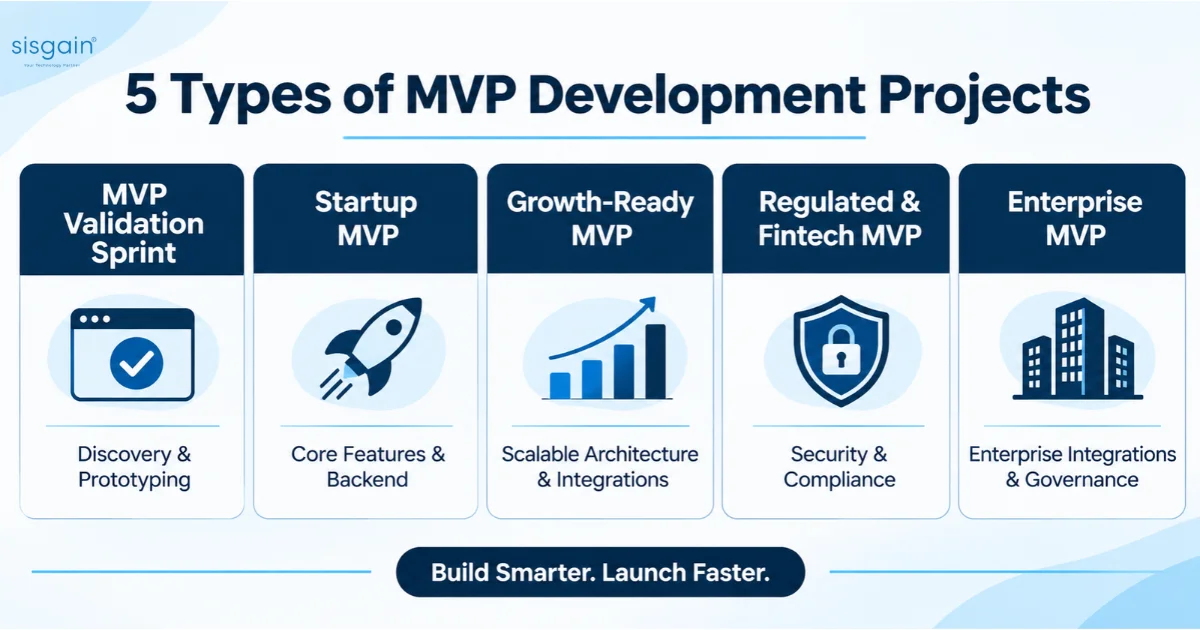
MVP cost depends on scope, platform choice, integrations, design complexity, and compliance requirements. Rather than quoting a single number, it helps to understand the common cost tiers and what drives each one. All figures should be confirmed with a partner against a written scope.
MVP Validation Sprint Cost
A validation sprint is a short, low-cost engagement focused on discovery, prototyping, and user testing. It is designed to answer whether the idea is worth building. This is often the best first step for founders who are still refining the problem.
Startup MVP Development Cost
A standard startup MVP includes core features, a basic back end, user authentication, analytics, and app store deployment. Cost at this level depends mainly on the number of user roles, the complexity of the core workflow, and whether the app runs on iOS, Android, or both.
Growth-Ready MVP Development Cost
A growth-ready MVP adds scalable architecture, third-party integrations, payment processing, and deeper analytics. The additional investment is justified when the founder already has early traction and needs the product to handle more users without performance issues.
Regulated and Fintech MVP Development Cost
Regulated MVPs require stronger security controls, identity verification, audit logging, encryption, and documentation. Costs are higher, but so is the value of getting these foundations right, particularly for products that handle payments or sensitive personal information.
Enterprise MVP Development Cost
Enterprise MVPs often integrate with existing systems such as ERPs, CRMs, and internal databases. They also require role-based access, governance controls, and compliance reviews. Planning for enterprise mobile app development in Abu Dhabi at this scale means budgeting for integration and governance work from the beginning, rather than treating them as add-ons.
MVP vs Full-Scale App Development: What Should You Build First?
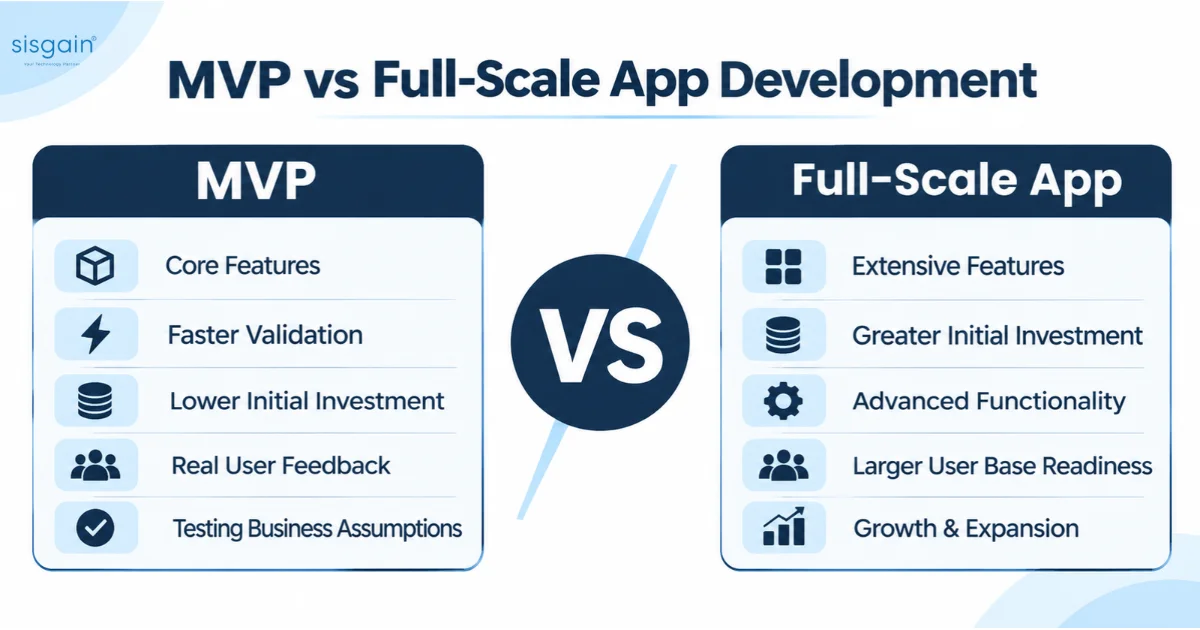
An MVP is not a smaller version of a finished product built to the same standard. It is a learning tool. A full-scale app assumes the product-market fit is already known and invests in breadth, polish, and scale. An MVP assumes some things are still uncertain and invests in testing those uncertainties as quickly as possible.
Build a full-scale app first only when the market need is proven, the user journey is well understood, and the business model has been tested with paying customers. In most other cases, an MVP is the more responsible choice. It limits financial risk, reduces time to feedback, and gives the team real data to guide the larger build.
Founders should also remember that an MVP does not have to be ugly or unreliable. Users should be able to complete the core task smoothly. What can be limited is the number of features, not the quality of the features that exist.
How Long Does It Take to Build an MVP App?
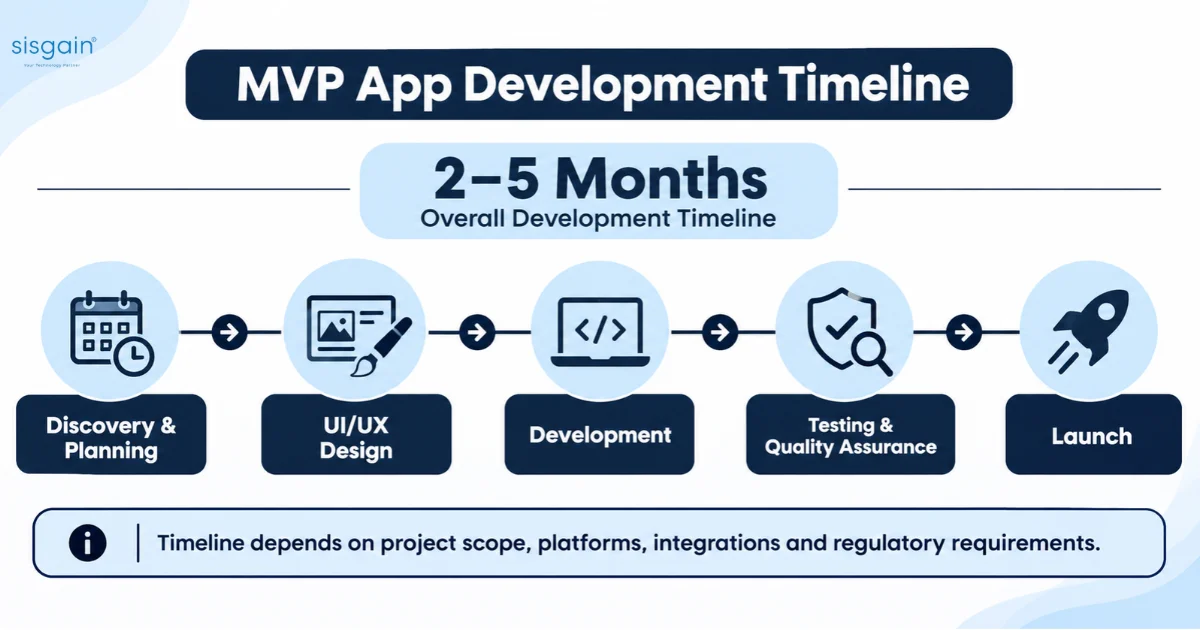
Most MVP projects take between two and five months from discovery to launch, depending on scope and the number of platforms. A simple single-platform app with a focused workflow can move faster, while an MVP with AI components, third-party integrations, or regulatory requirements usually needs more time for design, testing, and approvals.
Timelines are shortest when decisions are made quickly, requirements are stable, and feedback arrives on schedule. Delays most often come from changing scope mid-project, unclear user roles, or late-stage integration problems. Agreeing on a tight scope before development starts is the most effective way to protect the timeline.
How We Help Startups Validate Their MVP Before Scaling
Validation is the stage where many MVPs either prove their value or reveal that the idea needs to change. A useful validation process includes defined hypotheses, a small set of measurable metrics, and a clear decision rule. For example, a team might decide that if at least a set percentage of pilot users complete the core task within the first week, the product moves to the next phase. If not, the team tests a different approach.
The validation work should also include qualitative feedback. Numbers show what users do, while interviews reveal why. Combining both gives founders a clearer basis for decisions about pricing, features, and go-to-market plans.
Once validation succeeds, scaling can begin in a controlled way. That means improving performance, adding the features users request most, strengthening security, and preparing the architecture for higher load. The aim is to grow the product on evidence, not on assumptions.
Why Choose SISGAIN Technologies for MVP App Development in Abu Dhabi?
SISGAIN works with startups and enterprises that need a practical path from idea to market. Our approach combines product strategy, user-centered design, and disciplined engineering, with a focus on building only what the business needs to learn and grow. For teams looking for enterprise mobile app development in Abu Dhabi, we also align MVPs with the security and data protection expectations that larger organizations require.
Our work covers mobile app security UAE PDPL compliance considerations from the start, including how personal data is collected, stored, and accessed. We also help founders evaluate where AI features add real value and where simpler solutions will perform better. Whether you are a Hub71 company, an ADGM fintech, or an SME digitizing a core process, the goal is the same: a product that is ready for real users and built to improve from there.
As a team, we see our role as a long-term partner rather than a one-time vendor. We help define the product, build it, launch it, and support the next stage of growth.
Ready to Turn Your Startup Idea into a Market-Ready MVP?
Every strong product begins with a clear question: what problem are we solving, and how will we know it works? If you are ready to test your idea, build a focused MVP, and plan for growth, our team can help you move from concept to launch with confidence. Contact SISGAIN Technologies to discuss your MVP scope, timeline, and next steps for building a product that Abu Dhabi users and investors can trust.