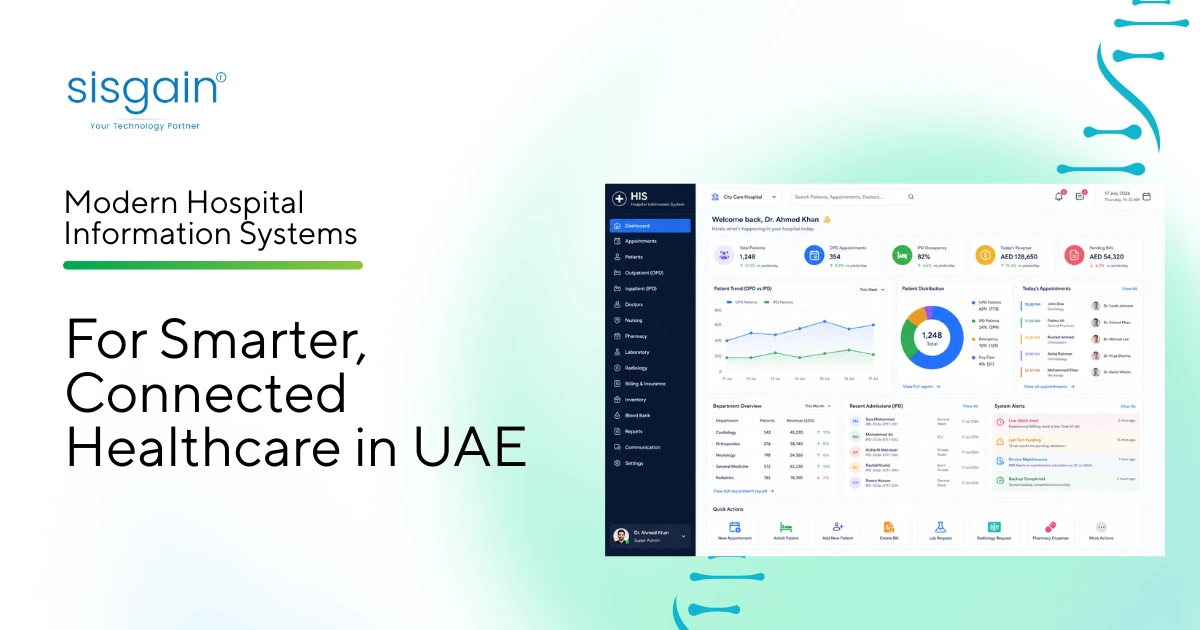

Quick Answer
A Hospital Information System (HIS) is an integrated healthcare software platform that manages clinical, operational, administrative, financial, and regulatory workflows within hospitals. In the UAE, a modern HIS also integrates with Electronic Medical Records (EMR), Electronic Health Records (EHR), Health Information Exchanges (NABIDH, Malaffi, Riayati), and supports HL7/FHIR interoperability while meeting DHA, DoH, and MOHAP compliance requirements.
UAE hospitals are under more pressure than ever to deliver faster, safer, and more connected care—and the right Hospital Information System is the backbone that makes it possible. This complete guide covers everything healthcare leaders, CIOs, and hospital administrators need to know about HIS in the UAE context: what it is, how it works, which modules matter, how to integrate with NABIDH, Malaffi, and Riayati, what compliance demands are non-negotiable in 2026, and how to evaluate vendors, control costs, and plan a successful implementation.
What Is a Hospital Information System (HIS)?
A Hospital Information System (HIS) is an integrated software platform that digitally manages the full spectrum of hospital operations—clinical, administrative, financial, and regulatory. Rather than relying on separate, siloed tools for scheduling, medical records, billing, and pharmacy, a HIS unifies these functions into one connected environment where data flows in real time across departments.
A Brief History and Evolution of HIS
The shift from paper-based records to digital systems began in earnest during the 1960s and 1970s, when early mainframe-based hospital data systems were introduced in the United States and Europe. These systems handled basic administrative functions—patient registration and billing—but were expensive, limited in scope, and far from integrated.
By the 1990s, client-server architectures allowed more functional depth. Laboratory, radiology, and pharmacy modules began appearing. The term "Hospital Information System" gained traction as software vendors started offering multi-department solutions on a common database.
The 2000s brought electronic medical records (EMR) into the mainstream, largely driven by government incentive programs in the US and Europe. The concept of interoperability—the ability for one system to share data meaningfully with another—became the defining challenge of the decade.
Today, a modern Hospital Information System is cloud-capable, AI-integrated, and standards-based. In the UAE specifically, HIS platforms must be built for interoperability with national Health Information Exchanges and aligned with emirate-level regulatory bodies.
Why Hospitals Moved Away from Paper Records
Paper-based hospital records created compounding risks: lost files, illegible handwriting, duplicate patient registrations, delayed test results, billing errors, and zero visibility across departments. A single missing allergy record could cause a clinical incident. A misfiled insurance claim could delay revenue by weeks.
Digital HIS platforms eliminated these structural weaknesses by creating a single source of truth for every patient encounter, every billing transaction, every inventory movement, and every regulatory submission.
Why HIS Is Now Essential
A modern hospital cannot operate competitively—or safely—without a robust HIS. The volume of data generated per patient has grown exponentially. A single hospitalization may involve dozens of diagnostic tests, multiple departments, several prescribing physicians, an insurance claim, and a discharge summary that must flow to a national health record. No manual process can manage that reliably at scale.
Why Hospital Information Systems Matter in UAE Healthcare
The UAE healthcare sector is undergoing a structural transformation, driven by population growth, government vision, and the demands of an increasingly complex insurance and regulatory environment.
UAE Vision 2031 and Smart Hospital Strategy
The UAE's healthcare ambitions are embedded in national strategy. The UAE Vision 2031 targets a world-class, preventive, and patient-centric health system. The Smart Hospital initiative—championed across the emirates—calls for end-to-end digitization of hospital services, including AI-driven diagnostics, connected devices, and real-time data sharing with national health authorities.
Hospital Information Systems are the foundational infrastructure layer that makes smart hospitals possible.
Growing Patient Volume and Complexity
The UAE's population exceeded 10 million people, with Dubai and Abu Dhabi continuing to attract expatriate talent and medical tourism. This population growth, combined with rising rates of chronic disease and an aging demographic, puts sustained pressure on hospital capacity and care coordination. A HIS that handles only basic scheduling is no longer sufficient—hospitals need platforms capable of managing complex multi-specialty care pathways.
Insurance Complexity and Revenue Cycle Demands
The UAE operates a mandatory health insurance system. Dubai's Health Insurance Law and Abu Dhabi's Thiqa and Daman schemes require hospitals to submit pre-authorizations, claims, and clinical justifications in structured digital formats. Managing this manually is operationally unsustainable. A HIS with a built-in insurance and revenue cycle management module directly reduces claim rejection rates and accelerates cash flow.
Digital Transformation Adoption
Healthcare leaders across the UAE are accelerating their digital transformation programs. Cloud adoption in UAE healthcare is rising sharply, with government institutions and private hospital groups both shifting toward hybrid and cloud-native architectures. AI adoption is following closely, with predictive analytics, diagnostic imaging AI, and clinical decision support entering mainstream hospital deployments.
The competitive reality is clear: hospitals with modern, integrated HIS platforms are delivering better outcomes, faster throughput, and stronger financial performance than those still operating on legacy or fragmented systems.
Understanding the UAE Healthcare Digital Ecosystem
UAE hospitals do not operate in isolation. Any Hospital Information System deployed in the UAE must integrate with a layered regulatory and data-sharing ecosystem involving multiple authorities and national platforms.
Dubai Health Authority (DHA)
The DHA regulates healthcare facilities and professionals in the Emirate of Dubai. DHA mandates specific standards for electronic health records, insurance processing, and data sharing—including integration with NABIDH (the Dubai Health Information Exchange).
Ministry of Health and Prevention (MOHAP)
MOHAP is the federal regulatory body overseeing healthcare across the UAE, particularly in the northern emirates. MOHAP sets national standards for HIS data formats, clinical reporting, and patient safety metrics.
Department of Health Abu Dhabi (DoH)
The DoH governs healthcare regulation in the Emirate of Abu Dhabi. It oversees the Malaffi platform—Abu Dhabi's Health Information Exchange—and enforces compliance with the Abu Dhabi Healthcare Information and Cyber Security (ADHICS) standard.
NABIDH
NABIDH (النبض) is Dubai's Health Information Exchange, operated by the DHA. It enables the secure sharing of patient health records across all DHA-licensed healthcare facilities. Every hospital operating in Dubai must integrate its HIS with NABIDH and submit structured clinical data in HL7 FHIR format.
Malaffi
Malaffi is Abu Dhabi's Health Information Exchange, operated by the DoH. It connects public and private healthcare providers across Abu Dhabi, giving clinicians access to a unified patient record. HIS platforms serving Abu Dhabi facilities must be Malaffi-compliant and capable of bidirectional data exchange.
Riayati
Riayati is the UAE's national unified medical record platform, operating at the federal level under MOHAP. It aggregates patient data from across all emirates, enabling national-level continuity of care. Integration with Riayati is becoming a baseline expectation for any serious HIS vendor operating in the UAE.
Bayan
Bayan is a federal healthcare data platform designed to aggregate national health statistics and support population health management and policy decisions. While primarily used by authorities rather than individual hospitals, HIS platforms may feed anonymized data into Bayan as part of national health reporting.
Understanding this ecosystem is not optional. A Hospital Information System UAE deployment that lacks these integrations will face regulatory barriers, insurance rejections, and operational friction that negates its clinical value.
Hospital Information System Architecture Explained
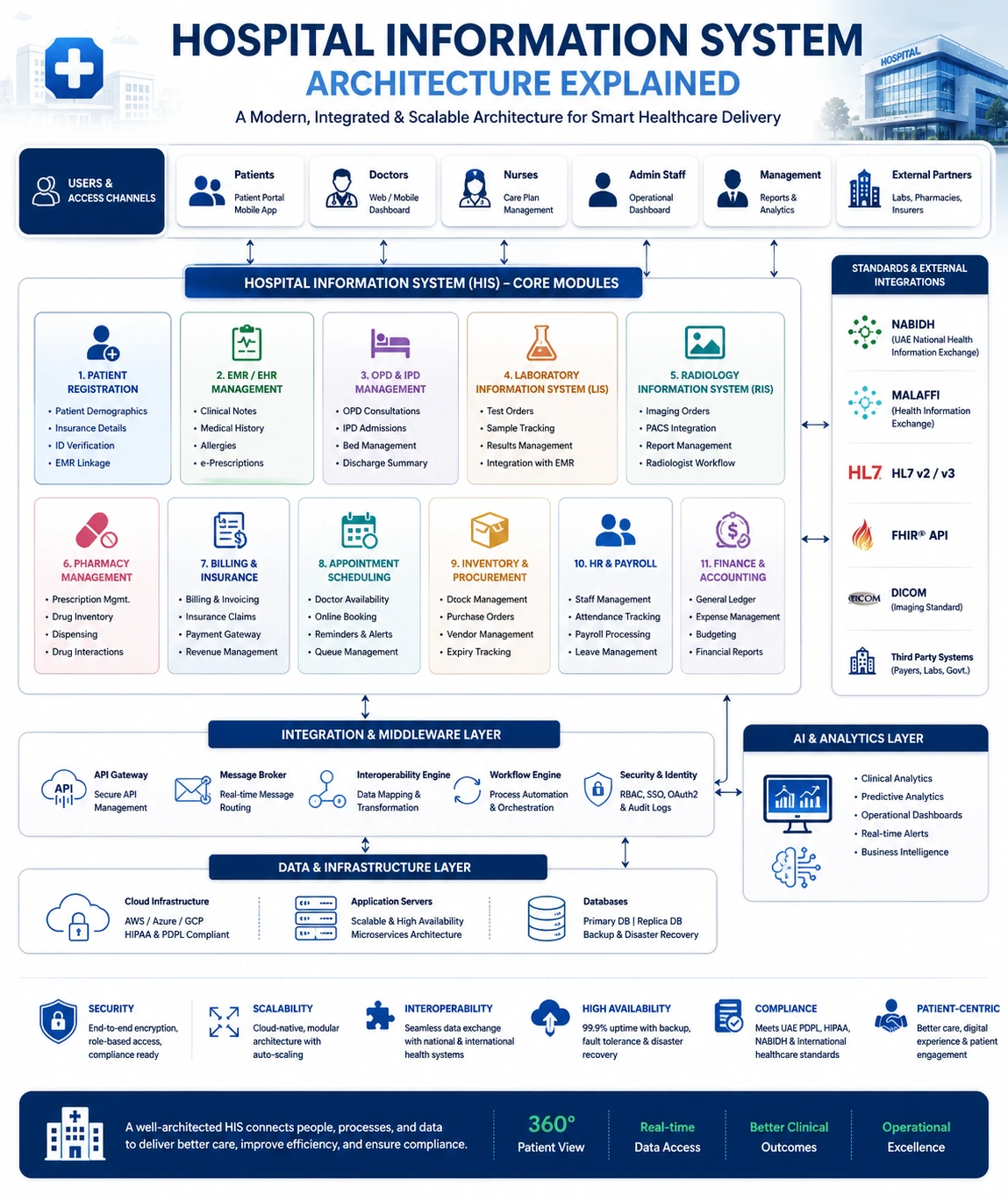
A well-designed HIS architecture follows the patient journey from the moment they arrive at the hospital to the moment they are discharged—and beyond.
The Patient Data Flow
The logical flow of a HIS moves through interconnected layers:
Patient Arrival → Reception & Registration → EMR/EHR → Specialty Modules → Billing & Insurance → Analytics → HIE/Government Systems
At each touchpoint, data is captured, validated, and made available to the next relevant department in real time.
Deployment Models
|
Architecture |
Description |
Best For |
|---|---|---|
|
Cloud-Based |
Hosted on a public or private cloud; minimal on-site infrastructure |
Startups, growing hospitals, multi-site groups |
|
On-Premise |
Servers hosted within the hospital facility |
Large government hospitals with strict data sovereignty requirements |
|
Hybrid |
Core systems on-premise, with cloud modules for analytics, telemedicine, and backup |
Enterprise hospitals balancing control and scalability |
APIs and Microservices
Modern HIS platforms are built on microservices architecture, where individual modules—pharmacy, lab, radiology—function as independent services connected via APIs. This approach allows hospitals to upgrade or replace specific modules without rebuilding the entire system. HL7 FHIR APIs are the standard interface for connecting HIS modules with national HIEs like NABIDH and Malaffi.
Core Modules of a Hospital Information System
A comprehensive Hospital Information System covers every operational domain of the hospital. Below is a breakdown of the essential modules any UAE hospital should expect from its HIS platform.
Patient Registration Module
The registration module is the entry point for every patient encounter. It captures demographic information, assigns a unique patient ID, manages medical record numbers (MRN), and links the patient to their insurance profile. Duplicate patient record prevention—through master patient index (MPI) logic—is a critical function at this stage.
Appointment Management
This module handles outpatient scheduling across all specialties, manages provider calendars, supports online and mobile booking, sends automated reminders via SMS and app notifications, and tracks appointment status from booking to arrival. Effective appointment management directly reduces no-show rates and improves department throughput.
OPD and IPD Management
Outpatient Department (OPD) management tracks patient flow from check-in through consultation and discharge. Inpatient Department (IPD) management handles bed assignment, ward transfers, nursing notes, meal orders, and discharge planning. Both modules must be tightly integrated with the EMR and billing systems.
Emergency Department (ED) Module
The ED module manages triage, acuity scoring, patient tracking on a live dashboard, resuscitation documentation, and fast-track workflows. In a busy UAE hospital emergency department, real-time visibility across all ED bays is essential for safe and efficient care.
Electronic Medical Record (EMR) Module
The Electronic Medical Record (EMR) Software module is the clinical core of the HIS. It captures the physician's documentation of each encounter—chief complaint, history, examination findings, diagnosis, treatment plan, prescriptions, and follow-up instructions. EMR data is structured, searchable, and linkable to lab results, imaging reports, and pharmacy orders.
Electronic Health Record (EHR) Module
The Electronic Health Record (EHR) Solutions module extends the EMR concept across facilities and time. Where an EMR is facility-specific, an EHR aggregates the patient's longitudinal health history across all providers and care settings. In the UAE context, EHR data flows to and from NABIDH, Malaffi, and Riayati, forming the patient's national health record.
Pharmacy Module
The pharmacy module manages medication dispensing, drug interaction checking, formulary management, controlled substance tracking, and stock replenishment. Integration with the EMR ensures prescriptions flow directly from the physician to the pharmacist without manual transcription, dramatically reducing medication errors.
Laboratory Information System (LIS) Module
The laboratory module manages test orders, specimen collection and tracking, result entry, quality control, and result delivery to the ordering clinician. Automated result notification—flagging critical values to the responsible physician—is a patient safety imperative.
Radiology Information System (RIS) Module
The radiology module handles imaging orders, scheduling, worklist management, report dictation and transcription, and DICOM image management. Integration with a Picture Archiving and Communication System (PACS) allows radiologists to view images and generate structured reports within the HIS environment.
Inventory and Supply Chain Management
This module tracks medical supplies, surgical consumables, and equipment availability across hospital stores and departments. Real-time inventory visibility prevents stockouts, reduces waste through expiry tracking, and supports procurement processes with demand-based reorder triggers.
HR and Payroll Module
Hospital HR systems manage employee records, credentialing, shift scheduling, leave management, attendance tracking, and payroll processing. In a UAE hospital where staff may be licensed under DHA, DoH, or MOHAP, the HIS should support professional license tracking and renewal alerts.
Insurance Claims Module
The insurance module manages pre-authorization requests, claims submission, adjudication tracking, denial management, and remittance processing. For UAE hospitals, this means structured data exchange with insurers and third-party administrators (TPAs) using formats compliant with DHA and DoH requirements.
Revenue Cycle Management (RCM)
RCM integrates everything from patient registration and service documentation to claims submission and payment collection. A well-functioning RCM module improves net collection rate, reduces days in accounts receivable, and provides management with real-time revenue visibility.
Billing and Financial Management
The billing module generates itemized patient bills, manages co-payments and deductibles, processes self-pay collections, and supports multi-currency billing for international patients. It connects directly to the general ledger and financial reporting system.
Reporting and Analytics Dashboard
Executive and operational dashboards aggregate KPIs across all HIS modules. Department heads can monitor bed occupancy, average length of stay, procedure volumes, and revenue per patient. Clinical leaders can track quality metrics, readmission rates, and infection control indicators. This module is covered in depth in Section 13.
Administration Module
The administration module manages system configuration, user role definitions, access control policies, audit logging, and compliance reporting. It is the governance layer of the HIS—ensuring that the right people have access to the right data, with every action logged.
HIS vs HMS vs EMR vs EHR
These terms are frequently used interchangeably, but they represent distinct tools with different scopes and purposes. Understanding the differences is essential before selecting a software platform. For a detailed breakdown, read our guide on the Key Differences in HIMS, EMR, and EHR.
|
Attribute |
HIS |
HMS |
EMR |
EHR |
|---|---|---|---|---|
|
Purpose |
Integrated hospital-wide management |
Administrative & operational management |
Clinical documentation per encounter |
Longitudinal patient health record |
|
Primary Users |
All hospital staff |
Administrators, finance, HR |
Physicians, nurses, clinical staff |
Clinicians, patients, insurers, regulators |
|
Scope |
Clinical + operational + financial + regulatory |
Operational + financial |
Single facility, clinical |
Multi-facility, patient-centric |
|
Data |
Structured clinical, financial, administrative |
Administrative, financial |
Clinical notes, orders, results |
Aggregated health history across providers |
|
Interoperability |
Full HIE integration (NABIDH, Malaffi, Riayati) |
Limited |
Limited |
Designed for cross-system sharing |
|
Compliance |
DHA, MOHAP, DoH, ADHICS |
Basic regulatory |
EMR standards |
HL7, FHIR, national HIE standards |
|
Best For |
Full-service hospitals and health systems |
Clinics, smaller facilities |
Specialty practices |
National and regional health networks |
Benefits of Hospital Information Systems
A Hospital Information System UAE deployment delivers measurable improvements across clinical, operational, and financial dimensions.
Operational Efficiency
Automated workflows eliminate redundant data entry, reduce manual handoffs, and streamline department coordination—cutting administrative overhead significantly.
Reduced Waiting Times
Smart queue management, automated appointment reminders, and real-time bed tracking reduce patient wait times in OPD, ED, and inpatient settings.
Better Patient Care
Physicians armed with complete, real-time patient data make faster and more accurate clinical decisions. Drug interaction alerts and allergy checks prevent adverse events.
Improved Compliance
Automated audit trails, structured reporting, and built-in regulatory templates make DHA, DoH, and MOHAP compliance systematic rather than reactive.
Revenue Optimization
Accurate charge capture, automated pre-authorization, and integrated claims management reduce revenue leakage and accelerate cash collection.
Paperless Workflows
Full digitization eliminates physical medical records, paper prescriptions, and manual insurance forms—reducing storage costs and environmental impact.
Better Decision Making
Executive dashboards surface real-time KPIs that allow hospital leadership to respond to trends proactively rather than reviewing lagging monthly reports.
Scalability
Cloud-native HIS platforms scale horizontally—new facilities, new departments, and new modules can be added without replacing the core system.
Patient Satisfaction
Faster service, transparent billing, digital appointment booking, and easy access to personal health records improve the overall patient experience.
AI-Powered Hospital Information Systems
Artificial intelligence is moving from a feature differentiator to a functional requirement in modern Hospital Information Systems. The UAE Healthcare Sector Is Leading AI Adoption, and hospitals that delay AI integration risk falling behind both clinically and competitively.
Predictive Analytics
AI-powered predictive analytics models analyze patient data to forecast clinical deterioration before it becomes a crisis. Hospitals use early warning scoring systems embedded in the HIS to identify sepsis risk, ICU transfer likelihood, and readmission probability—enabling nurses and physicians to intervene at the right moment.
AI Diagnostics
Machine learning models trained on large clinical datasets can assist in diagnosing conditions ranging from diabetic retinopathy to cardiac arrhythmias. When embedded in the HIS workflow, AI diagnostic tools surface decision support alerts directly within the physician's clinical view.
Medical Imaging AI
Radiology AI tools analyze DICOM images to detect anomalies—pulmonary nodules, fractures, intracranial bleeds—with speed and consistency that augments the radiologist's review. Integrated with the RIS module, these tools can automatically prioritize urgent findings in the radiology worklist.
Smart Scheduling
AI scheduling algorithms optimize appointment slots based on historical no-show rates, procedure duration variability, and provider availability. The result: higher slot utilization, shorter wait times, and more predictable department throughput.
AI-Assisted Medical Coding
Clinical documentation is automatically analyzed by AI coding engines to suggest ICD-10 and CPT codes based on the physician's notes. This reduces coder workload, improves coding accuracy, and accelerates claims submission.
Claims Automation
AI models trained on historical claims data can predict denial likelihood before submission, flagging documentation gaps so clinical staff can resolve them proactively. Post-submission, AI tracks claim status and automates follow-up workflows.
Virtual Assistants and Chatbots
AI-powered virtual assistants handle patient-facing tasks—appointment booking, symptom triage, medication reminders, and post-discharge follow-up—reducing the administrative burden on front-desk and call center staff.
Clinical Decision Support (CDS)
CDS tools embedded in the HIS provide evidence-based recommendations at the point of care. Drug dosing guidance, allergy cross-reference alerts, diagnostic protocol reminders, and antimicrobial stewardship prompts all improve clinical quality and patient safety.
Digital Twins
Some advanced healthcare AI deployments use digital twin technology—virtual models of hospital operations or individual patients—to simulate scenarios, optimize resource allocation, or model the impact of treatment decisions before they are made.
Ambient Documentation
Ambient AI tools use voice recognition to automatically convert clinical conversations—between physician and patient—into structured EMR documentation. Physicians spend less time on notes and more time in meaningful patient interaction.
For broader context on how AI is transforming care delivery, explore our AI in Healthcare Solutions resources.
Interoperability in Hospital Information Systems
Interoperability is the ability of different healthcare information systems to exchange, interpret, and use data meaningfully. For UAE hospitals, achieving genuine interoperability is both a regulatory mandate and a clinical necessity.
What Is Healthcare Interoperability?
A system is interoperable when it can send data to—and receive data from—another system in a format that both can understand and act on. Without interoperability, a patient's lab results from one hospital cannot be read by another hospital's HIS, a prescribing physician cannot see a patient's allergy history from a previous provider, and national HIEs cannot function.
Types of Interoperability
|
Type |
Description |
|---|---|
|
Technical |
Systems can communicate at a network and protocol level |
|
Structural |
Data is formatted consistently so it can be parsed correctly |
|
Semantic |
Data carries the same meaning across systems (using shared terminologies like SNOMED CT, LOINC, ICD-10) |
|
Organizational |
Governance, policy, and legal frameworks allow data sharing to occur |
HL7 and FHIR
HL7 (Health Level 7) is a set of international standards for exchanging healthcare information electronically. HL7 v2 messaging remains widely used for lab results, ADT (Admit/Discharge/Transfer) notifications, and order communications. FHIR (Fast Healthcare Interoperability Resources) is HL7's modern, API-based standard that enables granular, on-demand data exchange using REST APIs and JSON/XML formats.
In the UAE, NABIDH and Malaffi both require HL7 & FHIR Integration Services for compliant data submission.
DICOM
DICOM (Digital Imaging and Communications in Medicine) is the universal standard for medical imaging data. Any HIS with a radiology module must support DICOM to exchange imaging studies with PACS systems and, increasingly, with AI diagnostic tools.
SMART on FHIR
SMART on FHIR is an open standard that allows third-party applications to securely access FHIR-based HIS data. It enables AI tools, patient-facing apps, and analytics platforms to connect to the HIS without requiring deep system integration.
Health Information Exchange (HIE) in the UAE
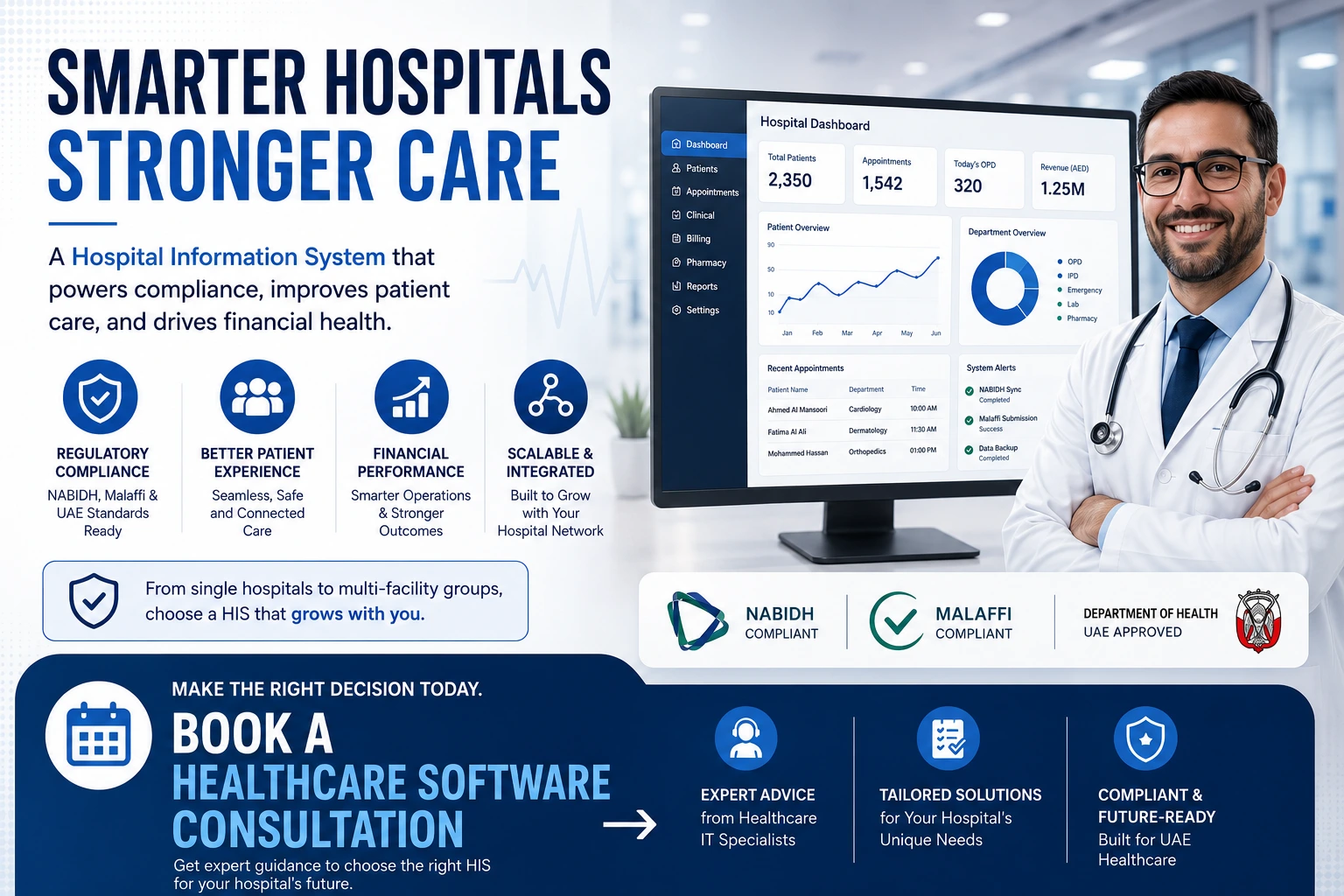
Health Information Exchanges are the national infrastructure connecting individual hospital HIS platforms into a unified patient record accessible across providers. For a deeper dive, explore our Health Information Exchange (HIE) Solutions page.
NABIDH (Dubai)
NABIDH is Dubai's mandatory Health Information Exchange. All DHA-licensed healthcare facilities must connect their HIS to NABIDH and submit clinical summaries—including encounter details, diagnoses, medications, allergies, and lab results—in HL7 FHIR format. NABIDH enables Dubai's clinicians to access a patient's complete history regardless of which facility they visited previously.
Malaffi (Abu Dhabi)
Malaffi operates under the Department of Health Abu Dhabi and connects over 3,000 healthcare facilities across the emirate. Malaffi stores longitudinal patient records and makes them available to authorized clinicians at the point of care, reducing duplicate testing and improving care transitions.
Riayati (Federal)
Riayati is the UAE's national medical record platform, connecting health data across all seven emirates. A patient who received care in Sharjah can have their relevant health history available to a physician in Abu Dhabi through Riayati. Federal-level HIE integration is becoming a non-negotiable requirement for any HIS deployment in the UAE.
Benefits of HIE Integration
- Eliminates duplicate diagnostic tests
- Reduces medication errors from unknown patient history
- Improves care continuity across providers and settings
- Supports population health management and national health surveillance
- Reduces patient onboarding time at new facilities
Compliance Checklist for UAE Hospitals (2026)
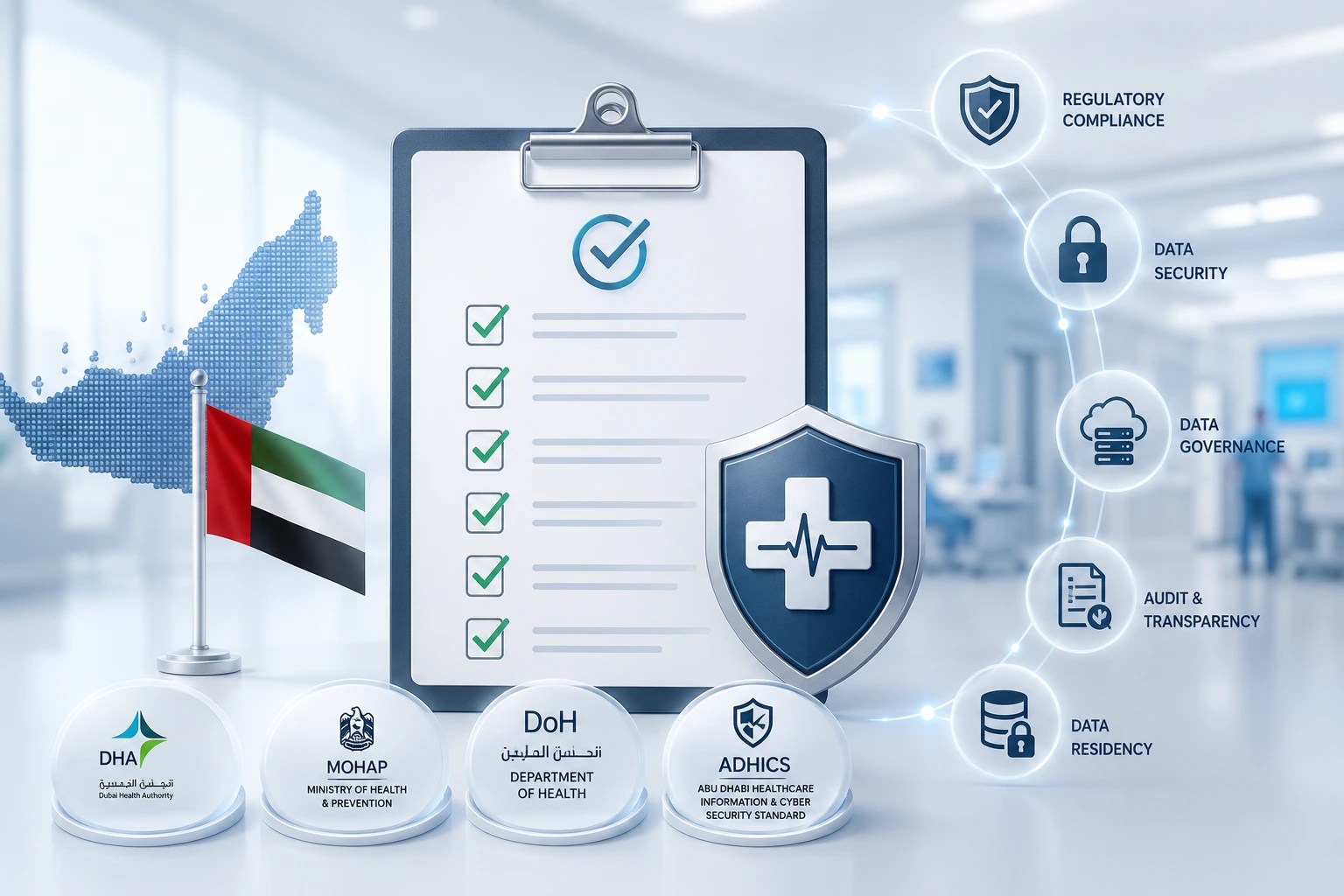
Compliance is not a one-time project. It is an ongoing operational discipline built into every layer of the HIS.
Regulatory Compliance Requirements
- DHA Compliance – EMR standards, NABIDH integration, insurance data formats, facility licensing requirements
- MOHAP Compliance – Federal reporting standards, drug formulary, controlled substance management
- DoH Compliance – Malaffi integration, ADHICS security standard, Abu Dhabi-specific clinical data requirements
- ADHICS (Abu Dhabi Healthcare Information and Cyber Security Standard) – Comprehensive information security requirements for Abu Dhabi healthcare entities
International Standards
- ISO 27001 – Information security management system certification
- HIPAA Alignment – Relevant for hospitals treating patients from the US or operating under international accreditation
- GDPR Awareness – Relevant for European patient data and international partnerships
Data Governance Requirements
- Patient Consent Management – Structured consent capture and tracking within the HIS
- Audit Logs – Immutable logs of all system access and data modifications
- Encryption – Data encrypted at rest and in transit using current standards (AES-256, TLS 1.3)
- Disaster Recovery – Documented RPO and RTO targets, tested recovery procedures
- Data Residency – Patient data stored within UAE jurisdiction in compliance with applicable laws
Healthcare Cybersecurity in HIS
Hospitals are high-value targets for cybercriminals. Healthcare data commands a premium on the black market, and operational disruption in a hospital—even for hours—creates direct patient safety risk. Our Cybersecurity Services in Dubai team works with healthcare providers to build resilient, defensible HIS environments.
The Ransomware Threat
Ransomware attacks on healthcare organizations have increased significantly year over year globally. A successful attack can encrypt patient records, disable clinical systems, and force hospitals to divert emergency patients. UAE hospitals must treat ransomware not as a hypothetical risk but as an active threat.
Zero Trust Architecture
Zero Trust is a security model that assumes no user, device, or network connection is inherently trustworthy. Every access request—internal or external—is verified before being granted. Zero Trust architecture is the recommended security posture for any hospital operating a cloud or hybrid HIS.
Identity and Access Management (IAM)
IAM systems control who can access which parts of the HIS, under what conditions, and for how long. Role-based access control (RBAC) ensures nurses see nursing-relevant data, billing staff see financial data, and physicians access their patient population—without unnecessary cross-access.
Multi-Factor Authentication (MFA)
MFA requires users to verify identity through at least two factors before accessing the HIS. Given that credential theft is among the most common attack vectors in healthcare, MFA is a baseline security control—not an optional enhancement.
SOC Monitoring
A Security Operations Center (SOC) provides 24/7 monitoring of HIS infrastructure, detecting anomalous behavior, unauthorized access attempts, and potential data exfiltration before they escalate. UAE hospitals handling large volumes of patient data should consider either an in-house SOC or a managed SOC provider.
Healthcare Analytics and Business Intelligence
Data without analysis is just storage. A modern HIS converts clinical and operational data into actionable intelligence through integrated Healthcare Analytics Solutions.
Executive Dashboards
Hospital CEOs and CFOs need real-time visibility into financial performance, capacity utilization, and patient satisfaction. Executive dashboards surface top-level KPIs—revenue per bed, cost per discharge, payer mix—in a format that supports fast, informed decisions.
Clinical KPIs
Clinical leadership tracks metrics including:
- Average length of stay (ALOS)
- 30-day readmission rate
- Hospital-acquired infection (HAI) rate
- Surgical complication rate
- Medication error rate
Patient Flow Analytics
Patient flow dashboards visualize bottlenecks in real time—which ED bays are occupied, which wards have available beds, where discharge delays are concentrated. Bed management teams use this data to optimize throughput and reduce hallway waits.
Revenue Cycle Analytics
Finance teams monitor days in accounts receivable, first-pass claim acceptance rate, denial reason analysis, and net collection rate. Analytics-driven revenue cycle management can recover significant revenue that would otherwise be lost to missed charges or unchallenged denials.
Predictive Population Health Analytics
Advanced HIS platforms support population-level analysis—identifying high-risk patient cohorts, chronic disease prevalence trends, and preventable hospitalization patterns. This data supports both clinical outreach programs and strategic capacity planning.
Mobile HIS and Telemedicine
Mobile access to HIS functionality has shifted from a convenience feature to a clinical necessity. Explore how Patient-Engagement Features in Hospital Mobile Apps are reshaping the patient experience.
Physician Mobile Apps
Physicians access patient data, review lab results, sign orders, and dictate notes from mobile devices—on the ward, in the clinic, or between facilities. Mobile EMR access reduces delays in care decisions and allows physicians to manage patient issues without being physically at a workstation.
Nurse Apps
Nursing mobile apps support bedside documentation, medication administration scanning, patient observation recording, and task management. Eliminating the need for nurses to walk to fixed workstations for documentation improves both efficiency and patient safety.
Patient Portal
Patient portals give individuals direct access to their health records, test results, appointment history, invoices, and medication lists. In the UAE, patient portal capabilities are increasingly aligned with NABIDH and Malaffi data, giving patients a unified view of their healthcare history.
Telemedicine Integration
Integrated telemedicine capabilities allow hospitals to offer virtual consultations, follow-up appointments, and remote chronic disease management. For a technical deep dive, see our Telemedicine App Development in UAE resources.
Remote Patient Monitoring
IoT-connected devices—blood pressure monitors, glucometers, wearable cardiac monitors—transmit patient-generated health data directly into the HIS. Clinicians receive alerts when readings fall outside safe parameters, enabling proactive intervention without requiring the patient to visit the hospital.
How to Implement a Hospital Information System
Successful HIS implementation is a structured project, not a software installation. Most failed implementations fail not because of bad software but because of poor planning, inadequate change management, or rushed go-lives.
Step-by-Step HIS Implementation Process
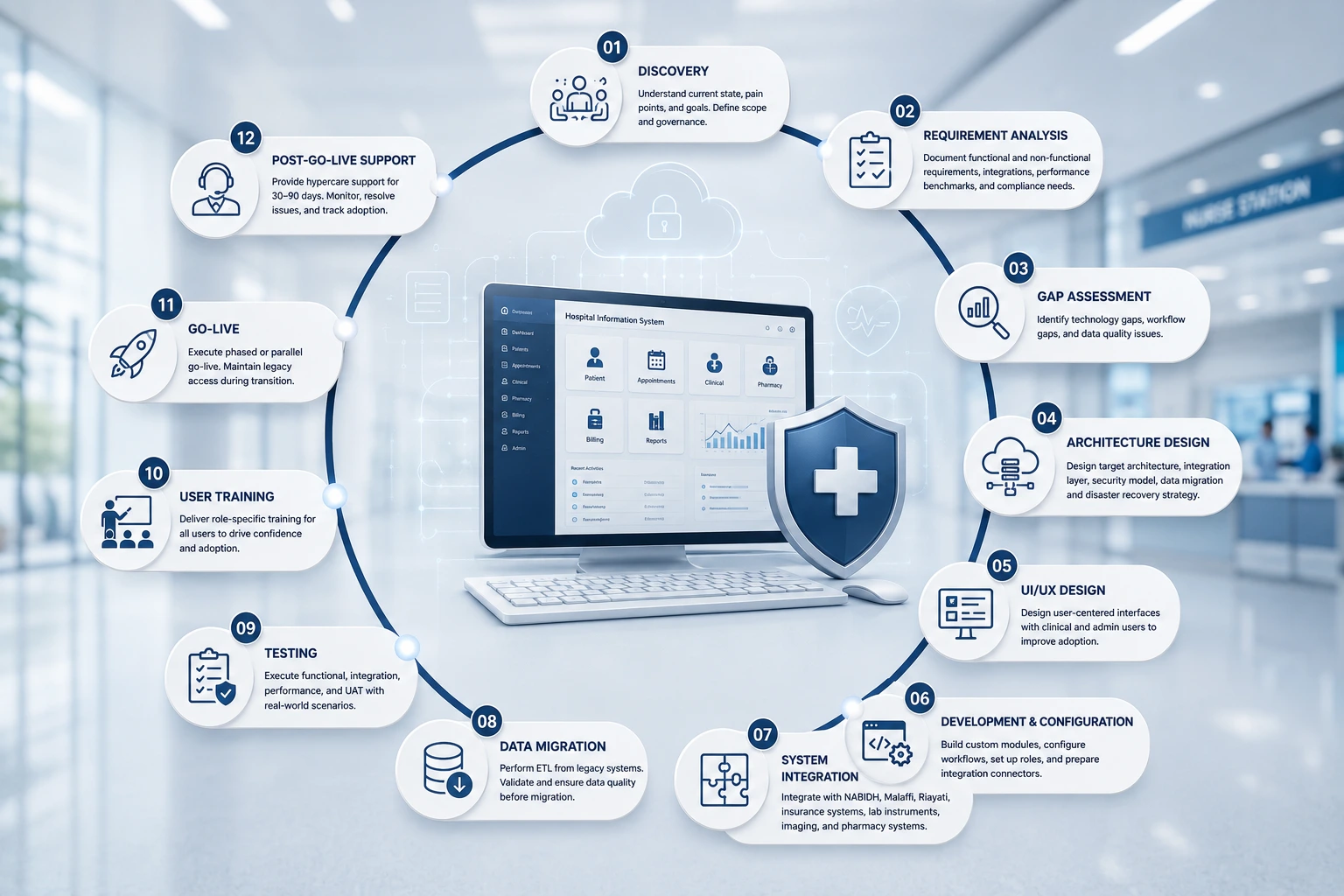
Step 1: Discovery
Engage hospital leadership, department heads, and clinical champions to understand the current state, pain points, and strategic goals. Define the project scope and governance structure.
Step 2: Requirement Analysis
Document functional and non-functional requirements for every department. Identify mandatory integrations (NABIDH, Malaffi, insurance systems), performance benchmarks, and regulatory non-negotiables.
Step 3: Gap Assessment
Compare current capabilities against requirements. Identify technology gaps, workflow gaps, and data quality issues that must be addressed before or during implementation.
Step 4: Architecture Design
Define the target HIS architecture—cloud, on-premise, or hybrid. Design the integration layer, security model, data migration strategy, and disaster recovery architecture.
Step 5: UI/UX Design
Engage clinical and administrative end users in interface design. Workflows built around actual user behavior reduce training time and adoption friction.
Step 6: Development and Configuration
For custom or hybrid deployments, this phase involves building custom modules, configuring workflows, setting up user roles, and preparing integration connectors.
Step 7: System Integration
Connect the HIS to NABIDH, Malaffi, Riayati, insurance systems, laboratory instruments, imaging systems, and pharmacy dispensing hardware. Test each integration in a staging environment before production deployment.
Step 8: Data Migration
Extract, transform, and load (ETL) historical data from legacy systems. Data quality validation is critical—migrating corrupted or duplicate records compounds problems in the new system.
Step 9: Testing
Execute functional testing, integration testing, performance testing, and user acceptance testing (UAT). Clinical UAT should involve actual end users testing real-world scenarios.
Step 10: User Training
Deliver role-specific training for physicians, nurses, pharmacists, billing staff, and administrators. Training effectiveness directly determines adoption speed.
Step 11: Go-Live
Execute a phased or parallel go-live strategy. Phased go-lives—department by department—reduce risk. Maintain legacy system access during the transition period.
Step 12: Post-Go-Live Support
Provide hypercare support for the first 30–90 days after go-live. Monitor system performance, resolve workflow issues, and track adoption metrics. A dedicated support team is essential during this period.
Our IT Consulting in Dubai team has guided hospitals through every stage of this process—from pre-implementation planning to post-go-live optimization.
Build vs Buy HIS Software
One of the most consequential decisions a hospital makes is whether to buy an off-the-shelf HIS, build a custom platform, or pursue a hybrid approach.
|
Factor |
Off-the-Shelf |
Custom Built |
Hybrid |
|---|---|---|---|
|
Time to Deploy |
3–9 months |
12–24+ months |
6–18 months |
|
Upfront Cost |
Medium |
High |
Medium-High |
|
Customization |
Limited |
Full |
Moderate-High |
|
UAE Compliance |
Depends on vendor |
Fully configurable |
Configurable |
|
Vendor Dependency |
High |
None |
Moderate |
|
Scalability |
Vendor roadmap-dependent |
Fully controlled |
Moderate |
|
Support |
Vendor-provided |
In-house or partner |
Shared |
|
Best For |
Hospitals needing fast deployment with standard workflows |
Large hospitals or networks with unique requirements |
Hospitals needing core functionality quickly with room for customization |
Choose off-the-shelf if deployment speed, predictable cost, and standard workflows align with your operational model.
Choose custom if your hospital has complex workflows, specialized services, or integration requirements that no commercial platform meets adequately. Our Custom Healthcare Software Development in UAE team specializes in building purpose-built HIS platforms for exactly these scenarios.
Choose hybrid if you need a functional core system quickly but require custom modules for specific departments or integrations.
For a detailed breakdown, see our guide on finding the Right Healthcare Software Development Company.
Hospital Information System Cost in the UAE
HIS pricing in the UAE varies significantly based on hospital size, module scope, deployment model, integration requirements, and vendor selection.
Key Pricing Factors
- Hospital Size – Bed count, number of departments, concurrent user volume
- Module Scope – Core modules vs. full-suite including AI, analytics, telemedicine
- Deployment Model – Cloud (subscription-based) vs. on-premise (higher upfront, lower ongoing)
- Integrations – NABIDH, Malaffi, Riayati, insurance, lab instruments, imaging systems
- Compliance Engineering – DHA, DoH, MOHAP-specific configuration requirements
- Support Model – 24/7 managed support vs. business-hours-only coverage
- Customization Depth – Standard configuration vs. bespoke workflow development
Indicative Cost Ranges for UAE Hospitals
|
Hospital Type |
Estimated HIS Investment |
|---|---|
|
Small Clinic / Day Surgery (Under 50 Beds) |
AED 150,000 – AED 500,000 |
|
Medium Hospital (50–200 Beds) |
AED 500,000 – AED 2,000,000 |
|
Large / Enterprise Hospital (200+ Beds) |
AED 2,000,000 – AED 10,000,000+ |
Note: These ranges are indicative. Actual costs depend on specific requirements. Contact our team for a detailed assessment.
How to Choose the Right HIS Vendor
Selecting a HIS vendor is a long-term strategic partnership decision. The wrong choice costs far more than the initial investment—in implementation rework, workflow disruption, and compliance risk.
HIS Vendor Evaluation Checklist
- Healthcare Domain Expertise – Does the vendor understand clinical workflows, not just software?
- UAE Market Experience – Has the vendor deployed HIS systems in the UAE? Do they understand DHA, DoH, and MOHAP requirements?
- Local Presence – Does the vendor have in-country support staff or a UAE-based team?
- Compliance Track Record – Can they demonstrate NABIDH, Malaffi, and Riayati integration experience?
- AI Capabilities – Is AI natively integrated, or bolted on as an afterthought?
- Scalability – Can the platform grow from a single facility to a multi-site health network?
- Cloud Readiness – Does the vendor support cloud, hybrid, and on-premise deployments?
- Support Model – What are the SLAs for critical system issues? Is 24/7 support available?
- Customization Capability – Can the platform be configured to match unique departmental workflows?
- Interoperability Standards – Native HL7 FHIR support is non-negotiable.
- Future Roadmap – Is the vendor investing in AI, ambient documentation, IoMT, and next-generation features?
- References – Can the vendor provide UAE-based hospital references and case studies?
Explore our guide to Find the Right Healthcare Software Development Company for an expanded framework.
The Future of Hospital Information Systems
The next generation of Hospital Information Systems will be defined not by what they manage, but by what they anticipate.
AI Agents and Autonomous Workflows
AI agents embedded in HIS platforms will autonomously execute routine tasks—scheduling follow-up appointments, triggering pre-authorization requests, ordering routine supplies—reducing human intervention in low-stakes, high-volume workflows.
Generative AI in Clinical Documentation
Generative AI models will produce first-draft clinical notes, discharge summaries, referral letters, and patient education materials from structured HIS data. Physicians will review and approve rather than compose from scratch.
Voice-Driven EMR
Ambient voice documentation—where AI listens to clinical conversations and structures them into EMR entries—will become the default documentation modality. This shift will return significant physician time to direct patient care.
Predictive Care and Digital Hospitals
Fully digital hospitals will use HIS data, wearable sensors, genomic profiles, and AI models to deliver predictive and preventive care—intervening before a patient deteriorates rather than responding after.
Internet of Medical Things (IoMT)
Medical devices—infusion pumps, ventilators, cardiac monitors, surgical robots—will transmit real-time data into the HIS, creating a continuous stream of patient vital signs that AI models and clinical alerts act upon automatically.
National FHIR Networks
As NABIDH, Malaffi, and Riayati mature and expand their FHIR API capabilities, UAE hospitals will operate within a truly national health data network—where any authorized clinician can access a complete, standardized patient record regardless of where care was originally delivered.
Conclusion
A Hospital Information System isn't a back-office IT project anymore — it's the infrastructure a UAE hospital's compliance, patient care, and financial health all run on top of. The hospitals that treat it that way now, rather than waiting for the next regulatory deadline to force the issue, are the ones that end up choosing their HIS on their own timeline instead of scrambling on someone else's.
Whether you're evaluating your first HIS, replacing a system that can't keep up with NABIDH or Malaffi requirements, or planning a multi-facility rollout, the decisions made at the architecture and vendor-selection stage are the ones that are hardest — and most expensive — to undo later. If you're still scoping how much platform you actually need, revisiting why hospitals need Hospital Management System software is a useful place to start before signing anything.