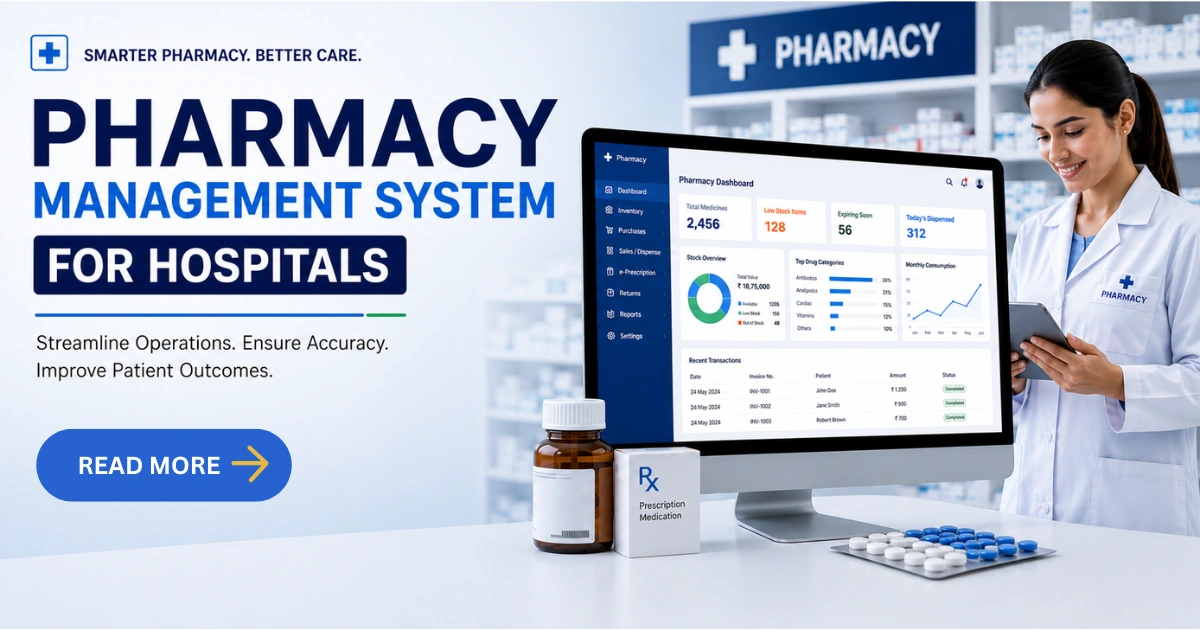

Technology is changing the way healthcare is delivered, making hospitals and clinics more efficient and improving patient care. With the rise of digital solutions, terms like HIMS, EMR, and EHR have become common in healthcare discussions. However, many healthcare professionals and hospital administrators find these terms confusing, as they are often used interchangeably. Each system has its own purpose, scope, and functionality, and understanding these differences is essential for making the right choice for your facility.
A Hospital Information Management System (HIMS) is a complete solution that manages all aspects of a hospital’s operations. It handles everything from patient registration, appointment scheduling, and billing to pharmacy management, lab integration, and data analytics. HIMS connects multiple departments, streamlines workflows, reduces errors, and helps hospitals run smoothly while providing better patient experiences.
Electronic Medical Records (EMR) focus on a patient’s medical history within a single healthcare facility. EMRs store information such as diagnoses, treatment plans, medications, and lab results, supporting clinicians in their day-to-day decision-making. In contrast, Electronic Health Records (EHR) are designed to share patient data across multiple healthcare providers. EHRs allow doctors, specialists, and labs to access the same patient information, ensuring coordinated care and better health outcomes.
Knowing the differences between HIMS vs EMR vs EHR is crucial for hospitals and clinics that want to optimize operations and deliver high-quality care. This guide will explain the difference between HIMS EMR and EHR, show real-world examples, compare features, and highlight why implementing a Hospital Information Management System (HIMS) can be a smart choice for healthcare facilities.
What is HIMS in Healthcare?
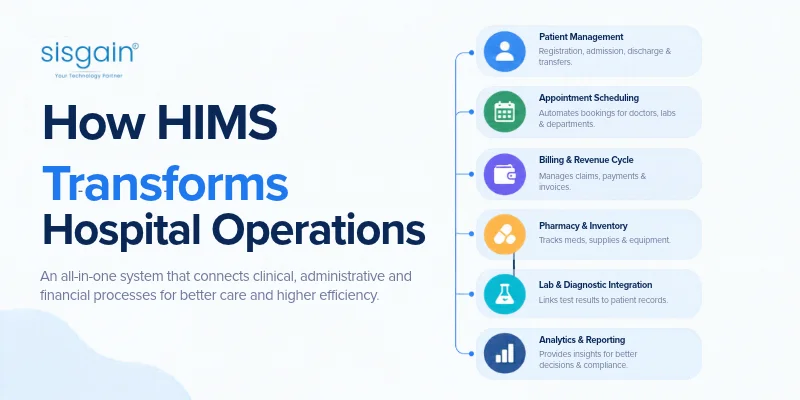
Hospital Information Management System (HIMS) is a powerful, all-in-one software solution designed to make hospital operations smoother, faster, and more efficient. Unlike EMR or EHR, which primarily focus on patient medical records, HIMS goes beyond by integrating clinical, administrative, and financial processes into a single, seamless platform. This means every department, from reception to pharmacy to billing, can work together effortlessly, improving both patient care and operational efficiency.
Key features of HIMS software include:
- Patient Management: Simplifies registration, admission, discharge, and transfers, ensuring accurate patient information is always accessible.
- Appointment Scheduling: Automates scheduling for doctors, labs, and departments, reducing wait times and optimizing resource use.
- Billing and Revenue Cycle Management: Tracks payments, manages insurance claims, generates invoices, and keeps financial processes transparent and accurate.
- Pharmacy & Inventory Management: Monitors medications, supplies, and equipment, preventing stockouts and ensuring smooth hospital operations.
- Laboratory & Diagnostic Integration: Links lab results and diagnostic reports directly to patient records, enabling quick access for clinicians.
- Analytics & Reporting: Provides actionable insights on hospital performance, patient care metrics, and regulatory compliance, helping administrators make data-driven decisions.
With HIMS, hospitals can deliver better care, reduce errors, and run operations efficiently—all in one unified system.
What is EMR?
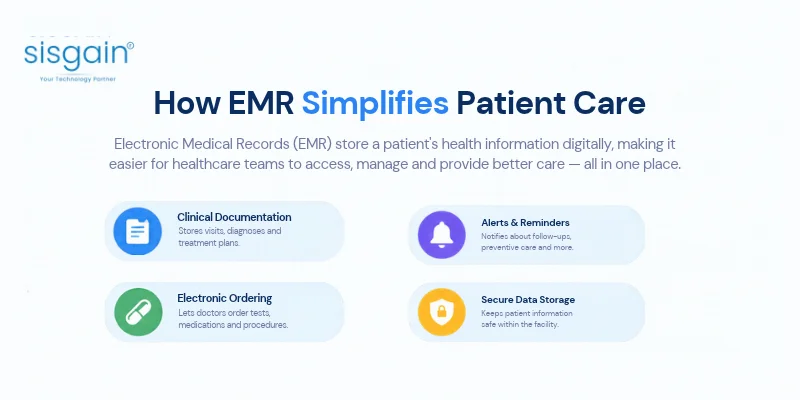
Electronic Medical Record software is a digital version of a patient’s medical chart used within a single healthcare facility. EMRs make it easier for doctors and medical staff to access complete patient information quickly, improving the accuracy and efficiency of care. By storing details like medical history, diagnoses, lab results, medications, and treatment plans in one place, EMRs streamline clinical workflows and reduce paperwork.
Key features of EMR include:
- Clinical Documentation: Keeps records of patient visits, diagnoses, and treatment plans digitally.
- Electronic Ordering: Enables doctors to order tests, medications, and procedures with just a few clicks.
- Alerts and Reminders: Notifies providers about preventive care, follow-ups, or important health checks.
- Secure Data Storage: Protects patient information within the facility’s system.
Although EMRs improve internal efficiency, they are generally limited to a single clinic or hospital and do not easily share data with other healthcare providers, making them ideal for in-house patient management.
What is EHR?
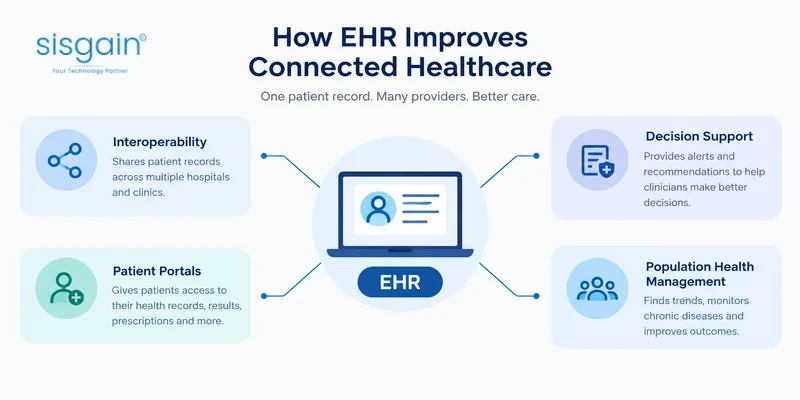
Electronic Health Record (EHR) is an advanced form of EMR that goes beyond storing patient data within a single facility. EHRs are designed to be shared securely across multiple healthcare providers, including hospitals, specialists, labs, and clinics. This interoperability allows every authorized provider to access a patient’s comprehensive medical history, ensuring coordinated care and better clinical outcomes. By connecting different healthcare systems, EHRs play a critical role in improving patient safety, reducing duplication of tests, and enhancing overall healthcare quality.
Key features of EHR include:
- Interoperability: Seamlessly shares patient records across multiple hospitals and clinics.
- Patient Portals: Gives patients access to their health records, lab results, prescriptions, and allows secure communication with providers.
- Decision Support: Provides alerts and evidence-based recommendations to help clinicians make informed care decisions.
- Population Health Management: Analyzes data across groups of patients to identify trends, monitor chronic diseases, and improve outcomes.
EHRs promote continuity of care, enable collaboration between providers in different locations, and empower patients to actively participate in their healthcare journey.
HIMS vs EMR vs EHR: Key Differences
To better understand the differences between HIMS, EMR, and EHR, it’s helpful to compare their key features, scope, and benefits side by side. While all three systems handle patient and hospital data, they serve distinct purposes and are designed for different levels of healthcare management. EMRs focus on managing patient records within a single facility, EHRs extend that capability across multiple providers to support coordinated care, and HIMS goes further by integrating administrative, clinical, and financial operations across the entire hospital. The table below provides a detailed comparison of these systems, highlighting their scope, interoperability, patient access, examples, and the pros and cons of each, making it easier for hospital administrators and healthcare decision-makers to choose the right solution for their facility.
|
Aspect |
EMR |
EHR |
HIMS |
|
Purpose |
Patient chart management |
Comprehensive health record |
Complete hospital management |
|
Scope |
Single facility |
Multiple healthcare providers |
Entire hospital operations |
|
Interoperability |
Limited |
High |
Medium to high |
|
Data Sharing |
Internal only |
Across multiple facilities |
Internal + external integration |
|
Patient Access |
Limited |
Via patient portals |
Limited to patient-related modules |
|
Focus |
Clinical care |
Coordinated care |
Administrative, clinical, and financial |
|
Examples |
Clinic EMR software |
Cloud-based EHR platforms |
Best hospital management system software |
|
Pros |
Cost-effective, easy to use |
Collaborative, holistic view |
Streamlines workflow, reduces errors |
|
Cons |
Limited interoperability |
Expensive, complex |
Resource-intensive implementation |
How HIMS Differs from EMR and EHR
The difference between HIMS, EMR, and EHR lies in their scope and the way they handle hospital operations.
- An Electronic Medical Record (EMR) is a digital version of a patient’s chart used within a single healthcare facility. It stores medical history, test results, and prescriptions but is limited to one clinic or hospital.
- An Electronic Health Record (EHR) expands this functionality by enabling secure data sharing across hospitals, labs, and specialists. This supports coordinated care, patient portals, and better long-term health outcomes.
- On the other hand, a Hospital Information Management System (HIMS) combines both EMR and EHR features with administrative, financial, and operational tools. It manages billing, pharmacy, inventory, staff scheduling, and reporting within one platform.
In short, EMR and EHR focus on patient data, while HIMS offers a complete solution for hospital-wide health information management.
Difference Between HIMS EMR and EHR
- The differences between HIMS, EMR, and EHR are important for healthcare professionals and hospital administrators to understand when selecting the right system for their facility. Each system has a distinct purpose, scope, and functionality, and knowing how they compare can help in making informed decisions.
- EMR vs HIMS: While EMR primarily focuses on managing patient medical records within a single clinic or hospital, HIMS goes beyond that by combining EMR functionalities with hospital-wide administrative and financial management. This means HIMS not only stores patient data but also manages appointments, billing, pharmacy inventory, lab integration, and overall hospital operations. Essentially, HIMS is a complete solution for running a hospital efficiently.
- EHR vs HIMS: EHR extends the concept of EMR by enabling secure sharing of patient data across multiple healthcare providers and facilities. It promotes coordinated care and better clinical outcomes. HIMS, however, integrates this interoperability feature with administrative and operational workflows, including billing, pharmacy, and analytics, providing a more comprehensive solution for hospital management.
- EMR vs EHR difference: The primary distinction between EMR and EHR lies in scope. EMR is limited to one facility, while EHR allows patient information to be securely accessed by multiple providers, supporting continuity of care across locations.
EMR vs EHR vs HIMS: Use Cases
Understanding the practical applications of EMR, EHR, and HIMS can help healthcare facilities determine which system best meets their needs. While all three systems manage patient data and support clinical workflows, their scope and functionality vary. EMRs are ideal for single-facility record management, EHRs are best suited for sharing patient information across multiple providers, and HIMS offers a complete solution for hospital-wide operations, integrating clinical, administrative, and financial processes. Here’s a breakdown of typical use cases for each system:
EMR (Electronic Medical Record):
- Small clinics or private practices managing patient records internally
- Tracking patient history, lab results, medications, and treatment plans within a single facility
- Streamlining in-house clinical workflows and reducing paperwork
EHR (Electronic Health Record):
- Multi-specialty hospitals and clinics that require coordinated care across departments
- Sharing patient information with specialists, labs, and other hospitals securely
- Supporting telemedicine, remote patient monitoring, and population health management
HIMS (Hospital Information Management System):
- Large hospitals or healthcare networks that need integrated management of clinical, administrative, and financial operations
- Streamlining appointments, billing, pharmacy, lab results, and staff management in one platform
- Providing analytics and reporting for better hospital performance and decision-making
EMR vs EHR Examples
To better understand how each system functions in real-world settings, it’s helpful to look at practical examples. The following examples illustrate how clinics, hospitals, and large healthcare networks use these systems to streamline operations, improve patient care, and ensure efficient management.
- EMR Example: A small clinic uses EMR software to maintain patient records internally, including visit notes, medications, lab results, and treatment history. This helps doctors access accurate patient information quickly and improves in-house clinical workflows.
- EHR Example: A multi-specialty hospital network uses an EHR platform to share patient medical histories securely across different facilities. Specialists, labs, and other providers can access the same patient information, enabling coordinated care and better clinical outcomes.
- HIMS Example: A large hospital implements HIMS software to manage all operations in one system, including patient records, appointments, billing, pharmacy, labs, and staff scheduling, streamlining hospital workflows efficiently.
Benefits of HIMS in Hospitals
Implementing a Hospital Information Management System (HIMS) offers numerous advantages for hospitals and healthcare networks. By integrating clinical, administrative, and financial workflows into a single platform, HIMS helps hospitals operate more efficiently while improving patient care.
Key benefits include:
- Operational Efficiency: Automates routine tasks such as patient registration, appointment scheduling, billing, and lab integration, reducing manual work and saving time.
- Improved Patient Care: Provides doctors and nurses with real-time access to patient records, lab results, and treatment history, enabling faster and more accurate decision-making.
- Financial Management: Streamlines billing, insurance claims, and revenue cycle management, reducing errors and ensuring timely payments.
- Resource Optimization: Tracks hospital resources, including staff, equipment, and inventory, allowing better allocation and preventing shortages.
- Data Analytics and Reporting: Generates actionable insights on hospital performance, patient outcomes, and compliance, supporting informed decision-making.
- Enhanced Communication: Connects different hospital departments, ensuring smooth coordination between clinical, administrative, and support teams.
With these benefits, HIMS is widely considered the best hospital management system, helping healthcare facilities deliver high-quality care while improving efficiency and patient satisfaction.
HIMS Software Features
A robust HIMS software is designed to manage every aspect of hospital operations efficiently, ensuring smooth workflows and high-quality patient care.
Key features include:
- Patient Management: Simplifies registration, admissions, and discharge processes, keeping patient information accurate and organized.
- EMR Integration: Stores detailed clinical records digitally, allowing doctors to access patient history, diagnoses, and treatment plans quickly.
- EHR Integration: Enables secure sharing of patient data across multiple healthcare providers for coordinated care.
- Billing & Revenue Cycle Management: Automates payments, insurance claims, and invoicing, reducing errors and improving financial efficiency.
- Pharmacy Management: Monitors medication stock and prescription workflows to prevent shortages.
- Laboratory Management: Integrates lab tests and results directly with patient records.
- Scheduling Module: Organizes appointments and staff schedules efficiently.
- Analytics & Reporting: Provides insights into hospital performance and compliance with regulations.
By implementing HIMS software, hospitals can streamline operations, enhance patient care, and improve overall efficiency.
EMR vs EHR Pros and Cons
When evaluating EMR, EHR, and HIMS, it’s important to consider not only their features but also their advantages and limitations. Each system offers unique benefits for patient care, operational efficiency, and data management, but they also come with challenges that hospitals and clinics must address. The following pros and cons highlight what makes each system effective, and where they may have limitations, helping healthcare administrators make informed decisions for their facility.
EMR Pros:
- Provides quick access to patient records, helping clinicians make faster decisions.
- Cost-effective and easy to implement, making it ideal for small clinics.
- Improves internal documentation and reduces manual errors.
EMR Cons:
- Limited to a single facility.
- Cannot easily share data with other healthcare providers, restricting coordinated care.
EHR Pros:
- Enables coordinated care by securely sharing patient information across multiple providers.
- Improves patient engagement through portals where patients can access records and communicate with providers.
- Supports telemedicine and remote patient monitoring.
EHR Cons:
- High implementation costs.
- Requires complex integration and staff training.
HIMS Pros:
- Integrates clinical, administrative, and financial workflows in one platform.
- Enhances operational efficiency and reduces errors.
- Improves patient experience by streamlining hospital processes.
HIMS Cons:
- Requires significant resources for setup.
- Staff training is essential for effective use.
EHR vs EMR vs HIMS Comparison Chart
To provide a clear overview of how EMR, EHR, and HIMS compare across different operational and clinical aspects, the table below summarizes their key capabilities. It highlights differences in patient record management, interoperability, administrative and financial features, lab integration, decision support, reporting, and the type of healthcare facility each system is best suited for. This comparison helps hospital administrators and healthcare professionals quickly understand which solution aligns with their needs.
|
Aspect |
EMR |
EHR |
HIMS |
|
Patient Record |
Yes |
Yes |
Yes |
|
Interoperability |
Low |
High |
Medium to High |
|
Administrative Modules |
Limited |
Limited |
Extensive |
|
Billing & Financials |
No |
Limited |
Yes |
|
Pharmacy & Lab Integration |
No |
Partial |
Full |
|
Decision Support |
Basic |
Advanced |
Advanced |
|
Reporting & Analytics |
Basic |
Advanced |
Advanced |
|
Ideal For |
Small clinics |
Multi-specialty hospitals |
Large hospitals & networks |
Healthcare Information Systems Explained
Healthcare information systems are software solutions designed to manage, store, and organize clinical and operational data, helping hospitals and clinics improve patient care, streamline workflows, and enhance overall efficiency. Key components of these systems include EMR, EHR, and HIMS, each serving a unique purpose in managing patient records and hospital operations. By integrating these solutions, healthcare facilities can ensure accurate data management, better clinical decision-making, and improved operational performance. Partnering with a trusted healthcare software development company guarantees smooth implementation, seamless integration across departments, and scalability to meet the evolving needs of modern healthcare organizations.
Conclusion
Choosing the right system between HIMS, EMR, and EHR depends on the size and needs of your healthcare facility:
- EMR: Ideal for single clinics or small hospitals.
- EHR: Best for multi-specialty hospitals requiring cross-facility patient data sharing.
- HIMS: Optimal for large hospitals or healthcare networks seeking complete integration of clinical, administrative, and financial operations.
Implementing a HIMS software solution allows hospitals to streamline workflows, enhance patient care, and gain valuable insights from operational data. By leveraging advanced hospital management system software and expert health information management, hospitals can transform operations and improve overall efficiency.
For healthcare organizations looking to improve patient outcomes and operational performance, investing in a HIMS system through a trusted healthcare software development company is a strategic step toward digital transformation.