
Introduction
The healthcare sector in the UAE is undergoing a rapid digital transformation, driven by the nation’s ambition to become a global leader in smart healthcare. With initiatives aligned to futuristic national visions and heavy investments in advanced technologies, hospitals across Dubai and the wider UAE are rethinking how care is delivered, managed, and optimized. At the same time, the global rise of artificial intelligence in healthcare is reshaping clinical decision-making, operational workflows, and patient engagement at an unprecedented pace.
Traditional hospital systems—often fragmented and heavily dependent on manual processes—are no longer sufficient to meet the expectations of today’s digitally aware patients. Issues such as data silos, inefficient workflows, delayed diagnoses, and lack of real-time insights continue to challenge healthcare providers. Patients now demand faster services, personalized care, and seamless digital experiences across every touchpoint.
To overcome these challenges, UAE hospitals are shifting toward integrated, intelligent ecosystems powered by AI and advanced Hospital Management Systems (HMS). These platforms enable automation, data centralization, and predictive capabilities that transform both clinical and administrative operations.
This is why UAE hospitals are rapidly adopting AI-powered HMS platforms.
What Is AI-Powered Hospital Management System (HMS)?
A Hospital Management System (HMS) is a centralized digital platform designed to manage the day-to-day operations of a hospital. It helps streamline key functions such as patient registration, appointment scheduling, billing, medical records, inventory, and staff management—all within a single system. In simple terms, HMS replaces manual paperwork and disconnected tools with a unified, efficient solution that improves hospital workflows.
When artificial intelligence is integrated into HMS, it transforms from a basic management tool into an intelligent decision-making system. AI-powered HMS can automate repetitive administrative tasks, analyze large volumes of patient data, and provide predictive insights that help doctors and hospital administrators make faster and more accurate decisions. For example, AI can assist in predicting patient admission rates, identifying potential health risks, and optimizing staff allocation based on real-time demand.
A key advancement in this space is the growing role of Generative AI in hospitals, which enhances capabilities such as automated medical documentation, virtual assistants for patient interaction, and intelligent report generation—reducing the burden on healthcare professionals while improving efficiency.
The difference between traditional HMS and AI-powered HMS is significant. Traditional systems mainly focus on data storage and basic process automation, often operating in silos. In contrast, AI-powered HMS offers real-time data processing, predictive analytics, and intelligent automation, enabling hospitals to move from reactive care to proactive, patient-centric healthcare delivery.
Why UAE Healthcare Sector Is Leading AI Adoption
The UAE healthcare sector is at the forefront of AI adoption, driven by strong government vision, strategic investments, and a commitment to innovation. National initiatives such as UAE Vision 2030 and smart city programs in Dubai and Abu Dhabi are accelerating the integration of advanced technologies across industries, with healthcare being a top priority.
Regulatory authorities like the Dubai Health Authority (DHA) and the Ministry of Health and Prevention (MOHAP) are actively promoting digital health transformation through policies, standards, and funding initiatives. These organizations are encouraging hospitals to adopt AI-driven solutions, electronic medical records, and integrated healthcare platforms to improve patient outcomes and operational efficiency.
Another key factor is the rapidly increasing demand for high-quality healthcare services. With a growing population, rising medical tourism, and higher patient expectations, hospitals are under pressure to deliver faster, more accurate, and personalized care. Traditional systems are no longer sufficient to handle this scale and complexity.
Additionally, the rise of private hospitals and healthcare providers in the UAE has intensified competition. To stay ahead, healthcare organizations are investing in AI-powered technologies and advanced HMS platforms that offer better patient experiences, improved efficiency, and data-driven insights.
This combination of government support, market demand, and competitive pressure positions the UAE as a global leader in AI-driven healthcare innovation, making it a prime market for intelligent hospital ecosystems.
Top Reasons UAE Hospitals Are Investing in AI + HMS
1. Enhancing Patient Care with AI
One of the most significant drivers behind AI adoption in UAE hospitals is the ability to deliver superior patient care. AI-powered HMS platforms enable faster and more accurate diagnoses by analyzing vast amounts of medical data in seconds—something that would take human teams considerably longer. This not only reduces waiting times but also improves clinical outcomes.
AI also supports personalized treatment plans by evaluating patient history, lifestyle data, and genetic factors. Instead of a one-size-fits-all approach, doctors can offer tailored care that aligns with each patient’s specific needs. Additionally, predictive healthcare is becoming a game-changer. AI systems can identify potential health risks before they become critical, allowing for early intervention and preventive care—an essential factor in improving long-term patient outcomes.
2. Automation of Hospital Operations
Operational efficiency is another major reason UAE hospitals are investing in AI-powered HMS solutions. Hospitals deal with complex administrative tasks daily, from billing and scheduling to inventory and staff coordination. AI helps automate these repetitive processes, significantly reducing manual workload and human error.
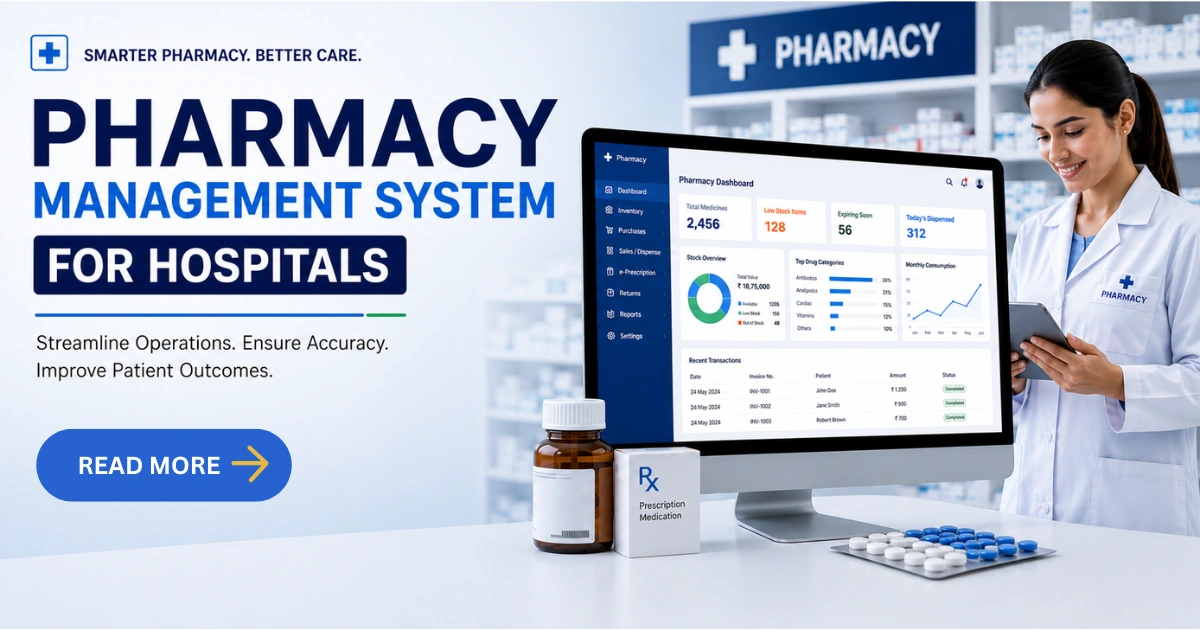
Billing automation ensures accurate and faster processing of patient invoices, minimizing disputes and delays. Appointment scheduling systems powered by AI can optimize doctor availability, reduce patient wait times, and manage cancellations efficiently. Inventory management becomes more intelligent, with systems tracking stock levels in real time and predicting future requirements to avoid shortages or overstocking.
These capabilities are often delivered through advanced hospital management software services, which provide end-to-end solutions tailored to the operational needs of modern healthcare facilities.
3. Data-Driven Decision Making
In today’s data-driven world, hospitals can no longer rely solely on intuition or outdated reports. AI-powered HMS platforms provide real-time dashboards and analytics that give hospital administrators complete visibility into operations.
From patient flow and bed occupancy rates to financial performance and staff productivity, every critical metric is accessible in real time. This allows decision-makers to identify inefficiencies, optimize resources, and respond quickly to changing conditions. Advanced analytics also help in forecasting trends, such as patient admission rates or seasonal disease outbreaks, enabling better planning and preparedness.
4. Regulatory Compliance & Data Security
Healthcare in the UAE is governed by strict regulations to ensure patient safety and data privacy. Compliance with standards set by authorities such as DHA and MOHAP is non-negotiable for hospitals operating in the region.
AI-powered HMS platforms are designed with compliance in mind, ensuring that all patient data is securely stored, managed, and accessed according to regulatory requirements. Features such as role-based access control, data encryption, and audit trails help protect sensitive information from breaches.
By automating compliance processes and maintaining accurate records, hospitals can reduce the risk of penalties while building trust with patients and stakeholders.
5. Cost Optimization & ROI
While the initial investment in AI and HMS platforms may seem significant, the long-term return on investment is substantial. By reducing manual workload, minimizing errors, and improving operational efficiency, hospitals can significantly cut down on operational costs.
AI-driven automation reduces the need for excessive administrative staff, while optimized workflows ensure better utilization of resources. Faster patient processing and improved service quality also contribute to higher patient satisfaction and increased revenue.
When evaluating implementation, many organizations consider factors such as AI development cost, but the focus is increasingly shifting toward the long-term value these technologies deliver. In a competitive healthcare landscape like the UAE, investing in AI-powered HMS is no longer an expense—it’s a strategic advantage.
Building Smart Healthcare Ecosystems with AI + HMS
The concept of a “smart healthcare ecosystem” goes beyond individual hospital operations. It represents a fully connected network where all components of the healthcare system work together seamlessly to deliver efficient, patient-centric care.
AI-powered HMS platforms act as the backbone of this ecosystem by integrating multiple entities, including hospitals, diagnostic labs, pharmacies, telemedicine platforms, and wearable devices. Instead of operating in isolation, these components are interconnected, enabling continuous data exchange and collaboration.
For example, when a patient visits a hospital, their medical records can instantly be shared with diagnostic labs for testing, pharmacies for medication, and even remote doctors through telemedicine platforms. Wearable devices further enhance this ecosystem by providing real-time health data such as heart rate, activity levels, and vital signs, which can be monitored continuously.
The integration of Cross-Platform Health Apps plays a crucial role in this transformation. These applications ensure that patients and healthcare providers can access critical information anytime, anywhere—whether through mobile devices, tablets, or desktops—creating a seamless digital experience.
One of the most powerful aspects of a smart healthcare ecosystem is real-time data sharing. This eliminates delays, reduces duplication of tests, and ensures that every stakeholder has access to accurate and up-to-date information. As a result, the entire patient journey—from diagnosis to treatment and follow-up—becomes more connected, efficient, and personalized.
In the UAE, where innovation and digital transformation are key priorities, building such ecosystems is becoming essential for hospitals aiming to deliver world-class healthcare services.
Key Benefits of AI + HMS for UAE Hospitals
The adoption of AI-powered HMS platforms offers a wide range of benefits for hospitals in the UAE, directly impacting both operational efficiency and patient satisfaction.
One of the most noticeable advantages is improved patient experience. With faster diagnosis, reduced waiting times, and personalized treatment plans, patients receive a higher standard of care. Digital tools such as online appointment booking, automated updates, and virtual consultations further enhance convenience and accessibility.
Operational speed is another critical benefit. Automated workflows and real-time data access enable hospitals to handle more patients efficiently without compromising quality. Tasks that once took hours can now be completed in minutes, allowing healthcare professionals to focus more on patient care rather than administrative duties.
AI also plays a vital role in reducing errors. From accurate billing to precise diagnostics, automation minimizes the risk of human mistakes, ensuring better outcomes and improved trust in healthcare services.
Scalability is equally important, especially in a rapidly growing healthcare market like the UAE. AI-powered HMS platforms can easily adapt to increasing patient volumes, new facilities, and evolving requirements without disrupting existing operations.
These advantages are often delivered through advanced healthcare software services, which combine cutting-edge technology with industry expertise to create solutions tailored for modern healthcare challenges.
In a competitive and innovation-driven environment, adopting AI + HMS is not just about keeping up—it’s about leading the future of healthcare.

Real-World Use Cases of AI in UAE Hospitals
AI is no longer a futuristic concept in the UAE—it is already transforming how hospitals operate and deliver care. One of the most impactful applications is AI-based diagnostics. Advanced algorithms can analyze medical images, lab results, and patient history to assist doctors in identifying diseases such as cancer, cardiovascular conditions, and neurological disorders with higher accuracy and speed.
Smart ICUs are another powerful example. These units use AI to continuously monitor patient vitals, detect anomalies in real time, and alert medical staff before conditions become critical. This proactive approach significantly improves patient survival rates and reduces the burden on healthcare professionals.
Virtual assistants are also gaining traction in UAE hospitals. These AI-powered tools handle patient queries, assist with appointment bookings, and provide medication reminders, ensuring a seamless patient experience. They also reduce administrative workload, allowing staff to focus on more critical tasks.
Telemedicine platforms, powered by AI, are enabling remote consultations, diagnosis, and follow-ups—especially beneficial for patients in remote areas or those seeking convenience. The growing role of Generative AI in hospitals is further enhancing these use cases by enabling automated clinical documentation, intelligent chatbots, and real-time report generation, making healthcare delivery faster and more efficient.
Challenges UAE Hospitals Face in AI + HMS Adoption
Despite the numerous benefits, the adoption of AI-powered HMS platforms in UAE hospitals is not without challenges. One of the primary barriers is the high initial investment required for implementation. Advanced AI systems, infrastructure upgrades, and integration processes can involve significant upfront costs, which may deter smaller healthcare providers.
Another critical challenge is staff training. Transitioning from traditional systems to AI-driven platforms requires healthcare professionals to adapt to new technologies. Without proper training and change management strategies, adoption can face resistance and inefficiencies.
Data privacy and security concerns also play a major role. With sensitive patient information being processed and stored digitally, hospitals must ensure compliance with strict UAE healthcare regulations. Any breach or mishandling of data can lead to serious legal and reputational consequences.
Additionally, integration complexity is a common issue. Many hospitals operate on legacy systems that are not easily compatible with modern AI solutions. Ensuring seamless integration without disrupting existing workflows requires careful planning and technical expertise.
Addressing these challenges is essential for successful implementation and long-term sustainability, reinforcing the importance of choosing the right technology approach and partner.
Future of AI + HMS in UAE Healthcare
The future of healthcare in the UAE is set to be defined by intelligent, interconnected, and highly automated systems powered by AI and advanced HMS platforms. One of the most promising developments is the rise of predictive healthcare systems. These systems will use real-time data and advanced analytics to anticipate diseases, recommend preventive measures, and enable early intervention—shifting the focus from treatment to prevention.
AI-powered robotic surgeries are also expected to become more widespread. These systems enhance precision, reduce recovery times, and minimize risks during complex procedures, setting new standards for surgical care in the region.
Fully automated hospitals are no longer a distant vision. From patient registration and diagnostics to treatment and discharge, every step of the healthcare journey will be managed through intelligent systems with minimal human intervention. This will significantly improve efficiency, accuracy, and patient satisfaction.
The UAE is also witnessing rapid growth in digital health startups, driving innovation in areas such as telemedicine, wearable health tech, and AI-driven diagnostics. These startups are contributing to a dynamic ecosystem that supports continuous advancement in healthcare technology.
As the UAE continues to invest in smart infrastructure and digital transformation, AI-powered HMS platforms will play a central role in shaping a future where healthcare is more proactive, personalized, and accessible.
Why Choosing the Right Technology Partner Matters
Implementing AI-powered HMS is a complex process that goes beyond just adopting new software—it requires strategic planning, customization, and ongoing support. This is why choosing the right technology partner is critical for success.
Every hospital has unique operational requirements, patient volumes, and service offerings. A reliable partner ensures that the solution is fully customized to meet these specific needs rather than offering a one-size-fits-all approach. Customization enables better alignment with workflows, resulting in higher efficiency and user adoption.
Scalability is another key factor. As hospitals grow and expand their services, the technology must be able to adapt without requiring complete system overhauls. A strong technology partner builds solutions that can scale seamlessly with the organization’s future needs.
Compliance with UAE healthcare laws and regulations is equally important. From data protection to system interoperability, the chosen solution must adhere to all legal requirements. Working with an experienced software development company in uae ensures that the platform is designed with local compliance standards in mind, reducing risks and ensuring smooth operations.
Ultimately, the right partner not only delivers technology but also provides long-term value through innovation, support, and continuous improvement.
Why SISGAIN Is the Ideal Partner for AI + HMS Solutions
When it comes to building advanced AI-powered HMS platforms, SISGAIN stands out as a trusted technology partner with deep expertise in healthcare software development. With a strong understanding of the UAE healthcare landscape, SISGAIN delivers solutions that are not only innovative but also aligned with local regulatory requirements.
SISGAIN specializes in integrating AI capabilities into hospital systems, enabling automation, predictive analytics, and intelligent decision-making. Their custom HMS solutions are designed to meet the specific needs of hospitals, clinics, and healthcare enterprises, ensuring seamless operations and enhanced patient care.
With a focus on scalability and performance, SISGAIN ensures that its solutions grow alongside your organization. Whether it’s integrating telemedicine, enabling real-time data access, or optimizing hospital workflows, the company provides comprehensive hospital management software services tailored to modern healthcare demands.
Most importantly, SISGAIN prioritizes compliance, data security, and user experience—key factors for success in the UAE healthcare sector. Their end-to-end approach, from consultation to deployment and support, ensures a smooth and efficient transformation journey.
Conclusion
The UAE healthcare sector is rapidly evolving from traditional, fragmented systems to intelligent, interconnected ecosystems powered by AI and advanced Hospital Management Systems. This transformation is not just about adopting new technology—it’s about redefining how care is delivered, improving patient outcomes, and achieving operational excellence at scale. From faster diagnostics and automated workflows to predictive analytics and real-time decision-making, AI + HMS platforms are enabling hospitals to meet the growing demands of modern healthcare.
At the same time, increasing competition, regulatory expectations, and patient-centric care models are making digital transformation a necessity rather than an option. Hospitals that embrace AI-driven systems today are positioning themselves as leaders in innovation, efficiency, and quality care, while those that delay risk falling behind in an increasingly competitive landscape.
The opportunity is clear: investing in AI-powered HMS is a strategic move that delivers long-term value, scalability, and a significant competitive edge.