
The healthcare industry in the UAE is rapidly undergoing digital transformation. Hospitals, clinics, and diagnostic centers are looking for advanced solutions to optimize operations, improve patient care, and ensure regulatory compliance. One of the most critical choices healthcare providers face today is determining the right model for their software infrastructure. Should they opt for a cloud-based SaaS (Software as a Service) model or stick with traditional on-premise healthcare software development?
With healthcare software development playing a central role in patient data management, clinical workflows, and telemedicine services, this decision can significantly impact long-term operational efficiency. Especially in regions like Dubai and across the UAE, where government initiatives support healthcare innovation, it becomes crucial to assess these models carefully. In this article, we explore both SaaS and on-premise systems in-depth and help you decide which solution best fits your healthcare facility.
What Is Healthcare Software Development?
Healthcare software development refers to the process of designing, building, and maintaining software applications tailored to the unique needs of the healthcare industry. These applications can range from simple scheduling systems to comprehensive hospital management platforms that include Electronic Health Records (EHR), billing modules, patient portals, and clinical decision support systems.
In the UAE, healthcare providers often invest in such systems to ensure patient data security, improve workflow automation, and maintain compliance with health authorities like the DHA (Dubai Health Authority) and MOH (Ministry of Health). Healthcare software development encompasses both the technical and strategic elements of building tools that facilitate better patient outcomes and streamlined administration.
One notable trend is the increasing adoption of specialized systems like a patient information management system, which helps providers access patient data in real-time, securely, and across various touchpoints. As this trend continues to grow, the choice between SaaS and on-premise deployment models becomes even more important.
Understanding SaaS in Healthcare

SaaS, or Software as a Service, refers to a cloud-based delivery model where healthcare applications are hosted on remote servers and accessed through the internet. Instead of installing the software on local machines, users subscribe to the service and log in through a browser or mobile app. This model is becoming increasingly popular among healthcare institutions in Dubai and other parts of the UAE.
The primary advantage of SaaS in healthcare software development is its scalability and flexibility. Clinics and hospitals can easily add or remove users, upgrade features, and ensure access to the latest updates without investing in hardware or maintenance. Another crucial benefit is remote accessibility. Healthcare professionals can access patient records, appointment schedules, and telemedicine tools from any location with internet access.
For instance, a clinic using a telemedicine application can deploy SaaS-based platforms to offer video consultations, e-prescriptions, and remote diagnosis. Moreover, modern SaaS platforms integrate seamlessly with remote patient monitoring AI systems, enabling continuous tracking of patient vitals and alerting doctors in real time.
Security is also robust with most SaaS solutions, as they comply with international standards like HIPAA and ISO. Cloud providers use encryption, multi-factor authentication, and regular audits to safeguard sensitive healthcare data. Additionally, automatic software updates mean that healthcare organizations always work with the latest security patches and features.
On-Premise Healthcare Software Explained

On-premise software refers to applications that are installed and run on the physical servers and infrastructure located within the healthcare facility. Unlike SaaS, this model requires in-house IT teams to manage hardware, perform updates, and ensure data backups.
The biggest advantage of on-premise healthcare software development is control. Organizations maintain full ownership over their data and infrastructure. For healthcare facilities in the UAE that have strict internal policies or need to comply with specific data residency regulations, on-premise solutions may provide peace of mind.
Additionally, on-premise systems can be highly customized to meet the exact needs of the healthcare provider. While SaaS solutions offer modular features, they may not always provide the depth of customization required by large hospital networks or specialty clinics. With an on-premise solution, developers can build bespoke features that align perfectly with internal workflows.
However, these benefits come with higher costs. On-premise systems require significant upfront investments in hardware, installation, and ongoing maintenance. They also demand a skilled IT workforce to handle security, data backups, and software updates. If these responsibilities are not managed properly, it can lead to vulnerabilities and inefficiencies.
Another limitation is accessibility. On-premise systems are typically accessible only within the hospital network, limiting flexibility and remote access unless additional remote access solutions are implemented.
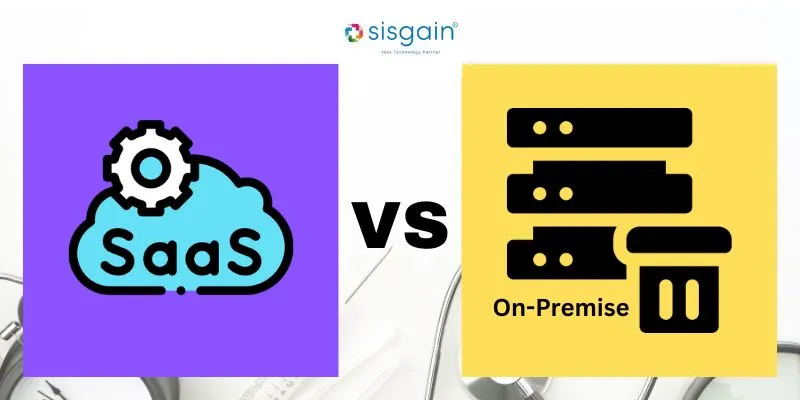
Head-to-Head Comparison: SaaS vs On-Premise in Healthcare
When it comes to healthcare software development, both SaaS and on-premise models have unique strengths and limitations. To help healthcare providers in the UAE make an informed choice, let’s evaluate them across several critical factors.
In terms of cost, SaaS operates on a subscription-based model, which is easier on the budget initially. It allows healthcare organizations to spread out their expenses and avoid the heavy upfront investment that comes with on-premise deployments. In contrast, on-premise solutions require the purchase of servers, networking equipment, licenses, and IT personnel.
Scalability is another area where SaaS stands out. As your clinic or hospital grows, you can quickly add new users, features, or storage without overhauling the infrastructure. On-premise systems, however, may need new hardware and extended setup time to accommodate growth.
Security and compliance are top priorities for any healthcare software. SaaS providers generally offer advanced security features and adhere to regulatory standards such as HIPAA, GDPR, and ISO. Still, some UAE organizations prefer on-premise systems for complete control over data storage and access.
Maintenance is largely automated in SaaS, with vendors handling updates, backups, and patches. On the other hand, on-premise solutions require internal IT teams to perform these tasks, which can be time-consuming and costly.
Accessibility is also crucial. SaaS solutions allow users to access systems from anywhere, making them ideal for multi-location facilities or remote care delivery. On-premise systems often limit access to in-network devices unless configured otherwise.
How to Choose: Factors to Consider for Your Facility
Choosing the right deployment model for your healthcare software development project requires careful evaluation of your facility’s needs, capabilities, and long-term goals.
Budget is often the first consideration. If your facility is a startup clinic or a mid-sized hospital, a SaaS model offers affordability and rapid deployment. You don’t have to worry about hardware costs or hiring a full IT team. On the other hand, if you have the financial bandwidth and require custom functionality, on-premise might be a better investment.
Another factor is your internal IT capability. SaaS models are designed to be managed with minimal tech support. However, on-premise solutions demand a skilled IT team to ensure smooth operation, troubleshoot issues, and maintain compliance.
Data sensitivity and local regulations also play a significant role. In Dubai, healthcare providers must comply with DHA regulations around data storage and sharing. If your organization handles extremely sensitive patient data or participates in government healthcare initiatives, on-premise deployment might align better with regulatory requirements.
Scalability is important for future-proofing. SaaS allows for immediate scaling with minimal effort. If your facility plans to expand or adopt advanced modules such as AI for diagnosis or remote monitoring, SaaS could be the optimal choice.
Accessibility is the final consideration. For organizations that need staff to access data from various locations—for instance, mobile doctors or home healthcare providers—SaaS provides unmatched convenience. Meanwhile, on-premise models are best for facilities operating within a single location with a robust internal network.
When evaluating vendors, consider working with top healthcare software development companies that have experience in both SaaS and on-premise implementations. This ensures your solution is tailored, compliant, and scalable.
Case Scenarios: SaaS vs On-Premise in Real-World Healthcare Settings
To better understand the practical implications of each model, let’s explore some real-world use cases relevant to healthcare facilities in the UAE.
A multi-specialty clinic in Dubai, focused on outpatient services and telehealth, adopted a SaaS-based healthcare solution to manage appointments, billing, and virtual consultations. This allowed the clinic to go live quickly without major IT investments. Additionally, their telemedicine application seamlessly integrated with the software, offering a streamlined experience to both doctors and patients.
On the flip side, a large government hospital opted for an on-premise deployment to comply with strict data governance laws. The hospital required deep customization for its electronic records system and wanted full control over data storage and access. With a dedicated IT team, they managed infrastructure, ensured uptime, and tailored modules to fit their unique needs.
A third example is a hybrid approach. A diagnostics center in Abu Dhabi used on-premise software for internal lab operations while employing a SaaS model for its patient portal. This allowed them to maintain control over internal systems while offering convenient online access to reports and appointments for patients.
These case scenarios highlight that the right solution often depends on your specific use case, compliance needs, and operational model.
Also Read - Why AI in Remote Patient Monitoring is the Future of Health
Partnering with the Right Healthcare Software Development Company
Selecting the right software development partner is just as critical as choosing the deployment model. The success of your project depends heavily on the experience, reliability, and expertise of the development firm you work with.
Top healthcare software development companies bring domain expertise, regulatory understanding, and a structured development approach to the table. They offer solutions that are not only tailored to your workflows but also compliant with regional standards like HIPAA, DHA, and MOHAP.
Moreover, these companies typically provide end-to-end services, from consultation and design to development, testing, and ongoing support. Whether you choose SaaS or on-premise, having a knowledgeable partner ensures a smooth implementation.
It’s also beneficial to work with firms that have a strong portfolio in building remote patient monitoring AI systems, EHR solutions, and mobile healthcare apps. These are all critical components of modern healthcare IT infrastructure.
As a healthcare provider in Dubai or across the UAE, you should evaluate potential partners based on their industry reputation, client reviews, security practices, and customization capabilities. Look for firms with proven expertise in areas such as telehealth, data analytics, and patient engagement platforms. This ensures that your software not only meets current needs but also adapts to future challenges.
Final Verdict: Which Is Best?
At the end of the day, there is no universal answer to the question of whether SaaS or on-premise is best for healthcare software development. It all boils down to the specific needs, capabilities, and compliance requirements of your organization.
SaaS offers undeniable benefits in terms of speed, flexibility, and lower upfront costs. It’s an ideal choice for clinics, outpatient centers, and mobile health services that need quick deployment and remote accessibility. On the other hand, on-premise solutions provide maximum control, customization, and data sovereignty, making them ideal for larger hospitals and institutions with in-house IT capabilities.
Healthcare organizations in the UAE should carefully assess their short-term goals and long-term vision before making a decision. Conducting a needs analysis and consulting with a qualified healthcare software development firm can guide you toward the right path.
Ultimately, your choice should align with your patient care goals, operational model, and regulatory obligations, ensuring that your investment in healthcare software development delivers lasting value.
Contact SISGAIN Today!

Ready to make the right choice for your healthcare facility? Whether you need expert consultation, custom development, or implementation support, our team at SISGAIN is here to help. As one of the top medical app development companies in the UAE, we specialize in both SaaS and on-premise solutions tailored to your unique needs.
Get in touch with us today to schedule a free consultation or request a demo of our latest healthcare solutions. Let’s build the future of healthcare together.
Book A Free Demo Now