
Introduction
“Imagine a patient in Dubai struggling to explain symptoms because the hospital’s AI chatbot only understands English fluently.”
This is no longer a hypothetical challenge in Gulf healthcare. Across the UAE and wider GCC region, hospitals and clinics are rapidly embracing digital healthcare technologies, AI-powered systems, and smart patient engagement platforms. However, one major gap still exists — language and cultural communication.
The healthcare sector in the UAE serves one of the world’s most diverse populations. Every day, hospitals interact with Arabic, English, Hindi, Urdu, and multilingual patients who expect fast, personalized, and accurate healthcare support. Unfortunately, many traditional AI healthcare systems are still designed primarily for English-speaking Western markets, creating communication barriers that directly impact patient experience and operational efficiency.
As UAE healthcare transformation accelerates through smart hospitals in Dubai and Abu Dhabi, the demand for multilingual and culturally aware AI systems is growing significantly. Patients increasingly prefer Arabic-first healthcare interactions, especially when discussing sensitive medical concerns, booking appointments, or understanding treatment instructions.
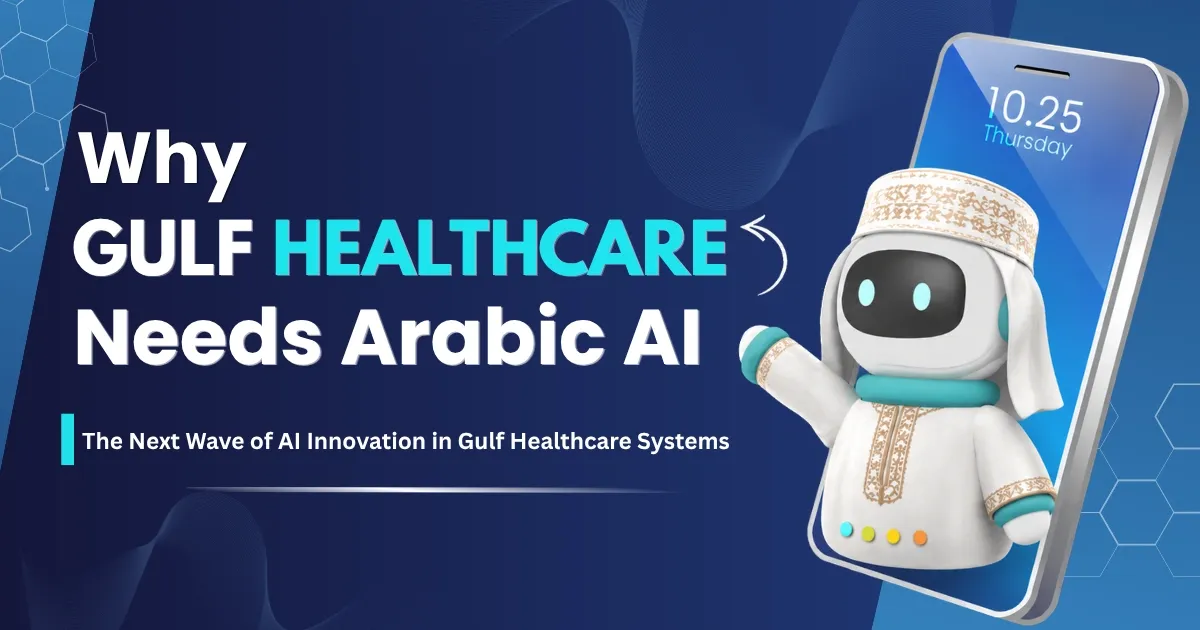
This is where Arabic AI healthcare is becoming essential rather than optional. An advanced Arabic medical AI assistant can help healthcare providers bridge communication gaps, automate patient engagement, and improve accessibility across multilingual populations.
At the same time, UAE Hospitals Are Investing in AI + HMS solutions to create smarter, more connected healthcare ecosystems capable of handling rising patient expectations in the digital era.
The Growing Communication Gap in Gulf Healthcare
The Gulf healthcare sector operates in one of the most linguistically diverse environments in the world. In cities like Dubai, Abu Dhabi, and Sharjah, hospitals and clinics manage interactions with patients from dozens of nationalities every single day. While this diversity strengthens the UAE healthcare ecosystem, it also creates serious communication challenges that many healthcare providers are struggling to address effectively.
A patient may speak Arabic at home, communicate partially in English, and rely on family members for medical interpretation. Another patient may prefer Hindi or Urdu when discussing symptoms or treatment instructions. In busy healthcare environments, these language gaps often slow down workflows and increase the risk of misunderstandings.
Front desk teams, nurses, and call center staff are already under pressure managing appointments, patient records, insurance coordination, and follow-ups. When communication barriers are added to these responsibilities, operational inefficiencies grow rapidly.
Common communication challenges include:
- Appointment misunderstandings
- Incorrect symptom interpretation
- Delayed follow-ups
- Missed medication instructions
- High administrative workload
For example, a patient attempting to explain symptoms through a basic English-only chatbot may receive inaccurate guidance simply because the system cannot properly understand regional Arabic dialects or mixed-language conversations. Even appointment scheduling becomes more complicated when multilingual patients cannot communicate comfortably.
This growing challenge is one of the main reasons healthcare providers are exploring multilingual healthcare AI systems designed specifically for Gulf healthcare environments. Modern AI for Arabic healthcare can help hospitals automate patient communication, reduce staff burden, and improve the overall patient journey while maintaining language accessibility across multiple demographics.
As patient expectations continue evolving in the UAE, communication is becoming just as important as clinical care itself.
Why English-Only Healthcare AI Fails in the GCC
Many healthcare AI systems currently available in the market were originally developed for Western healthcare environments. While these platforms may perform well in English-speaking regions, they often fail to address the unique communication needs of Gulf healthcare providers.
The GCC is not simply a bilingual market. It is a highly multicultural healthcare ecosystem where language, dialect, culture, and communication style directly influence patient trust and healthcare outcomes. This is where many generic AI systems struggle.
Arabic itself is highly complex. There are major differences between Modern Standard Arabic and regional dialects spoken across the UAE and Gulf countries. Emirati Arabic, Saudi dialects, Levantine Arabic, and mixed-language conversations create challenges that standard healthcare chatbots are not trained to handle effectively.
For example, patients often switch between Arabic and English while describing symptoms, medications, or medical history. An English-only system may misunderstand critical details, leading to poor patient experiences or communication errors.
In healthcare, context matters just as much as translation. Patients discussing sensitive health concerns expect empathy, cultural understanding, and conversational accuracy. A system that translates words without understanding cultural context cannot deliver truly effective healthcare communication.
This is why the UAE is actively investing in Arabic-first AI models and digital healthcare innovation to support smarter and more inclusive healthcare systems. The future of Arabic AI healthcare depends on systems that understand:
- Local accents and dialects
- Arabic medical terminology
- Cultural communication patterns
- Multilingual patient interactions
- Context-sensitive healthcare conversations
Modern Arabic healthcare AI solutions are being designed specifically for these regional realities. Instead of forcing patients to adapt to technology, Gulf healthcare providers are now adopting AI systems that adapt to the patient.
As healthcare digitization continues across the UAE, Arabic medical AI will become a critical part of delivering accessible, patient-centered healthcare experiences in the GCC.
What Is an Arabic Medical AI Assistant?
An Arabic medical AI assistant is an AI-powered healthcare solution designed specifically for Arabic-speaking and multilingual healthcare environments. Unlike standard healthcare chatbots that primarily operate in English, these advanced systems are built to understand Arabic language interactions, regional dialects, and culturally sensitive healthcare communication across the UAE and Gulf region.
In modern hospitals and clinics, an Arabic medical AI assistant acts as a digital support system for both patients and healthcare providers. It helps streamline communication, automate repetitive administrative tasks, and improve patient engagement throughout the healthcare journey.
On the patient side, these AI systems can support:
- Appointment booking and rescheduling
- Arabic chatbot support for common healthcare queries
- Voice-based patient assistance
- Prescription and medication reminders
- Telemedicine consultation support
- Multilingual healthcare communication
For hospitals and healthcare staff, the capabilities go even further. Many providers are now integrating AI-powered workflow tools that reduce manual documentation and improve operational efficiency.
Hospital-side functions include:
- AI medical scribing during consultations
- Automated patient summaries
- Clinical documentation support
- Workflow automation
- Real-time patient data assistance
One of the most impactful innovations is the Arabic medical AI scribe, which can automatically transcribe doctor-patient conversations in Arabic and English while generating structured clinical notes. This helps physicians spend less time typing and more time focusing on patient care.
As UAE healthcare continues embracing digital transformation, the Arabic medical AI assistant is quickly becoming an essential part of smarter, more connected healthcare ecosystems designed for the realities of Gulf healthcare communication.
How Arabic Medical AI Assistants Improve Patient Experience
Patient experience is rapidly becoming one of the most important performance indicators in UAE healthcare. Hospitals are no longer evaluated only on clinical outcomes. Today, healthcare providers are also measured by how efficiently, comfortably, and personally they interact with patients throughout the care journey.
This is where Arabic medical AI assistants are creating a significant impact.
In multicultural healthcare environments like Dubai and Abu Dhabi, patients often struggle with long waiting times, language barriers, delayed responses, and difficulty accessing healthcare information in their preferred language. AI-powered healthcare systems are helping solve these challenges by making healthcare communication faster, more accessible, and more personalized.
One of the biggest advantages is improved accessibility. Elderly Arabic-speaking patients, international residents, and patients in remote locations can now interact with healthcare systems more comfortably through multilingual and voice-enabled AI support.
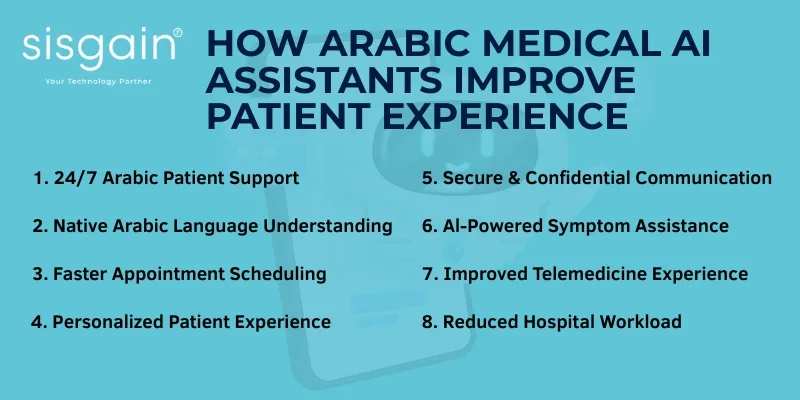
Modern AI systems provide:
- 24/7 multilingual patient assistance
- Arabic-first communication support
- Faster appointment scheduling
- Automated healthcare guidance
- Voice-enabled healthcare interactions
Another major improvement comes from response speed. Patients no longer need to wait on overloaded call centers for simple queries. AI-powered systems can instantly answer common healthcare questions, guide patients to the right department, and even assist with symptom-based triaging before appointments.
Patient benefits include:
- Reduced waiting times
- Better communication clarity
- Higher satisfaction scores
- Easier follow-ups
- More personalized healthcare experiences
Most importantly, patients feel more comfortable communicating in their native language. Human-like conversational AI creates a more natural healthcare experience, especially when discussing sensitive medical concerns.
As part of the wider UAE healthcare transformation, AI-powered patient engagement systems are rapidly expanding across Gulf hospitals, helping providers improve both operational efficiency and patient satisfaction at the same time.
Why UAE Hospitals Are Investing in AI + HMS
Healthcare providers across the UAE are aggressively investing in AI-driven healthcare infrastructure to improve operational efficiency, patient engagement, and long-term healthcare scalability. Hospitals are no longer relying solely on traditional management systems. Instead, they are combining AI systems with Hospital Management Systems (HMS), telemedicine platforms, and patient engagement technologies to create smarter healthcare ecosystems.
This transformation is especially visible in Dubai and Abu Dhabi, where smart hospitals and AI-enabled healthcare initiatives are accelerating rapidly. Healthcare providers are adopting multilingual healthcare AI systems to improve communication, automate workflows, and reduce pressure on medical and administrative teams.
Modern healthcare facilities are integrating:
- AI-powered patient communication systems
- Hospital Management Systems (HMS)
- Telemedicine platforms
- AI physician assistants
- Smart appointment scheduling tools
- Automated patient engagement platforms
One of the main reasons for this investment is operational efficiency. Hospitals managing thousands of patient interactions daily need scalable systems capable of handling multilingual communication, appointment coordination, clinical documentation, and patient support without increasing administrative workload.
Recent UAE healthcare AI implementations now include AI-enabled smart clinics, virtual healthcare assistants, and AI-driven patient engagement systems that support Arabic and multilingual healthcare communication.
Estimated AI integration costs in UAE healthcare can vary depending on system complexity and integration requirements.
Estimated AI Integration Costs:
- AI chatbot integration: AED 25,000 – AED 80,000
- Arabic medical AI assistant: AED 80,000 – AED 250,000
- AI medical scribe integration: AED 120,000 – AED 400,000
- Enterprise AI + HMS integration: AED 300,000+
For healthcare providers planning digital transformation, partnering with experienced hospital management information system developers in gulf regions becomes critical for seamless deployment and scalability.
At the same time, growing demand for advanced AI applications is also increasing discussions around AI development costs and long-term healthcare technology investment strategies across the UAE healthcare sector.
The Role of Arabic AI in Telemedicine and Remote Care
Telemedicine is rapidly becoming a core part of healthcare delivery across the Gulf region. As patients increasingly prefer digital healthcare access, hospitals and clinics in the UAE are investing heavily in remote healthcare technologies that improve accessibility, convenience, and patient engagement.
However, one major challenge still exists in virtual healthcare environments — effective multilingual communication.
Many patients feel uncomfortable discussing symptoms or medical concerns in English during remote consultations. This is especially true for elderly Arabic-speaking patients and residents who prefer native-language healthcare interactions. Arabic AI technologies are helping bridge this communication gap by making telemedicine more accessible and patient-friendly.
Modern multilingual healthcare AI systems now support:
- Remote consultations in Arabic
- AI-assisted symptom collection
- Voice-enabled virtual healthcare support
- Automated appointment reminders
- AI-powered patient follow-up systems
- Multilingual telemedicine communication
For example, AI-powered virtual assistants can collect preliminary patient symptoms before a telemedicine consultation even begins. This reduces physician workload while helping doctors access more structured patient information during online consultations.
Voice-enabled healthcare AI is also improving accessibility for patients who may not feel comfortable typing medical information or navigating complex digital healthcare platforms. Patients can simply speak naturally in Arabic while AI systems process requests, schedule appointments, or provide healthcare guidance.
The UAE is already seeing the emergence of AI-enabled telemedicine clinics designed to support smart healthcare transformation initiatives. These systems are helping healthcare providers deliver faster and more personalized care without geographical limitations.
As telemedicine adoption continues growing, healthcare providers investing in telemedicine app development services are increasingly prioritizing multilingual healthcare AI capabilities to improve remote patient experiences and strengthen digital healthcare accessibility across the Gulf region.
Arabic Medical AI Scribes Are Reducing Physician Burnout
Physician burnout has become a growing challenge in healthcare systems worldwide, including across the UAE and Gulf region. Doctors are spending a significant portion of their time managing clinical documentation, updating patient records, and handling administrative tasks instead of focusing directly on patient care.
In busy hospitals and clinics, this documentation burden often leads to longer working hours, workflow inefficiencies, and reduced physician satisfaction. This is where the Arabic medical AI scribe is transforming healthcare operations.
AI medical scribes are intelligent systems designed to automatically document clinical interactions in real time. During consultations, these AI-powered tools can listen to doctor-patient conversations, transcribe medical discussions, and generate structured clinical summaries in both Arabic and English.
Modern Arabic medical AI scribe systems can:
- Transcribe consultations automatically
- Generate patient summaries
- Automate clinical notes
- Support bilingual medical documentation
- Reduce administrative workload
- Improve documentation accuracy
For physicians working in multilingual healthcare environments, this technology significantly reduces repetitive manual work while improving workflow efficiency. Instead of spending hours typing reports and updating records, doctors can focus more attention on patient interaction and clinical decision-making.
Benefits for physicians include:
- Less paperwork
- More patient interaction
- Faster documentation
- Reduced burnout
- Better workflow efficiency
AI physician assistant initiatives are already gaining momentum in UAE healthcare as hospitals look for smarter ways to improve clinician productivity and operational performance.
As AI for Arabic healthcare continues evolving, AI medical scribes are expected to become a standard feature in future-ready hospitals and smart healthcare facilities across the Gulf region.
Key Features to Look for in the Best Arabic Medical AI Assistant in 2026
As healthcare providers across the UAE continue investing in AI-driven digital transformation, choosing the right Arabic medical AI assistant has become a strategic decision rather than just a technology upgrade. The best Arabic medical AI assistant 2026 should go beyond simple chatbot functionality and deliver intelligent, secure, and healthcare-focused capabilities designed specifically for Gulf healthcare environments.
Healthcare organizations should evaluate AI platforms based on language intelligence, healthcare integration, automation capabilities, and regulatory compliance.
Essential features to look for include:
Language & NLP Capabilities
- Arabic dialect understanding
- Emirati and Gulf Arabic language processing
- Real-time multilingual translation
- Voice recognition for Arabic and English
- Context-aware healthcare conversations
Healthcare Integration Features
- EMR/EHR compatibility
- HMS integration
- Telemedicine platform compatibility
- API-based healthcare system integration
- Centralized patient communication support
Advanced AI Capabilities
- Predictive healthcare analytics
- AI-powered triaging
- Conversational AI for patient interaction
- Medical summarization
- AI-driven workflow automation
- Smart appointment management
Security & Compliance Features
- HIPAA compliance
- UAE healthcare regulation support
- End-to-end data encryption
- Secure cloud hosting
- Role-based data access controls
Another important factor is scalability. Healthcare providers need AI systems capable of supporting future smart hospital initiatives, multilingual patient engagement, and remote healthcare expansion.
Since healthcare workflows are highly specialized, hospitals should work with experienced healthcare-focused AI development teams that understand regional healthcare operations and compliance requirements.
Partnering with experts in custom healthcare app development in UAE can help organizations build scalable and region-specific Arabic healthcare AI solutions tailored to Gulf healthcare demands. Similarly, experienced software development companies in uae and IT software development companies in dubai are playing a major role in accelerating AI healthcare innovation across the region.
Challenges Healthcare Providers Must Consider Before AI Adoption
While AI is transforming healthcare operations across the Gulf region, successful implementation requires careful planning and responsible deployment. Healthcare providers must understand that adopting AI systems involves more than simply installing new technology. It requires strong governance, secure infrastructure, and proper operational alignment.
One of the biggest concerns surrounding healthcare AI is data privacy and patient confidentiality. Hospitals handle highly sensitive patient information, making cybersecurity and compliance critical priorities. AI systems must follow strict healthcare data protection standards while ensuring secure storage and transmission of medical records.
Another growing concern is AI hallucination, where AI systems generate inaccurate or misleading responses. In healthcare environments, even small communication errors can impact patient safety and trust. This is why AI-generated healthcare recommendations should always be reviewed within clinically supervised workflows.
Healthcare providers must also prepare for:
- Complex system integrations
- Staff training requirements
- Workflow adaptation challenges
- Regulatory compliance management
- Long-term maintenance and scalability
Integrating AI with existing Hospital Management Systems, EHR platforms, and telemedicine systems often requires specialized technical expertise and structured implementation strategies.
At the same time, trustworthy healthcare AI frameworks are becoming increasingly important worldwide as governments and healthcare regulators focus on responsible AI usage in clinical environments.
Most importantly, healthcare AI should support doctors, not replace them. The goal of AI adoption is to reduce administrative burden, improve efficiency, and strengthen patient engagement while allowing healthcare professionals to focus more on clinical care and human interaction.
The Future of Arabic AI Healthcare in the Gulf Region
The future of Gulf healthcare is becoming increasingly connected, intelligent, and multilingual. As the UAE and wider GCC region continue investing heavily in digital transformation, Arabic AI healthcare is expected to become a foundational part of modern healthcare infrastructure over the next few years.
Healthcare providers are already moving beyond basic automation toward fully integrated AI-powered healthcare ecosystems capable of delivering personalized patient experiences at scale.
In the coming years, hospitals across Dubai, Abu Dhabi, and the Gulf region are expected to adopt:
- AI voice assistants in every hospital
- Arabic-first healthcare automation
- Smart hospitals powered by AI
- AI-enabled patient journey management
- Personalized multilingual healthcare support
The UAE is also investing heavily in Arabic AI infrastructure to strengthen regional AI innovation and improve Arabic-language digital technologies. This investment is accelerating the development of healthcare AI systems specifically designed for Gulf healthcare communication and operational needs.
Several emerging innovations are expected to shape the future of Arabic healthcare AI, including:
- AI-powered wearable integration
- Predictive healthcare analytics
- AI-driven diagnostics
- Generative AI healthcare assistants
- Voice-enabled patient care
- Real-time multilingual healthcare communication
Future healthcare systems may allow patients to interact naturally with AI assistants in Arabic through voice, mobile apps, smart kiosks, and wearable devices. AI will also help healthcare providers predict patient risks earlier, automate administrative workflows, and improve care coordination across hospitals and remote healthcare platforms.
As smart healthcare initiatives continue expanding, Arabic healthcare AI solutions will likely evolve from optional digital tools into core healthcare infrastructure supporting hospitals, clinics, telemedicine providers, and public healthcare systems throughout the GCC.
Healthcare providers that invest early in multilingual AI systems will be better positioned to improve operational efficiency, patient engagement, and long-term digital healthcare competitiveness.
Conclusion
The Gulf healthcare sector is entering a new era where patient communication, digital accessibility, and intelligent automation are becoming central to healthcare delivery. As hospitals across the UAE continue embracing smart healthcare transformation, the demand for Arabic-first and multilingual AI systems is growing rapidly.
Traditional English-only healthcare platforms are no longer sufficient for the realities of GCC healthcare environments. Patients expect personalized, culturally aware, and language-accessible healthcare experiences that improve both convenience and trust.
This is why Arabic AI is becoming essential across hospitals, clinics, telemedicine platforms, and patient engagement systems throughout the region. From appointment scheduling and multilingual communication to AI medical scribing and workflow automation, AI assistants are helping healthcare providers improve operational efficiency while enhancing patient satisfaction.
Most importantly, patient communication now directly impacts healthcare quality. When patients can communicate comfortably in their preferred language, healthcare experiences become more accurate, accessible, and patient-centered.
“In the Gulf healthcare sector, the future of patient engagement will not be English-first — it will be multilingual, culturally aware, and powered by Arabic AI.”
Healthcare providers planning future-ready digital transformation strategies should consider investing in scalable AI healthcare solutions designed specifically for Gulf healthcare needs. Partnering with experts in custom healthcare app development in UAE can help organizations build secure, intelligent, and patient-focused healthcare ecosystems prepared for the future of healthcare in the UAE.