
In the modern aviation industry, operational efficiency is directly connected to profitability, passenger satisfaction, and airline reputation. One of the biggest challenges airlines face today is unexpected aircraft downtime. Even a small technical issue can ground an aircraft for hours or even days, causing flight delays, cancellations, disrupted schedules, higher maintenance expenses, and significant revenue losses. For commercial airlines operating on tight schedules, every minute an aircraft remains unavailable can create a chain reaction across the entire network.
Traditionally, airlines have relied on scheduled inspections and reactive maintenance approaches to keep aircraft operational. In scheduled maintenance, components are inspected or replaced after a fixed number of flight hours or cycles, regardless of their actual condition. Reactive maintenance, on the other hand, addresses issues only after a failure occurs. While these methods help maintain aviation safety standards, they often fail to detect hidden technical problems early enough to prevent unexpected breakdowns.
This is where AI predictive maintenance software for airlines is revolutionizing the aviation sector. By combining artificial intelligence, machine learning, IoT sensors, and real-time analytics, airlines can now monitor aircraft systems continuously and predict potential failures before they happen. Instead of waiting for a malfunction, maintenance teams receive intelligent alerts about abnormal behavior, component wear, or system inefficiencies in advance. This allows airlines to perform maintenance proactively, reduce operational disruptions, and improve fleet reliability.
Today, AI in aircraft maintenance is helping airlines move from traditional time-based maintenance strategies to data-driven predictive maintenance models. Modern aircraft generate massive amounts of operational data during every flight, including engine performance, fuel consumption, temperature variations, pressure levels, vibration patterns, and equipment health metrics. Advanced AI algorithms analyze this data in real time to identify patterns that may indicate upcoming technical failures.
The adoption of predictive maintenance in aviation offers several important benefits for airlines. It helps reduce unscheduled maintenance events, lowers operational costs, improves aircraft availability, enhances passenger experience, and increases overall flight safety. Airlines can also optimize spare parts management, improve maintenance scheduling, and reduce unnecessary inspections by using intelligent predictive systems.
As the aviation industry becomes more digitally connected, the demand for advanced airline maintenance software and intelligent automation solutions continues to grow rapidly. Airlines worldwide are investing in scalable AI aviation maintenance solutions to improve operational performance and remain competitive in an increasingly demanding market.
In this blog, we will explore how AI-powered predictive maintenance works in aviation, the technologies behind it, its key business benefits, real-world applications, implementation challenges, and how airlines can successfully reduce operational disruptions through intelligent maintenance strategies.
What Is AI Predictive Maintenance Software for Airlines?
The aviation industry operates in one of the most complex and safety-critical environments in the world. Aircraft systems must function with maximum accuracy and reliability at all times. Even a minor technical issue can lead to costly delays, operational disruptions, and passenger dissatisfaction. To overcome these challenges, airlines are increasingly adopting AI predictive maintenance software for airlines to improve maintenance efficiency and reduce unexpected aircraft failures.
AI predictive maintenance software is an advanced technology solution that uses artificial intelligence, machine learning, IoT sensors, and real-time analytics to monitor aircraft health continuously. Unlike traditional maintenance methods that rely on fixed schedules or manual inspections, AI-powered systems analyze live operational data to predict technical issues before they become serious failures.
Modern aircraft generate enormous volumes of data during every flight. Thousands of sensors installed across aircraft systems collect information related to engine performance, temperature, pressure, vibration levels, fuel efficiency, hydraulic operations, electrical systems, and structural conditions. The AI system processes this data in real time and compares it with historical maintenance records and performance patterns.
Using machine learning algorithms, the software can identify unusual behavior, hidden abnormalities, and early warning signs of component wear or system degradation. For example, if an engine begins producing abnormal vibration patterns or a hydraulic system shows inconsistent pressure levels, the AI system can immediately alert maintenance teams before the issue causes operational failure.
This predictive approach allows airlines to schedule maintenance activities at the most appropriate time instead of waiting for components to fail unexpectedly. As a result, airlines can avoid emergency repairs, reduce flight disruptions, improve maintenance planning, and significantly enhance fleet reliability.
Another major advantage of modern airline maintenance software is its ability to automate maintenance decision-making processes. Maintenance teams receive intelligent recommendations about which parts require inspection, repair, or replacement based on actual aircraft conditions rather than estimated timelines. This improves operational efficiency while reducing unnecessary maintenance costs.
Today’s AI-powered maintenance systems can monitor multiple critical aircraft components, including:
- Engine performance and fuel efficiency
- Hydraulic system operations
- Landing gear condition and brake systems
- Electrical and power distribution systems
- Cabin equipment and passenger comfort systems
- Aircraft structural health and fatigue monitoring
- Environmental control systems
- Navigation and communication equipment
As the aviation industry becomes more digitally connected, AI in aircraft maintenance is helping airlines move toward smarter, data-driven operations. These intelligent systems not only improve aircraft performance but also enhance safety, reduce operational risks, and deliver a better passenger experience.
For airlines aiming to remain competitive in today’s fast-changing aviation market, investing in advanced AI aviation maintenance solutions is becoming an essential part of long-term operational strategy.
Why Aircraft Downtime Is a Major Challenge for Airlines
Aircraft downtime is one of the most expensive and operationally disruptive problems airlines face today. In the aviation industry, aircraft are valuable revenue-generating assets, and every hour an aircraft remains grounded can result in substantial financial losses. Whether caused by unexpected technical failures, maintenance delays, or equipment malfunctions, downtime directly affects airline profitability, operational efficiency, and customer satisfaction.
Airlines operate on highly optimized schedules where aircraft availability plays a critical role in maintaining smooth operations. When a single aircraft becomes unavailable unexpectedly, it can create a ripple effect across the entire airline network. Delayed departures, missed connections, rescheduled crews, and canceled flights can quickly impact thousands of passengers and damage an airline’s reputation.
One of the biggest challenges with traditional maintenance approaches is that many technical issues are discovered only after a failure occurs. Reactive maintenance often forces airlines to deal with emergency repairs, urgent spare part replacements, and unscheduled inspections. These unexpected events not only increase operational costs but also create maintenance bottlenecks that reduce overall fleet efficiency.
When aircraft downtime occurs, airlines may experience several major operational and financial consequences, including:
- Flight delays and cancellations
- Passenger compensation and refund expenses
- Increased maintenance and repair costs
- Crew rescheduling challenges
- Loss of customer trust and brand reputation
- Reduced aircraft utilization rates
- Disruptions in route planning and airport operations
In many cases, unscheduled maintenance events are significantly more expensive than planned maintenance activities because they require immediate technical support, emergency logistics, and rapid operational adjustments.
This is why aircraft downtime reduction has become a top priority for airlines worldwide. Aviation companies are increasingly investing in intelligent technologies that can improve aircraft reliability and reduce operational disruptions before they happen.
By adopting advanced predictive maintenance in aviation, airlines can move from reactive maintenance strategies to proactive and condition-based maintenance models. AI-powered systems continuously monitor aircraft performance and provide early warnings about potential component failures. This allows maintenance teams to resolve issues during scheduled maintenance windows rather than during active flight operations.
The implementation of AI aviation maintenance solutions also helps airlines improve maintenance planning, optimize spare parts inventory, reduce unnecessary inspections, and maximize fleet availability. As a result, airlines can improve operational performance while delivering a safer and more reliable travel experience for passengers.
In today’s competitive aviation landscape, reducing downtime is no longer only about cutting maintenance costs. It has become a critical business strategy for improving operational resilience, enhancing customer satisfaction, and maintaining long-term profitability.
How AI Predictive Maintenance Works in Aviation
The aviation industry generates massive amounts of operational data every day. Modern aircraft are equipped with highly advanced digital systems that continuously monitor the health and performance of critical components during every stage of flight. However, collecting data alone is not enough. The real value comes from using artificial intelligence to transform this raw information into actionable maintenance insights.
This is where AI predictive maintenance software for airlines plays a crucial role. By combining real-time monitoring, machine learning algorithms, and intelligent analytics, airlines can predict technical failures before they happen and take proactive action to prevent costly disruptions.
Unlike traditional maintenance methods that rely on fixed inspection schedules or manual diagnostics, predictive maintenance uses data-driven intelligence to monitor aircraft conditions continuously. The system identifies hidden warning signs, predicts possible failures, and helps maintenance teams resolve issues before they impact operations.
The process of predictive maintenance in aviation typically involves three major stages: data collection, machine learning analysis, and predictive alert generation.
Data Collection from Aircraft Systems
Modern commercial aircraft contain thousands of sensors installed across various systems and components. These sensors continuously generate operational data throughout every flight, creating a detailed picture of aircraft health and performance in real time.
The collected data includes information related to:
- Engine temperature and pressure
- Fuel consumption and fuel flow rates
- Hydraulic system performance
- Electrical system activity
- Landing gear operations
- Cabin pressure and environmental controls
- Aircraft vibration levels
- Flight speed and altitude metrics
- Brake system conditions
- Structural stress and fatigue levels
These sensors act as the foundation of modern AI in aircraft maintenance because they provide continuous visibility into aircraft performance. Even small changes in system behavior can be detected instantly through sensor monitoring.
For example, if an engine begins operating at slightly higher temperatures than normal or if vibration levels increase unexpectedly, the system records and analyzes those variations immediately.
The data collected from aircraft systems is transmitted to centralized maintenance platforms, cloud-based aviation systems, or airline operation centers where AI-powered software processes it in real time.
This continuous monitoring enables airlines to move away from reactive maintenance models and adopt smarter, condition-based maintenance strategies.
Machine Learning Analysis
Once the operational data is collected, machine learning algorithms begin analyzing both historical and real-time information to identify patterns associated with equipment wear, system degradation, or possible technical failures.
Machine learning is one of the most important technologies behind modern AI aviation maintenance solutions because it allows systems to learn from past maintenance events and continuously improve prediction accuracy over time.
The AI system compares current aircraft performance with:
- Historical maintenance records
- Previous failure patterns
- Manufacturer performance standards
- Operational flight conditions
- Fleet-wide performance data
By analyzing these datasets together, the software can detect abnormalities that may not be visible through traditional inspection methods.
For example:
- An unusual vibration pattern in an aircraft engine may indicate an upcoming mechanical issue.
- Continuous temperature fluctuations could signal component fatigue or cooling system problems.
- Changes in fuel efficiency may reveal engine degradation or system inefficiencies.
- Hydraulic pressure inconsistencies could indicate early leakage or pump failure.
The AI model uses these patterns to calculate the probability of component failure before it occurs.
One of the biggest advantages of machine learning is that the system becomes smarter over time. As airlines collect more operational data and maintenance records, the AI continuously refines its prediction models and improves maintenance recommendations.
This intelligent analysis helps airlines make faster and more accurate maintenance decisions while reducing unnecessary inspections and operational risks.
Predictive Alerts and Proactive Maintenance
After analyzing aircraft data, the AI system generates predictive alerts whenever it detects abnormal behavior or early warning signs of potential failures.
Instead of discovering technical problems after a breakdown occurs, maintenance teams receive real-time notifications in advance. These alerts allow engineers and technicians to take corrective action before the issue affects flight operations.
For example, the system may notify maintenance teams about:
- Engine components approaching wear limits
- Electrical systems showing overheating patterns
- Brake systems requiring inspection
- Hydraulic systems with pressure irregularities
- Fuel system efficiency drops
These predictive alerts help airlines plan maintenance activities more effectively and reduce the risk of unexpected aircraft grounding.
With proactive maintenance scheduling, airlines can:
- Schedule repairs during planned maintenance windows
- Order replacement parts in advance
- Reduce emergency repair situations
- Minimize flight delays and cancellations
- Improve spare parts inventory management
- Increase aircraft availability and fleet reliability
This proactive approach is one of the biggest reasons why airlines are rapidly adopting advanced airline maintenance software solutions.
By preventing unscheduled maintenance events, predictive systems significantly improve operational efficiency and support long-term aircraft downtime reduction strategies.
The Business Impact of AI Predictive Maintenance
The implementation of predictive maintenance technology is transforming airline operations worldwide. Airlines that use AI-powered maintenance systems can improve operational performance while lowering maintenance costs and improving passenger satisfaction.
Key business benefits include:
- Reduced aircraft downtime
- Improved fleet utilization
- Faster maintenance response times
- Enhanced operational safety
- Lower repair and inspection costs
- Better resource planning
- Increased customer trust and reliability
As the aviation industry continues to embrace digital transformation, AI-powered predictive maintenance is becoming an essential technology for airlines aiming to improve operational resilience and maintain a competitive advantage in the global market.
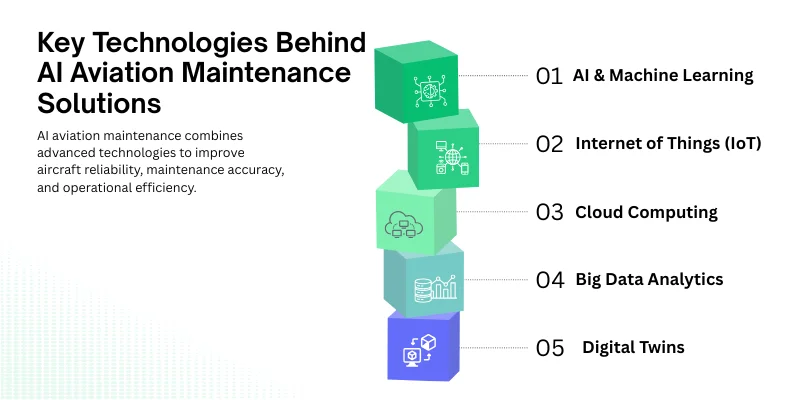
Key Technologies Behind AI Aviation Maintenance Solutions
The success of modern AI aviation maintenance solutions depends on a combination of advanced digital technologies working together to improve aircraft reliability, operational efficiency, and maintenance accuracy. These technologies enable airlines to monitor aircraft health in real time, analyze massive operational datasets, and predict technical issues before they lead to failures.
As airlines continue to modernize their operations, the integration of artificial intelligence, IoT, cloud computing, big data analytics, and digital twins is transforming the future of aviation maintenance.
Artificial Intelligence and Machine Learning
Artificial intelligence and machine learning are the core technologies behind modern AI predictive maintenance software for airlines. These systems are designed to analyze massive volumes of operational and maintenance data quickly, accurately, and continuously.
Traditional maintenance methods often rely on manual inspections and predefined maintenance schedules. In contrast, AI-powered systems can process real-time aircraft data and identify hidden patterns that may indicate early signs of equipment failure.
Machine learning models continuously learn from:
- Historical maintenance records
- Aircraft sensor data
- Operational performance trends
- Previous failure incidents
- Flight conditions and environmental factors
As the system receives more data, prediction accuracy improves automatically over time. This allows airlines to make smarter maintenance decisions based on actual aircraft conditions rather than assumptions.
For example, AI algorithms can identify unusual vibration patterns in engines, abnormal fuel consumption behavior, or temperature fluctuations that may signal upcoming technical problems.
By using AI in aircraft maintenance, airlines can improve operational reliability, reduce unexpected failures, and optimize maintenance planning.
Internet of Things (IoT)
The Internet of Things (IoT) plays a critical role in modern aviation maintenance systems. IoT technology connects aircraft components, sensors, and monitoring devices to centralized maintenance platforms, enabling continuous real-time monitoring.
Modern aircraft are equipped with thousands of IoT-enabled sensors that collect operational data from critical systems such as:
- Aircraft engines
- Hydraulic systems
- Landing gear
- Electrical systems
- Cabin equipment
- Fuel systems
- Environmental control systems
These sensors generate valuable performance insights throughout every flight.
For example, IoT sensors can detect:
- Changes in engine vibration levels
- Pressure inconsistencies in hydraulic systems
- Abnormal temperature increases
- Fuel efficiency variations
- Structural stress conditions
This real-time visibility allows airlines to identify potential issues immediately and take preventive action before failures occur.
IoT-based monitoring is one of the main reasons why predictive maintenance in aviation has become more accurate, efficient, and scalable.
Cloud Computing
Cloud computing provides the infrastructure needed to store, manage, and process the enormous amount of operational data generated by aircraft systems every day.
Modern aviation maintenance platforms rely heavily on cloud technology because airlines operate across multiple airports, fleets, and geographic regions. Cloud-based systems allow maintenance teams to access real-time aircraft data from anywhere while ensuring scalability and operational flexibility.
Cloud platforms help airlines:
- Store large maintenance datasets securely
- Process real-time operational data faster
- Enable remote maintenance monitoring
- Improve collaboration across maintenance teams
- Integrate AI analytics with operational systems
- Support predictive maintenance automation
Many aviation companies work with a trusted software development company uae to build secure and scalable cloud-based aviation maintenance platforms tailored to airline operational requirements.
As aviation data volumes continue to grow, cloud computing is becoming essential for modern airline maintenance software solutions.
Big Data Analytics
Aircraft systems generate massive amounts of operational information during every flight. Big data analytics helps airlines transform this raw data into valuable maintenance insights.
Using advanced analytics tools, airlines can identify:
- Long-term equipment performance trends
- Frequent failure patterns
- Maintenance cost inefficiencies
- Fleet-wide operational risks
- Component lifespan predictions
Big data analytics enables airlines to make data-driven maintenance decisions instead of relying solely on manual inspections or fixed maintenance schedules.
For example, analytics platforms can compare performance data across an entire fleet to identify which aircraft components are most likely to fail under specific operating conditions.
This level of analysis helps airlines optimize maintenance schedules, reduce unnecessary inspections, and improve fleet performance.
The combination of AI and big data is significantly improving aircraft downtime reduction strategies across the aviation industry.
Digital Twins
Digital twin technology is one of the most advanced innovations in modern aviation maintenance.
A digital twin is a virtual replica of an aircraft, engine, or specific aircraft component. This virtual model receives real-time operational data from the actual aircraft and simulates how the system behaves under different conditions.
Engineers can use digital twins to:
- Monitor aircraft health remotely
- Simulate component performance
- Predict future maintenance requirements
- Test operational scenarios
- Identify hidden performance issues
For example, if an aircraft engine begins showing unusual operating behavior, engineers can use the digital twin model to simulate various stress conditions and determine the root cause of the issue before it becomes critical.
Digital twins improve maintenance accuracy while reducing the need for unnecessary inspections and manual diagnostics.
As airlines continue adopting advanced AI aviation maintenance solutions, digital twin technology is expected to play a major role in improving aircraft reliability and operational efficiency.
Benefits of AI in Aircraft Maintenance
The adoption of AI-powered predictive maintenance systems is transforming the aviation industry by improving maintenance efficiency, operational reliability, and flight safety. Airlines worldwide are investing in intelligent maintenance platforms to reduce operational disruptions and optimize fleet performance.
Below are some of the biggest benefits of using AI in aircraft maintenance.
Reduced Aircraft Downtime
One of the most important advantages of predictive maintenance is reduced aircraft downtime.
Traditional maintenance approaches often identify problems only after a failure occurs, leading to unexpected aircraft grounding and operational disruptions. AI-powered systems help airlines detect early warning signs before failures happen.
By addressing technical issues proactively, airlines can:
- Reduce unscheduled maintenance events
- Prevent flight delays and cancellations
- Improve aircraft availability
- Increase operational efficiency
This proactive maintenance strategy helps airlines keep aircraft operational for longer periods while improving overall fleet reliability.
Lower Maintenance Costs
Emergency repairs and unexpected component failures are significantly more expensive than planned maintenance activities.
AI systems help airlines optimize maintenance planning by identifying exactly when repairs or replacements are needed. This reduces unnecessary inspections and minimizes expensive emergency maintenance situations.
Benefits include:
- Lower repair costs
- Reduced labor expenses
- Better spare parts management
- Improved maintenance scheduling
- Reduced operational disruptions
As a result, airlines can improve cost efficiency while maintaining high safety standards.
Improved Flight Safety
Safety is the highest priority in aviation, and predictive maintenance plays a major role in improving operational safety.
AI systems continuously monitor aircraft systems and identify hidden abnormalities that may not be visible during routine inspections.
Early detection of technical issues helps airlines:
- Prevent equipment failures
- Reduce operational risks
- Improve regulatory compliance
- Enhance maintenance accuracy
- Increase overall aircraft reliability
This proactive approach strengthens airline safety management systems and improves passenger confidence.
Better Fleet Utilization
Aircraft are highly valuable operational assets, and maximizing fleet utilization is essential for airline profitability.
When aircraft spend less time grounded for unexpected repairs, airlines can operate more flights and improve scheduling efficiency.
Improved fleet utilization allows airlines to:
- Increase revenue opportunities
- Improve route planning
- Reduce operational bottlenecks
- Optimize aircraft availability
This is one of the key reasons why airlines are rapidly investing in intelligent airline maintenance software systems.
Faster Maintenance Decisions
AI-powered analytics platforms provide maintenance teams with real-time operational insights and predictive recommendations.
Instead of relying solely on manual inspections or delayed reporting systems, engineers can access intelligent maintenance alerts instantly.
This enables:
- Faster issue diagnosis
- Quicker maintenance response times
- Better maintenance prioritization
- Improved operational decision-making
The ability to make faster and smarter maintenance decisions significantly improves airline operational efficiency.
Improved Passenger Experience
Flight delays and cancellations directly impact passenger satisfaction and airline reputation.
By reducing unexpected technical failures, AI-powered predictive maintenance helps airlines deliver more reliable flight operations.
Passengers benefit from:
- Fewer delays and cancellations
- Improved flight reliability
- Better onboard system performance
- Enhanced travel experience
In today’s highly competitive aviation market, maintaining a strong customer experience is essential for long-term airline success.
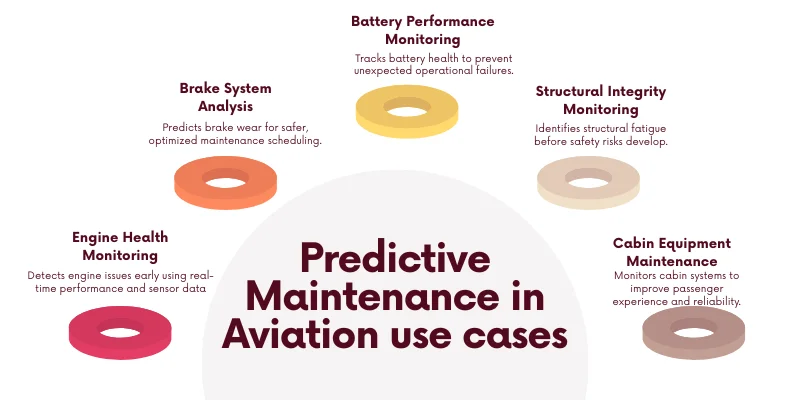
Real-World Use Cases of Predictive Maintenance in Aviation
The practical applications of predictive maintenance in aviation are expanding rapidly as airlines continue adopting advanced AI technologies. Predictive systems are now being used across multiple aircraft systems to improve operational reliability and reduce maintenance risks.
Engine Health Monitoring
Aircraft engines are among the most critical and expensive components in aviation.
AI systems continuously monitor:
- Engine vibration levels
- Fuel consumption patterns
- Temperature fluctuations
- Pressure readings
- Engine efficiency metrics
By analyzing these performance indicators, predictive systems can detect early signs of engine wear or malfunction before a major failure occurs.
This helps airlines schedule maintenance proactively and avoid costly engine-related downtime.
Brake System Analysis
Aircraft brake systems experience significant stress during takeoff and landing operations.
Predictive maintenance models analyze landing performance data to identify brake wear conditions and estimate replacement timelines accurately.
This allows airlines to:
- Improve brake system safety
- Optimize maintenance schedules
- Reduce unnecessary brake replacements
- Prevent operational disruptions
Battery Performance Monitoring
Aircraft batteries are essential for powering critical onboard systems.
AI-powered maintenance systems track battery performance indicators such as:
- Charging efficiency
- Temperature behavior
- Voltage stability
- Energy output patterns
By identifying battery degradation early, airlines can prevent unexpected failures and improve operational safety.
Structural Integrity Monitoring
Aircraft structures experience constant stress during flight operations due to pressure changes, turbulence, and environmental conditions.
Sensors installed across aircraft structures monitor:
- Stress levels
- Material fatigue
- Structural vibrations
- Wing performance conditions
AI systems analyze this data to identify potential structural weaknesses before they become serious safety risks.
This improves aircraft durability and long-term maintenance planning.
Cabin Equipment Maintenance
Passenger comfort systems are also important for airline operations and customer satisfaction.
AI-powered systems can monitor cabin equipment such as:
- Air conditioning systems
- Cabin lighting
- In-flight entertainment systems
- Seat electronics
- Environmental control systems
Predictive monitoring helps airlines maintain better cabin performance while reducing passenger complaints and service disruptions.
How AI Helps Reduce Unscheduled Maintenance Events
Unscheduled maintenance is one of the most expensive and operationally disruptive challenges in the aviation industry. Unlike planned maintenance activities, unscheduled maintenance occurs unexpectedly when an aircraft component suddenly fails or shows signs of malfunction during operations. These unexpected technical issues can lead to flight delays, aircraft grounding, emergency inspections, canceled flights, passenger dissatisfaction, and significant financial losses for airlines.
In traditional aviation maintenance systems, many technical problems are identified only after a failure has already occurred. Maintenance teams often rely on routine inspection schedules, manual diagnostics, or pilot-reported issues to detect problems. While these methods are necessary for maintaining safety standards, they are not always capable of identifying hidden defects or early signs of equipment degradation.
This is where AI predictive maintenance software for airlines is transforming aviation operations. AI-powered systems continuously monitor aircraft performance in real time and identify abnormalities long before they become serious operational failures. Instead of reacting to breakdowns after they happen, airlines can now predict technical issues early and take preventive action.
Modern AI in aircraft maintenance uses machine learning algorithms, IoT sensors, and predictive analytics to analyze massive amounts of operational data generated by aircraft systems. The AI system compares live aircraft performance with historical maintenance patterns to identify unusual behavior that may indicate future equipment failure.
For example:
- AI systems can predict hydraulic leakage before a major hydraulic system failure occurs.
- Engine monitoring sensors can identify abnormal vibration patterns that may signal internal engine wear.
- Electrical system analytics can detect overheating components before they cause operational disruptions.
- Fuel system monitoring can identify performance inefficiencies linked to component degradation.
- Brake performance analysis can predict excessive wear before safety risks increase.
These predictive insights help maintenance teams resolve issues during scheduled maintenance windows instead of dealing with emergency repairs during active operations.
By reducing unexpected failures, airlines can:
- Minimize flight delays and cancellations
- Avoid costly emergency maintenance events
- Improve aircraft availability
- Optimize maintenance workforce planning
- Reduce operational disruptions across the network
- Increase overall fleet reliability
One of the biggest advantages of predictive maintenance in aviation is its ability to support proactive maintenance strategies. Airlines no longer need to depend entirely on fixed inspection intervals because AI systems provide maintenance recommendations based on actual aircraft conditions and real-time performance data.
This predictive approach significantly improves operational efficiency while helping airlines reduce downtime, improve safety standards, and maintain a more reliable passenger experience.
As aviation technology continues to evolve, reducing unscheduled maintenance events through AI-driven predictive systems is becoming a critical business strategy for airlines worldwide.
Role of Data Analytics and IoT in Airline Maintenance Software
Modern aviation maintenance systems depend heavily on data analytics and Internet of Things (IoT) technologies to improve operational visibility, maintenance planning, and aircraft reliability. Together, these technologies form the foundation of advanced airline maintenance software and predictive maintenance platforms.
Aircraft generate enormous amounts of operational data during every flight. Without intelligent analytics tools, managing and interpreting this data would be extremely difficult. AI-powered analytics and IoT-enabled monitoring systems help airlines transform raw operational information into actionable maintenance insights.
These technologies enable airlines to monitor aircraft conditions continuously, identify hidden performance issues, and make faster maintenance decisions based on real-time operational data.
Real-Time Aircraft Monitoring
Real-time monitoring is one of the most important capabilities of modern AI aviation maintenance solutions.
IoT sensors installed across aircraft systems continuously collect and transmit operational data related to:
- Engine performance
- Fuel consumption
- Hydraulic pressure
- Electrical system activity
- Brake system conditions
- Cabin environment performance
- Structural stress and vibration levels
This data is automatically sent to centralized maintenance systems or cloud-based aviation platforms where engineers can monitor aircraft conditions remotely in real time.
Real-time visibility allows maintenance teams to detect abnormalities immediately instead of waiting for scheduled inspections.
For example, if engine temperatures begin rising beyond normal operating ranges during flight, the maintenance system can generate instant alerts for engineers to investigate the issue before it becomes critical.
This continuous monitoring capability significantly improves operational awareness and supports proactive maintenance planning.
Data-Driven Maintenance Planning
Traditional maintenance schedules are often based on fixed timelines or flight hours rather than actual aircraft conditions. While this approach ensures regulatory compliance, it can sometimes lead to unnecessary inspections or missed early warning signs.
Modern analytics platforms allow airlines to shift toward data-driven maintenance strategies.
Using predictive analytics, airlines can identify:
- Which components are likely to fail soon
- Which aircraft require immediate inspection
- Which systems are operating efficiently
- Which maintenance activities can be postponed safely
This approach improves maintenance efficiency because repairs and inspections are scheduled based on actual equipment performance rather than assumptions.
Data-driven planning helps airlines:
- Reduce unnecessary maintenance work
- Improve maintenance resource allocation
- Optimize maintenance schedules
- Increase fleet availability
- Reduce operational downtime
As a result, airlines can operate more efficiently while lowering maintenance-related costs.
Improved Spare Parts Management
Managing aircraft spare parts inventory is a major operational challenge for airlines. Maintaining excessive inventory increases storage costs, while insufficient inventory can delay repairs and extend aircraft downtime.
AI-powered forecasting systems help airlines optimize spare parts management by predicting component replacement requirements more accurately.
Predictive maintenance platforms analyze:
- Component lifespan trends
- Failure probability rates
- Aircraft operational patterns
- Historical maintenance records
Based on this analysis, airlines can maintain the right inventory levels for critical replacement parts.
This helps airlines:
- Reduce spare parts shortages
- Avoid overstocking inventory
- Lower storage and logistics costs
- Improve repair turnaround times
- Minimize aircraft grounding delays
Efficient inventory planning plays a major role in supporting long-term aircraft downtime reduction strategies.
Enhanced Operational Visibility
Modern airline maintenance software provides centralized operational dashboards that give airlines complete visibility into fleet health and maintenance activities.
These platforms allow maintenance teams to monitor:
- Aircraft performance data
- Maintenance schedules
- Component health conditions
- Predictive alerts and risk scores
- Historical maintenance records
- Fleet-wide operational trends
With centralized visibility, airlines can make faster and more informed operational decisions.
For example, maintenance managers can instantly identify which aircraft require immediate attention, which components are at higher risk of failure, and which maintenance tasks should be prioritized.
This improved operational transparency enhances maintenance coordination, reduces response times, and supports more efficient airline operations overall.
Challenges Airlines Face When Implementing AI Maintenance Systems
Although AI-powered predictive maintenance offers significant operational advantages, implementing these advanced systems also presents several technical, financial, and organizational challenges for airlines.
Successful adoption of AI predictive maintenance software for airlines requires careful planning, infrastructure investment, and long-term operational strategy.
Data Integration Issues
One of the biggest implementation challenges is data integration.
Aircraft operational data often comes from multiple sources, including:
- Aircraft sensors
- Flight management systems
- Maintenance databases
- Manufacturer systems
- Legacy operational platforms
These systems may use different formats, communication protocols, and storage structures, making integration complex and time-consuming.
Without proper integration, AI systems may struggle to generate accurate maintenance predictions.
Airlines must ensure that operational data is standardized, accessible, and compatible across all maintenance platforms.
High Initial Investment
Implementing AI-powered aviation maintenance systems requires significant upfront investment.
Airlines may need to invest in:
- IoT sensor infrastructure
- Cloud computing platforms
- AI analytics software
- Data storage systems
- Cybersecurity solutions
- Workforce training programs
Many airlines also work with specialized aviation technology providers and assess Software Development Costs in 2026 before starting large-scale digital transformation projects.
Although predictive maintenance can reduce long-term operational costs, the initial implementation phase can be financially challenging for some airlines.
Regulatory Compliance
The aviation industry operates under strict global safety and compliance regulations.
Airlines implementing AI maintenance systems must ensure compliance with aviation authorities such as:
- FAA (Federal Aviation Administration)
- EASA (European Union Aviation Safety Agency)
- ICAO (International Civil Aviation Organization)
AI-generated maintenance recommendations must align with approved maintenance procedures and regulatory requirements.
Maintaining transparency, traceability, and auditability within AI systems is essential for regulatory approval.
Workforce Training
Advanced predictive maintenance systems require maintenance teams to develop new technical skills.
Engineers and technicians must understand:
- AI-generated maintenance insights
- Predictive analytics dashboards
- IoT monitoring systems
- Digital maintenance workflows
Without proper workforce training, airlines may struggle to maximize the benefits of AI-powered maintenance systems.
Continuous technical education and operational training are critical for successful AI adoption in aviation maintenance environments.
Cybersecurity Risks
Modern aviation systems are becoming increasingly connected through cloud platforms, IoT devices, and digital communication networks.
While connectivity improves operational efficiency, it also increases cybersecurity risks.
Connected aircraft maintenance systems may become targets for:
- Data breaches
- Ransomware attacks
- Unauthorized system access
- Operational disruptions
To protect sensitive operational data, airlines must implement strong cybersecurity strategies, including:
- Data encryption
- Secure cloud infrastructure
- Access control systems
- Network monitoring solutions
- Regular cybersecurity audits
Cybersecurity is becoming an essential component of all modern AI aviation maintenance solutions as airlines continue expanding digital operations.
Best Practices for Successful AI Maintenance Adoption
Implementing AI predictive maintenance software for airlines is not only about installing advanced technology. Successful adoption requires a clear strategy, high-quality data infrastructure, experienced technology partners, and long-term operational planning. Airlines that follow a structured implementation approach are more likely to achieve better operational efficiency, reduced downtime, and improved maintenance performance.
As the aviation industry becomes increasingly data-driven, airlines must ensure that their predictive maintenance systems are scalable, secure, and capable of adapting to future technological advancements.
Below are some of the most important best practices airlines should follow for successful AI maintenance adoption.
Start with High-Impact Use Cases
One of the most effective ways to implement predictive maintenance successfully is to begin with high-impact operational areas.
Instead of deploying AI systems across the entire fleet immediately, airlines should first focus on aircraft systems that frequently cause maintenance delays, technical disruptions, or operational bottlenecks.
For example, airlines can initially implement predictive maintenance for:
- Aircraft engines
- Hydraulic systems
- Brake systems
- Landing gear components
- Electrical systems
These systems generate large amounts of operational data and often contribute significantly to unscheduled maintenance events.
By targeting high-priority maintenance areas first, airlines can:
- Achieve faster operational improvements
- Demonstrate measurable ROI
- Reduce implementation risks
- Improve maintenance team adoption
- Optimize future AI expansion strategies
Starting with focused use cases also allows airlines to test AI models, improve prediction accuracy, and refine maintenance workflows before scaling across the entire fleet.
Invest in Quality Data
Data is the foundation of every successful AI aviation maintenance solution.
AI systems rely heavily on operational data to generate accurate maintenance predictions. If the data collected from aircraft systems is incomplete, inconsistent, or inaccurate, predictive models may produce unreliable insights.
To improve AI performance, airlines must invest in:
- High-quality sensor infrastructure
- Standardized data collection systems
- Real-time monitoring capabilities
- Accurate maintenance record management
- Secure cloud-based data storage
Clean and structured data enables machine learning algorithms to identify equipment failure patterns more effectively and improve maintenance forecasting accuracy.
Airlines should also establish strong data governance policies to ensure operational data remains secure, accessible, and compliant with aviation regulations.
Without reliable data, even the most advanced predictive maintenance platform may struggle to deliver accurate results.
Partner with Experienced Technology Providers
Implementing AI-powered aviation systems requires specialized technical expertise and deep industry knowledge.
Airlines often partner with experienced aviation technology providers to develop customized predictive maintenance platforms that align with their operational requirements.
Choosing the right technology partner is critical because aviation maintenance systems must support:
- Real-time operational monitoring
- Aircraft system integration
- AI analytics and machine learning
- Regulatory compliance
- Cybersecurity protection
- Scalable cloud infrastructure
Many airlines work with providers offering custom aviation software development services to create tailored maintenance solutions designed specifically for their fleet operations and business objectives.
Organizations across the Middle East are also increasingly collaborating with leading Software Companies in Abu Dhabi to develop scalable and intelligent aviation technology platforms capable of supporting digital transformation initiatives.
An experienced technology partner can help airlines reduce implementation risks, improve system integration, and accelerate operational adoption.
Focus on Scalability
The aviation industry is continuously evolving, and airline maintenance systems must be capable of supporting future operational growth.
When implementing predictive maintenance technology, airlines should ensure that their systems are scalable enough to handle:
- Fleet expansion
- Increasing operational data volumes
- Advanced AI capabilities
- Multi-airport operations
- Integration with future aviation technologies
A scalable maintenance platform allows airlines to expand predictive maintenance capabilities gradually without rebuilding their infrastructure entirely.
Cloud-based architectures, modular software systems, and flexible analytics platforms play an important role in supporting long-term scalability.
Scalability also ensures that airlines can continue adopting new technologies such as digital twins, edge computing, and autonomous maintenance systems as the aviation industry advances.
Ensure Continuous Monitoring and Optimization
AI systems are not static technologies. Predictive maintenance models must be continuously monitored, updated, and optimized to maintain high prediction accuracy.
As aircraft operating conditions change and new maintenance data becomes available, machine learning algorithms need regular retraining and validation.
Airlines should continuously evaluate:
- Prediction accuracy rates
- Maintenance outcomes
- False alert frequency
- System performance trends
- Operational efficiency improvements
Continuous monitoring helps airlines identify system weaknesses, improve maintenance recommendations, and optimize operational performance over time.
Regular software updates and AI model improvements also help maintenance systems adapt to changing fleet conditions and evolving operational requirements.
Successful AI in aircraft maintenance depends on long-term optimization rather than one-time implementation.
Future of AI in Aviation Maintenance
The future of aviation maintenance is becoming increasingly intelligent, automated, and data-driven. As airlines continue investing in digital transformation, artificial intelligence will play an even greater role in improving operational efficiency, maintenance accuracy, and aircraft reliability.
Emerging technologies are expected to transform how airlines monitor aircraft systems, perform inspections, and manage maintenance operations in the coming years.
The next generation of AI predictive maintenance software for airlines will focus on automation, real-time decision-making, and predictive intelligence at a much larger scale.
Autonomous Maintenance Inspections
Future aviation systems may use autonomous drones and robotic inspection technologies to perform aircraft inspections automatically.
These systems will use AI-powered image recognition and sensor analysis to detect:
- Structural cracks
- Surface damage
- Corrosion issues
- Component wear patterns
Autonomous inspections can reduce manual inspection time while improving maintenance accuracy and operational efficiency.
AI-Powered Robotic Repairs
Robotic maintenance systems powered by AI are expected to assist engineers with repetitive maintenance tasks and complex repair operations.
AI-powered robots may help airlines:
- Perform precision repairs
- Conduct automated component replacements
- Improve maintenance speed
- Reduce human error during inspections
These technologies could significantly improve maintenance productivity while lowering operational costs.
Advanced Digital Twins
Digital twin technology will become more advanced and integrated with real-time aircraft operations.
Future digital twins will simulate entire aircraft systems dynamically, allowing airlines to:
- Predict maintenance requirements more accurately
- Simulate operational stress conditions
- Optimize aircraft performance continuously
- Improve maintenance planning decisions
Advanced digital twins will help airlines achieve better operational visibility and predictive accuracy.
Real-Time Predictive Analytics
Future predictive maintenance systems will provide even faster and more detailed operational insights.
AI platforms will process aircraft data in real time and generate immediate maintenance recommendations during active flight operations.
This level of predictive intelligence will help airlines:
- Prevent failures earlier
- Improve operational responsiveness
- Optimize maintenance scheduling dynamically
- Reduce aircraft downtime further
Real-time analytics will become a major competitive advantage for modern airlines.
Blockchain-Based Maintenance Records
Blockchain technology may help airlines create more secure, transparent, and tamper-proof maintenance records.
Blockchain-based systems can improve:
- Maintenance traceability
- Regulatory compliance
- Aircraft service history management
- Data sharing across aviation stakeholders
This technology could simplify maintenance auditing processes while improving operational transparency.
Edge Computing for Aircraft Systems
Edge computing allows operational data to be processed directly on or near the aircraft instead of relying entirely on centralized cloud systems.
This approach reduces data processing delays and enables faster maintenance decision-making.
Edge computing can improve:
- Real-time aircraft monitoring
- AI processing speed
- Operational reliability
- In-flight predictive analysis capabilities
As aircraft systems become more connected, edge computing will play an increasingly important role in future AI aviation maintenance solutions.
Why Airlines Need Custom Aviation Software Development
Many airlines prefer custom aviation software solutions because they offer better flexibility, scalability, and operational control compared to generic maintenance platforms. While selecting a technology partner, airlines often compare the ai development Cost in Dubai to evaluate the affordability of building AI-powered predictive maintenance systems with advanced analytics, IoT monitoring, and cloud integration. Custom aviation software helps airlines improve maintenance workflows, integrate existing operational systems, enhance fleet visibility, and create intelligent maintenance environments that support long-term operational efficiency and business growth.
Personalized Maintenance Workflows
Custom platforms allow airlines to create maintenance workflows that align with their operational processes, maintenance schedules, and fleet structures.
This improves maintenance efficiency and operational coordination across teams.
Fleet-Specific Analytics
Different aircraft models generate different operational data and maintenance requirements.
Custom software allows airlines to build analytics systems tailored to specific fleet types, operational environments, and maintenance priorities.
Integration with Existing Airline Systems
Airlines often operate multiple operational platforms, including:
- Flight management systems
- Maintenance tracking systems
- Inventory management platforms
- ERP solutions
- Crew scheduling systems
Custom aviation software can integrate seamlessly with these existing systems, improving operational efficiency and centralized data management.
Better Scalability and Operational Control
As airlines expand operations, custom software platforms can scale more effectively to support:
- Additional aircraft
- New operational routes
- Larger maintenance teams
- Advanced AI capabilities
Custom systems also provide airlines with greater control over maintenance processes, security policies, and operational customization.
Advanced Reporting and Analytics
Custom-built maintenance platforms offer detailed reporting dashboards and analytics capabilities that help airlines monitor:
- Fleet performance trends
- Maintenance KPIs
- Operational risks
- Downtime statistics
- Predictive maintenance insights
These insights support better operational decision-making and long-term maintenance planning.
A trusted software development company uae can help airlines build secure, scalable, and AI-powered aviation maintenance platforms tailored to their operational goals and future digital transformation strategies.

Conclusion
AI is transforming the aviation industry by making aircraft maintenance smarter, faster, and more efficient. Through predictive analytics, machine learning, IoT monitoring, and intelligent automation, airlines can significantly reduce operational disruptions and improve fleet performance.
Implementing AI predictive maintenance software for airlines enables companies to predict failures before they occur, reduce maintenance costs, improve safety, and enhance passenger satisfaction.
As aviation technology continues to evolve, airlines that adopt advanced AI aviation maintenance solutions will gain a strong competitive advantage in operational efficiency and customer experience.
Predictive maintenance is no longer a future concept. It is becoming an essential strategy for airlines seeking long-term growth, reliability, and profitability.