
The logistics industry in the UAE is undergoing a major digital transformation. With the rapid growth of eCommerce, last-mile delivery services, international trade, and increasingly complex supply chains, businesses are investing heavily in technology to improve operational efficiency and gain a competitive advantage.
Modern logistics companies no longer rely on spreadsheets and manual processes. Instead, they are adopting intelligent fleet management systems, transportation management platforms, warehouse automation solutions, and supply chain visibility tools to streamline operations, reduce costs, and deliver better customer experiences.
As demand for real-time tracking, route optimization, predictive analytics, and automated warehouse operations continues to rise, understanding the logistics app development cost in Dubai has become essential for businesses planning their digital transformation journey. However, many companies underestimate the total investment required and often overlook hidden expenses that can significantly impact project budgets.
The overall cost of logistics software development depends on several factors, including application complexity, platform selection, cloud infrastructure, integrations, cybersecurity requirements, AI-powered capabilities, and ongoing maintenance. Whether you are building a fleet management solution, transportation management software, warehouse management platform, or a complete supply chain ecosystem, having a clear understanding of these cost drivers can help you make informed decisions and maximize your return on investment.
In this comprehensive guide, we will explore the factors influencing logistics software development cost Dubai, break down the pricing of fleet, warehouse, and transportation management solutions, uncover common hidden budget traps, and explain how emerging technologies such as artificial intelligence are shaping the future of logistics software in the UAE. By the end of this article, you will have a realistic understanding of the investment required to build a scalable, future-ready logistics platform that supports long-term business growth.
Why Logistics Companies in UAE Are Accelerating Digital Transformation
The logistics industry in the UAE is rapidly embracing digital transformation to improve operational efficiency, reduce costs, and enhance customer experiences. Businesses are investing in intelligent technologies to gain real-time visibility across transportation, warehousing, and supply chain operations. With the growing adoption of AI Software Development in UAE, logistics companies can leverage predictive analytics, automated workflows, and smart decision-making systems to streamline daily operations. These innovations help organizations improve delivery accuracy, optimize resources, and adapt to increasing customer expectations while building scalable logistics ecosystems capable of supporting future business growth.
Rising eCommerce and Last-Mile Delivery Expectations
The rapid growth of online shopping and on-demand delivery services has significantly increased pressure on logistics companies. Customers now expect faster deliveries, accurate tracking information, and seamless order experiences, making digital transformation a necessity rather than an option.
- Growing eCommerce Demand: The rise of online retail and marketplace platforms has led to a surge in order volumes. Logistics companies must handle increasing shipments efficiently while maintaining speed and service quality across multiple delivery channels.
- Real-Time Shipment Visibility: Modern customers expect transparency throughout the delivery journey. Real-time tracking capabilities allow businesses to provide accurate shipment updates, reduce customer inquiries, and improve overall trust and satisfaction.
- Faster Delivery Requirements: Same-day and next-day delivery expectations are forcing logistics providers to optimize their operations. Intelligent route planning and automated dispatch systems help reduce delivery times and improve efficiency.
- Enhanced Customer Experience: Digital platforms enable businesses to deliver a more reliable and personalized experience through automated notifications, live tracking, and proactive communication, ultimately improving customer loyalty and retention.
Supply Chain Complexity and Operational Challenges
As logistics networks expand, managing transportation, inventory, warehouses, and deliveries becomes increasingly complex. Businesses need better coordination and greater visibility to ensure smooth operations and minimize disruptions.
- Fleet Optimization: Efficient fleet management helps businesses maximize vehicle utilization, monitor driver performance, reduce fuel consumption, and lower operating expenses while ensuring timely deliveries.
- Warehouse Coordination: Managing warehouse operations effectively is essential for maintaining smooth inventory movement. Digital solutions help streamline receiving, storage, picking, and order fulfillment processes to improve productivity.
- Route Planning and Delivery Optimization: Poor route planning can increase fuel costs and delivery delays. Advanced logistics software uses real-time data and AI-powered algorithms to determine the most efficient routes and improve delivery performance.
- Inventory Management: Maintaining accurate inventory levels is critical for preventing stock shortages and excess inventory. Smart inventory management systems provide better visibility and help businesses make informed decisions.
The Role of Modern Logistics Software
Modern logistics platforms help organizations automate transportation, inventory, and warehouse operations while providing complete visibility across the supply chain. Businesses are increasingly implementing advanced fleet management systems, transportation management platforms, and Supply Chain Management Software UAE solutions to improve coordination between suppliers, warehouses, and delivery networks. These technologies enable real-time monitoring, data-driven decision-making, and faster response to disruptions. By centralizing operations and improving collaboration, logistics companies can increase efficiency, reduce operational risks, and create a more resilient infrastructure capable of supporting long-term expansion and evolving customer demands.
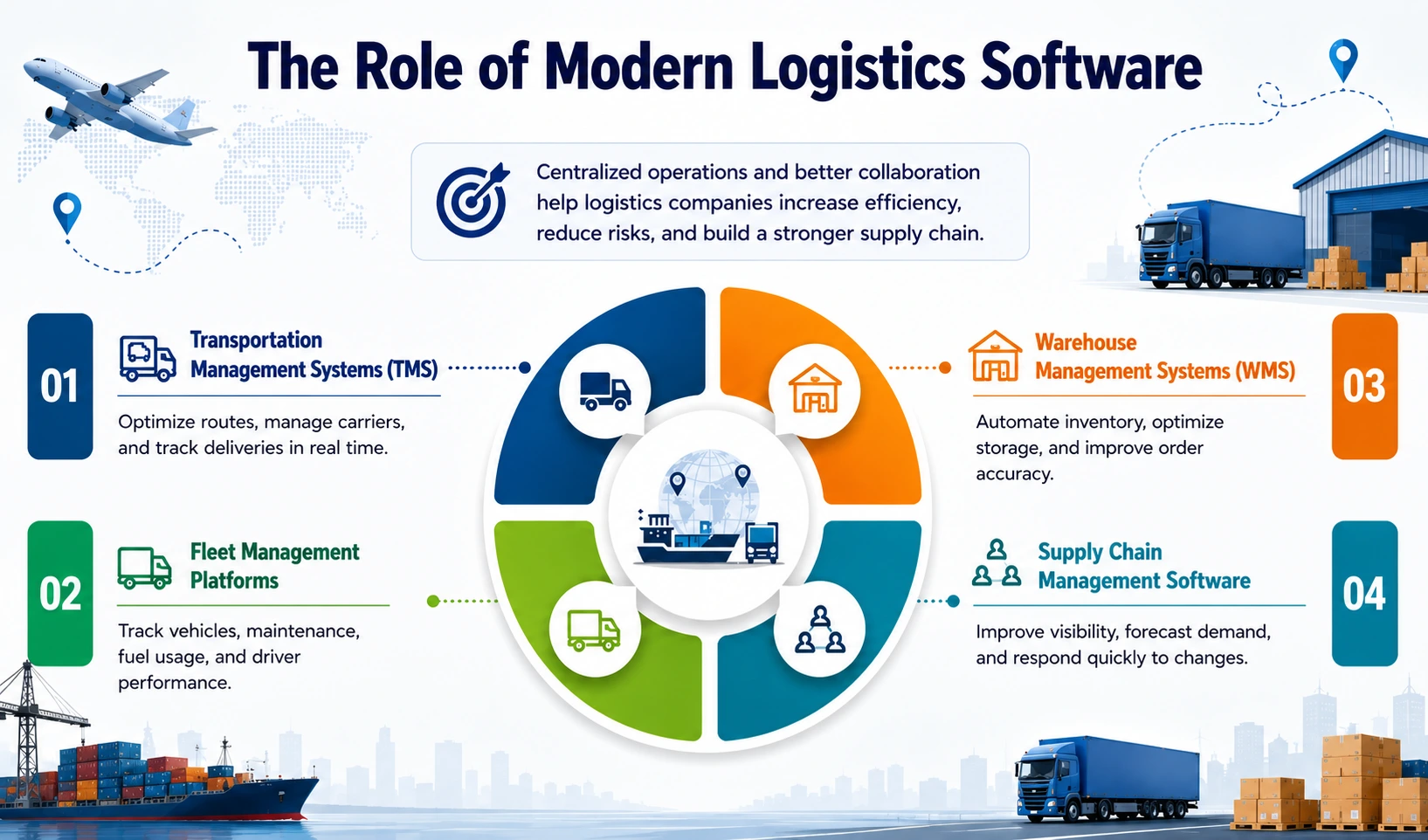
- Transportation Management Systems (TMS): Transportation management software helps businesses optimize dispatching, manage carriers, improve route planning, and monitor deliveries in real time, resulting in lower transportation costs and improved service quality.
- Fleet Management Platforms: Fleet management systems provide visibility into vehicle locations, maintenance schedules, fuel usage, and driver behavior, helping organizations enhance productivity and reduce operational risks.
- Warehouse Management Systems (WMS): Warehouse management solutions automate inventory tracking, optimize storage utilization, and improve order fulfillment accuracy, enabling warehouses to operate more efficiently.
- Supply Chain Management Software: Advanced supply chain platforms provide end-to-end visibility, improve demand forecasting, strengthen supplier collaboration, and enable businesses to respond quickly to market changes and disruptions.
What Determines Logistics Software Development Cost in Dubai?
Understanding logistics software development costs requires evaluating multiple factors, including platform complexity, integrations, scalability, security, and long-term maintenance requirements. Businesses that partner with an experienced application development company in Dubai can better estimate project budgets and avoid costly development mistakes. A skilled technology partner helps define the right architecture, identify essential features, and ensure the software remains scalable as operational demands grow. This strategic approach allows organizations to maximize return on investment while developing future-ready logistics solutions tailored to their unique business requirements.
"What Factors Influence Logistics Software Development Cost in Dubai?"
The logistics software development cost in Dubai is influenced by several factors, including the type of software, feature requirements, user roles, deployment platforms, cloud infrastructure, third-party integrations, and scalability needs. Businesses implementing AI-powered capabilities and enterprise-grade functionalities should expect higher development costs due to increased complexity and customization requirements.
Software Type and Business Requirements
The type of software being developed is one of the most important factors affecting the overall development cost. Different logistics solutions serve different business functions, and each requires varying levels of complexity, integrations, and customization.
Fleet Management Systems
Fleet management systems are designed to help businesses monitor and optimize their vehicles, drivers, and transportation operations. These solutions often include features such as real-time GPS tracking, fuel consumption analysis, maintenance scheduling, driver performance monitoring, and route optimization. Since fleet management applications require continuous data processing and location tracking, their development costs are generally higher than those of basic logistics applications. Companies with large fleets often require additional reporting and analytics capabilities, which further increase the overall investment.
Transportation Management Software
Transportation management software focuses on improving the movement of goods and streamlining delivery operations. These platforms help businesses manage dispatching, carrier coordination, shipment scheduling, freight planning, and route optimization. More advanced transportation systems may include automated load management, delivery tracking, and proof-of-delivery capabilities. Because these solutions involve multiple stakeholders and require seamless communication across the transportation network, they typically demand more development resources and higher budgets.
Warehouse Management Software
Warehouse management systems are essential for organizations that need efficient inventory control and order fulfillment processes. These platforms help automate receiving, storage, picking, packing, and shipping operations while improving inventory accuracy. Advanced warehouse solutions may support barcode scanning, RFID technology, real-time inventory visibility, and automated replenishment. Integrating these functionalities with existing systems requires additional development effort, which directly affects the overall cost of the project.
End-to-End Logistics Platforms
Many enterprises prefer comprehensive logistics ecosystems that combine fleet management, transportation management, warehouse operations, and supply chain activities into a unified platform. These end-to-end solutions provide complete visibility across the logistics network and enable businesses to manage operations from a centralized dashboard. Due to their complexity, extensive integrations, and advanced analytics capabilities, enterprise logistics platforms generally represent the highest level of investment among logistics software solutions.
Number of Features and User Roles
Another major factor influencing development costs is the number of features required and the variety of users interacting with the system. Each user role requires dedicated interfaces, workflows, permissions, and functionalities, which increase development complexity and testing requirements.
Driver Applications
Drivers are among the primary users of logistics software. Dedicated driver applications typically include navigation tools, delivery schedules, route optimization, proof-of-delivery features, and communication capabilities. Some platforms also provide digital signatures, document uploads, and real-time notifications to improve delivery accuracy and efficiency. Building these features requires additional development effort and contributes to the overall project budget.
Fleet Manager Dashboards
Fleet managers require powerful dashboards that provide complete visibility into transportation operations. These dashboards often include vehicle tracking, driver performance analytics, fuel consumption reports, maintenance schedules, and route efficiency metrics. Advanced reporting and business intelligence capabilities make these systems more sophisticated and increase development costs.
Warehouse Staff Interfaces
Warehouse employees need specialized interfaces to manage inventory, process orders, and coordinate warehouse activities. Features such as barcode scanning, stock movement tracking, and automated inventory updates help improve operational efficiency. Designing user-friendly interfaces and ensuring real-time synchronization between warehouse systems require significant technical expertise and resources.
Administrative Control Panels
Administrators require centralized control over the entire logistics ecosystem. Administrative panels typically provide access to user management, role-based permissions, reporting tools, system settings, and performance analytics. Since administrators oversee multiple business functions, these dashboards often contain advanced features that require extensive customization and security measures.
Customer Portals
Modern logistics companies increasingly offer customer-facing portals that allow clients to monitor shipments, receive notifications, and access delivery information in real time. Providing seamless user experiences and ensuring secure access to sensitive information adds another layer of complexity to the application, ultimately affecting development costs.
Web, Mobile, and Cloud Architecture
The choice of deployment platforms and infrastructure has a direct impact on software development expenses. Businesses must carefully evaluate whether they require mobile applications, web platforms, or a combination of both.
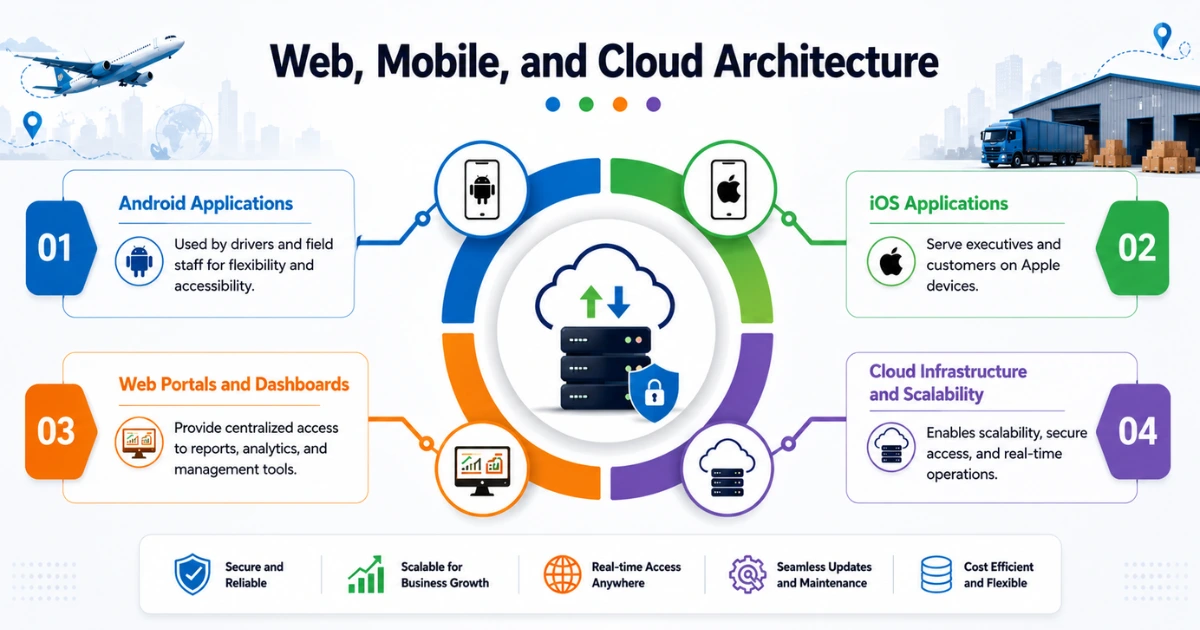
Android Applications
Android applications are widely used by drivers, field staff, and fleet operators because they provide flexibility and accessibility. Developing Android apps requires ensuring compatibility across various devices, screen sizes, and operating system versions. Additional testing and optimization efforts contribute to the overall project cost.
iOS Applications
Many organizations also require iOS applications to serve executives, managers, and customers who use Apple devices. Developing separate applications for iOS platforms increases development time and requires additional expertise. Businesses seeking a premium user experience often invest in dedicated iOS applications alongside Android solutions.
Web Portals and Dashboards
Web-based platforms play a crucial role in logistics operations by providing centralized access to reports, analytics, and management tools. Managers and administrators rely on web portals to monitor deliveries, analyze performance, and coordinate operations. Enterprise-level dashboards with advanced reporting and visualization capabilities require more sophisticated development, resulting in higher costs.
Cloud Infrastructure and Scalability
Cloud infrastructure has become a standard component of modern logistics applications because it provides flexibility, scalability, and secure access to data. Cloud-based systems enable businesses to process large amounts of information in real time while supporting remote access and seamless updates. However, cloud hosting, database management, storage, cybersecurity, and maintenance expenses should be considered when calculating the total cost of ownership.
Third-Party Integrations
Modern logistics software rarely operates in isolation. Most organizations require integrations with external systems and services to ensure smooth and efficient operations. The complexity and number of these integrations can significantly influence the development budget.
GPS Tracking and Mapping Services
Real-time tracking capabilities are essential for fleet and transportation management systems. Integrating GPS and mapping technologies allows businesses to monitor vehicles, optimize routes, and provide accurate delivery updates. These integrations often involve third-party APIs and ongoing licensing costs that must be included in the project budget.
Payment Gateway Integrations
Logistics platforms that process transactions or support invoicing require secure payment gateway integrations. Implementing these systems involves ensuring compliance with security standards and providing support for multiple payment methods. These requirements add complexity to the development process.
ERP System Connectivity
Enterprise Resource Planning (ERP) systems are frequently used to manage finance, inventory, procurement, and operational processes. Integrating logistics software with ERP platforms helps ensure seamless data synchronization and improves organizational efficiency. However, custom ERP integrations often require extensive development, testing, and maintenance, which increase costs.
CRM Platform Integration
Customer Relationship Management systems help businesses maintain strong relationships with customers and improve communication. Integrating logistics software with CRM platforms enables organizations to centralize customer information, automate notifications, and enhance service quality. Achieving smooth synchronization between systems requires additional technical resources and expertise.
IoT Devices and Smart Sensors
The adoption of Internet of Things (IoT) technologies is transforming logistics operations. IoT devices can monitor vehicle conditions, track assets, and provide real-time information about temperature, humidity, and equipment performance. Integrating these devices with logistics platforms enables greater visibility and automation, but it also introduces additional infrastructure requirements and increases development complexity.
Essential Features That Influence Logistics App Development Cost
As logistics operations become more complex, organizations require advanced features such as real-time tracking, predictive analytics, route optimization, and intelligent automation. Businesses working with an experienced AI app development company in Dubai can integrate machine learning capabilities that improve operational efficiency and support data-driven decision-making. AI-powered logistics applications help reduce manual intervention, optimize fleet utilization, and improve customer service through predictive insights. These intelligent features not only enhance business performance but also create scalable digital ecosystems capable of adapting to changing market conditions and future technological advancements.
Real-Time Fleet Tracking
Real-time fleet tracking has become one of the most essential features for transportation and logistics companies. It enables businesses to monitor vehicle locations, delivery progress, and route performance through GPS technology and interactive maps. This feature provides complete visibility into fleet operations and allows managers to respond quickly to delays or disruptions.
Modern tracking systems also help businesses improve customer communication by providing accurate delivery updates and estimated arrival times. Since real-time tracking requires GPS integration, mapping services, and continuous data synchronization, implementing this capability significantly influences development costs.
Route Optimization and Dispatch Management
Efficient route planning is crucial for reducing transportation costs and improving delivery performance. Route optimization systems use real-time traffic information, delivery schedules, and geographical data to determine the most efficient routes for drivers and vehicles.
Dispatch management features help businesses assign tasks automatically, monitor deliveries, and improve coordination between drivers and dispatch teams. Advanced platforms powered by artificial intelligence can dynamically adjust routes based on changing traffic conditions or unexpected delays. These capabilities require sophisticated algorithms and integrations, making them an important contributor to overall software development expenses.
Driver Performance Monitoring
Driver behavior has a direct impact on fuel efficiency, vehicle maintenance, and delivery reliability. Driver performance monitoring features allow fleet managers to evaluate factors such as driving speed, idle time, braking patterns, route adherence, and overall productivity.
By analyzing driver data, organizations can identify opportunities to improve safety, reduce operational costs, and enhance service quality. Some platforms also include scorecards and automated alerts that help encourage better driving practices. Implementing these analytical capabilities requires additional backend processing and reporting systems, increasing development complexity.
Fuel Consumption Analytics
Fuel costs represent one of the largest operational expenses for logistics and transportation companies. Fuel consumption analytics enable businesses to monitor fuel usage, identify inefficiencies, and detect unusual consumption patterns.
Advanced analytics tools provide insights into factors that affect fuel efficiency, including vehicle performance, driving behavior, and route conditions. Businesses can use these insights to optimize fleet operations and reduce unnecessary expenses. Integrating telematics systems and generating real-time analytics requires additional technical infrastructure, which affects the overall project budget.
Vehicle Maintenance Alerts
Unexpected vehicle breakdowns can lead to costly delays and disruptions across the supply chain. Vehicle maintenance management features help businesses monitor the condition of their fleet and schedule preventive maintenance activities.
These systems can automatically generate alerts for oil changes, tire replacements, engine inspections, and other routine servicing requirements. Predictive maintenance capabilities powered by artificial intelligence can further reduce downtime by identifying potential issues before they become major problems. Building such intelligent systems requires advanced analytics and data processing capabilities, increasing development costs.
Warehouse and Inventory Management
For logistics companies involved in storage and fulfillment operations, warehouse and inventory management capabilities are essential. These features help businesses maintain accurate inventory records, track stock movement, and streamline order processing activities.
Warehouse management modules often include barcode scanning, inventory tracking, automated replenishment, and real-time stock visibility. More advanced systems may support RFID technologies and integration with enterprise resource planning platforms. Because these functionalities involve multiple workflows and require seamless synchronization, they contribute significantly to the overall development investment.
Delivery Scheduling and Notifications
Delivery scheduling features help businesses organize shipments efficiently and ensure timely deliveries. Logistics platforms can automatically assign delivery slots, optimize schedules, and manage order priorities based on customer requirements.
Automated notification systems keep customers informed throughout the delivery journey by providing updates on shipment status, delays, and estimated arrival times. Real-time communication improves transparency and enhances customer satisfaction. Supporting notifications across SMS, email, and mobile applications requires integration with third-party communication services, which adds to development complexity.
Reporting and Business Intelligence Dashboard
Data-driven decision-making has become a competitive advantage for modern logistics companies. Reporting and business intelligence dashboards provide valuable insights into fleet utilization, delivery performance, operational costs, inventory levels, and customer service metrics.
These dashboards enable managers to analyze trends, identify bottlenecks, and make informed decisions that improve efficiency. Advanced analytics platforms may also include predictive insights and customizable reports tailored to specific business requirements. Since these capabilities require complex data processing and visualization tools, they have a substantial impact on software development costs.
Multi-User Access and Role-Based Permissions
Logistics applications are typically used by multiple stakeholders, including drivers, dispatchers, warehouse personnel, managers, and customers. Multi-user access and role-based permissions ensure that each user can access only the information and functionalities relevant to their responsibilities.
For example, drivers may only have access to delivery schedules and navigation tools, while administrators require complete control over operations and reporting. Implementing secure access controls and managing different user roles requires careful system architecture and advanced security mechanisms, increasing both development time and costs.
Customer Portal and Shipment Tracking
Modern customers expect complete transparency and easy access to shipment information. Customer portals provide a centralized platform where users can place orders, monitor deliveries, view invoices, and receive notifications in real time.
Shipment tracking capabilities enhance customer experiences by allowing users to follow the progress of their orders from dispatch to final delivery. Businesses that prioritize customer self-service and real-time visibility can improve satisfaction and build stronger relationships. However, creating intuitive customer interfaces and maintaining secure access to sensitive information requires additional design and development resources.
As logistics operations become increasingly complex, businesses are moving beyond traditional tracking systems and investing in intelligent platforms powered by AI Software Development in UAE. Features such as predictive analytics, smart routing, and automated decision-making are transforming the industry and helping organizations gain a competitive advantage. Partnering with a reliable AI app development company enables businesses to implement advanced capabilities while ensuring that their logistics applications remain scalable, secure, and ready for future growth.
By carefully selecting the features that align with their operational goals, companies can control development expenses while building robust logistics solutions that deliver long-term value and improved efficiency.
Logistics Software Development Cost Dubai: Estimated Pricing Breakdown
Understanding the logistics software development cost Dubai businesses should expect is essential before investing in a digital transformation initiative. One of the biggest misconceptions among logistics companies is that there is a fixed price for building logistics software. In reality, the cost varies considerably depending on the complexity of the platform, the number of users, required integrations, AI capabilities, and the level of customization involved.
A basic application with essential features may require a relatively modest investment, whereas an enterprise-grade platform that combines fleet management, warehouse operations, transportation management, and supply chain analytics can cost several times more. In addition, businesses should consider long-term expenses such as cloud infrastructure, software maintenance, cybersecurity, and third-party licensing fees when estimating their total budget.
Generally, the logistics software pricing UAE companies encounter falls into three categories: basic logistics applications, mid-level fleet management systems, and enterprise logistics platforms. Each category addresses different business requirements and supports varying levels of operational complexity.
"How Much Does Logistics Software Development Cost in Dubai?"
Logistics software development costs in Dubai generally range from $20,000 to over $200,000. Basic applications typically cost between $20,000 and $40,000, mid-level fleet management systems range from $40,000 to $80,000, while enterprise logistics platforms with AI, IoT, and advanced integrations can exceed $200,000 depending on business requirements and customization levels.
Basic Logistics Application
Estimated Cost: $20,000–$40,000
Basic logistics applications are typically designed for startups, small logistics providers, and businesses beginning their digital transformation journey. These solutions focus on essential functionalities that improve operational visibility and streamline daily activities without requiring significant investments.
Although these applications offer fewer capabilities than advanced enterprise platforms, they provide businesses with a solid technological foundation that can be expanded as operations grow.
GPS Tracking
Real-time GPS tracking is one of the most fundamental features of any logistics application. This capability enables businesses to monitor vehicle locations and track deliveries throughout the transportation process. Fleet operators can view the exact location of their vehicles, identify delays, and optimize delivery schedules based on real-time information.
From a customer perspective, GPS tracking enhances transparency and improves trust by providing accurate updates regarding shipment status and estimated arrival times. Since this feature requires mapping technologies, location services, and continuous synchronization, it contributes significantly to development costs.
Order Management
Order management functionality helps businesses organize and monitor the entire order lifecycle, from order placement to final delivery. Instead of relying on manual processes, logistics companies can automate shipment creation, assign deliveries, and track progress through a centralized system.
Efficient order management reduces operational errors, improves coordination between departments, and enables businesses to deliver a better customer experience. As order volumes increase, this functionality becomes increasingly important for maintaining efficiency and scalability.
Administrative Dashboard
An administrative dashboard serves as the control center of the logistics platform. Managers and administrators use this interface to monitor ongoing operations, review delivery performance, manage users, and analyze key business metrics.
Advanced dashboards may include customizable reports, performance indicators, and operational insights that help decision-makers identify inefficiencies and improve productivity. Designing intuitive and data-rich dashboards requires additional development resources and user experience expertise.
Automated Notifications
Modern customers expect instant updates regarding their shipments. Notification systems enable businesses to send automated alerts related to order confirmations, dispatch updates, delays, and successful deliveries.
These notifications can be delivered through mobile applications, email, SMS, or push messages. By improving communication and keeping customers informed throughout the delivery journey, businesses can enhance customer satisfaction and reduce support inquiries.
Basic logistics applications are ideal for organizations seeking affordable digital solutions that provide essential operational capabilities while leaving room for future expansion.
Mid-Level Fleet Management Software
Estimated Cost: $40,000–$80,000
As logistics operations expand, businesses often require more sophisticated tools to manage vehicles, drivers, and delivery networks. Mid-level fleet management systems are designed to provide greater visibility, improved automation, and advanced analytical capabilities.
The fleet management software development cost for these solutions is higher because they involve more complex workflows, larger datasets, and multiple user roles. These platforms are particularly suitable for transportation companies, delivery providers, and organizations operating medium-sized fleets.
Driver Management
Managing drivers effectively is essential for maintaining operational efficiency and ensuring consistent service quality. Driver management modules enable businesses to assign deliveries, monitor schedules, evaluate performance, and maintain compliance with company policies.
Some systems also provide digital documentation, communication tools, attendance tracking, and performance scorecards. By centralizing driver-related information, businesses can improve productivity and reduce administrative burdens.
Route Optimization
Transportation costs are heavily influenced by route efficiency. Route optimization features use real-time traffic conditions, delivery priorities, and geographical data to determine the most efficient delivery paths.
Artificial intelligence and machine learning algorithms can further enhance route planning by dynamically adjusting routes based on changing circumstances. These capabilities help reduce fuel expenses, shorten delivery times, and improve overall fleet utilization.
Because intelligent routing systems involve advanced algorithms and mapping integrations, they represent a significant component of development costs.
Reporting Dashboards
Data-driven decision-making is becoming increasingly important in the logistics industry. Reporting dashboards provide managers with detailed insights into operational performance, vehicle utilization, fuel consumption, delivery efficiency, and driver productivity.
These analytical tools help businesses identify trends, uncover inefficiencies, and make informed strategic decisions. Advanced reporting capabilities often include interactive charts, real-time metrics, and predictive analytics, all of which require sophisticated backend architecture and data processing capabilities.
API Integrations
Modern logistics operations depend on seamless communication between multiple systems. API integrations enable logistics software to connect with GPS services, payment gateways, ERP platforms, accounting systems, communication tools, and external databases.
These integrations improve efficiency by automating data exchange and eliminating manual processes. However, developing and maintaining integrations often requires additional customization, testing, and ongoing support, which directly impacts project costs.
Mid-level fleet management systems provide businesses with the tools needed to scale operations while improving visibility and reducing inefficiencies.
Enterprise Logistics Platform
Estimated Cost: $80,000–$200,000+
Large enterprises and organizations with complex logistics networks often require comprehensive digital ecosystems that integrate transportation management, fleet operations, warehouse management, and supply chain processes into a single platform.
The custom logistics software development cost for enterprise solutions is considerably higher because these systems are built to support large volumes of data, multiple user groups, advanced analytics, and extensive integrations. Although the initial investment may seem substantial, enterprise platforms often deliver significant long-term value through automation, improved efficiency, and enhanced decision-making.
Warehouse Management Capabilities
Warehouse management modules help businesses optimize inventory storage, improve order fulfillment accuracy, and streamline warehouse workflows. These systems support receiving, picking, packing, and shipping activities while maintaining complete visibility over inventory movement.
Advanced warehouse solutions may also incorporate barcode scanning, RFID technologies, and automated stock replenishment, enabling organizations to reduce errors and increase operational efficiency.
Supply Chain Analytics
Supply chain analytics provide businesses with valuable insights into supplier performance, inventory trends, transportation efficiency, and demand patterns. These capabilities enable organizations to forecast disruptions, identify bottlenecks, and optimize resource allocation.
Through advanced analytics and real-time visibility, businesses can make proactive decisions that improve overall supply chain performance and enhance customer satisfaction.
AI-Powered Automation
Artificial intelligence is rapidly becoming a competitive advantage within the logistics sector. AI-powered systems can automate repetitive tasks, optimize routes, forecast demand, predict maintenance requirements, and improve operational decision-making.
Organizations investing in intelligent logistics platforms are increasingly leveraging AI technologies to reduce costs, increase efficiency, and enhance scalability. The implementation of machine learning models and predictive analytics significantly contributes to development complexity and costs but offers substantial long-term benefits.
IoT Integration
The Internet of Things (IoT) is transforming how logistics companies monitor assets and manage operations. IoT-enabled devices provide real-time information regarding vehicle conditions, cargo temperatures, asset locations, and equipment performance.
This continuous stream of data helps businesses improve visibility, prevent losses, and enhance operational efficiency. However, integrating IoT devices requires specialized infrastructure, sensor connectivity, and sophisticated data management capabilities.
ERP Connectivity
Enterprise Resource Planning systems play a crucial role in managing finance, procurement, inventory, and business operations. ERP integration enables logistics software to synchronize information across departments, creating a unified digital ecosystem.
This connectivity eliminates data silos, improves collaboration, and provides decision-makers with a comprehensive view of business performance. Since ERP systems often require extensive customization and complex integrations, they represent one of the most significant factors influencing enterprise development costs.
Fleet Management Software Development Cost Explained
Fleet management software has evolved beyond vehicle tracking and now incorporates intelligent automation and predictive decision-making capabilities. Many logistics providers collaborate with an AI agent development company Dubai to build advanced systems that improve route planning, automate dispatch operations, and monitor vehicle performance in real time. AI-powered fleet management platforms help businesses reduce fuel costs, improve driver productivity, and minimize operational disruptions. By leveraging intelligent agents and machine learning technologies, organizations can create more efficient transportation networks while preparing for the future of connected and automated logistics operations.
Factors Affecting Fleet Management Software Development Cost
There is no fixed pricing model for fleet management software because every transportation business operates differently. The overall development cost depends on the number of features, system architecture, integrations, and user requirements.
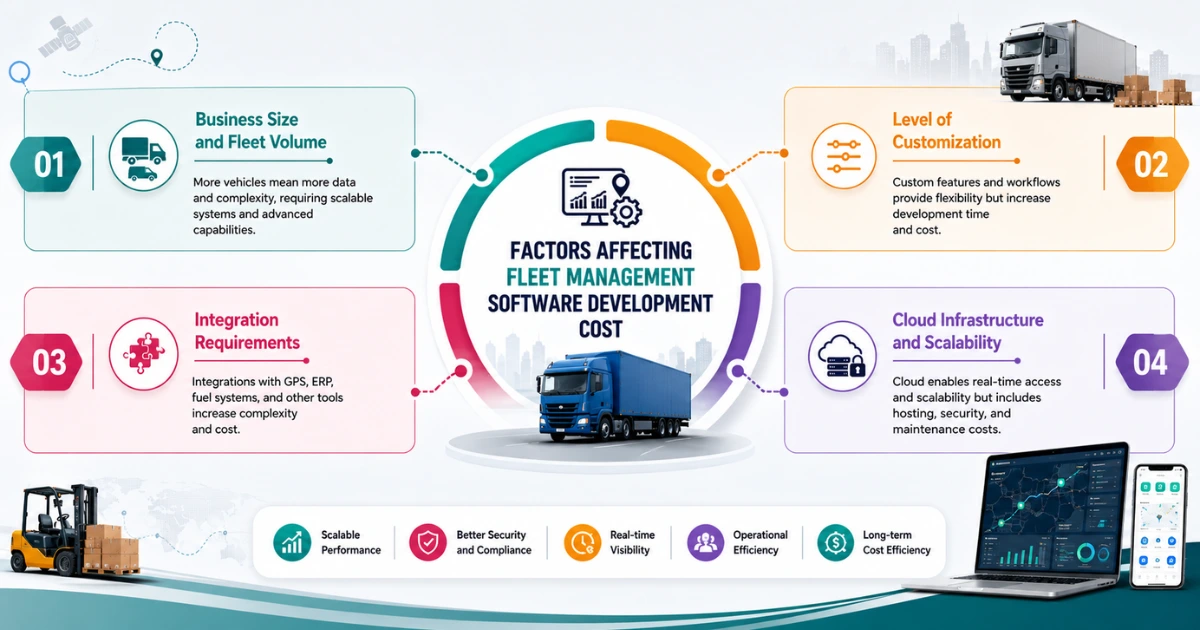
Business Size and Fleet Volume
The size of the fleet being managed has a direct impact on software complexity. Businesses operating a few vehicles may only require basic tracking and reporting functionalities, whereas organizations managing hundreds or thousands of vehicles need advanced analytics, automation, and centralized monitoring capabilities.
Larger fleets generate vast amounts of operational data, requiring scalable infrastructure and sophisticated processing systems. As the number of vehicles increases, the software must be capable of handling higher workloads while maintaining performance and reliability.
Level of Customization
Every transportation company has unique operational processes and requirements. Some organizations may need customized dashboards, specialized reporting tools, or industry-specific workflows that are not available in standard solutions.
Custom-built platforms provide greater flexibility and long-term scalability, but they also require additional development time and resources. Consequently, highly customized fleet management systems generally involve higher investments compared to off-the-shelf alternatives.
Integration Requirements
Modern fleet management solutions rarely operate as standalone systems. Businesses often require integrations with GPS services, fuel management systems, ERP platforms, accounting software, telematics devices, and communication tools.
These integrations improve efficiency and data synchronization but increase technical complexity. Developing and maintaining seamless connections between multiple platforms contributes significantly to overall project costs.
Cloud Infrastructure and Scalability
Most modern fleet management applications rely on cloud-based infrastructure to provide real-time access to information and support growing operations. Cloud environments enable businesses to store large volumes of data, monitor fleets remotely, and scale resources according to demand.
However, cloud hosting, storage, cybersecurity, and ongoing maintenance costs should also be considered when estimating the total investment required for a fleet management platform.
Features Required by Transportation Companies
Transportation companies require much more than simple vehicle tracking capabilities. Modern fleet management systems are designed to optimize operations, improve driver productivity, and enhance customer satisfaction through advanced functionalities.
Real-Time Vehicle Tracking
Real-time tracking allows businesses to monitor vehicle locations continuously and gain complete visibility into fleet movements. Managers can identify delays, optimize dispatching, and provide customers with accurate delivery updates.
This feature has become a standard requirement for transportation companies because it improves operational transparency and helps organizations respond quickly to unexpected disruptions.
Driver Management and Performance Monitoring
Managing drivers effectively is essential for maintaining productivity and ensuring safety. Fleet management platforms enable businesses to evaluate driving behavior, monitor schedules, and track performance indicators such as speeding, harsh braking, and idle time.
These insights help organizations improve driver efficiency, reduce fuel consumption, and minimize risks associated with unsafe driving practices.
Route Optimization and Dispatching
Efficient route planning plays a crucial role in reducing operational expenses. Intelligent dispatch systems analyze traffic conditions, delivery schedules, and geographical information to determine the most efficient routes.
By minimizing unnecessary travel and reducing delays, transportation companies can lower fuel costs and improve delivery performance. Advanced route optimization capabilities often rely on artificial intelligence and machine learning technologies.
Fuel Management and Cost Control
Fuel expenses represent one of the largest operating costs for transportation businesses. Fleet management software provides detailed insights into fuel consumption patterns, enabling companies to identify inefficiencies and implement cost-saving measures.
Organizations can analyze driving behaviors, optimize routes, and detect unusual fuel usage patterns to improve overall profitability.
Reporting and Analytics
Data-driven decision-making is becoming increasingly important in the transportation industry. Reporting dashboards provide managers with valuable information about fleet utilization, driver performance, maintenance schedules, and operational costs.
These insights help businesses identify opportunities for improvement and make strategic decisions that enhance efficiency and profitability.
AI-Powered Fleet Optimization
Artificial intelligence is revolutionizing fleet management by enabling organizations to automate decision-making and improve operational efficiency. Businesses that invest in intelligent solutions are gaining a competitive advantage through enhanced visibility and predictive capabilities.
Intelligent Route Planning
AI-powered algorithms analyze traffic conditions, weather patterns, and historical delivery data to determine the most efficient routes. Unlike traditional routing systems, artificial intelligence can continuously adjust routes in real time to minimize delays and improve delivery performance.
This capability not only enhances customer satisfaction but also helps businesses reduce fuel consumption and operational expenses.
Dynamic Resource Allocation
Artificial intelligence enables transportation companies to allocate vehicles and drivers more efficiently. By analyzing workloads and operational priorities, AI systems can recommend optimal assignments and improve fleet utilization.
These intelligent capabilities help organizations maximize productivity while reducing idle time and unnecessary resource usage.
Demand Forecasting
Machine learning models can analyze historical trends and predict future demand patterns. This allows businesses to anticipate workload fluctuations, allocate resources more effectively, and avoid capacity shortages.
Demand forecasting helps transportation companies improve planning and maintain service quality during peak periods.
Automated Decision-Making
AI-powered fleet management platforms can automate repetitive tasks such as scheduling, dispatching, and exception handling. These automation capabilities reduce manual intervention and enable organizations to focus on strategic activities.
As artificial intelligence becomes increasingly important, many businesses are collaborating with an AI agent development company Dubai to build intelligent systems capable of supporting complex transportation operations.
Predictive Vehicle Maintenance
Unexpected vehicle breakdowns can result in costly delays, missed deliveries, and dissatisfied customers. Predictive maintenance is emerging as one of the most valuable capabilities in modern fleet management systems because it helps businesses prevent problems before they occur.
Monitoring Vehicle Health
Connected sensors and telematics devices continuously collect information about engine performance, tire conditions, fuel systems, and other critical components. This data provides valuable insights into the overall health of vehicles and helps organizations identify early warning signs of potential issues.
Reducing Unplanned Downtime
Traditional maintenance strategies often rely on fixed schedules or reactive repairs after failures occur. Predictive maintenance uses artificial intelligence and historical data analysis to detect abnormalities and recommend servicing before breakdowns happen.
By preventing unexpected failures, businesses can improve vehicle availability and maintain consistent delivery operations.
Lowering Maintenance Costs
Timely maintenance helps organizations avoid expensive repairs and extend the lifespan of their vehicles. Predictive analytics enables businesses to schedule maintenance activities more efficiently and reduce overall operating costs.
Over time, these savings can generate a substantial return on investment and contribute to improved profitability.
Improving Fleet Reliability
Reliable vehicles are essential for maintaining customer satisfaction and meeting delivery commitments. Predictive maintenance capabilities enhance fleet reliability by ensuring that vehicles remain in optimal operating condition. Organizations that prioritize preventive maintenance can reduce disruptions, improve service quality, and strengthen their competitive position in the market.
Transportation Management Software Cost UAE: What Businesses Should Expect
The transportation management software cost UAE businesses should expect depends largely on the features, integrations, and level of automation required. Transportation management systems (TMS) have become essential for logistics providers, freight companies, distributors, and supply chain organizations that need greater visibility and control over their transportation operations. These platforms help businesses optimize routes, manage carriers, monitor deliveries, and streamline communication across the supply chain.
The overall cost of developing transportation management software can range from $40,000 to over $150,000, depending on the complexity of the platform and the specific business requirements. Companies that require advanced analytics, AI-powered automation, and extensive third-party integrations should expect higher development investments. Among the various features that influence the cost of a transportation management system, route planning, freight management, delivery tracking, and enterprise integrations play a particularly important role.
Route Planning and Dispatching
Route planning and dispatching are among the most critical components of any transportation management platform. These capabilities help businesses optimize delivery routes, assign vehicles efficiently, and improve overall transportation performance.
Modern route planning systems use real-time traffic data, delivery schedules, weather conditions, and geographical information to identify the most efficient routes. This enables transportation companies to reduce travel distances, lower fuel consumption, and improve delivery times. For businesses managing large fleets or handling high delivery volumes, intelligent route optimization can significantly enhance operational efficiency.
Dispatching functionality allows managers to assign tasks to drivers, monitor delivery schedules, and make adjustments when unexpected delays occur. Advanced transportation management systems can automate dispatch processes, ensuring that resources are allocated efficiently and deliveries are completed on time.
Because route optimization and dispatch management require GPS integrations, mapping technologies, and sophisticated algorithms, they contribute significantly to the overall transportation management software cost UAE organizations should anticipate.
Freight and Carrier Management
Freight and carrier management capabilities enable businesses to coordinate shipments more effectively and maintain better control over transportation operations. These features are particularly important for companies working with multiple carriers, freight providers, and distribution partners.
Transportation management software helps organizations manage carrier information, compare transportation costs, assign shipments, and monitor freight movements throughout the delivery process. Businesses can evaluate carrier performance, optimize shipping expenses, and improve communication with logistics partners.
Advanced systems may also support contract management, rate calculations, load optimization, and automated carrier selection based on predefined criteria. These capabilities help businesses improve efficiency while reducing operational costs and minimizing delays.
Since freight management often involves multiple stakeholders and complex workflows, implementing these features requires additional development effort, which directly affects the overall software investment.
Delivery Tracking and Proof of Delivery
Customers increasingly expect complete transparency and real-time visibility throughout the delivery process. Delivery tracking and proof of delivery features enable businesses to provide accurate shipment updates while ensuring accountability and improving customer satisfaction.
Real-time tracking capabilities allow managers and customers to monitor deliveries from dispatch to final destination. Businesses can track vehicle locations, estimated arrival times, and delivery statuses, enabling them to respond quickly to delays or disruptions.
Proof of delivery functionality further enhances operational reliability by providing confirmation that a shipment has been successfully delivered. Drivers can capture digital signatures, upload photographs, scan barcodes, or record delivery timestamps directly through mobile applications. These records help reduce disputes, improve compliance, and strengthen customer trust.
Implementing real-time tracking systems and digital proof of delivery mechanisms requires mobile applications, cloud infrastructure, and integration with GPS services, making them important factors influencing transportation software development costs.
Integration with ERP and Accounting Platforms
Transportation management software rarely operates as a standalone solution. Most organizations require seamless integration with enterprise resource planning (ERP) systems and accounting platforms to ensure efficient data flow across departments.
ERP integration enables transportation systems to synchronize information related to inventory, procurement, order management, and financial operations. By eliminating manual data entry and reducing information silos, businesses can improve accuracy and streamline workflows across the organization.
Accounting platform integrations help automate invoicing, payment processing, expense tracking, and financial reporting. This allows businesses to maintain greater control over transportation costs while improving financial transparency and operational efficiency.
However, integrating transportation management systems with ERP and accounting software often requires extensive customization, API development, and compatibility testing. These integrations increase development complexity and are among the major factors affecting the overall transportation management software cost UAE companies should consider when planning their digital transformation initiatives.
Warehouse Management Software Development Cost
The warehouse management software development cost depends on several factors, including the complexity of warehouse operations, the level of automation required, the number of users, and the integrations needed with other business systems. As supply chains become increasingly sophisticated and customer expectations continue to rise, businesses are investing in modern warehouse management solutions to improve inventory accuracy, streamline fulfillment processes, and enhance operational efficiency.
Traditional warehouse operations often rely heavily on manual processes, which can lead to inventory discrepancies, delayed shipments, and higher operational costs. Modern Warehouse Management Systems (WMS) help organizations overcome these challenges by providing real-time visibility into inventory, automating warehouse workflows, and enabling data-driven decision-making.
Depending on the features and level of customization involved, the warehouse management software development cost can range from $30,000 for basic systems to more than $150,000 for enterprise-grade solutions with advanced analytics, automation capabilities, and smart warehousing technologies. Businesses should view this investment as a long-term strategy for improving productivity, reducing errors, and supporting future growth.
Inventory Management
Inventory management is the foundation of every warehouse management system and one of the most critical factors influencing development costs. Maintaining accurate inventory records is essential for ensuring smooth warehouse operations and preventing issues such as stock shortages, overstocking, and order fulfillment delays.
Modern inventory management systems provide businesses with real-time visibility into stock levels, product locations, incoming shipments, and outgoing orders. Instead of relying on spreadsheets or manual processes, organizations can automate inventory updates and maintain accurate records across multiple warehouses and distribution centers.
Advanced inventory management capabilities often include stock forecasting, automated replenishment, batch tracking, serial number management, and multi-location inventory control. These features help businesses optimize inventory levels and improve overall supply chain efficiency.
As warehouse operations become more complex, additional functionality and customization requirements increase development efforts, directly affecting the overall warehouse management software development cost. However, the long-term benefits of improved inventory accuracy and reduced operational inefficiencies often justify the investment.
Barcode and RFID Support
Efficient inventory tracking is essential for maintaining productivity and minimizing errors within warehouse environments. Barcode and RFID technologies have become indispensable tools for modern warehouse operations because they enable faster and more accurate tracking of products throughout the supply chain.
Barcode scanning systems allow warehouse staff to quickly identify products, update stock levels, and process shipments with minimal manual intervention. By reducing human errors and accelerating warehouse processes, barcode-enabled systems improve operational efficiency and enhance order accuracy.
RFID technology offers even greater visibility by allowing businesses to track products automatically without requiring direct scanning. RFID tags can provide real-time information regarding product locations, inventory movements, and warehouse activities. This technology is particularly valuable for organizations managing large inventories or high-volume distribution centers.
Integrating barcode scanners, RFID readers, and related hardware into warehouse management software requires additional development and infrastructure investments. Businesses must also ensure compatibility between software platforms and physical devices, which increases complexity and influences the overall development budget.
Despite these additional costs, barcode and RFID support significantly improve inventory accuracy, reduce labor requirements, and enable more efficient warehouse operations.
Warehouse Analytics
Data-driven decision-making has become increasingly important for warehouse operators seeking to maximize productivity and optimize resource utilization. Warehouse analytics capabilities provide valuable insights into inventory movement, order fulfillment performance, labor productivity, and overall operational efficiency.
Modern analytics dashboards enable managers to monitor key performance indicators and identify areas where improvements are needed. Businesses can analyze picking efficiency, storage utilization, shipping accuracy, and order processing times to gain a deeper understanding of warehouse performance.
Advanced analytics solutions may also incorporate predictive capabilities that help organizations anticipate demand fluctuations, identify bottlenecks, and improve inventory planning. These insights allow businesses to make proactive decisions that enhance efficiency and reduce operational costs.
Developing comprehensive reporting and analytics capabilities requires sophisticated data processing systems, visualization tools, and customized dashboards. As a result, warehouse analytics represents a significant factor influencing the overall warehouse management software development cost.
Organizations that prioritize performance optimization and strategic decision-making often view analytics capabilities as essential components of a modern warehouse management system rather than optional features.
Automation and Smart Warehousing
Automation is transforming warehouse operations by reducing manual processes, improving productivity, and increasing operational accuracy. Smart warehousing technologies enable organizations to create more efficient and scalable distribution environments that can adapt to changing business demands.
Modern warehouse management systems support automated workflows that streamline receiving, storage, picking, packing, and shipping activities. These capabilities help reduce processing times while minimizing the risk of human error.
Smart warehousing solutions may also integrate with conveyor systems, robotic equipment, automated storage and retrieval systems (AS/RS), Internet of Things (IoT) devices, and artificial intelligence technologies. These advanced capabilities allow warehouses to operate with greater efficiency and provide real-time visibility across operations.
Artificial intelligence is playing an increasingly important role in smart warehousing by enabling demand forecasting, inventory optimization, and predictive maintenance. Machine learning algorithms can analyze historical data and operational trends to recommend improvements that enhance warehouse performance.
Although implementing automation and intelligent technologies requires higher upfront investments, these capabilities deliver substantial long-term benefits by improving productivity, reducing labor costs, and supporting business scalability.
For enterprises managing large distribution networks or high-volume warehouses, smart warehousing represents a strategic investment that can provide a significant competitive advantage.
Supply Chain Software Development Cost Dubai
The supply chain software development cost Dubai businesses should expect depends on the complexity of their operations, the level of automation required, and the need for integration across procurement, inventory, logistics, warehousing, and distribution functions. As supply chains become more interconnected and customer expectations continue to evolve, organizations are increasingly investing in digital platforms that provide end-to-end visibility and enable data-driven decision-making.
Modern supply chain platforms go far beyond traditional inventory and procurement systems. Today's solutions leverage artificial intelligence, predictive analytics, and cloud technologies to improve operational efficiency, reduce disruptions, and strengthen collaboration among suppliers, distributors, and logistics partners. Businesses implementing advanced Supply Chain Management Software UAE solutions often gain a significant competitive advantage by improving visibility and increasing operational agility.
Depending on the scope and complexity of the project, the supply chain software development cost Dubai can range from $50,000 for mid-level platforms to over $200,000 for enterprise-grade ecosystems that support multiple locations, suppliers, and business units.
Supply Chain Visibility
One of the primary goals of modern supply chain software is to provide complete visibility across every stage of the supply chain. Without real-time visibility, organizations often struggle with delayed shipments, inventory shortages, and inefficient resource allocation.
Supply chain visibility enables businesses to monitor inventory levels, track shipments, analyze supplier performance, and identify disruptions before they affect operations. Real-time data allows organizations to make faster and more informed decisions, helping them respond quickly to changing market conditions.
Advanced visibility capabilities also improve collaboration among suppliers, warehouses, transportation providers, and customers. Businesses can track goods as they move across different stages of the supply chain and maintain greater control over operations.
Developing these capabilities requires integration with multiple systems, real-time data synchronization, and sophisticated dashboards, which significantly influence the overall supply chain software development cost Dubai organizations should consider.
Vendor and Procurement Management
Managing suppliers and procurement processes efficiently is essential for maintaining a resilient supply chain. Vendor and procurement management modules help organizations streamline supplier relationships, automate purchasing workflows, and improve procurement transparency.
These capabilities enable businesses to evaluate supplier performance, manage contracts, track purchase orders, and optimize procurement activities. Automated workflows reduce manual intervention and help organizations maintain stronger relationships with suppliers while minimizing delays and operational inefficiencies.For companies working with multiple vendors and international suppliers, procurement management systems provide centralized visibility and improve collaboration across the supply chain ecosystem.
However, developing comprehensive procurement and supplier management functionalities often requires extensive customization and integration with ERP systems, contributing to higher development costs.
Demand Forecasting
Demand forecasting has become increasingly important as businesses seek to optimize inventory levels and respond more effectively to market fluctuations. Traditional forecasting methods often rely on historical data and manual calculations, which may not accurately reflect changing customer behavior.
Modern supply chain software leverages artificial intelligence and machine learning algorithms to analyze historical trends, seasonal variations, and market conditions. These intelligent systems help organizations predict future demand and make proactive decisions regarding inventory management and production planning.
Accurate forecasting reduces the risk of stock shortages and excess inventory while improving resource utilization and customer satisfaction. Businesses that invest in predictive capabilities often achieve greater operational efficiency and improved profitability. Because demand forecasting requires advanced analytics and machine learning technologies, these features add complexity and increase the overall development budget.
Data Analytics and Reporting
Data-driven decision-making is one of the biggest advantages of modern supply chain software. Analytics and reporting capabilities provide businesses with actionable insights into procurement performance, inventory movement, supplier reliability, and overall operational efficiency.
Interactive dashboards enable managers to monitor key performance indicators and identify inefficiencies across the supply chain. Organizations can evaluate trends, analyze costs, and measure performance in real time, allowing them to make strategic decisions that improve productivity and profitability.
Advanced analytics platforms may also include predictive reporting, customizable dashboards, and business intelligence tools that provide deeper insights into operations. These capabilities require sophisticated data processing infrastructure and advanced visualization technologies, which significantly influence the supply chain software development cost Dubai businesses should anticipate.
Companies investing in comprehensive Supply Chain Management Software UAE solutions often prioritize analytics because they provide the visibility and intelligence needed to support long-term growth and competitive advantage.
Hidden Budget Traps Many Logistics Businesses Overlook
One of the most common mistakes businesses make when estimating logistics software pricing UAE is focusing exclusively on development costs while overlooking the additional expenses that arise after the initial implementation. Many organizations underestimate these hidden costs and later face budget overruns that affect project timelines and profitability.Although the initial development investment is important, businesses should also account for infrastructure expenses, maintenance requirements, security measures, scalability needs, and system optimization. Understanding these hidden budget traps can help organizations plan more effectively and avoid unexpected financial burdens.
"What Hidden Costs Should Businesses Consider When Developing Logistics Software?"
Beyond development expenses, businesses should also account for hidden costs such as cloud infrastructure, API licensing fees, cybersecurity, software maintenance, user training, scalability upgrades, performance optimization, and data migration. Proper budgeting for these factors helps avoid unexpected costs and ensures long-term operational success.
Cloud Infrastructure Expenses
Cloud infrastructure is the backbone of modern logistics software. It enables businesses to store and process large amounts of data while providing real-time access to information across multiple locations.However, cloud services involve recurring expenses related to hosting, storage, databases, bandwidth, and backup solutions. As the number of users and transactions increases, infrastructure requirements also grow, leading to higher operational costs. Businesses that underestimate cloud expenses often encounter unexpected monthly costs after deployment. Therefore, cloud infrastructure should be considered a long-term investment rather than a one-time expenditure.
API Licensing Costs
Most logistics platforms rely on third-party APIs to provide essential functionalities such as GPS tracking, maps, payment processing, communication services, and external integrations.While integrating these services improves operational efficiency, many API providers charge recurring licensing fees based on usage levels. As transaction volumes increase, API expenses can become a substantial component of ongoing operational costs.Organizations should carefully evaluate third-party services and understand their pricing models before starting development to avoid unexpected expenditures in the future.
Cybersecurity and Compliance
Cybersecurity is becoming increasingly important as logistics companies handle sensitive operational and customer data. Protecting this information requires investments in encryption technologies, access controls, secure authentication mechanisms, and compliance frameworks.Businesses operating across international markets may also need to comply with industry regulations and data protection requirements, which add further complexity to software development.Although cybersecurity investments increase initial costs, they help prevent data breaches, operational disruptions, and reputational damage that could prove far more expensive in the long run.
Software Maintenance and Updates
Software development does not end after deployment. Continuous maintenance is required to ensure system stability, security, and compatibility with evolving technologies.Regular updates are necessary to fix bugs, improve performance, introduce new features, and address changing business requirements. Businesses should typically allocate a portion of their annual software budget for ongoing maintenance and support services.Failing to account for maintenance expenses can result in outdated systems and reduced operational efficiency over time.
User Training and Change Management
Even the most advanced software cannot deliver its full value if employees are unable to use it effectively. Organizations often overlook the costs associated with user training and change management during digital transformation initiatives.Employees may require training sessions, onboarding programs, and ongoing support to adapt to new systems and workflows. Resistance to change can also impact productivity and slow down implementation efforts.Investing in training helps businesses maximize software adoption and ensures that teams can leverage the full capabilities of the platform.
Scalability Requirements
Many businesses initially develop software based on their current needs without considering future growth. As operations expand, additional users, vehicles, warehouses, and transactions place greater demands on the system.Supporting growth often requires infrastructure upgrades, database optimization, and new feature development. Organizations that fail to plan for scalability may face expensive redesigns and performance issues later. Building scalable architecture from the beginning can reduce long-term costs and support sustainable business expansion.
Performance Optimization
As logistics platforms process increasing volumes of data, maintaining speed and responsiveness becomes more challenging. Slow-loading dashboards, delayed reports, and inefficient workflows can negatively impact productivity and user experiences.Performance optimization involves improving databases, refining application architecture, and enhancing processing efficiency. These activities require ongoing investments but are essential for maintaining reliable operations.Organizations that neglect performance optimization often experience reduced productivity and increased operational risks.
Data Migration Costs
Businesses transitioning from legacy systems frequently underestimate the complexity of data migration. Moving inventory records, customer information, financial data, and operational histories from existing platforms to new software requires careful planning and validation.Data migration projects often involve cleansing inconsistent information, ensuring compatibility between systems, and minimizing disruptions during implementation.Because data quality directly affects software performance and decision-making, organizations should allocate sufficient resources for migration activities to ensure a smooth transition.
How AI Is Changing Logistics and Fleet Management Applications
The adoption of ai in logistics is transforming how businesses manage transportation, warehousing, and supply chain operations. Artificial intelligence enables organizations to analyze large volumes of data, automate repetitive tasks, and make faster operational decisions. From predictive maintenance and demand forecasting to intelligent route optimization and automated dispatching, AI technologies are helping logistics providers improve efficiency while reducing costs. Companies investing in AI-powered logistics solutions gain greater visibility, improved customer experiences, and stronger operational resilience, making artificial intelligence a critical component of future-ready logistics ecosystems.
Predictive Analytics
One of the most significant contributions of artificial intelligence to logistics and fleet management is predictive analytics. Traditional reporting systems provide information about what has already happened, but predictive analytics enables organizations to anticipate future events and make proactive decisions.
By analyzing historical records, operational patterns, weather conditions, and market trends, AI-powered systems can predict delays, equipment failures, fluctuations in demand, and potential disruptions within the supply chain. These insights allow businesses to prepare for challenges before they affect operations.
For example, predictive analytics can help fleet managers identify vehicles that are likely to require maintenance, enabling repairs to be scheduled before breakdowns occur. Similarly, warehouses can optimize inventory levels based on projected demand, reducing storage costs and preventing stock shortages.
Although implementing predictive analytics requires advanced machine learning models and sophisticated data infrastructure, the long-term benefits often include improved efficiency, reduced risks, and enhanced decision-making capabilities.
AI-Based Route Optimization
Route planning has traditionally been a time-consuming process that relied heavily on manual calculations and static maps. Artificial intelligence has revolutionized this process by enabling systems to continuously analyze traffic patterns, weather conditions, delivery priorities, and road restrictions.
AI-based route optimization helps logistics companies determine the most efficient routes for vehicles, reducing travel distances and improving delivery performance. Unlike conventional systems, AI algorithms can dynamically adjust routes in real time when unexpected conditions arise.
This capability enables businesses to minimize fuel consumption, shorten delivery times, and improve vehicle utilization. In highly competitive industries where customer expectations continue to rise, intelligent route optimization provides a significant advantage.
Companies operating large fleets often achieve substantial cost savings by leveraging AI-driven routing technologies that enhance operational efficiency and support sustainable transportation practices.
Intelligent Demand Forecasting
Demand forecasting plays a critical role in inventory management, resource planning, and overall supply chain performance. Traditional forecasting methods frequently struggle to adapt to rapidly changing customer behavior and market conditions.
Artificial intelligence addresses this challenge by analyzing vast amounts of historical and real-time data to identify trends and predict future demand patterns. Machine learning models continuously improve their accuracy by learning from previous outcomes and adjusting to evolving conditions.
Intelligent demand forecasting enables businesses to maintain optimal inventory levels, improve warehouse utilization, and allocate resources more effectively. Organizations can better prepare for seasonal fluctuations, avoid overstocking, and minimize the risk of stock shortages.
By enhancing forecasting accuracy, AI technologies help businesses improve customer satisfaction while reducing unnecessary operational expenses.
AI Agents for Process Automation
Organizations implementing AI-driven logistics solutions often evaluate different automation technologies before deployment. Understanding the differences between intelligent agents and conversational systems through an ai-agent-vs-chatbot-guide helps businesses choose the most effective approach for their operational requirements. AI agents can automate scheduling, dispatching, and decision-making processes, while chatbots primarily focus on customer interactions and support. Selecting the right technology improves productivity, enhances automation capabilities, and enables organizations to build smarter logistics ecosystems that support sustainable growth and operational efficiency.Organizations implementing AI-driven logistics solutions often evaluate different automation technologies before deployment.
Understanding the differences between intelligent agents and conversational systems through an ai-agent-vs-chatbot-guide helps businesses choose the most effective approach for their operational requirements. AI agents can automate scheduling, dispatching, and decision-making processes, while chatbots primarily focus on customer interactions and support. Selecting the right technology improves productivity, enhances automation capabilities, and enables organizations to build smarter logistics ecosystems that support sustainable growth and operational efficiency.
Conversational Support with AI Chatbots
Customer communication plays a critical role in modern logistics operations, where real-time updates and quick responses are essential. Businesses are increasingly adopting AI Chatbot Solutions Dubai to automate customer support, provide shipment updates, and handle routine service inquiries. Advanced AI chatbots can operate around the clock, improve response times, and deliver personalized assistance across multiple communication channels. By reducing support workloads and enhancing customer engagement, conversational AI helps logistics companies improve service quality while maintaining efficient and scalable customer support operations.
Custom Logistics Software Development Cost vs Off-the-Shelf Solutions
When comparing solutions offered by various Logistic Software Companies, businesses must evaluate flexibility, scalability, and long-term value rather than focusing solely on upfront costs. Off-the-shelf platforms may provide faster deployment, but they often limit customization and future expansion opportunities. Custom logistics software allows organizations to align technology with their specific operational workflows while integrating advanced capabilities such as AI, analytics, and automation. Although custom development requires a higher initial investment, it often delivers greater efficiency, stronger competitive advantages, and better long-term return on investment.
"Is Custom Logistics Software Better Than Off-the-Shelf Solutions?"
Custom logistics software offers greater flexibility, scalability, and long-term return on investment compared to off-the-shelf solutions. Although custom development requires a higher upfront investment, it allows businesses to integrate advanced technologies, support unique workflows, and scale operations more effectively as business requirements evolve.
Advantages of Ready-Made Software
Off-the-shelf logistics solutions are designed to provide businesses with immediate access to essential functionalities without requiring extensive development efforts. These platforms are particularly attractive to startups and organizations seeking quick deployment with lower upfront investments.
Ready-made software typically includes features such as shipment tracking, inventory management, route planning, and reporting capabilities. Because these solutions are already developed and tested, businesses can implement them relatively quickly.
Another advantage of off-the-shelf platforms is that they often involve predictable subscription costs and require less initial technical involvement. Companies with simple logistics requirements may find these solutions sufficient for their day-to-day operations.
However, ready-made platforms also have limitations. Since they are designed for a broad audience, businesses may encounter restrictions regarding customization, integrations, and scalability. Organizations with unique workflows or specialized operational requirements often struggle to adapt standardized solutions to their needs.As businesses grow, these limitations can create inefficiencies and force organizations to invest in additional tools or expensive modifications.
Benefits of Custom Development
Custom logistics software is built specifically to address the unique requirements and operational processes of a business. Unlike off-the-shelf platforms, custom solutions provide complete flexibility and can be tailored to support existing workflows, user roles, and integration requirements.Organizations investing in custom software gain greater control over system architecture, security, and future enhancements. Businesses can incorporate advanced capabilities such as artificial intelligence, predictive analytics, IoT integrations, and automated workflows that provide competitive advantages.
Custom platforms also enable seamless integration with ERP systems, CRM platforms, warehouse management systems, and transportation networks. This level of connectivity helps eliminate information silos and improves operational efficiency. Although the custom logistics software development cost is higher initially, businesses often benefit from improved scalability and reduced dependency on third-party software vendors. Custom solutions can evolve alongside organizational growth, making them suitable for enterprises with complex logistics operations.Additionally, organizations retain ownership of their software, allowing them to introduce new features and innovations without being constrained by the limitations of pre-built systems.
Which Option Offers Better Long-Term ROI?
The answer largely depends on the size of the business and its strategic objectives. For startups and organizations with relatively simple requirements, off-the-shelf software can provide a cost-effective entry point and accelerate digital transformation.However, businesses managing large fleets, multiple warehouses, and complex supply chains often discover that custom solutions provide greater long-term value. Although the upfront investment is higher, custom platforms deliver improved flexibility, stronger integration capabilities, enhanced security, and better support for future expansion.
From a return on investment perspective, custom software frequently proves more economical over time because organizations avoid recurring licensing fees, reduce operational inefficiencies, and maintain full control over their technology ecosystem.As logistics operations continue to evolve and customer expectations become more demanding, scalability and adaptability are becoming increasingly important. Businesses that prioritize long-term growth and innovation often find that custom solutions offer the best balance between cost, efficiency, and competitive advantage.
Why Businesses Should Work with an Experienced Software Development Company in UAE
Partnering with a reliable software development company in UAE gives businesses access to industry-specific expertise and advanced technology capabilities. Experienced development teams understand the complexities of transportation, logistics, fleet management, and even custom aviation software development, allowing them to create highly scalable and secure digital solutions. Their expertise in building mission-critical systems helps organizations implement robust architectures, seamless integrations, and future-ready technologies such as AI, IoT, and predictive analytics. By working with a trusted technology partner, businesses can reduce development risks, improve operational efficiency, and ensure that their software investments support long-term growth and evolving market requirements.
Industry Expertise
Industry knowledge plays a crucial role in the success of any logistics software project. Developing a transportation or fleet management platform requires a thorough understanding of delivery operations, warehouse workflows, route planning, inventory management, and supply chain processes.An experienced development company brings valuable insights gained from working with businesses across logistics, transportation, manufacturing, and retail sectors.
This expertise enables developers to design solutions that align with real-world operational requirements instead of relying solely on generic software approaches.Companies with domain experience can also identify potential challenges early in the development process and recommend features that enhance efficiency and productivity. Their understanding of industry-specific workflows helps minimize costly revisions and accelerates project delivery.Businesses that collaborate with specialized development teams often achieve better outcomes because the software is built around practical operational needs rather than assumptions.
Scalability and Security
Scalability is one of the most important considerations when developing logistics applications. A platform that supports a few vehicles or warehouses today should also be capable of handling significantly larger operations in the future.Experienced development teams design software architectures that can accommodate increasing numbers of users, transactions, vehicles, and data volumes without sacrificing performance. This approach enables businesses to expand their operations without requiring expensive system replacements or major redesigns.Security is equally important because logistics platforms handle sensitive information related to customers, shipments, inventory, and financial transactions.
Data breaches and cyberattacks can disrupt operations and damage business reputation.A professional software development company in UAE implements security measures such as encryption, multi-factor authentication, role-based access controls, and secure APIs to protect business-critical information. These security frameworks help organizations maintain compliance and reduce operational risks.By prioritizing scalability and security from the beginning, businesses can create resilient digital ecosystems capable of supporting long-term growth.
Long-Term Technical Support
Software development does not end when an application is launched. Continuous support and maintenance are essential for ensuring system stability, security, and compatibility with evolving technologies.As business requirements change, organizations often need additional features, performance improvements, and updates to maintain competitiveness. Unexpected issues and software bugs also require prompt attention to minimize disruptions.An experienced development partner provides ongoing technical support that helps businesses maintain reliable operations and maximize the value of their software investment.
This support may include system monitoring, bug fixes, performance optimization, and feature enhancements.Long-term collaboration with a trusted technology partner allows organizations to adapt to changing market conditions and continuously improve their digital infrastructure.Without reliable support, businesses may face downtime, reduced productivity, and higher operational risks over time.
AI and Emerging Technology Capabilities
Artificial intelligence and emerging technologies are rapidly reshaping the logistics industry. Companies that embrace innovation are gaining competitive advantages through improved efficiency, predictive insights, and automated decision-making.Organizations increasingly seek partners with expertise in AI Software Development in UAE because AI-powered solutions enable intelligent route optimization, predictive maintenance, demand forecasting, and automated workflows.
In addition to artificial intelligence, technologies such as the Internet of Things (IoT), machine learning, cloud computing, and big data analytics are becoming essential components of modern logistics ecosystems. A capable application development company in Dubai can help businesses integrate these technologies into their operations and create future-ready platforms that support continuous innovation.By leveraging advanced technologies, organizations can improve customer experiences, reduce operational costs, and respond more effectively to changing market demands.
Logistics App Development Cost Dubai Compared with eCommerce and Other Industries
Businesses often compare logistics software budgets with the ecommerce app development cost dubai when evaluating digital transformation investments. While eCommerce applications primarily focus on product management and customer experiences, logistics platforms require additional capabilities such as fleet tracking, route optimization, warehouse management, and real-time operational visibility. These added complexities increase development requirements and infrastructure needs. Understanding these differences helps organizations set realistic budgets and choose the right technology strategy based on their operational goals, scalability requirements, and long-term growth objectives.
Logistics Apps vs eCommerce Applications
eCommerce applications primarily focus on product catalogs, shopping carts, payment processing, and customer experiences. While these functionalities are important, they generally involve fewer operational complexities than logistics platforms.Logistics applications, on the other hand, must coordinate multiple moving components, including vehicles, drivers, warehouses, shipments, customers, and suppliers. These systems require real-time visibility and continuous synchronization across different departments and stakeholders.As a result, the ecommerce app development cost Dubai businesses encounter is often lower than the cost of building a fully integrated logistics platform.
For example, a standard eCommerce application may require customer accounts, product management, and payment gateways, whereas a logistics solution must additionally support GPS tracking, route optimization, fleet monitoring, inventory management, analytics, and third-party integrations. These additional requirements significantly increase development complexity and overall investment.
Why Logistics Platforms Are More Complex
One of the primary reasons logistics applications are more expensive than software in many other industries is the complexity of logistics operations themselves.Transportation and supply chain activities involve numerous stakeholders, including drivers, warehouse staff, fleet managers, administrators, suppliers, and customers. Each group requires unique interfaces, permissions, and workflows.Furthermore, logistics platforms must process large volumes of real-time data generated by vehicles, GPS devices, IoT sensors, warehouses, and customer interactions.
Maintaining performance while ensuring accuracy requires sophisticated backend architecture and scalable cloud infrastructure.Advanced functionalities such as route optimization, predictive analytics, and AI-powered automation add another layer of complexity. Businesses that seek intelligent logistics platforms often require machine learning capabilities and advanced reporting systems that further increase development efforts.
Unlike many traditional applications, logistics software must operate continuously and support mission-critical activities where delays and disruptions can have immediate financial consequences.
Integration and Operational Requirements
Modern logistics platforms rarely operate in isolation. They must communicate seamlessly with a wide range of external systems and technologies to ensure efficient operations.These integrations may include GPS tracking services, ERP platforms, warehouse management systems, CRM software, accounting tools, payment gateways, IoT devices, and communication platforms.Building and maintaining these integrations requires additional development resources and extensive testing. Businesses must also ensure that data flows accurately between systems and that operational workflows remain uninterrupted.Operational requirements within logistics are equally demanding.
Real-time shipment visibility, automated dispatching, delivery tracking, fleet monitoring, inventory synchronization, and customer notifications all require robust infrastructure and highly responsive software.Compared with applications in industries such as eCommerce, education, or healthcare, logistics software generally involves greater technical challenges and more extensive customization. These factors explain why the app development cost in Dubai for logistics solutions is often higher than that of applications built for many other sectors.
Future Trends Shaping Logistics Software in UAE
The logistics industry in the UAE is undergoing a significant technological transformation driven by artificial intelligence, automation, IoT, and cloud computing. As customer expectations continue to rise and supply chains become increasingly complex, businesses are investing in next-generation digital solutions that enhance efficiency, improve visibility, and support long-term growth.
Modern logistics platforms are evolving beyond traditional tracking and management systems. They are becoming intelligent ecosystems capable of analyzing data, predicting disruptions, automating operations, and enabling real-time decision-making. The rapid adoption of AI in logistics is creating new opportunities for transportation companies, warehouses, and supply chain organizations to improve productivity while reducing operational costs.Businesses seeking to remain competitive are increasingly partnering with an experienced AI app development company and investing in AI Software Development in UAE to build future-ready platforms that can adapt to changing market demands and technological advancements.
AI and Automation
Artificial intelligence and automation are expected to become the foundation of next-generation logistics platforms. While traditional systems primarily focused on tracking and reporting, modern AI-driven solutions can analyze large volumes of operational data and make intelligent decisions in real time.AI technologies are enabling businesses to automate repetitive processes such as route planning, dispatching, inventory management, demand forecasting, and customer support. Machine learning algorithms can identify patterns, predict disruptions, and recommend actions that improve efficiency and reduce operational costs.
Automation is also helping organizations eliminate manual tasks and accelerate workflows across transportation and warehouse operations. This allows logistics providers to improve service quality, reduce errors, and enhance overall productivity.As the adoption of AI in logistics continues to grow, businesses investing in intelligent platforms will be better positioned to respond to changing market conditions and maintain a competitive advantage.
IoT-Enabled Fleet Monitoring
The Internet of Things (IoT) is transforming how logistics companies monitor vehicles, assets, and shipments. Connected devices and smart sensors provide continuous streams of real-time information that help organizations gain greater visibility into their operations.IoT-enabled fleet monitoring allows businesses to track vehicle locations, analyze driver behavior, monitor fuel consumption, and evaluate vehicle performance more effectively. Sensors can also provide valuable insights regarding engine conditions, tire pressure, temperature levels, and cargo status.
This continuous flow of data enables fleet managers to identify inefficiencies, improve safety, and optimize resource utilization. In industries where temperature-sensitive or high-value goods are transported, IoT technologies provide additional protection by ensuring products remain within specified conditions.As sensor technologies become more affordable and sophisticated, IoT integration is expected to become a standard feature of modern logistics software across the UAE.
Digital Twins and Predictive Maintenance
Digital twin technology is emerging as one of the most innovative trends shaping the future of logistics. A digital twin is a virtual representation of a physical asset, vehicle, warehouse, or operational process that continuously receives data from real-world systems.By creating digital replicas of logistics assets, businesses can simulate different scenarios, analyze performance, and identify potential problems before they occur. This capability provides organizations with deeper operational insights and supports more effective decision-making.
One of the most valuable applications of digital twins is predictive maintenance. Instead of relying on fixed maintenance schedules, businesses can use real-time data and artificial intelligence to predict when equipment or vehicles are likely to require servicing.Predictive maintenance helps reduce downtime, extend asset lifespan, and minimize repair costs. For fleet operators and warehouse managers, this proactive approach improves reliability and ensures smoother operations.As artificial intelligence and IoT technologies continue to advance, digital twins are expected to play a critical role in optimizing logistics infrastructure and enhancing operational resilience.
Autonomous Logistics Operations
Automation is gradually moving beyond process optimization and entering the realm of autonomous logistics operations. Emerging technologies are enabling systems to perform tasks with minimal human intervention, creating opportunities for greater efficiency and scalability.Artificial intelligence is already being used to automate dispatching, inventory replenishment, shipment scheduling, and warehouse workflows. In the future, autonomous vehicles, robotic process automation, and intelligent warehouse systems are expected to become more widely adopted.
Smart warehouses equipped with autonomous robots can accelerate order fulfillment and reduce labor-intensive activities. AI-powered systems can also make dynamic decisions based on real-time information, improving responsiveness and reducing delays.Although fully autonomous logistics ecosystems are still evolving, businesses that begin investing in intelligent automation today will be better prepared for the next generation of digital supply chains.Organizations working with an experienced AI app development company are increasingly exploring these technologies to build platforms capable of supporting future operational models.
Cloud-Based Supply Chain Ecosystems
Cloud computing is becoming the backbone of modern logistics and supply chain management. Cloud-based ecosystems provide businesses with the flexibility, scalability, and connectivity needed to manage increasingly complex operations.Unlike traditional on-premise systems, cloud platforms enable organizations to access real-time information from anywhere while facilitating collaboration among suppliers, warehouses, transportation providers, and customers.Cloud-based logistics software supports faster deployment, easier maintenance, and seamless scalability as businesses grow.
Organizations can add users, integrate new technologies, and expand operations without making significant infrastructure investments.Cloud ecosystems also enable advanced analytics, artificial intelligence, and machine learning capabilities by providing the computing power required to process large volumes of data.As digital transformation accelerates across the UAE, cloud technologies are expected to become the standard foundation for logistics and supply chain platforms. Businesses investing in AI Software Development in UAE are increasingly leveraging cloud architectures to create agile and resilient digital ecosystems capable of supporting continuous innovation.
Conclusion
Investing in logistics technology is no longer just an operational necessity but a strategic decision that can drive long-term business growth and competitive advantage. While the logistics app development cost Dubai businesses incur varies based on features, integrations, and complexity, organizations should focus on scalability, efficiency, and long-term return on investment rather than upfront expenses alone. Understanding hidden costs and planning accordingly can help prevent unexpected budget overruns. As AI in logistics continues to transform transportation and supply chain operations, partnering with an experienced software development company in UAE enables businesses to build secure, scalable, and future-ready solutions that support sustainable growth.