
In recent years, healthcare has undergone a profound digital transformation, with hospitals and clinics worldwide embracing mobile applications to enhance patient engagement and improve care delivery. Studies show that actively involving patients in their own care leads to better clinical outcomes and higher satisfaction. Modern patient-centered apps shift from one-way prescriptions to two-way communication, empowering patients to access their health data, ask questions, and participate in decisions about their treatment. This “doctor–patient interaction” model helps people manage their health better, ultimately yielding improved adherence to care plans and more personalized service.
The global market for these solutions is rapidly expanding. Grand View Research projects the patient engagement solutions market to grow from roughly $27.6 billion in 2024 to about $86.7 billion by 2030 (nearly 21% CAGR). Meanwhile, the broader healthcare mobile app industry is expected to skyrocket – from an estimated $165.6 billion in 2025 to over $1.07 trillion by 2030 (a 45% CAGR) – reflecting surging smartphone adoption and innovation globally. North America currently leads these markets (accounting for ~40–44% share), but Asia-Pacific is the fastest-growing region, driven by rising mobile connectivity and government initiatives in countries like China and India. In this context, companies like SISGAIN Technologies – a custom healthcare software developer with a global clientele – are harnessing these trends to deliver cutting-edge mobile health solutions for hospitals and clinics.
The Value of Patient Engagement
Healthcare experts emphasize that patient engagement is not optional but a key driver of quality care. Engaged patients – those who understand their conditions and feel connected to providers – tend to have better health outcomes. For example, mobile apps can educate patients about their illnesses and self-care. By providing personalized content (e.g. diet tips, exercise guidance, medication info), apps help patients “know more about their illness and the type of lifestyle to be led. This reduces knowledge gaps and empowers patients to make informed decisions (e.g. understanding test results or medication side effects).
Engagement also means two-way interaction. Instead of passively following a doctor’s instructions, patients can use apps to view their medical records and discuss them with clinicians. Secure messaging and tele-consultations built into apps let patients ask follow-up questions, resolve doubts about treatment, and give feedback. For chronic conditions (diabetes, hypertension, etc.), continuous engagement is critical: apps remind patients about medication refills or upcoming appointments, and facilitate regular monitoring. Taken together, these capabilities boost adherence and continuity of care. Research notes that apps with these features can directly “alleviat[e] chronic conditions” and support longer-term lifestyle changes.
Importantly, mobile apps enable providers to gather patient feedback and data. Patients can rate services or report symptoms through apps, and sophisticated analytics can turn that data into insights for personalized treatment. For instance, systematic feedback helps physicians tailor care (e.g. adjusting treatment plans for better outcomes) and improves patient experience. In short, by making engagement digital, hospitals can track what works, identify gaps, and continuously refine care models – a major shift from one-size-fits-all approaches.
Key Patient-Engagement Features in Hospital Mobile Apps
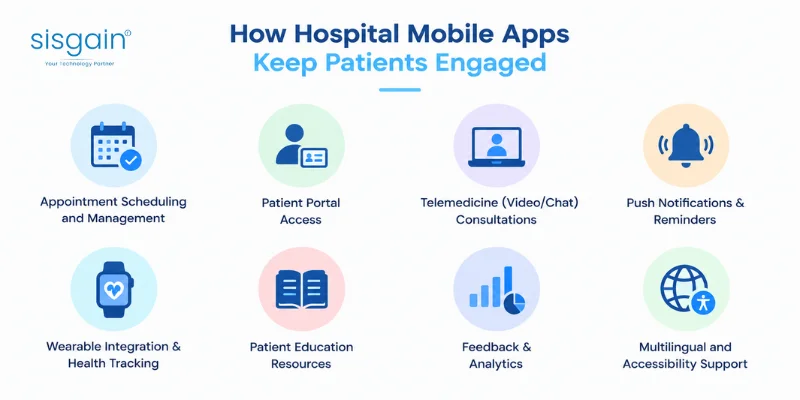
Successful hospital apps integrate a suite of features designed to meet patient needs and simplify providers’ workflows. The top features include (but are not limited to):
-
Appointment Scheduling and Management: Patients can book, reschedule or cancel visits directly in the app. This reduces missed appointments (a major cost driver) and lets patients choose convenient times. Doctors and staff can also adjust schedules in real time. Studies show that offering in-app scheduling significantly cuts no-shows and improves clinic efficiency.
-
Patient Portal Access: Securely integrated Electronic Health Records (EHR) allow patients to view their own medical data through the app. Patients can see lab results, imaging reports, medication lists and other records on demand. Cloud-based portals mean updated health information is available anywhere, anytime, without downloads. Accessible portals foster transparency and trust – patients who monitor their records are better informed and engaged in care decisions.
-
Telemedicine (Video/Chat) Consultations: Real-time video calling and secure messaging transform the way patients and providers communicate. Built-in video chat brings back a “human touch” to remote visits. Patients can have virtual follow-ups or triage calls from home, while doctors can visually assess patients and answer questions. In-app chat or messaging also lets patients quickly clarify issues (medication doubts, treatment instructions, etc.). These features have proven to be among “the best ways” to improve patient education and involvement.
-
Push Notifications & Reminders: Automated alerts keep everyone on schedule. Apps can send reminders for upcoming appointments, annual screenings, or routine tasks like taking medicationo. Doctors and nurses get notified of any scheduling changes or critical updates. In effect, notifications build accountability: patients report better adherence when their phones alert them about health tasks. Both OSPLabs and SISGAIN emphasize that appointment and medication reminders are essential engagement tools.
-
Wearable Integration & Health Tracking: Modern apps often sync with consumer wearables (e.g. smartwatches, fitness trackers) and medical devices. This allows real-time monitoring of vitals (heart rate, glucose, blood pressure, activity, etc.). When hospitals can view patient-generated data continuously, providers detect problems earlier and adjust care. For example, if a wearable signals abnormal heart rates, the app can notify the care team before a serious event. OSPLabs points out that wearable-data integration “reduces the number of consultations required” by automating data exchange and enabling proactive alerts.
-
Patient Education Resources: Engaging apps include educational libraries – articles, videos, and interactive tools about health conditions and wellness. SISGAIN notes that customized apps can incorporate AI-driven recommendations and gamified challenges to make learning about health more accessible. Health literacy features empower patients to understand their care; studies show educated patients adhere better to plans.
-
Feedback & Analytics: In-app surveys and feedback forms give patients a voice. By analyzing responses and usage patterns, healthcare organizations can identify bottlenecks and tailor services. As OSPLabs observes, gathering feedback is “a key market trend” that enables truly personalized treatment plans.
-
Multilingual and Accessibility Support: To serve diverse populations globally, apps often provide multiple languages and accessible design. SISGAIN specifically recommends multilingual support so that apps resonate with all patient demographics.
Each feature above can be woven together into a seamless app experience. Importantly, the app’s interface must be user-friendly and secure – intuitive navigation, clear layouts, and robust login protections (biometric or encryption) are critical for adoption. Healthcare app developers like SISGAIN ensure compliance with regulations (e.g. HIPAA in the U.S.) and use encryption so patients trust the platform with their data.
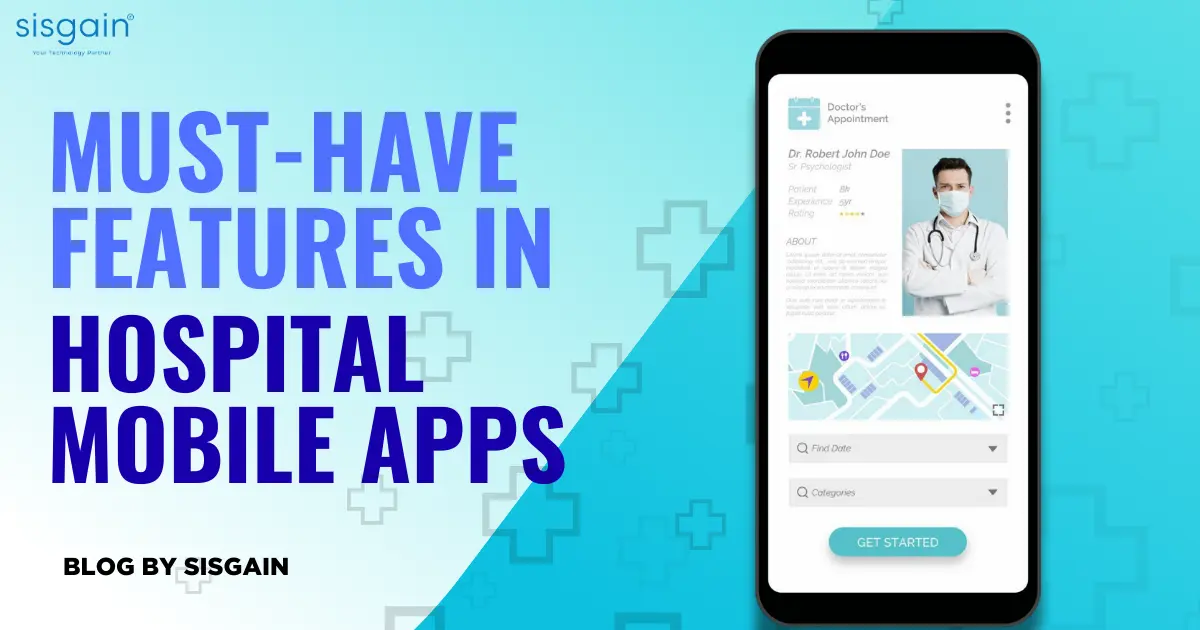
Figure: Mobile health applications (like secure patient portals and telemedicine interfaces) empower patients to view records, schedule care, and communicate with doctors, boosting engagement and outcomes.
Global Landscape and Market Drivers
Patient engagement apps are part of a broader mHealth revolution affecting healthcare worldwide. Several factors are fueling this growth:
-
Rising Demand for Convenience: Modern patients expect the same on-demand access in healthcare that they have in other services. The pandemic accelerated telehealth adoption, proving that remote care can be effective. Consumers now look for digital tools to book care as easily as ordering food.
-
Technology Advancements: The proliferation of smartphones (6+ billion global users) and fast mobile networks has made app-based health solutions viable everywhere. Integration of artificial intelligence, machine learning, and even blockchain (for secure data sharing) is pushing apps to be smarter and more personalized. Grand View Research notes that AI-driven engagement tools are among the fastest-growing segments, enabling predictive health insights and personalization.
-
Chronic Disease Burden: With chronic conditions on the rise worldwide, continuous monitoring and patient involvement are imperative. Remote Patient Monitoring (RPM) systems exemplify this trend: SISGAIN highlights RPM as a “key component” of value-based care, using wearables and sensors to track patients remotely. This not only improves outcomes (through timely interventions) but also reduces hospitalizations and costs.
-
Regulatory Support and Incentives: Many governments now encourage digital health solutions. For instance, Europe’s Digital Health Act (DVG) and various country-level programs in Asia are funding innovative patient apps. In the U.S., CMS and insurers are gradually reimbursing telehealth and patient-portal activities, making app investments financially viable for providers.
-
Competitive Healthcare Market: Hospitals and clinics compete on patient satisfaction and retention. Offering a modern app can be a differentiator. As one study notes, healthcare providers across every region (from the U.S. to Europe and Asia) are prioritizing “patient-centric” tools to stay competitive.
Together, these global drivers mean that the patient-engagement app market will remain robust. Technology forecasts underline that Asia-Pacific will lead future expansion (e.g. China’s large patient base and digital infrastructure), while North America will stay a mature market with a high adoption baseline.
SISGAIN Technologies’ Solutions
SISGAIN Technologies specializes in building exactly these kinds of healthcare apps. A custom software developer with offices and clients worldwide, SISGAIN emphasizes tailored solutions that align with an organization’s workflows and goals. For hospitals and clinics seeking to boost patient engagement, SISGAIN’s offerings include:
-
Telemedicine App Development: SISGAIN creates HIPAA-compliant telehealth apps with video consultation and secure messaging (part of their Telemedicine Solutions. These apps integrate smoothly with hospital systems to capture appointment data and update EHRs in real time.
-
Patient Portal and EHR Integration: SISGAIN builds portals that let patients log in to view their electronic health records. By connecting to existing EHR/EMR systems via HL7/FHIR standards, the apps ensure records are up-to-date. The result is a “bird’s eye view” for patients (as OSPLabs terms itosplabs.com) and a single point of access for care data.
-
Appointment and Billing Systems: The company’s solutions often include digital scheduling modules and even mobile payment or billing integrations. This streamlines administrative tasks: patients can book visits, refill prescriptions, or pay co-pays all within the app.
-
Remote Patient Monitoring (RPM): Notably, SISGAIN offers custom RPM platforms. These platforms connect with wearable devices to track vitals like blood glucose, heart rate, and blood pressure. Doctors get dashboards for real-time data analysis, and automated alerts trigger when readings fall outside safe ranges. SISGAIN’s RPM solutions emphasize data security and regulatory compliance, giving providers confidence to remotely monitor patients with chronic diseases.
-
Health Analytics and AI: Beyond basic features, SISGAIN integrates analytics and emerging tech into apps. For example, they leverage AI to personalize content (health tips, risk alerts) and blockchain to secure data provenance where appropriate. By harvesting insights from app usage and sensors, SISGAIN helps healthcare organizations refine population health strategies.
SISGAIN underscores a strictly professional approach. All development follows industry standards (HIPAA, HL7, GDPR, etc.), and the UX is crafted for diverse users – from tech-savvy millennials to older patients. They also provide ongoing support and maintenance, recognizing that health apps require continuous updates and integration with evolving health IT systems.
According to SISGAIN’s case histories, such customized apps have “transformed how patients interact with providers” (citing MyChart and Healow as benchmarks). By partnering with SISGAIN, hospitals can “add value by multiplying profits for long-term benefits” in the global market, as the company’s mission states.
Telehealth, Wearables and Future Directions
Looking ahead, mobile patient engagement will keep evolving. Innovations like wearable health tech are already mainstream: smartwatches, fitness bands, and even smart clothing continuously collect patient data. The key is integrating this data into care. SISGAIN and industry experts note that seamlessly connecting wearables and hospital apps enables a kind of automated patient monitoring. For example, if a patient’s smartwatch detects irregular heartbeats, the app can flag the care team instantly.
Another frontier is digital therapeutics and AI-driven coaching. Apps may soon include AR/VR modules for patient education (e.g. visualizing anatomy or rehabilitation exercises). Predictive analytics will also play a role: by analyzing trends across thousands of app users, machine learning can predict a patient’s risk of complications and prompt preventive action.
However, with these advances comes the need for robust security and interoperability. SISGAIN emphasizes that new features must integrate “into existing healthcare systems” without silo. Data encryption, user authentication, and compliance with local laws remain top priorities. In global deployments, apps must adapt to different healthcare regulations and languages – another reason SISGAIN advocates modular, scalable architectures.
One emerging trend is AI chatbots and voice assistants for patient engagement. Healthcare providers are experimenting with chatbots that answer patient queries or guide them through symptom checkers. These tools, along with wearables and telehealth, point toward a future where continuous digital touchpoints keep patients engaged 24/7. Integrating such tools will be a logical extension of today’s apps.
Conclusion
In summary, hospital mobile apps are transforming patient engagement on a global scale. By offering education, communication, convenience, and personalization, these apps support better health outcomes and higher satisfaction for patients and providers alike. The evidence is clear: features like scheduling, portals, telehealth, notifications, and wearables are “must-haves” for modern healthcare apps.
Healthcare organizations across North America, Europe, Asia and beyond are investing heavily in such technologies. Market analysts predict double-digit growth well into the next decade. In this booming landscape, SISGAIN Technologies stands out by delivering tailored, enterprise-grade solutions that leverage these engagement features. Their global reach – with clients from the United States to the UAE, India and beyond – positions them to be a trusted partner for any healthcare provider aiming to boost patient engagement.
Ultimately, the combination of strategic app design and robust technology can bridge gaps between doctors and patients. When hospitals deploy mobile apps with the right feature set, patients become active participants in care, and providers gain powerful new tools to monitor and improve health. The result is a more efficient, patient-centered system. As SISGAIN’s experts conclude, investing in digital health now is investing in better outcomes and streamlined care for years to come