
Running a restaurant in the UAE is no small feat. Whether you're operating a café in Abu Dhabi, a fine-dining establishment in Dubai, or a fast-casual eatery in Sharjah, success depends on agility, efficiency, and consistent customer experience. Your technology should support all that especially your Point of Sale (POS) system.
Yet, far too many restaurants are stuck with outdated, underperforming POS platforms that limit their growth rather than fuel it.
According to research by Toast, 73% of restaurants report that modern POS systems help streamline operations. However, many UAE-based establishments still use legacy POS tools that don't meet today’s mobile, data-driven, cloud-first restaurant environment.
If you've ever thought, "Maybe my system is good enough for now," this article is for you. Because in today’s market, "good enough" is simply not good enough.
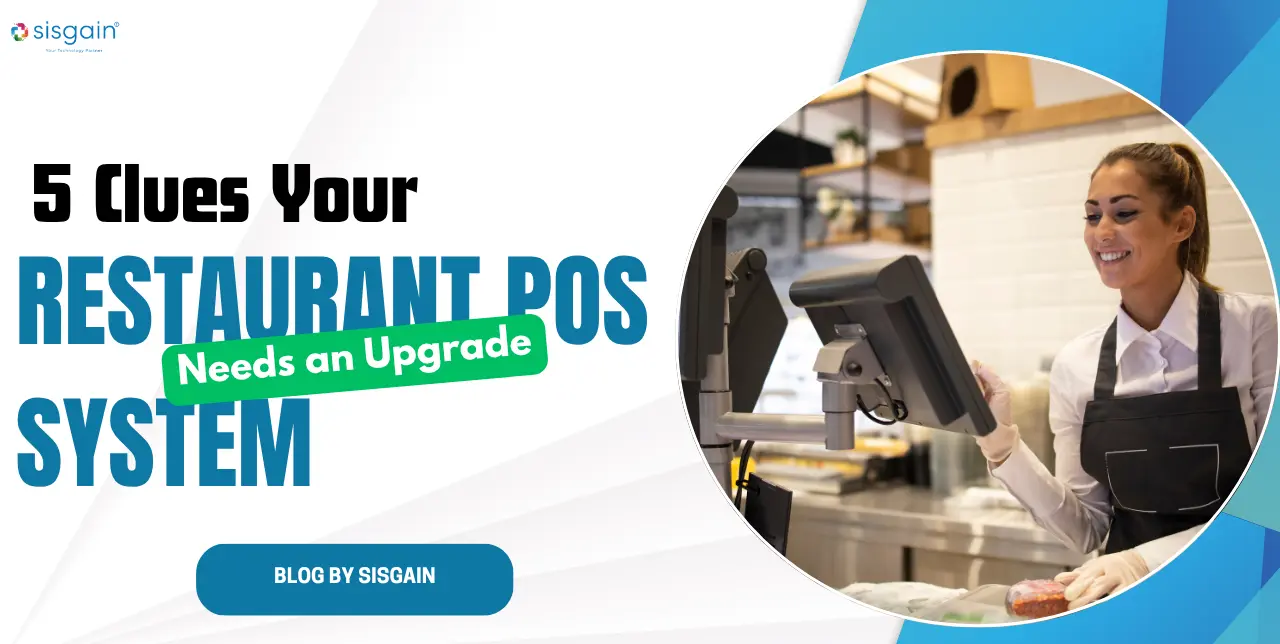
Here are five undeniable clues your restaurant POS system needs an upgrade and what to look for in a solution built for growth.
1. Your POS Is Still Locked to On-Premise Servers
If your restaurant POS system depends on on-premise servers and physical hardware, it’s a strong indicator that your technology stack hasn’t kept pace with modern restaurant operations. Legacy POS systems were built for a time when restaurants operated from a single location, data volumes were smaller, and remote management wasn’t a priority.
In today’s fast-moving, multi-channel dining environment, on-premise POS systems create operational friction. They typically require restaurant owners or managers to be physically present to make even minor changes—such as updating menu prices, configuring taxes, or resolving system errors. This lack of flexibility becomes a serious limitation for growing restaurants, franchises, or owners managing multiple outlets.
Common challenges with on-premise POS systems include:
No real-time data synchronization across locations, leading to delayed or inconsistent sales and inventory reports
Manual software updates and system reboots, often scheduled during off-hours or after closing
High maintenance costs tied to local servers, hardware failures, and IT support
Limited remote access, making it difficult to monitor performance, troubleshoot issues, or generate reports on the go
In contrast, modern cloud-based restaurant management software is designed for mobility, scalability, and real-time control. With a cloud POS, restaurant owners can manage menus, pricing, inventory, and promotions from anywhere—whether they’re at home, traveling, or overseeing multiple branches from a single dashboard. Sales data updates instantly, inventory levels stay accurate across locations, and system updates happen automatically without disrupting daily operations.
More importantly, cloud platforms offer higher reliability and data security through encrypted connections, automatic backups, and disaster recovery—something most legacy, on-premise systems struggle to deliver consistently.
For restaurants aiming to scale, streamline operations, and stay competitive, remaining tied to on-premise POS infrastructure is no longer just inconvenient—it’s a strategic disadvantage
Benefits of Switching to Cloud-Based POS:
| Feature | Legacy POS System | Cloud-Based POS System |
|---|---|---|
| Accessibility | On-site only | Anywhere with internet |
| Updates | Manual | Automatic, in real-time |
| Integration | Limited | Seamless with 3rd party platforms |
| Scalability | Complicated and costly | Easy to scale across locations |
| Remote Monitoring | Not available | Real-time dashboards |
In the UAE, where tourism-driven footfall, takeout orders, and delivery partnerships with apps like Talabat and Deliveroo are essential, cloud-based POS is no longer optional — it’s the industry standard.
Also Read - The Essential Guide to Restaurant POS Software
Find the right POS for your restaurant's unique needs
2. Your POS Lacks Essential Business-Critical Features
If your POS system is limited to basic order entry and payment processing, it’s doing little more than replacing a traditional cash register. In today’s data-driven restaurant industry, a POS system is expected to act as a central intelligence hub—connecting operations, customers, staff, and finances in real time.
Modern restaurants operate across multiple touchpoints: dine-in, takeaway, delivery platforms, online reservations, and digital payments. A POS that doesn’t support this ecosystem quickly becomes a bottleneck rather than a business enabler.
Evaluate your current POS against these essential capabilities:
Smart Inventory Management: Automatically track ingredient usage, receive low-stock alerts, minimize food wastage, and align purchasing decisions with real sales trends.
Customer Loyalty & CRM Tools: Capture customer preferences, reward repeat visits, and run targeted promotions that increase lifetime value rather than relying on discounts alone.
Seamless Third-Party Integrations: Connect effortlessly with accounting software, payroll systems, food delivery platforms, reservation tools, and kitchen display systems—eliminating manual data entry and errors.
Real-Time Analytics & Reporting: Instantly identify top-performing and underperforming menu items, peak sales hours, staff efficiency, and daily revenue trends—without waiting for end-of-day reports.
Reliable Support & System Stability: Access timely technical support when issues arise, especially during peak service hours when downtime directly impacts revenue and guest experience.
In tech-forward markets like Dubai and Abu Dhabi, customer expectations are higher than ever. Guests expect frictionless ordering, fast and flexible payments, digital receipts, loyalty rewards, and consistent service—whether they’re dining in, ordering online, or visiting a different branch of the same restaurant.
When your POS lacks these core features, the impact goes beyond inconvenience. It leads to slower service, missed upselling opportunities, inaccurate reporting, and ultimately, lost revenue and customer loyalty.
A modern restaurant POS should support growth, improve decision-making, and enhance guest experience—not hold your operations back. The difference between a basic POS and a business-ready system is often the difference between surviving and scaling in a competitive market.
3. New Staff Struggle to Learn and Use the POS System
Training new restaurant staff is already a challenge—especially in fast-paced hospitality environments where speed and accuracy are non-negotiable. When an outdated or poorly designed POS system is added to the equation, onboarding becomes slower, error-prone, and frustrating for both employees and managers.
Legacy POS systems often rely on cluttered interfaces, rigid workflows, and outdated navigation patterns that are difficult for new hires to grasp quickly. Instead of focusing on customer service, staff are forced to spend valuable time learning complex button sequences and manual workarounds.
Common feedback from frontline restaurant staff includes:
“The system isn’t intuitive and takes days to understand.”
“Menu or price updates don’t reflect immediately, which causes confusion.”
“Simple tasks like splitting bills, applying discounts, or handling modifiers are unnecessarily complicated.”
“Mistakes happen because the interface feels slow and outdated.”
In regions like the UAE, where staff turnover in the hospitality sector is high, ease of use is not a luxury—it’s a business requirement. A POS system must be designed for rapid onboarding, minimal training, and consistent performance across different skill levels and roles.
Modern, cloud-based POS platforms are built with usability in mind. They typically feature clean dashboards, role-based access, multilingual interfaces, and guided workflows that allow new employees to become productive within hours rather than days. Updates sync in real time, reducing confusion during service hours, and intuitive layouts help staff complete tasks quickly and accurately.
The impact is immediate and measurable: faster service times, fewer order errors, smoother shifts, and improved customer experiences. Just as importantly, an easy-to-use POS reduces staff stress and boosts confidence—leading to better retention and a more stable, motivated team.
"Switching to SISGAIN for Restaurants was the best decision we made. Even our least tech-savvy staff picked it up in one shift."
— Linda Chen, Owner of Lotus Garden Bistro.
4. Your POS System Can’t Scale With Your Business
Every successful restaurant eventually reaches a turning point where growth becomes the priority—opening new locations, launching delivery-first concepts, introducing mobile ordering, or experimenting with formats like cloud kitchens and food trucks. At this stage, your POS system should act as a growth enabler, not an operational roadblock.
Legacy or entry-level POS systems are often built for single-location use. As soon as expansion plans begin, their limitations become obvious and costly.
Clear indicators that your POS is restricting business growth include:
Each new outlet requires a separate setup or entirely new system, increasing costs and operational inconsistency
Lack of support for digital menus, QR-based ordering, or contactless experiences, which are now standard expectations
Manual coordination between kitchen, bar, and front-of-house systems, leading to delays and communication gaps
No centralized control for menus, pricing, or promotions across multiple locations
Inconsistent or non-compliant VAT invoicing, creating reporting challenges for UAE-based multi-branch operations
Across the UAE, restaurants are scaling faster than ever—often expanding into multiple locations within short timeframes or adopting hybrid models that combine dine-in, delivery, and takeaway. A POS system that can’t replicate successful operations across new outlets forces owners to reinvent processes every time they grow.
Scalable, cloud-based POS platforms are designed specifically for expansion. They allow restaurant owners to manage multiple branches from a single dashboard, standardize menus and pricing centrally, and access consolidated performance reports across all locations. New outlets can be launched faster using predefined configurations, while updates roll out instantly across the entire network.
Most importantly, a scalable POS supports evolving business models—whether it’s adding delivery integrations, launching a virtual brand, or adapting to regulatory requirements like UAE VAT compliance—without disrupting existing operations.
When evaluating your POS, the key question is simple: Can it grow at the same pace as your business? If the answer is no, it’s not just limiting efficiency—it’s limiting opportunity
5. Your POS Is Failing to Deliver a Real Return on Investment
A lower upfront price doesn’t automatically make a POS system cost-effective. In reality, the true value of a POS lies in its ability to improve efficiency, reduce losses, and actively contribute to revenue growth. A well-implemented POS should pay for itself through measurable operational and financial gains.
A performance-driven POS system should help your restaurant:
Process orders faster, reducing queues and increasing table turnover
Minimize order errors, which directly lowers refunds, remakes, and customer complaints
Identify top-performing and underperforming menu items, enabling smarter pricing and menu optimization
Reduce food waste through accurate inventory tracking and usage insights
Increase customer retention with loyalty data, repeat-visit incentives, and personalized offers
If your current system is failing to generate measurable results or costing you more than it saves, you're due for an upgrade. Use this quick formula to determine if your POS is earning its keep:
ROI = (Net Return - Cost of POS) / Cost of POS x 100
Example:
-
Monthly revenue increase after upgrade = AED 4,000
-
Cost of new POS = AED 1,500/month
-
ROI = (4000 - 1500) / 1500 x 100 = 166.6%
That’s a smart investment.
POS downtime, complex user interfaces, and limited reporting capabilities all carry hidden costs. Switching to a performance-focused POS will turn those costs into growth opportunities.
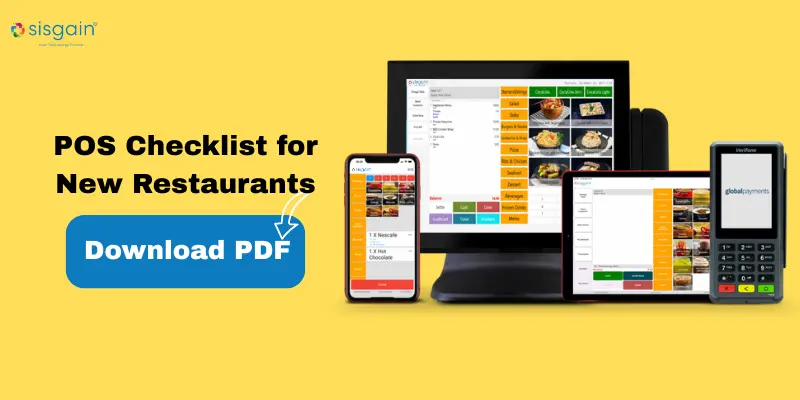
What to Ask Before Upgrading Your POS
Once you've spotted these red flags in your current system, it’s time to consider your next move. Choosing a new POS vendor is no small decision — here are questions to help guide you:
-
Is it built specifically for restaurants?
-
Does it support multi-language staff environments?
-
Is it compliant with UAE VAT regulations?
-
Can it integrate with delivery platforms like Talabat or Deliveroo?
-
Does it offer 24/7 UAE-based support?
-
Can I see real-time data across all locations?
-
Is training available for my team?
A reliable POS solution should make your operations smarter, faster, and more profitable not more complicated.
"I used to spend hours fixing errors and chasing down missing tickets with our old system. Since we moved to SISGAIN's POS, it’s been seamless. Sales tracking, table management, everything just flows. It honestly changed how we run our restaurant.”
— Luca Romano, Head Chef & Co-founder of Trattoria Romano
Final Thoughts: Don’t Let "Good Enough" Hold You Back
Your restaurant POS system should be your competitive edge, not your biggest limitation. In a market as dynamic as the UAE, where customer expectations evolve quickly and competition is fierce, using outdated technology is a surefire way to fall behind.
By upgrading to a modern, cloud-based POS system, you can:
-
Scale with confidence
-
Serve customers faster and better
-
Make data-driven decisions
-
Train staff efficiently
-
Increase profits and customer loyalty
If your POS system checks any of the five clues above, it’s time for an upgrade.
Ready to Elevate Your Restaurant POS Experience?
Request a free demo of SISGAIN’s next-gen restaurant POS systems, and discover a platform built for UAE’s unique restaurant landscape.
Empower your team. Delight your guests. Grow your business.
Built for restaurants. Built for the UAE. Built for you.