

Closing a real estate deal today involves far more than signing a contract. With multiple documents, compliance checks, lender coordination, and tight timelines, managing transactions manually can be overwhelming.
Real estate transaction management software centralizes every step of the deal, from offer submission to final closing, reducing errors and improving efficiency. For agents handling multiple listings, these tools streamline workflows, enhance coordination, and allow professionals to focus on clients rather than paperwork.
As the property market embraces digital transformation, investing in advanced real estate transaction management tools has become essential for faster closings, better compliance, and a smoother client experience. In this guide, we’ll explore the top platforms, must-have features, and trends shaping the best transaction management software 2026.
What Is Real Estate Transaction Management Software?
Real estate transactions involve numerous documents, approvals, deadlines, and stakeholders. From the moment a buyer submits an offer until the final closing paperwork is completed, agents must coordinate multiple tasks while ensuring compliance with legal and regulatory requirements. Handling these processes manually through emails, spreadsheets, and paper documents often leads to confusion, missed deadlines, and unnecessary delays. This is why real estate transaction management software has become an essential solution for modern real estate professionals.
At its core, real estate transaction management software is a digital platform that organizes and manages the entire deal lifecycle in one place. Instead of relying on scattered tools, agents and brokers can track documents, tasks, and approvals within a centralized system. Many of these platforms are developed by experienced technology providers such as an IT software development company, ensuring secure, scalable solutions that support complex real estate workflows.
Modern real estate transaction management tools function as a structured workflow system that guides a deal from the initial offer to the final closing. Once a transaction begins, the platform automatically organizes tasks, tracks deadlines, and stores documents so that everyone involved in the deal can access the required information easily.
Key Functions of Real Estate Transaction Management Software
The best real estate transaction management software typically includes several core functions that simplify the entire deal lifecycle.
1. Centralized Document Management
The software securely stores all transaction documents in one location. Contracts, disclosures, inspection reports, and closing documents can be uploaded, shared, and accessed by authorized users. This eliminates the need to search through emails or physical folders.
2. Automated Workflow and Task Management
Most platforms automatically generate transaction checklists and assign tasks based on the deal stage. This ensures that agents complete important steps such as document submission, inspections, and approvals on time.
3. Digital Signatures and Document Approvals
Many real estate transaction management tools integrate e-signature capabilities, allowing buyers, sellers, and agents to sign documents electronically. This speeds up the approval process and reduces paperwork delays.
4. Real-Time Transaction Tracking
Agents can monitor the progress of each deal through dashboards and status trackers. This feature is particularly helpful for professionals using transaction management software for real estate agents, as it allows them to manage multiple transactions simultaneously without losing visibility.
5. Compliance and Audit Trails
Real estate transactions must follow strict legal guidelines. The software records every action taken within the system, creating a complete audit trail that helps brokerages stay compliant with regulations.
In simple terms, real estate transaction management software transforms the traditional paperwork-heavy transaction process into an organized and automated digital workflow. By using the best transaction management software 2026, brokerages and agents can improve efficiency, reduce manual errors, and ensure that property deals move smoothly from offer to closing.
Why Real Estate Agents Need Transaction Management Software in 2026
The real estate industry in 2026 is faster and more complex than ever. Agents manage multiple deals, documents, and deadlines simultaneously, making real estate transaction management software essential for maintaining efficiency and accuracy throughout the transaction process.
Using transaction management software for real estate agents helps professionals stay organized, automate repetitive tasks, and ensure that every stage of a property transaction progresses smoothly.
Managing Multiple Transactions Efficiently
- Agents often handle several deals at the same time, which makes manual tracking difficult.
- Real estate transaction management tools provide dashboards to monitor deal progress and upcoming deadlines.
Reducing Administrative Work
- Real estate transactions involve significant paperwork and repetitive administrative tasks.
- The best real estate transaction management software automates reminders, task assignments, and document organization.
Improving Client Communication
- Buyers and sellers expect clear updates throughout the transaction process.
- Transaction management software for real estate agents allows real-time sharing of documents and status updates.
Ensuring Compliance and Accuracy
- Real estate transactions must meet strict legal and documentation requirements.
- Real estate transaction management software securely stores records and maintains detailed audit trails.
Faster Transaction Closings
- Delays often occur when documents or approvals are missed during the process.
- The best transaction management software 2026 helps streamline workflows and accelerate deal closures.
Better Team Collaboration
- Real estate transactions involve agents, brokers, clients, and legal professionals.
- Real estate transaction management tools enable seamless collaboration and communication among all stakeholders.
Key Features of the Best Transaction Management Software 2026
When choosing the best real estate transaction management software, it is important to evaluate the features that improve efficiency, reduce administrative work, and help agents manage transactions smoothly. The best transaction management software 2026 combines automation, collaboration tools, and secure document handling to support every stage of a real estate deal.
Automated Transaction Workflows
Modern real estate transaction management software automates repetitive tasks such as creating checklists, assigning responsibilities, and setting deadlines. This ensures every stage of the transaction process is completed on time without missing critical steps.
Digital Document Management
Real estate transactions involve numerous documents including contracts, disclosures, and inspection reports. Real estate transaction management tools store these documents securely in the cloud, allowing agents and clients to access them anytime.
E-Signature Integration
Electronic signature features allow buyers, sellers, and agents to sign documents digitally. This eliminates the need for physical paperwork and helps speed up approvals, making the overall transaction process faster and more efficient.
Real-Time Transaction Tracking
With transaction management software for real estate agents, professionals can track the progress of multiple deals simultaneously. Dashboards display pending tasks, completed milestones, and upcoming deadlines, helping agents stay organized.
CRM and MLS Integration
The best real estate transaction management software integrates with CRM systems and MLS platforms. This connection allows agents to manage leads, listings, and transaction data within a unified ecosystem.
Mobile Accessibility
Agents frequently work outside the office while meeting clients or visiting properties. Mobile access allows professionals to review documents, update transaction progress, and communicate with stakeholders directly from their smartphones.
Client Communication Portals
Many real estate transaction management tools include client portals where buyers and sellers can track deal progress, review documents, and receive updates. This transparency improves trust and enhances the overall client experience.
Compliance and Audit Tracking
Real estate deals require strict regulatory compliance. The best transaction management software 2026 records every document update and approval, creating a complete audit trail that helps brokerages maintain accurate and compliant records.
Task Notifications and Reminders
Automated reminders ensure agents never miss critical deadlines such as inspections, financing approvals, or contract submissions. This feature helps maintain smooth workflows and prevents delays during property transactions.
Data Security and Cloud Storage
Security is a critical component of real estate transaction management software. Cloud-based systems use encryption and secure access controls to protect sensitive client information, ensuring documents remain safe and accessible.
For custom tweaks, explore real estate software development to build features that fit like a glove.
Top Real Estate Transaction Management Software 2026
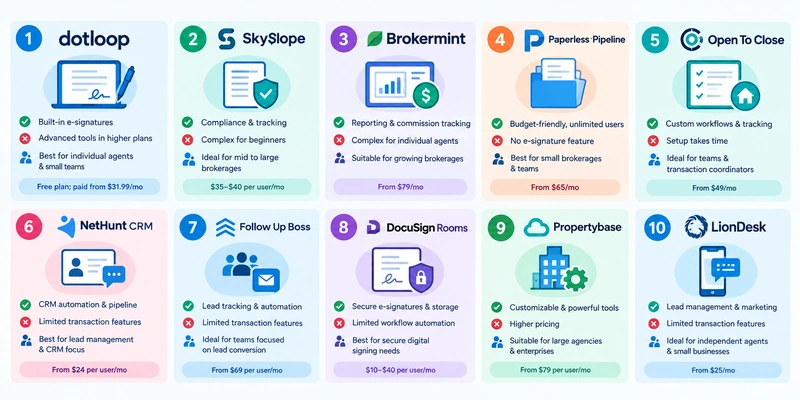
Managing real estate deals has never been more digital. The top real estate transaction management software in 2026 helps agents automate workflows, organize documents securely, and collaborate smoothly. Choosing the right platform depends on your team size, integrations, ease of use, and budget.
We've vetted these based on user reviews, features, and 2025 performance projections. Each includes an overview, key features, pros/cons, pricing, and ideal users.
1. Dotloop
Dotloop is a popular real estate transaction management platform that helps agents manage documents, e-signatures, and deal workflows in one place.
Pros: Simplifies transaction workflows with built-in e-signatures.
Cons: Advanced tools are available only in higher plans.
Pricing: Free plan available; paid plans start around $31.99/month.
Who Should Use It: Best for individual agents and small real estate teams
2. SkySlope
SkySlope is a brokerage-focused transaction management system designed to ensure compliance and streamline document tracking.
Pros: Excellent compliance and brokerage-level transaction tracking.
Cons: Interface may feel complicated for beginners.
Pricing: Around $35–$40 per user/month.
Who Should Use It: Ideal for mid to large real estate brokerages.
3. Brokermint
Brokermint is a real estate management platform that combines transaction management, accounting, and commission tracking.
Pros: Powerful reporting and commission tracking tools.
Cons: Slightly complex for individual agents.
Pricing: Starts around $79/month depending on features.
Who Should Use It: Suitable for growing real estate brokerages.
4. Paperless Pipeline
Paperless Pipeline is a simple and affordable transaction management solution that helps brokerages organize documents and track deals.
Pros: Budget-friendly platform with unlimited users.
Cons: Does not include built-in e-signature functionality.
Pricing: Starts around $65/month.
Who Should Use It: Best for small brokerages and teams.
5. Open To Close
Open To Close is a workflow-driven transaction management software that helps agents manage tasks, documents, and communication.
Pros: Customizable workflows and easy transaction tracking.
Cons: Initial setup can take some time.
Pricing: Plans start around $49/month.
Who Should Use It: Ideal for real estate teams and transaction coordinators.
6. NetHunt CRM
NetHunt CRM is a customer relationship management platform that helps agents manage leads, deals, and client communication.
Pros: Strong CRM automation and sales pipeline management.
Cons: Limited advanced transaction management features.
Pricing: Starts around $24 per user/month.
Who Should Use It: Best for agents focused on lead management and CRM.
7. Follow Up Boss
Follow Up Boss is a real estate CRM platform designed to help agents capture leads and manage client relationships.
Pros: Excellent lead tracking and communication automation.
Cons: Transaction management features are limited.
Pricing: Starts around $69 per user/month.
Who Should Use It: Ideal for real estate teams focused on lead conversion.
8. DocuSign Rooms for Real Estate
DocuSign Rooms helps agents manage secure digital documents and electronic signatures for real estate transactions.
Pros: Trusted e-signature platform with secure document storage.
Cons: Limited workflow and transaction automation features.
Pricing: Typically $10–$40 per user/month.
Who Should Use It: Best for agents needing secure digital document signing.
9. Propertybase
Propertybase is a Salesforce-powered real estate CRM and transaction platform designed for large agencies.
Pros: Highly customizable with powerful automation tools.
Cons: Higher pricing compared to other solutions.
Pricing: Starts around $79 per user/month.
Who Should Use It: Suitable for large real estate agencies and enterprises.
10. LionDesk
LionDesk is a real estate CRM platform that provides lead management, marketing automation, and communication tools.
Pros: Affordable CRM with texting and video messaging features.
Cons: Limited transaction management capabilities.
Pricing: Starts around $25/month.
Who Should Use It: Ideal for independent agents and small real estate businesses.
Comparison of the Best Real Estate Transaction Management Software
|
Software Platform |
Best For |
Automation Level |
Integrations |
Pricing Model |
Mobile Support |
|
Dotloop |
Individual agents and small teams |
High |
MLS, CRM, Google Drive |
Freemium + subscription |
Yes |
|
SkySlope |
Mid to large brokerages |
High |
CRM, MLS, accounting tools |
Subscription |
Yes |
|
Brokermint |
Brokerages with commission tracking |
Medium–High |
QuickBooks, CRM, MLS |
Monthly subscription |
Yes |
|
Paperless Pipeline |
Budget-friendly brokerages |
Medium |
CRM and document tools |
Monthly subscription |
Limited |
|
Open To Close |
Transaction coordinators and teams |
Medium |
CRM and email tools |
Subscription |
Yes |
|
NetHunt CRM |
Agents needing CRM + deal tracking |
Medium |
Gmail, Google Workspace |
Per-user subscription |
Yes |
|
Follow Up Boss |
Lead-focused real estate teams |
Medium |
Lead sources, CRM tools |
Per-user subscription |
Yes |
|
DocuSign Rooms |
Secure document management |
Medium |
CRM, storage tools |
Subscription |
Yes |
This comparison makes it easier for real estate businesses to evaluate the most important capabilities at a glance. By reviewing automation, integrations, and pricing models side by side, brokerages can shortlist platforms that align with their workflow requirements and long-term growth plans.
How to Choose the Right Real Estate Transaction Management Software
Choosing the right transaction management software can make a big difference in how smoothly your real estate deals are handled. Here are a few important steps to help you select the best platform for your business.
1. Identify Your Business Needs
Start by understanding your requirements such as transaction volume, team size, and the type of features you need to manage deals efficiently.
2. Check Automation Features
Look for software that offers workflow automation, task reminders, and document tracking to reduce manual work and save time.
3. Evaluate Integration Options
The platform should easily integrate with CRM systems, MLS platforms, accounting tools, and document storage solutions.
4. Compare Pricing Plans
Review different pricing models to ensure the software fits your budget while still offering the essential features your business requires.
5. Consider Scalability
Choose a solution that can grow with your business and support more users or transactions as your real estate operations expand.
6. Check Security and Compliance
Ensure the software provides secure document storage, data protection, and compliance features to meet real estate regulatory requirements.
7. Review Customer Support
Reliable customer support and training resources are important to help your team quickly resolve issues and use the platform effectively.
Benefits of Using Real Estate Transaction Management Tools
Managing real estate transactions manually can be overwhelming, with multiple documents, deadlines, and parties involved in each deal. Real estate transaction management tools simplify this process by centralizing documents, tasks, and communication into a single platform. This ensures every step of the transaction is organized, reducing the chances of missed deadlines or errors that could cost time and money.
These tools also enhance collaboration and transparency. Agents, clients, brokers, and transaction coordinators can easily track progress, access the latest documents, and stay updated on every milestone. Secure portals and cloud-based storage ensure sensitive information is protected while remaining accessible to authorized parties.
Another key benefit is compliance and risk management. Most platforms include audit trails and built-in compliance checks, helping brokerages adhere to regulatory requirements without manual monitoring. By reducing administrative burdens and improving organization, real estate transaction management software allows agents to focus on high-value activities like building client relationships and closing deals
Future Trends in Transaction Management Software for Real Estate
The real estate industry is evolving, and the best transaction management software 2026 will do more than manage deals—it will streamline and anticipate them.
AI-Driven Deal Prediction: AI analyzes data to forecast deal outcomes, highlight risks, and guide agents on next steps.
Blockchain for Transactions: Blockchain ensures secure, transparent, and tamper-proof property records, reducing fraud and improving compliance.
Smart Contract Automation: Automated contracts handle payments, contingencies, and approvals, reducing delays and errors.
Integrated Ecosystems: Future platforms will unify CRMs, MLS, accounting, and marketing tools, letting agents manage leads, documents, and transactions from one dashboard.
For brokerages looking to stay ahead, collaborating with experts in software development in Dubai ensures these advanced tools are implemented efficiently and tailored to your unique workflows.
By adopting these trends, real estate professionals can close deals faster, stay compliant, and maintain a competitive edge in 2026.
Custom Real Estate Transaction Software vs Off-the-Shelf Tools
Custom real estate transaction management software offers flexibility, tailored workflows, and integration with existing CRMs, MLS systems, and accounting tools. Partnering with a software development consulting company ensures the platform meets your specific business needs while scaling with your brokerage.
Here’s a clear comparison table for Custom vs Off-the-Shelf Real Estate Transaction Management Software:
|
Feature/Aspect |
Off-the-Shelf Tools |
Custom Transaction Management Software |
|
Implementation Time |
Quick to set up, ready-to-use |
Longer setup, tailored to business needs |
|
Cost |
Affordable, lower upfront cost |
Higher initial investment, long-term ROI |
|
Features |
Standard features like document management, workflow automation |
Fully customizable features, tailored workflows, dashboards, and reports |
|
Integration |
Basic integrations with CRM or MLS |
Seamless integration with CRM, MLS, accounting, marketing tools |
|
Scalability |
Limited; may require switching platforms as business grows |
Highly scalable; grows with the brokerage without platform change |
|
Flexibility |
Low; limited customization |
High; designed to match unique business processes |
|
Best For |
Small teams, individual agents, quick adoption |
Growing brokerages, large teams, businesses needing tailored workflows |
This table makes it easy to see the advantages and trade-offs of each option, helping brokerages decide which solution fits their size, goals, and operational needs for 2026.
Final Verdict
Choosing the best real estate transaction management software is a strategic move that streamlines workflows, centralizes documents, and automates tasks, letting agents focus on closing deals.
In 2026, automation is essential. Features like digital signatures, real-time notifications, and compliance tracking reduce errors, speed up closings, and improve client satisfaction.
Whether off-the-shelf or custom-built, prioritizing scalability, integrations, and workflow automation ensures your brokerage handles growing transaction volumes efficiently. Investing in the right software today positions your team for growth, efficiency, and success in the evolving real estate market.