
Key Points
- The global fitness app market is booming, projected to grow from $17.71 billion in 2025 to over $33 billion by 2030, driven by rising health awareness and tech integration. This creates opportunities for apps like MyFitnessPal, which boasts 220 million users worldwide.
- Building your app involves core features like personalized tracking, AI-driven plans, and wearable integrations, with development costs ranging from $50,000 to $200,000 depending on complexity.
- Monetization leans toward freemium models and subscriptions, which can yield steady revenue—fitness apps generated $3.98 billion in 2024 alone. However, success requires addressing user pain points like motivation and data privacy amid evolving trends like AI and gamification.
- Post-launch, focus on ASO, social marketing, and iterations based on analytics to achieve high retention, as seen in apps that boosted user engagement by 52% through habit-forming features.
Why Now? Market Momentum
With smartphone penetration at 70.1% globally (5.78 billion users), fitness apps are more accessible than ever. The COVID-19 pandemic accelerated demand, with downloads surging 46% worldwide as people sought home-based solutions. Trends like AI personalization and wearables position your app for long-term growth.
Essential Steps to Get Started
- Research & Plan: Analyze competitors like MyFitnessPal and Noom to identify gaps, such as better AI meal planning.
- Design & Build: Prioritize intuitive UI/UX with tools like Swift for iOS and Firebase for backend scalability.
- Launch & Scale: Integrate monetization early and use data for refinements—expect 3-6 months for MVP development.
Potential Challenges and Tips
Privacy compliance (e.g., GDPR, HIPAA) is crucial to build trust, especially with health data. Start with an MVP to test features cost-effectively, and collaborate with experienced developers to avoid common pitfalls like poor integration.
IntroductionIn today's fast-paced world, where desk jobs dominate and gym memberships gather dust, the quest for better health has never been more urgent. Imagine this: You're juggling a demanding career, family responsibilities, and the nagging guilt of skipped workouts. Personal trainers are expensive, diets feel overwhelming, and motivation wanes after the first week. Enter fitness apps—the digital sidekicks that fit seamlessly into your pocket, offering personalized guidance 24/7. But what if you could create your own?
The demand for build your own fitness app solutions is skyrocketing. With global smartphone penetration reaching 70.1%—that's 5.78 billion users in 2025—these apps are no longer a luxury but a necessity for millions seeking convenient wellness tools. The COVID-19 pandemic supercharged this shift: Gym closures led to a 46% surge in fitness app downloads worldwide, as people turned to virtual workouts and tracking features for at-home routines. Fast-forward to 2025, and the market reflects this momentum. The global fitness app sector is valued at $17.71 billion this year, up from $14.66 billion in 2024, with a blistering compound annual growth rate (CAGR) of 20.8%. By 2030, it's projected to hit $33.58 billion, fueled by AI innovations and wearable tech.
This isn't just about numbers; it's about impact. Apps like MyFitnessPal have transformed lives, helping over 220 million users track calories, log meals, and build sustainable habits, generating $310 million in annual revenue. Yet, gaps remain—users crave more intuitive AI coaching, seamless social sharing, and culturally tailored nutrition plans. That's where your app like MyFitnessPal comes in.
In this comprehensive guide, we'll walk you through everything from ideation to launch. Whether you're an entrepreneur eyeing diet and nutrition app development or a developer passionate about health and wellness apps, you'll learn how to craft a fitness pal application that drives results, fosters loyalty, and scales globally. We'll cover features, tech stacks, costs, and proven strategies, drawing on real-world successes. By the end, you'll have a roadmap to turn your vision into a thriving fitness and nutrition app.
Ready to sweat the small stuff for big gains? Let's dive in. (For more on established players, check MyFitnessPal App overview.)
Why Fitness and Nutrition Apps Are a Game-Changer

Fitness and nutrition apps aren't just trendy gadgets; they're revolutionizing how we approach well-being. For users, they democratize access to expert advice—think calorie counters that feel like a personal dietitian or workout planners that adapt to your schedule. A study of 25 nutrition apps found that offline-capable tools improved healthy eating habits in 52% of cases, proving their real-world efficacy. Users report higher motivation through features like progress streaks and community challenges, leading to sustained engagement.
From a business perspective, the rewards are equally compelling. These apps tap into recurring revenue streams, with subscriptions accounting for the lion's share of the $3.98 billion generated by fitness apps in 2024—an 11.1% year-over-year increase. High retention rates build brand authority; apps like Peloton have turned one-time downloads into loyal communities, boosting lifetime value. Plus, in a crowded market, differentiation through personalization can skyrocket user acquisition—AI-driven apps see 30% higher retention than generic trackers.
What fuels this explosion? Key trends shaping health and wellness apps:
- AI Personalization: Algorithms analyze user data to craft bespoke workout and meal plans, predicting needs before they arise. McKinsey's Future of Wellness survey highlights how distinct consumer segments drive demand for tailored experiences, with AI at the forefront.
- Wearable Integrations: Devices like Apple Watch and Fitbit sync seamlessly, providing real-time biometrics. Wearables top the 2025 fitness trends list, followed closely by mobile apps.
- Gamification and Social Features: Streaks, badges, and leaderboards turn routines into games, while sharing fosters accountability. These elements increased engagement by 25% during peak pandemic usage.
- Holistic Wellness: Beyond fitness, apps now incorporate mental health tools, sleep tracking, and hydration reminders, aligning with a broader self-care movement.
The pandemic's legacy lingers: A 67% jump in U.S. installs by March 2020 evolved into hybrid models blending virtual and in-person elements. Today, with 86% of adults owning mobile phones (68% smartphones), the infrastructure is ripe for global adoption. Building a fitness and nutrition app positions you at the intersection of tech and human potential—profitable, purposeful, and poised for impact. (Explore more on health and wellness apps trends.)
Types of Fitness and Nutrition Apps You Can Build
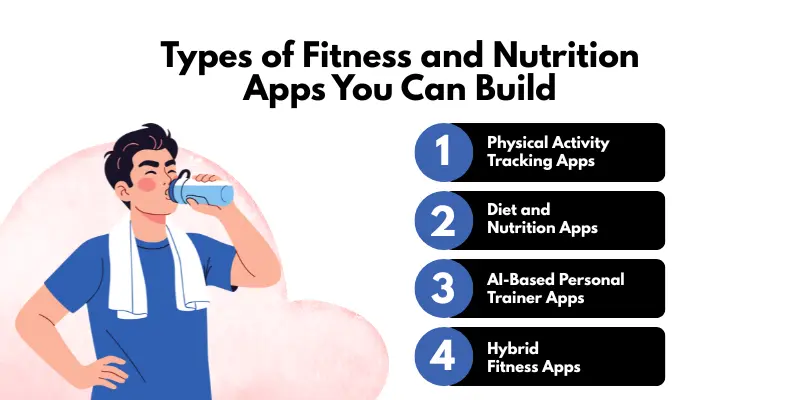
Not all fitness apps are created equal. Choosing the right type aligns with user needs and market gaps, ensuring your build your own fitness app project resonates. Here's a breakdown of popular categories, each with proven potential.
Physical Activity Tracking Apps
These focus on movement metrics, appealing to beginners and pros alike. Core features include step counting, distance logging, calorie burn estimates, sleep analysis, and workout timers. Integration with wearables elevates them—syncing data from devices like Garmin or Oura Ring for accurate insights.
Take MyFitnessPal's activity logging: Users manually or auto-log exercises, viewing trends in a dashboard that motivates consistency. In 2025, these apps dominate downloads, with U.S. installs up 10.2% CAGR to $12.55 billion by 2034. They're low-barrier entry points, ideal for MVPs.
Diet and Nutrition Apps
Nutrition is the unsung hero of health—80% of weight management ties to diet. These apps excel at calorie counting, macro breakdowns, meal planning, hydration alerts, and grocery list generation. Gamification shines here: Daily quests for veggie intake or recipe unlocks keep users hooked.
Success stories abound; apps like Lose It! use barcode scanners for effortless logging, reducing user friction. Diet and nutrition app development has seen explosive growth, with AI suggesting culturally relevant recipes boosting adherence by 40% in trials. Regional adaptations, like keto plans for Western users or millet-based for Indian markets, unlock global appeal. (Dive deeper into diet and nutrition app development.)
AI-Based Personal Trainer Apps
The future is smart: AI coaches generate dynamic plans based on user inputs like age, goals, and biometrics. Real-time feedback—via voice prompts or AR overlays—adjusts reps mid-workout. Analytics predict plateaus, suggesting tweaks.
Noom's behavioral psychology integration exemplifies this, with studies showing 5-10% sustained weight loss. In 2025, AI trends dominate, with platforms personalizing 70% of experiences.
Hybrid Fitness Apps
Why choose when you can combine? These all-in-one powerhouses merge tracking, nutrition, coaching, and community. They're the most lucrative, with retention 2x higher than single-focus apps. MyFitnessPal evolved into one, adding workouts to its nutrition core. High development effort yields premium pricing—perfect for ambitious builders.
| App Type | Key Features | Target Users | Market Potential (2025) | Example |
|---|---|---|---|---|
| Physical Activity Tracking | Steps, calories, wearables sync | Casual exercisers | $17.71B global market | Strava |
| Diet & Nutrition | Meal plans, scanners, gamification | Weight managers | 52% habit improvement rate | Lose It! |
| AI Personal Trainer | Adaptive plans, feedback | Goal-oriented pros | AI personalization up 30% retention | Noom |
| Hybrid | All above + social | Comprehensive seekers | Highest retention (2x) | MyFitnessPal |
This table highlights why hybrids often win for scalability.
Core Features of a Successful Fitness App
Features aren't bells and whistles—they're the engine of engagement. A successful fitness pal application balances simplicity with depth, ensuring users return daily. Aim for 80% core functionality in your MVP, expanding iteratively.
- Simple Onboarding: Friction kills retention. Use social logins (Google, Apple) and quick quizzes for goal setup—under 2 minutes. MyFitnessPal's voice log feature, updated in 2025, cuts entry barriers by 50%.
- Personalized Goal Setting: Options for weight loss, muscle gain, or marathon prep. AI refines based on progress, using inputs like BMI and activity levels.
- Progress Tracking & Dashboards: Visual charts for weight trends, streak calendars, and milestone badges. Notifications celebrate wins, reinforcing dopamine hits.
- Wearable Device Integration: Pull data from Apple HealthKit or Google Fit for seamless syncing. This trend tops 2025 lists, enhancing accuracy.
- Social & Community Features: Share progress on feeds, join challenges, or compete on leaderboards. Social apps see 25% higher daily sessions.
- Gamification Elements: Rewards for consistency, like virtual trophies or discounts on gear. Streaks turned MyFitnessPal's engagement up 20%.
- Push Notifications & Reminders: Gentle nudges for water breaks or missed logs, timed via user preferences to avoid annoyance.
Prioritize accessibility: Dark mode, voice commands, and multi-language support broaden reach
| Feature | User Benefit | Tech Impact | Engagement Boost |
|---|---|---|---|
| Onboarding | Quick start | Reduces churn 40% | High |
| Goal Setting | Tailored motivation | AI integration | Medium-High |
| Tracking Dashboards | Visual progress | Data viz libraries | High |
| Wearables Sync | Accurate data | APIs (HealthKit) | Very High |
| Social Features | Accountability | Real-time DB | High |
| Gamification | Fun retention | Backend logic | Medium |
| Notifications | Habit building | FCM/APNs | Medium |
These elements ensure your app isn't just used—it's loved.
Step-by-Step Guide to Build Your Own Fitness App
Turning vision into code requires method. This 600-word roadmap demystifies build your own fitness app, from research to revenue.
1. Market Research & Competitor Analysis
Start with intel: Survey 500+ users via tools like SurveyMonkey. Analyze giants—MyFitnessPal (220M users, strong in nutrition but weaker on workouts), Fitbit (wearable focus, gaps in social), Noom (psychology-driven, pricey subs). App Store reviews reveal pain points: 30% cite clunky UIs, 25% want better personalization. Identify your niche, like eco-friendly meal plans for sustainability-focused millennials. Tools like App Annie provide download stats; aim for underserved regions like Asia-Pacific, where growth hits 15% CAGR.
2. UI/UX Design Considerations
Design wins loyalty—80% of users judge apps by aesthetics. Opt for clean, vibrant interfaces: Minimalist dashboards with swipe gestures for logs. Create wireframes in Figma, prototypes in Adobe XD. Test with 50 beta users for intuitiveness; iterate on feedback like larger buttons for seniors. Accessibility (WCAG compliance) ensures inclusivity, boosting ratings by 15%.
3. Selecting App Features & Tech Stack
Prioritize MVP: Core tracking + one differentiator (e.g., AI chat). For backend, use cloud databases like Firebase for scalability; frontend, cross-platform Flutter for iOS/Android efficiency. Integrate ML via TensorFlow for personalization. (See our guides on Mobile App Development and partnering with Software makers.)
4. Choosing the Right Development Team
In-house suits control freaks; outsourcing (e.g., Eastern Europe at $40-60/hr vs. U.S. $100+) scales faster. Vet for health app expertise—look for HIPAA-savvy portfolios. Agile teams deliver in sprints; expect 3-6 months for MVP.
5. Monetization Strategies
Freemium hooks 70% of users: Basic tracking free, premium AI plans at $9.99/month. Subscriptions yield 60% revenue; in-app purchases for custom workouts add upsell. Ads (non-intrusive banners) or affiliates (gear commissions) diversify. Regional tweaks: Tiered pricing for emerging markets. Fitness apps thrive on 20-30% conversion via trials.
This phased approach minimizes risks, maximizing ROI.
Tech Stack Recommendations for a Fitness Pal Application
A robust stack ensures performance and scalability. For iOS, Swift with Xcode handles native fluidity; Android, Kotlin for robust security. Backend: Node.js on AWS or Firebase for real-time sync—handles 1M+ users like MyFitnessPal. Analytics via Google Analytics/Mixpanel track engagement; payments through Stripe/PayPal for seamless subs.
Wearable APIs: HealthKit/Google Fit for data pulls. Cross-platform? React Native cuts costs 30%. In 2025, AI via PyTorch integrates effortlessly for predictive features.
| Component | Recommendation | Why It Fits |
|---|---|---|
| iOS Frontend | Swift/Xcode | Native performance |
| Android Frontend | Kotlin/Android Studio | Security & speed |
| Backend | Node.js/AWS/Firebase | Scalable, real-time |
| Analytics | Google Analytics/Mixpanel | User insights |
| Payments | Stripe/PayPal | Global compliance |
| Wearables | HealthKit/Google Fit | Seamless integration |
This stack supports 99.9% uptime, future-proofing your fitness pal application.
Compliance & Security Measures
Health data is sensitive—breaches erode trust. Adhere to GDPR for EU users (fines up to 4% revenue), HIPAA for U.S. medical integrations, and ISO 27001 for info security. Encrypt data at rest/transit with AES-256; use OAuth for auth. Privacy policies must detail data use—transparency boosts retention 25%. Regular audits and anonymized analytics protect users, especially in AI features processing biometrics.
Cost to Build Your Own Fitness App
Budget wisely: Factors like platforms (iOS/Android doubles cost), features (AI adds 20-30%), and team location (offshore saves 40%) vary totals. Basic MVP: $50,000-$80,000; full-featured like MyFitnessPal: $150,000-$200,000+ in 2025. Breakdown: Design $20K-40K, dev $60K-120K, testing $10K-20K.
Tips: MVP-first shaves 30%; cross-platform tools like Flutter cut redundancy. Agile avoids overruns.
| Cost Factor | Low-End Estimate | High-End Estimate | Savings Tip |
|---|---|---|---|
| Platforms (Single) | $30K | $50K | Start iOS-only |
| Features (Basic) | $20K | $50K | Prioritize core |
| Team (Offshore) | $40/hr | $100/hr | Outsource wisely |
| Total MVP | $50K | $100K | Agile methodology |
Invest smart for scalable returns.
Post-Launch Strategies for Fitness App Success
Launch is just the start. ASO optimizes keywords like "build your own fitness app" for top rankings. Social media (TikTok challenges) and influencers drive 40% of acquisitions. Retention: Personalized notifications, loyalty rewards. Analyze via Mixpanel; A/B test updates. For global growth: Localization (multi-language) and compliance tweaks—Asia's 15% CAGR beckons.
Case Studies & Success Stories
MyFitnessPal: From 2005 calorie tracker to 220M-user giant, gamification and 2025 updates like Meal Planner spiked engagement 20%. Revenue hit $310M via freemium.
Noom: AI psychology led to 5% weight loss in studies, $600M+ revenue through subs. EatLove's family nutrition AI scaled via affiliates, proving hybrid models' power.
Our team has delivered similar Fitness App development successes—contact us.
Conclusion & Call-to-Action
Building a fitness and nutrition app empowers users and entrepreneurs alike. From market research to monetized launches, these steps unlock health revolutions. Embrace AI, gamify engagement, and prioritize privacy for enduring success.
Ready to build? Collaborate with our expert team to develop your app like MyFitnessPal today. Schedule a consultation or explore MyFitnessPal App insights and Mobile App Development services. Your wellness empire awaits.