
Burger stands tap into a global love affair with burgers, a staple so popular that even gourmet hotspots embrace them. This guide will walk you through everything an aspiring stand owner needs: from planning and budgeting to setup, marketing, and profitability. We’ll cover choosing locations, writing a business plan, handling licenses, selecting equipment and ingredients, hiring staff, and even creative menu ideas. By the end, you’ll see why a burger stand can be a low-risk, rewarding venture – especially with the help of modern technology like cloud based restaurant management software to keep things running smoothly.
Why Start a Burger Stand?
Starting a burger stand can be an attractive small-business idea for first-time entrepreneurs. It typically requires lower startup costs and smaller space than a full restaurant, yet it rides on the unwavering popularity of burgers. Burgers have strong profit potential: their steady demand gives them a solid cash flow and profit margin. For example, one analysis notes that quick-service burger businesses can eventually earn net margins of 20–40% when well-managed. In comparison to fixed-location restaurants, a movable stand or truck lets you test different sites and scale up gradually. Integrating a modern restaurant pos system software from day one can further boost efficiency and profits by streamlining sales, inventory, and billing. In short, a burger stand offers flexible location and menu options with proven popularity, making it a smart low-risk business for beginners.
Step 1: Finding the Perfect Location
Your stand’s location is crucial to attracting customers. Ideally, set up where there’s plenty of foot traffic – e.g. beside busy streets, outside office parks, near college campuses, shopping malls, parks or tourist spots. According to one guide, placing a stand by a high-traffic area or community gathering spot dramatically boosts sales. Pop-up locations like farmers markets, street festivals, or summer fairs can also generate crowds. (These short-term venues often require only a temporary permit.) Balance this with your lease commitment: if you can start with a short-term lease or weekend spot, you can “test-drive” a location before signing a long contract. In any case, look for high-visibility spots with constant footfall.
Step 2: Crafting a Burger Stand Business Plan
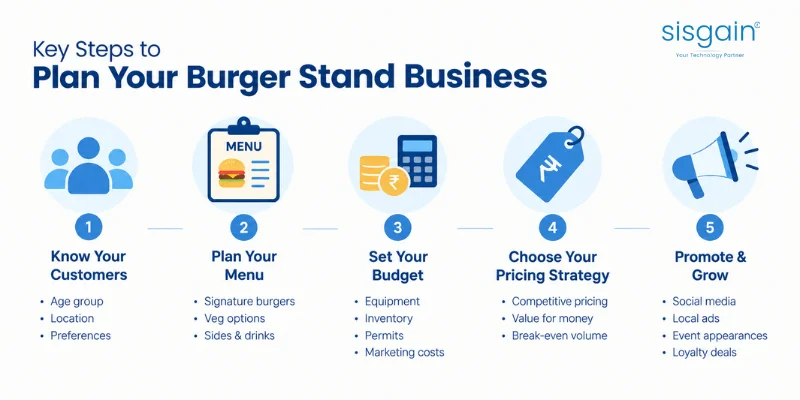
Write a clear business plan that covers key questions: Who are your customers? What menu items will you offer? What is your initial budget and pricing strategy? and How will you promote the stand?. Outline your target audience (e.g. lunch crowds, families, college students) and draft sample menus. Include an investment breakdown (equipment, inventory, permits, marketing costs) and sales projections. Planning is critical: as one source puts it, a business plan is “a roadmap to future success”. Your plan should detail marketing tactics (social media, local ads, event appearances) and how you’ll measure profitability. Bullet points can help organize it, for example:
-
Target customers: (age, location, preferences)
-
Menu ideas: (classic cheeseburgers, veggie options, sides)
-
Startup budget: (grill, cart or truck, kitchen tools, initial inventory)
-
Pricing & profit goals: (estimate break-even volume)
-
Marketing plan: (social posts, loyalty deals, event catering)
Incorporate technology into your plan, too. For example, consider a [food truck ordering system] or POS app to easily track sales and inventory. A solid plan will help you anticipate challenges and convince any partners or lenders that you’ve done your homework.
Step 3: Budgeting and Investment
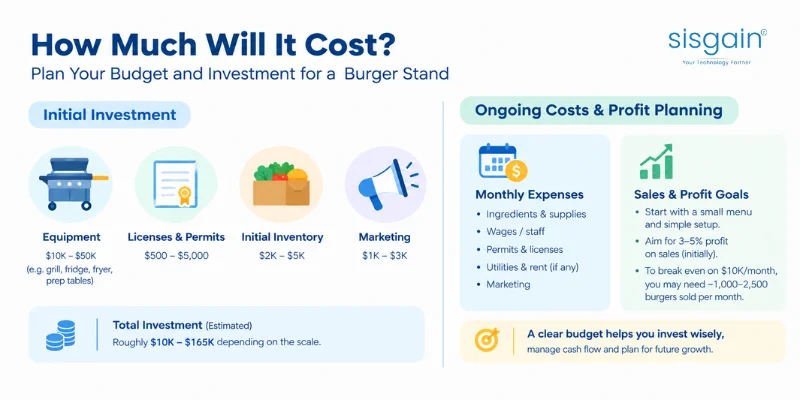
Figure out how much cash you need to get rolling, and scale options. Even a small burger cart requires equipment, initial ingredients, licenses, and some marketing. Equipment can be a big cost: one analysis found that a U.S. mobile food business might spend about $10K–$50K on kitchen equipment like grills, refrigerators, fryers and prep tables You’ll also need to budget for licenses and permits ($500–5,000) and initial inventory ($2K–5K). Below are typical budget scenarios:
-
Low-budget: Use minimal gear (single grill, small cooler) and limited menu. You might start for a few thousand dollars, especially if you rent or buy second-hand equipment.
-
Mid-range budget: A well-equipped cart or small truck with fryer, grill, and better refrigeration ($20K–$50K total).
-
High-budget: If you finance a full food truck or kiosk, expect tens of thousands up front. In one estimate, a U.S. owned food truck startup ran $41.5K–$165K in total initial costs.
Set aside cash flow for supplies and marketing, too. Burger stand revenues can grow, but margins may start small (only 3–5% profit on sales initially). Plan how many meals you’ll need to sell to break even (for example, covering $10K monthly costs might require on the order of 1,000–2,500 burgers sold each month). In short, list all your one-time costs (equipment, renovation, initial stock) and monthly expenses (ingredients, wages, permits). Adjust quantities or menu items to fit your capital. A clear budget ensures you know exactly how much to invest and when you might become profitable.
Step 4: Legal Requirements & Licenses
Complying with regulations is non-negotiable. You’ll typically need a business license (to legally operate), a food service permit/health department license (since you’re selling prepared food), and a food handler or safety certification for your staff. Some locales also require a street vendor or mobile food permit specific to carts and trucks. For example, mobile food vendors often register the vehicle or cart and pass a health inspectionr. These legal steps protect your customers and avoid fines. Also, handling ingredients safely and visibly (e.g. sealed meat, sanitized surfaces) builds trust and meets health code standards. In summary, budget time and money for permits and training, and keep all certificates (and inspection passes) posted as required.
Step 5: Burger Stand Equipment Essentials
Your burger stand will need grills and cold storage as the basics. Must-have items include a flat-top grill or griddle, fryer (for fries), a refrigerator/freezer, and sturdy prep counters or tables. You’ll also need utensils (spatulas, tongs), pans, cutting boards, serving trays, and heat lamps. A sneeze guard or overhead canopy can be important for outdoor hygiene. Don’t forget Point-of-Sale tools: a cash box or cash register, and ideally a digital POS device for quicker checkout. Keep everything clean – dirty or rusty equipment can cause foodborne illness and hurt your reputation.
For example, modern restaurant POS system software can turn a tablet or phone into a cash register that automatically tracks sales and inventory, generating reports for you. Investing in a POS or cloud based restaurant management software not only speeds up transactions but also links directly to inventory levels and sales data. This way, when a burger sells, the system deducts ingredients from stock automatically. The goal is to make daily operations smooth. In short, besides grills and fryers, equip your stand with reliable refrigeration, a simple POS setup, and a clean work area to ensure quality and safety.
Step 6: Choosing Ingredients & Crafting the Menu
Focus on fresh, quality ingredients and a simple menu at first. Core burger components are ground beef or other patties (chicken, plant-based), buns, cheese, lettuce, tomato, onion, pickles, and sauces (ketchup, mayo, mustard). You can also offer sides like fries, chips, or coleslaw and a few drink options. Keep recipes consistent to control costs and portion sizes. For example, pre-portion meat into patties and use the same amount of toppings per burger. By standardizing your ingredients (e.g. 1 patty, 2 slices of cheese, 3 pickles per burger), you simplify inventory management and pricing.
An easy way to manage costs is with software. A pos for small business can track exactly how much of each ingredient you use and how many of each burger sells. This data highlights your best-sellers and identifies waste. Remember to consider seasonal and specialty items (like a BBQ burger in summer or a spicy chili burger in winter) to attract repeat customers. Overall, a focused menu with reliable ingredients – tracked and priced carefully – will let your stand run efficiently.
Step 7: Staffing & Operations
Plan a lean team. A small burger stand often needs just one cook (you can be the cook) and 1–2 helpers for serving and prep. At the very least, have someone man the grill while another takes orders and handles fries. Roles should be clear: one person cooks patties and assembles burgers; another takes cash or cards, bags orders, and calls out completed orders. If you plan to deliver or use a pick-up service, you’ll need a delivery driver or partner with a delivery app.
Train everyone on a simple workflow. For example: cook on one side of the stand, plate and bag orders on another, and have a separate window for payment. Use tech to reduce staff needs – for example, a modern POS can let customers pay by card or tap and send orders directly to the kitchen screen. Features like QR-code ordering or a kitchen display system (KDS) can streamline operations and even reduce the number of people you need. In short, hire only as many people as needed for peak times (maybe part-timers for weekends) and make sure everyone knows their role. This keeps labor costs low and the operation smooth.
Step 8: Marketing, Branding & Social Media
Build a recognizable brand. Design a memorable logo, stand signage and color scheme that customers can spot at a glance. For example, a fun name or theme (like “The Burger Barn”) and a clear menu board will make your stand inviting. Then, promote that brand: create social media pages on Instagram and Facebook where you post location updates, daily specials, and appetizing burger photos. Modern diners love following food stands on social media. Host grand opening specials or loyalty deals (e.g. buy 5 burgers get 1 free) to encourage repeat business.
Leverage local events and word-of-mouth. If you park at an event or in a busy lot, put up flyers or signs in advance and partner with nearby businesses (office parks, theaters) for cross-promotion. You could even highlight any tech integration – for example, offering online ordering or a mobile-friendly menu via a food truck ordering system can attract on-the-go customers. Lastly, encourage happy customers to leave reviews on Google or Yelp. Overall, consistent branding and a bit of digital marketing will help a small burger stand stand out in a crowded market.
Step 9: Using Technology for Efficiency
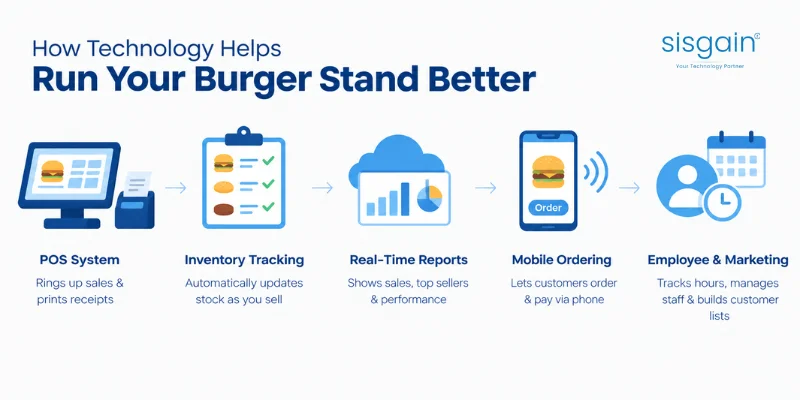
Take advantage of modern restaurant tech to boost efficiency. A key tool is a POS system – even a tablet-based one – to ring up sales and print receipts. Many POS systems include built-in inventory tracking (deducting buns and patties as you sell) and reporting. For example, you might use a cloud-based restaurant management system that links sales to stock levels, so you know when to reorder meat or buns. Mobile ordering and payment apps can let customers order and pay via smartphone, reducing lines at peak times.
For inventory and sales analysis, cloud platforms are handy: they give real-time sales dashboards and show which burgers are top sellers. They can also help with employee management (tracking hours) and even marketing (customer email lists). In short, a restaurant pos system software or cloud based restaurant management software can handle billing, orders and inventory in one place. With this tech, you track sales, performance and customer preferences effortlessly. This frees you to focus on cooking great burgers, knowing the back-end is automated.
Step 10: Maintaining Health & Safety Standards
Safety first: keep your stand and food immaculate. Wipe down counters, grills and utensils frequently, and sanitize anything that contacts food. As one source warns, unclean equipment can lead to food poisoning, and customers notice hygiene immediately. Store raw meat below cooked or ready-to-eat items to avoid cross-contamination, and keep hot foods hot (above 140°F) and cold foods cold (below 40°F). Train your staff in proper handwashing and glove use, and ensure everyone has up-to-date food safety certificates.
Stay on top of health regulations. Maintain temperature logs and cleaning schedules, and comply with local inspection requirements. Display your health permit or grade as required – it reassures customers. In short, rigorous cleanliness and adherence to health codes protect your customers and your business. Failing to comply could mean fines or even shutdown. By demonstrating high food safety standards and caring for every detail of hygiene, you build trust and avoid costly penalties.
Step 11: Tips for Making Burgers More Exciting
Finally, make your burgers unforgettable. Offer unique twists and signature sauces to stand out. For example, you might feature a special “smoky BBQ sauce” or a “garlic herb mayo” that customers can’t get elsewhere. Seasonal or limited-time burgers (like a pumpkin-spice burger in fall, or a jalapeño mango burger in summer) create buzz. Hire or consult with someone experienced if possible – as one guide suggests, even following creative recipes from well-known chains can spark ideas.
Focus on quality and consistency. A juicy patty with fresh toppings is already appealing. Emphasize house-made or high-quality ingredients (like local cheese or bakery buns) in your marketing. Consider offering burger customization (extra toppings or spice levels) to engage customers. The goal is mouth-watering presentation and flavor. By combining a creative recipe with friendly service, your burgers will get customers talking and returning for more.
Conclusion & Final Thoughts
Starting a burger stand requires planning, creativity and hard work, but it’s an achievable goal with huge appetite potential. By following a solid business plan, securing proper permits, and choosing quality equipment and ingredients, you lay a strong foundation. Don’t overlook technology: modern POS and management systems can automate billing, inventory and customer orders, letting you run a tighter operation. Above all, focus on tasty burgers and great service. A juicy, well-crafted burger and friendly stall atmosphere will turn first-time customers into regulars. With careful planning, smart tools, and an emphasis on quality, your burger stand can sizzle with success. Good luck, and happy grilling!