

Key Takeaways
- Understanding what drives Healthcare App Development Cost in Dubai and how investment decisions affect long-term business performance
- Which healthcare app features generate the highest business value and patient satisfaction
- Where healthcare providers should prioritize their development budget for maximum return
- Compliance, security, and regulatory requirements that affect project costs in the UAE
- How AI, telemedicine, RPM, and EMR integrations influence development investment decisions
- Common mistakes businesses make when budgeting healthcare technology projects in Dubai
- Why selecting an experienced development partner impacts long-term ROI and revenue generation
Introduction
The United Arab Emirates is experiencing one of the most remarkable healthcare digitization journeys in the world. Dubai, sitting at the center of this transformation, has positioned itself as a global hub for health technology innovation, backed by visionary government policy, a sophisticated private healthcare sector, and a patient population that is among the most digitally connected on the planet. Across the emirate, hospitals, clinics, diagnostic centers, insurance providers, pharmacies, and wellness startups are investing in mobile and web-based healthcare applications at a pace that would have seemed extraordinary just five years ago.
But digital transformation in healthcare is not simply a matter of building an application and launching it. It is a complex, high-stakes investment that touches clinical safety, patient privacy, regulatory compliance, and long-term business competitiveness simultaneously. Unlike a retail app or a food delivery platform, a healthcare application carries responsibilities that extend far beyond user experience and interface design. The data it handles is among the most sensitive in existence. The decisions it supports can have direct consequences for patient health. The regulatory environment in which it operates is detailed, evolving, and enforced.
This is why the question of where to invest a healthcare app development budget is so consequential — and why so many organizations in Dubai get it wrong. Some spend heavily on front-end aesthetics while neglecting the security architecture that keeps patient data safe. Others build feature-rich platforms that cannot integrate with existing clinical systems, making them practically unusable for the clinical staff they were designed to serve. Still others underestimate compliance costs entirely, only to discover late in development that their application requires a fundamental redesign to meet Dubai Health Authority standards.
This comprehensive guide exists to help healthcare organizations, digital health entrepreneurs, hospital administrators, and technology decision-makers in Dubai make smarter, more strategic investment decisions. It breaks down the real factors that drive healthcare app development costs, identifies which investments generate the strongest long-term returns, explains the compliance and security landscape that must inform every architectural decision, and offers practical guidance on how to build a budget strategy that creates sustainable value. Whether you are planning a patient-facing mobile application, a clinical workflow platform, an AI-powered diagnostic tool, or a full-scale hospital management system, the principles in this guide will help you invest more intelligently and build more successfully.
Healthcare App Development Cost in Dubai: A Quick Answer
Before diving into the details, it is worth addressing the question that most decision-makers ask first: how much does it cost to develop a healthcare app in Dubai?
The honest answer is that the healthcare app development cost in Dubai cannot be reduced to a single number without understanding the specific requirements of the project. Development cost is a function of multiple interconnected variables — and understanding those variables is the first step toward building a realistic budget.
At the most fundamental level, application complexity is the primary driver of cost. A straightforward patient registration and appointment booking app with basic notification functionality represents a very different investment compared to a comprehensive platform that supports multi-specialty telemedicine, integrates with multiple EMR systems, processes real-time data from connected health devices, incorporates AI-powered clinical decision support, manages insurance billing workflows, and serves thousands of concurrent users. Both are legitimately called healthcare applications, but they occupy entirely different investment categories.
Beyond complexity, the healthcare industry introduces cost drivers that do not exist in most other sectors. Regulatory compliance requires specialized architecture and ongoing audit readiness. Security requirements demand investment in encryption, identity management, threat monitoring, and penetration testing that goes well beyond what consumer apps typically need. Integration with legacy clinical systems — EMRs, laboratory information systems, pharmacy platforms, insurance networks — adds technical complexity that frequently surprises organizations unfamiliar with healthcare IT environments.
When evaluating mobile app development cost Dubai 2026, businesses should think in terms of investment phases rather than one-time project costs. Initial development is just the beginning. Ongoing maintenance, security updates, compliance reviews, feature expansion, and infrastructure management represent a long-term financial commitment that must be factored into any responsible budget analysis. Organizations that plan for this reality from the start make far better investment decisions than those who treat development cost as a one-time expense.
If you are exploring how much does it cost to develop an app in the healthcare space specifically, the most accurate answer begins with a thorough requirements analysis conducted by a development partner with genuine healthcare expertise — one who understands not just the technology but the clinical, regulatory, and operational environment in which the application must operate.
Why Healthcare Organizations Are Increasing Technology Investments
Understanding why the investment is happening at this scale and pace helps clarify where the genuine opportunities lie and why the strategic calculus has shifted so decisively toward digital.
Digital Transformation in Healthcare
The UAE government's commitment to digital transformation across all sectors of the economy has been particularly forceful in healthcare. The Dubai Health Authority's digital health strategy, the national telemedicine framework, and the push toward integrated electronic health records across the emirate have created both regulatory mandates and commercial opportunities for healthcare organizations willing to invest in technology. Simultaneously, the broader smart city infrastructure being built across Dubai — including high-speed connectivity, cloud-ready government systems, and an increasingly sophisticated technology talent ecosystem — has made digital health development more practical and more commercially viable than ever before.
Healthcare organizations that aligned their technology investments with this policy direction early have gained access to government partnership opportunities, favorable regulatory treatment, and first-mover advantages in patient acquisition that late adopters are now struggling to replicate. The organizations investing most aggressively in healthcare technology today are not doing so purely out of enthusiasm for innovation. They are responding to a competitive environment that has fundamentally changed.
Growing Patient Expectations
Dubai's population is among the most digitally sophisticated in the world. A significant proportion of residents are expatriate professionals who have experienced high-quality digital health services in their home countries and carry those expectations into their interactions with healthcare providers in the UAE. Simultaneously, younger Emirati patients who have grown up as digital natives expect healthcare experiences that match the convenience and quality of the digital services they use every day — banking, retail, entertainment, travel.
These patients do not simply prefer digital services. They increasingly make provider selection decisions based on digital capability. A clinic that offers online appointment booking, teleconsultation, digital prescription management, and real-time test results access will attract and retain patients who would previously have had no practical alternative to whoever was geographically closest. The competitive implications for healthcare organizations are profound: digital capability has become a patient acquisition and retention tool, not merely an operational efficiency measure.
Operational Efficiency Requirements
Beyond the patient-facing benefits, digital healthcare platforms generate substantial internal operational value that directly affects the financial performance of healthcare organizations. Automated appointment scheduling systems reduce the administrative workload on front-desk staff. Digital prescription systems eliminate the inefficiencies and error risks of paper-based processes. Real-time capacity management dashboards allow clinical managers to allocate staff and resources more intelligently. Automated billing and insurance adjudication tools accelerate revenue collection and reduce the administrative cost per claim.
These operational benefits compound over time. A healthcare organization that invested in a well-designed clinical workflow platform three years ago has been capturing those efficiency gains every single day since launch. The cumulative value of those gains frequently exceeds the total development investment many times over — a reality that makes the ROI case for healthcare technology investment much stronger than a simple cost comparison might suggest.
Revenue Opportunities Through Digital Services
Perhaps the most compelling driver of healthcare technology investment is the set of revenue opportunities that digital platforms create and that traditional care delivery models simply cannot access. A clinic without telemedicine capabilities cannot serve patients outside its immediate geographic catchment area. A hospital without a remote patient monitoring program cannot generate recurring revenue from chronic disease management between in-person visits. A healthcare organization without a digital patient engagement platform cannot effectively sell corporate wellness contracts to the employers who are increasingly willing to pay for them.
Working with an experienced healthcare app development company unlocks these revenue channels in ways that transform the economics of digital investment. The most sophisticated healthcare organizations in Dubai are not asking whether to invest in technology — they have moved past that question entirely. They are asking which technology investments will generate the strongest returns and how to build the foundation that makes those returns sustainable. Partnering with a Healthcare Software Company that understands both the technology and the healthcare business model is the critical first step in answering those questions intelligently.
What Factors Influence Healthcare App Development Cost in Dubai?
A clear understanding of cost drivers is essential for building a realistic budget and avoiding the expensive surprises that derail so many healthcare technology projects.
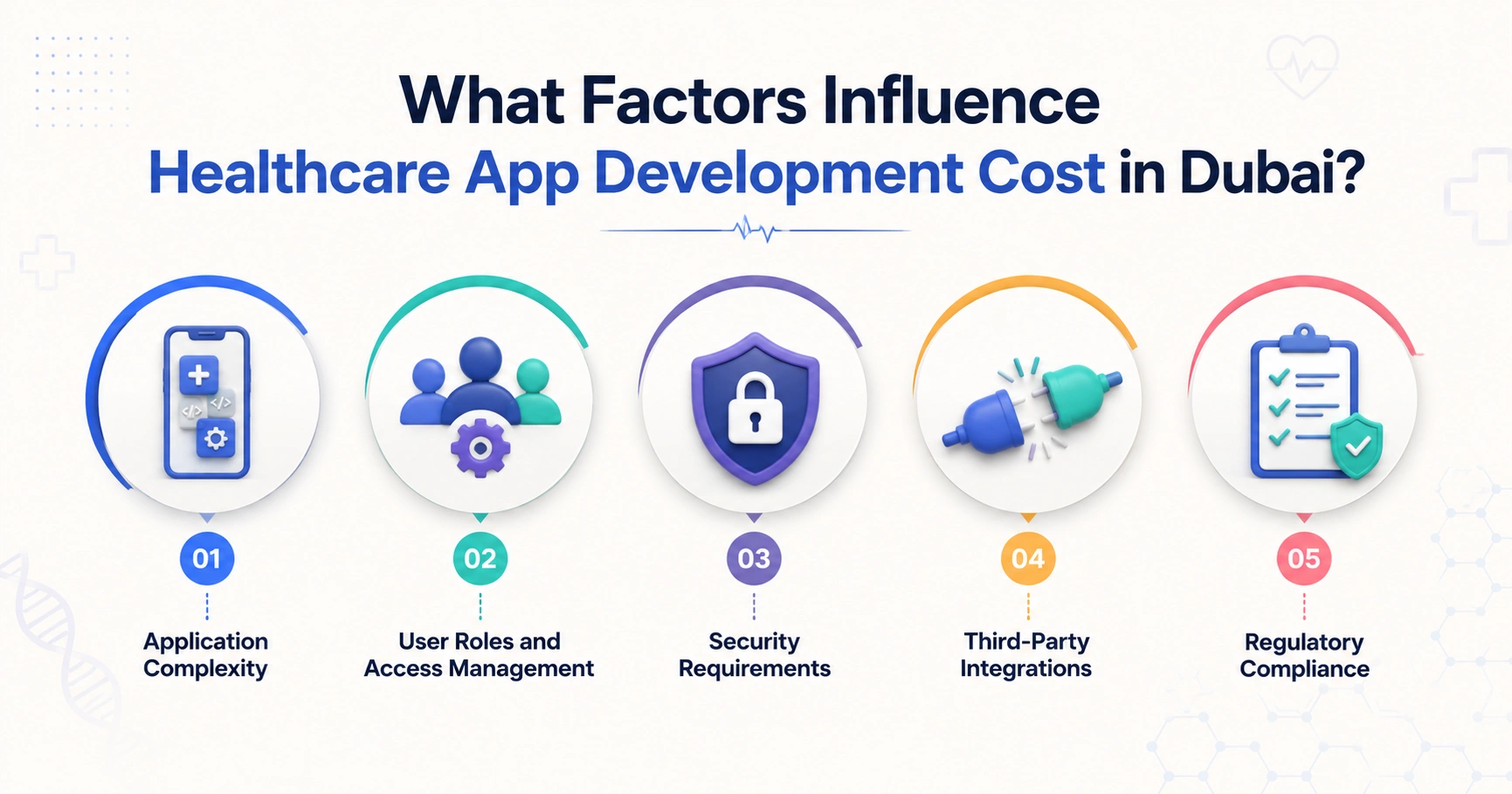
Application Complexity
The relationship between application complexity and development cost is direct and significant. Every feature the application needs to support — every user workflow, every data processing function, every integration touchpoint, every reporting capability — requires design time, development time, testing time, and ongoing maintenance investment. Simple applications with focused functionality cost less and launch faster. Comprehensive platforms with broad feature sets require more time, more specialized expertise, and more rigorous testing before they are ready to deploy safely in a clinical environment.
The complexity calculus is further complicated by the multi-platform requirements that most healthcare applications face. Patients expect to access services through iOS and Android mobile apps. Clinical staff may primarily work on desktop browsers. Administrative users need robust web-based interfaces. Building and maintaining a consistent, high-quality experience across all these platforms simultaneously is a genuine engineering challenge that adds meaningfully to development cost and timeline.
User Roles and Access Management
Healthcare applications are distinguished from most other software categories by the complexity of their user populations. A typical healthcare platform serves patients, primary care physicians, specialists, nurses, pharmacists, laboratory technicians, administrative staff, billing coordinators, compliance officers, and potentially insurance company representatives — all simultaneously, all with different data access requirements, all with different workflow needs, and all with different levels of technical sophistication.
Building the role-based access control systems that govern these different user types correctly is both technically complex and clinically critical. Access control failures in healthcare applications are not merely embarrassing — they are potentially dangerous and almost certainly regulatory violations. Getting this architecture right requires careful design, thorough testing, and ongoing governance investment that must be reflected in the development budget.
Security Requirements
The security requirements for healthcare applications are genuinely demanding — more demanding than most other categories of business software. Healthcare data is among the most valuable on dark web marketplaces, which means healthcare applications are among the most frequently targeted by sophisticated attackers. Meeting the security standards required by the Dubai Health Authority and expected by international compliance frameworks requires investment across multiple dimensions: encryption at rest and in transit, multi-factor authentication, intrusion detection systems, vulnerability management programs, penetration testing, security monitoring, and incident response planning.
These security investments are not optional enhancements. They are baseline requirements for operating a healthcare application responsibly in the UAE. Organizations that attempt to reduce security costs during development consistently discover that the cost of remediation following a security incident — in regulatory penalties, legal liability, patient notification requirements, and reputational damage — is orders of magnitude greater than the security investment they avoided.
Cloud Infrastructure
Modern healthcare applications depend on cloud infrastructure that is scalable, resilient, geographically appropriate, and compliant with health data residency requirements. The cost of cloud infrastructure depends on the volume of data the application stores and processes, the performance requirements users expect, the redundancy needed to achieve required uptime levels, and the regulatory constraints on where health data can be stored and processed.
UAE health data regulations include requirements around data residency that must inform cloud architecture decisions. Not every cloud region and configuration is compliant with UAE health data requirements, and building on a non-compliant foundation creates regulatory exposure that can be expensive and disruptive to resolve. Infrastructure costs also continue indefinitely after launch and should be explicitly included in long-term budget planning rather than treated as a development-phase expense.
Third-Party Integrations
Healthcare applications rarely operate as standalone systems. They exist within complex ecosystems of clinical, administrative, and financial software that must exchange data seamlessly to support patient care and business operations. Integrating a new healthcare application with existing EMR systems, laboratory information systems, radiology platforms, pharmacy networks, insurance adjudication systems, government health registries, payment processors, and connected medical devices is technically demanding work.
Each integration requires not just initial development but ongoing maintenance as the systems on both ends of the connection evolve. Integration failures in healthcare environments have clinical consequences — missing lab results, inaccessible medication histories, payment processing errors — that create real patient safety and business continuity risks. Budgeting adequately for integration work, including appropriate testing and ongoing support, is essential for applications that need to function reliably within complex clinical environments.
Regulatory Compliance
Compliance with UAE health regulations, Dubai Health Authority requirements, and applicable international standards like HIPAA-equivalent frameworks is not an optional investment for healthcare applications. It is a legal and ethical requirement that shapes the architecture, the processes, and the ongoing operations of any legitimate healthcare digital platform.
Compliance costs are frequently underestimated by organizations that have not previously built regulated healthcare software. Meeting compliance requirements means more than checking boxes on a requirements document. It means building audit logging systems, implementing consent management workflows, designing data minimization controls, maintaining documentation that demonstrates compliance, conducting regular compliance reviews, and training staff on regulatory obligations. These requirements add real cost at every phase of the project — and the cost of non-compliance is invariably higher than the cost of getting it right from the beginning.
Which Healthcare App Features Deliver the Highest ROI?
Investment prioritization is one of the most consequential decisions in healthcare app development. Not every feature delivers equal value, and organizations that invest in the right capabilities first generate returns far sooner than those that spread their budget too thinly across too many functions.
Understanding the features of hospital mobile apps that generate the strongest ROI helps decision-makers allocate their budgets more effectively and build product roadmaps that create value in the right sequence.
Patient Registration
A well-designed digital registration system reduces administrative overhead, eliminates duplicate record creation, captures structured data that feeds downstream clinical and billing workflows, and creates a first impression that significantly influences long-term patient satisfaction and retention. The investment in a properly designed registration system pays dividends across every subsequent patient interaction — which, over the lifetime of a patient relationship, represents substantial cumulative value.
Poorly designed registration systems, conversely, create friction that drives patients away before they have even experienced the care itself. Organizations that underinvest in this seemingly simple capability frequently discover that their most sophisticated clinical features are being abandoned before patients even reach them.
Appointment Scheduling
Online appointment scheduling consistently ranks as the feature with the strongest and most immediate ROI in patient-facing healthcare applications. The operational impact alone — reduced front-desk call volume, lower administrative cost per booking, higher appointment density through optimized slot management — frequently generates savings that justify the development investment within the first year of operation.
Beyond operational savings, the patient experience benefits are significant. Automated reminders reduce no-show rates, which is one of the most expensive operational problems for healthcare providers of all sizes. The ability to book appointments at any time without waiting on hold is a differentiating capability that directly affects patient acquisition and retention in competitive markets.
Telemedicine
Teleconsultation has moved from a pandemic-era necessity to a permanent feature of the healthcare landscape in Dubai and across the UAE. Patient adoption has remained strong even as in-person care has fully resumed, driven by the genuine convenience advantages that virtual consultation offers for routine follow-ups, minor complaints, prescription management, and specialist access.
For healthcare providers, telemedicine expands the addressable patient population beyond geographic boundaries, enables revenue generation outside traditional clinic hours, and creates a higher-margin care delivery model for appropriate visit types. The investment in building a robust, clinically integrated teleconsultation platform is among the most commercially defensible in the healthcare technology portfolio.
E-Prescriptions
Digital prescription systems reduce medication errors, improve prescription tracking and auditability, enable direct pharmacy integration, and create a cleaner compliance record for regulatory purposes. They are increasingly expected as a baseline capability by both patients and regulators, and the operational benefits they generate — in reduced administrative burden, faster prescription processing, and lower error rates — create real and measurable value.
Health Monitoring
For applications targeting chronic disease management, preventive wellness, or post-acute care, health monitoring capabilities create the continuous care relationships that drive both clinical outcomes and commercial performance. Patients who actively monitor their health within a provider's digital ecosystem generate higher engagement, stronger retention, and more billable care interactions than those who only appear for scheduled appointments.
Integrating health monitoring with connected devices amplifies these benefits significantly. An rpm software development company with healthcare domain expertise can help organizations build monitoring programs that capture meaningful clinical data, generate appropriate alerts, and support the care team workflows needed to act on that data effectively.
Secure Messaging
HIPAA-equivalent secure messaging between patients and care teams reduces unnecessary in-person visits, improves care continuity between appointments, increases patient satisfaction scores, and generates data that supports quality improvement and population health management programs. For clinical staff, secure messaging tools reduce the inefficiency of phone tag and paper message systems while maintaining the documentation trail that compliance requirements demand.
Payment Integration
Frictionless payment processing — including real-time insurance eligibility verification, co-pay collection at the point of service, and flexible payment plan options for larger balances — directly impacts revenue collection rates and the cost of revenue cycle management. Healthcare organizations with mature digital payment capabilities consistently outperform those relying on traditional billing processes on both collection rate and days in accounts receivable, two metrics that directly affect cash flow and financial performance.
Budget Allocation Strategy for Healthcare Applications
A thoughtful budget allocation strategy distributes investment across the full lifecycle of the application rather than concentrating resources in initial feature development at the expense of infrastructure, compliance, and long-term sustainability.
Frontend Development
Frontend development encompasses everything the user sees and interacts with: the patient-facing mobile application, the clinician-facing clinical workflow interface, the administrative dashboards, and the reporting tools that support management decision-making. Quality frontend development in healthcare requires genuine expertise in user experience design, accessibility standards, clinical workflow understanding, and the performance optimization needed to keep applications responsive under real-world conditions.
Cutting corners on frontend development has immediate consequences for adoption. Healthcare applications with poor user experiences are abandoned by patients who have alternatives and resented by clinical staff who have no choice but to use them. Both outcomes destroy the commercial value the application was built to create.
Backend Development
Backend development is where the most consequential — and most expensive — engineering work occurs. The backend handles data storage and retrieval, business logic processing, API management, integration orchestration, security enforcement, and the performance optimization needed to keep the application functioning correctly under load.
Healthcare backends carry additional complexity relative to most other application categories. They must handle highly sensitive data with appropriate encryption and access controls. They must maintain audit logs that satisfy regulatory requirements. They must integrate with external clinical systems that follow complex, often poorly documented standards. They must be designed for the kind of reliability that clinical environments demand — downtime in a healthcare application is not merely inconvenient; it can affect patient safety and care continuity.
Cloud Infrastructure
Cloud infrastructure investment covers hosting environments, database systems, content delivery networks, backup and disaster recovery systems, and the monitoring and alerting tools that ensure the operations team can detect and respond to problems before they affect users. In a healthcare context, infrastructure must be configured to meet data residency requirements, support the access patterns of clinical workflows, and provide the uptime guarantees that critical systems demand.
Compliance and Security
Compliance and security investment should be treated as a first-class budget category rather than an afterthought. This investment covers security architecture design, penetration testing, compliance framework implementation, audit logging systems, consent management workflows, encryption key management, access control governance, and the ongoing security monitoring that keeps the application protected after launch.
Organizations that try to minimize compliance and security costs during development consistently spend more on remediation, regulatory responses, and incident recovery than they would have spent building things correctly from the start.
Integrations
Integration investment covers the technical work of connecting the application to the external systems it must communicate with — EMRs, pharmacy platforms, insurance networks, laboratory systems, payment processors, connected devices, and government health registries. This work is frequently more complex and time-consuming than initial estimates suggest, particularly when integrating with legacy systems that have limited, poorly documented APIs. Budget accordingly and build time contingencies for integration projects that involve systems outside your direct control.
Maintenance and Updates
Ongoing maintenance is a recurring investment that begins at launch and continues for as long as the application is in operation. It covers security patches, operating system compatibility updates, regulatory compliance updates as requirements evolve, bug fixes, performance optimization, and the feature enhancements needed to keep the application competitive. Organizations that plan for maintenance investment from the beginning avoid the technical deterioration that eventually forces a much more expensive platform rebuild.
User Experience Optimization
Ongoing user experience research, usability testing, and design iteration is an investment category that most healthcare organizations undervalue. The adoption rates, retention metrics, and clinical outcomes that healthcare applications generate are directly related to how well the experience has been optimized for the real needs of real users in real clinical environments. This optimization work does not end at launch — it is an ongoing process that continues as user needs evolve, as the application grows, and as new capabilities are added.
Compliance and Regulatory Requirements That Affect Development Costs
The regulatory environment for digital health in Dubai is sophisticated, evolving, and enforced. Understanding the specific requirements that apply to a healthcare application is essential groundwork that must inform architecture decisions from the earliest stages of development.
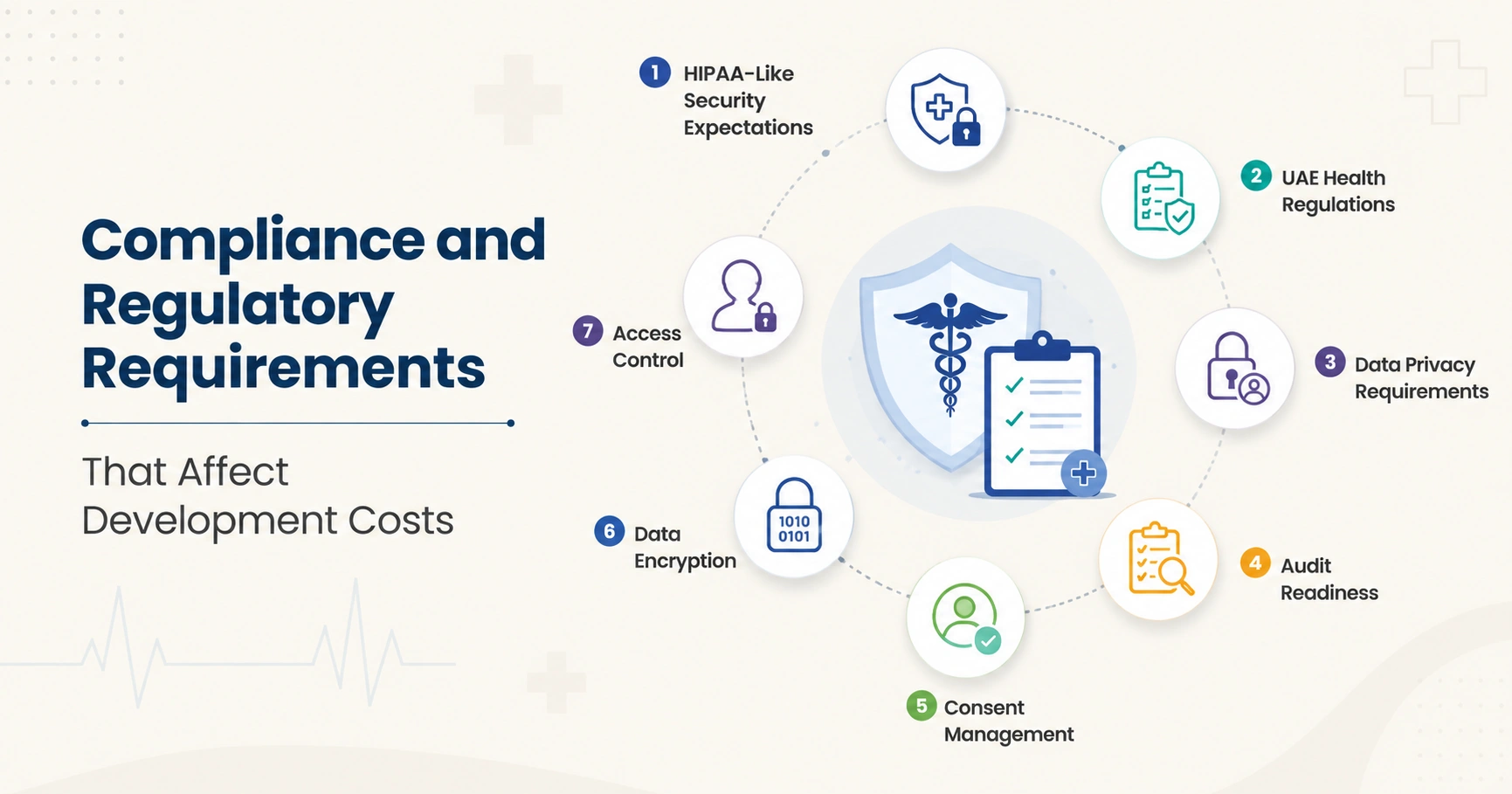
HIPAA-Like Security Expectations
Although HIPAA is a United States regulation, its core principles — data minimization, access control, audit logging, breach notification, and business associate accountability — have become global reference standards for healthcare data security. Many healthcare organizations operating in Dubai apply HIPAA-equivalent standards as a baseline expectation, particularly when serving international patients or operating as part of global healthcare networks. Development teams unfamiliar with these standards frequently underestimate the architectural implications.
UAE Health Regulations
The Dubai Health Authority and the Abu Dhabi Department of Health maintain specific, detailed requirements for digital health services operating within their jurisdictions. These requirements cover teleconsultation platforms, electronic health record systems, health data storage standards, clinical software certification, and the operational processes that healthcare organizations must follow when delivering care through digital channels. Compliance with these frameworks is not optional — it is a condition of legal operation.
Data Privacy Requirements
The UAE Personal Data Protection Law and emirate-specific health data regulations govern how patient information is collected, stored, processed, shared, and retained. Applications must implement privacy by design principles, including data minimization — collecting only what is genuinely necessary — purpose limitation, transparent data practices, and robust user consent management systems that allow patients to control how their information is used.
Audit Readiness
Healthcare applications must maintain detailed, tamper-evident logs of all data access and system activities. These audit trails must capture who accessed which data, when they accessed it, what actions they took, and from which location or device. Building the audit infrastructure needed to generate and maintain these records correctly — and to produce compliance reports during regulatory review — is non-trivial engineering work that must be planned and budgeted from the beginning.
Consent Management
Patient consent for data collection, processing, and sharing must be obtained through legally valid processes, recorded in ways that can be produced as evidence during regulatory review, and honored consistently across every system function. Building consent management systems that meet these requirements — and that allow patients to modify or withdraw consent over time — requires both technical implementation and careful process design.
Data Encryption
All sensitive health data must be encrypted using current, validated standards both during transmission and at rest in storage systems. Encryption key management — ensuring that keys are properly generated, stored, rotated, and revoked — is a specialized discipline that healthcare organizations without deep security expertise frequently underestimate. Getting this wrong creates vulnerabilities that can be exploited or that create compliance failures during regulatory audits.
Access Control
Granular, role-based access control systems that restrict each user to the data and functions appropriate to their specific role are both a regulatory requirement and a clinical safety control. These systems must be implemented correctly at the database level, enforced at the application layer, and audited regularly to ensure they continue to operate as intended as the application evolves and as user roles change.
Security Investment: Where Businesses Should Never Cut Costs
Security is the investment category where cost-reduction decisions most reliably destroy more value than they save. The consequences of a serious security failure in a healthcare application are severe and multidimensional — regulatory penalties, litigation, patient notification costs, reputational damage, and the operational disruption of responding to and recovering from a breach.
Identity Management
Robust identity management — including multi-factor authentication, single sign-on integration where appropriate, session management controls, and strong password requirements — is the first line of defense against unauthorized account access. Healthcare data breaches frequently begin with compromised credentials, making identity management investment one of the highest-ROI security measures available.
Encryption
End-to-end encryption for all patient communications and at-rest encryption for all stored health data protect the most sensitive information the application handles even in the event of infrastructure compromise. These systems must be implemented using current, validated cryptographic standards and audited regularly to ensure they remain effective as standards evolve.
Threat Monitoring
Continuous monitoring for unusual access patterns, attempted intrusions, data exfiltration indicators, and system anomalies allows security teams to detect and respond to threats before they develop into breaches. Security information and event management tools, combined with appropriately staffed security operations capabilities, represent an ongoing investment that pays for itself in prevented incidents.
Penetration Testing
Regular penetration testing by qualified security professionals who understand healthcare application architectures and attack vectors identifies exploitable vulnerabilities before malicious actors do. This testing should be conducted before initial launch and repeated at regular intervals thereafter, with particular attention following significant feature additions, infrastructure changes, or integration implementations.
Disaster Recovery
Healthcare applications must remain available and data must be recoverable even in the event of infrastructure failures, ransomware attacks, or natural disasters. Building, documenting, and regularly testing disaster recovery plans — including the recovery time and recovery point objectives that clinical operations require — is both a regulatory expectation and a clinical necessity.
Incident Response
A well-designed and regularly practiced incident response plan ensures that when a security event occurs, the organization can respond quickly, limit the scope of damage, meet regulatory notification obligations within required timeframes, and restore normal operations with minimal disruption. Organizations that invest in incident response planning before they need it consistently recover from security events faster and with less damage than those that are developing their response plans in the middle of a crisis.
AI-Powered Healthcare Applications: Are They Worth the Investment?
Artificial intelligence has moved from a speculative technology to a practical operational tool in healthcare organizations around the world, including leading healthcare providers in Dubai. The question for most organizations is no longer whether AI has a place in healthcare — it clearly does — but which AI investments deliver genuine value and how to implement them responsibly.
Understanding the cost of AI development in Dubai 2026 is important context for organizations evaluating AI healthcare solutions Dubai 2026. AI development costs vary based on the complexity of the models being built, the quality and volume of training data available, the integration requirements with existing clinical systems, and the validation and governance processes needed to deploy AI safely in clinical environments.
Predictive Analytics
AI models trained on longitudinal patient data can identify individuals at elevated risk of clinical deterioration, hospital readmission, or chronic disease progression before symptoms become clinically obvious. For healthcare organizations, this predictive capability translates directly into better outcomes through earlier intervention, lower care costs through reduced emergency utilization, and stronger patient retention through more proactive care management. The commercial case for predictive analytics investment is strongest in organizations with large patient populations and rich longitudinal data.
Virtual Health Assistants
AI-powered conversational interfaces — intelligent chatbot development cost 2026 being a key consideration for many organizations — can handle appointment scheduling, medication reminders, symptom triage, insurance inquiry responses, and FAQ management around the clock without human intervention. Well-designed health assistants reduce administrative workload while improving patient access to information and support at the moments when patients need it most, including outside of traditional clinic hours.
The investment in a healthcare-specific virtual assistant is meaningfully different from a generic chatbot implementation. Healthcare assistants must handle sensitive topics with appropriate clinical judgment, escalate appropriately when symptoms suggest urgency, maintain privacy compliance in every interaction, and integrate with clinical systems to access and update relevant patient information. These requirements add both development complexity and ongoing maintenance investment, but they also distinguish a genuinely useful clinical tool from a superficial marketing feature.
Patient Engagement Automation
AI systems that personalize patient communications based on individual health history, behavioral patterns, and engagement preferences can drive measurable improvements in appointment adherence, medication compliance, preventive care utilization, and chronic disease management participation. These improvements generate both clinical and commercial value: healthier patients require less acute intervention, and engaged patients generate more consistent revenue and stronger referral behavior.
AI in hospital management extends this engagement automation capability to the operational level, allowing healthcare organizations to optimize scheduling, predict no-shows, manage capacity more effectively, and allocate clinical resources more intelligently. The ROI on these operational AI applications is often more immediately measurable than clinical AI applications, making them a practical starting point for organizations that are new to AI investment.
Clinical Decision Support
AI tools that surface relevant clinical evidence, flag potential drug interactions, highlight anomalies in laboratory results, or identify patterns in patient data that warrant clinical attention support clinicians in making faster and more informed decisions. These systems are most valuable when they are deeply integrated into clinical workflows — appearing at the right moment in the care process with information that is genuinely useful rather than requiring clinicians to seek them out separately.
Among the top artificial intelligence apps being deployed in healthcare globally, clinical decision support tools have demonstrated some of the strongest evidence for improving patient outcomes and reducing clinical errors. Organizations that invest in these capabilities as part of a broader clinical AI strategy are building a foundation that will grow in value as the underlying models improve and as clinical staff develop experience using AI-generated insights.
Medical Data Analysis
AI-driven analysis of medical imaging, pathology data, genomic information, and longitudinal health records can identify patterns and anomalies that would be difficult or impossible for human reviewers to detect consistently at scale. While the most sophisticated medical AI applications require significant investment in model development, validation, and clinical governance, they create genuine competitive differentiation and deliver clinical value that justifies that investment in organizations with appropriate patient volumes and data infrastructure.

Telemedicine and Remote Patient Monitoring Investments
Telemedicine and remote patient monitoring represent two of the highest-growth, highest-return areas in healthcare technology investment in the UAE and globally. Organizations that have invested seriously in these capabilities are already generating meaningful competitive advantages in patient acquisition, care delivery efficiency, and revenue generation.
Teleconsultation Platforms
A robust teleconsultation platform is more than a video calling application with a healthcare brand applied to it. It is a clinical care delivery system that must support structured clinical workflows, integrate with patient records and prescribing systems, manage scheduling and payments, handle the technical requirements of high-quality video under variable network conditions, and maintain the security and compliance standards that apply to all protected health information.
Building this correctly requires genuine healthcare technology expertise — the kind that comes from having built and deployed teleconsultation platforms in regulated healthcare environments rather than from adapting general-purpose video communication tools. The investment in a properly designed platform pays for itself through the revenue it generates and the patients it retains.
Connected Devices
Remote patient monitoring programs depend on seamless data flow from connected medical devices — blood pressure monitors, glucose meters, pulse oximeters, cardiac monitors, smart scales, and wearable sensors — to clinical review platforms that allow care teams to monitor patient status, identify concerning trends, and intervene before problems escalate. Integrating this device ecosystem into a cohesive clinical platform requires expertise in medical device communication standards, data processing pipelines, and alert management systems.
Working with an rpm software development company that has genuine experience in remote patient monitoring system architecture ensures that device integration is built correctly from the start rather than assembled reactively as device compatibility issues arise. This expertise makes a measurable difference in the reliability, scalability, and clinical utility of the resulting platform.
Chronic Disease Monitoring
The business case for chronic disease remote monitoring investment is particularly strong in the UAE, where conditions like diabetes, hypertension, and cardiovascular disease represent a significant proportion of the patient population and a substantial share of total healthcare spending. Remote monitoring programs for these conditions generate recurring revenue through monitoring subscription fees or bundled care contracts, reduce expensive acute care utilization by enabling earlier intervention, and create the continuous care relationships that drive patient retention and satisfaction.
Revenue Expansion Opportunities
Telemedicine and remote patient monitoring unlock revenue streams that traditional healthcare delivery models cannot access. A hospital with a mature teleconsultation platform can serve patients across the UAE and beyond without expanding its physical footprint. A specialty clinic with a remote monitoring program can generate recurring revenue from patient relationships between in-person visits. A healthcare organization with both capabilities can compete effectively for corporate wellness contracts that require digital health service delivery as a core component.
EMR and HL7 Integration Costs Explained
Why Healthcare Data Integration Matters
The clinical value of a healthcare application is directly proportional to its ability to access and contribute to a complete, accurate picture of each patient's health history. An application that exists in isolation from the patient's medical record — unable to see previous diagnoses, current medications, allergy lists, or historical test results — forces clinicians to work with incomplete information, creates safety risks from information gaps, and frustrates clinical staff who must manually reconcile data between systems.
Data integration is not a technical luxury for well-funded organizations. It is a clinical necessity for any application intended to support real patient care, and it must be budgeted and planned accordingly.
EMR Connectivity
Connecting a new healthcare application to existing electronic medical record systems requires understanding both the technical standards those systems use for data exchange and the specific implementation details of the particular EMR being integrated. Most modern EMR systems support HL7 FHIR as a data exchange standard, but the depth and consistency of that support varies significantly across systems and versions. Working with an emr development company that has direct experience with the specific EMR systems in the target environment reduces integration risk and development time substantially.
EMR connectivity enables the bidirectional data flow that genuinely integrated care requires: patient-facing applications can display relevant clinical history to support patient understanding and self-management, while data generated in the patient-facing application — appointment records, teleconsultation notes, remote monitoring readings — can flow back into the EMR to maintain a complete clinical record.
Hospital System Interoperability
HL7 FHIR has emerged as the dominant standard for health data exchange, and organizations that build their integration architecture on this foundation gain significant flexibility as their system portfolio evolves. However, implementing HL7 FHIR correctly requires specialized expertise that is genuinely scarce. An hl7 software development company with proven healthcare integration experience can build interoperability infrastructure that performs reliably under real clinical workloads and that can be extended as integration requirements grow.
Poor HL7 implementation is one of the most common sources of hidden cost in healthcare technology projects. Integration failures that are not caught during testing create data quality problems — missing records, duplicate entries, incorrectly mapped clinical values — that are expensive to diagnose, difficult to remediate, and potentially dangerous from a clinical safety perspective. Getting this work right from the beginning is significantly less costly than cleaning up the consequences of getting it wrong.
Long-Term Operational Benefits
The operational benefits of well-executed data integration compound over time in ways that make the upfront investment increasingly valuable. Clinicians who can access complete patient histories during teleconsultations deliver safer and more effective care. Administrative staff who work in systems where data flows automatically between platforms without manual re-entry are significantly more productive. Analytics teams who can query integrated data sources generate insights that would be impossible to produce from siloed systems. Organizations that invest in integration infrastructure build capabilities that appreciate in value as their data accumulates and as they add new applications to their portfolio.
Common Healthcare App Development Challenges Dubai Businesses Face
Understanding the most common challenges that healthcare technology projects face in Dubai helps organizations plan more effectively, set more realistic expectations, and avoid the expensive mistakes that derail so many well-intentioned projects.
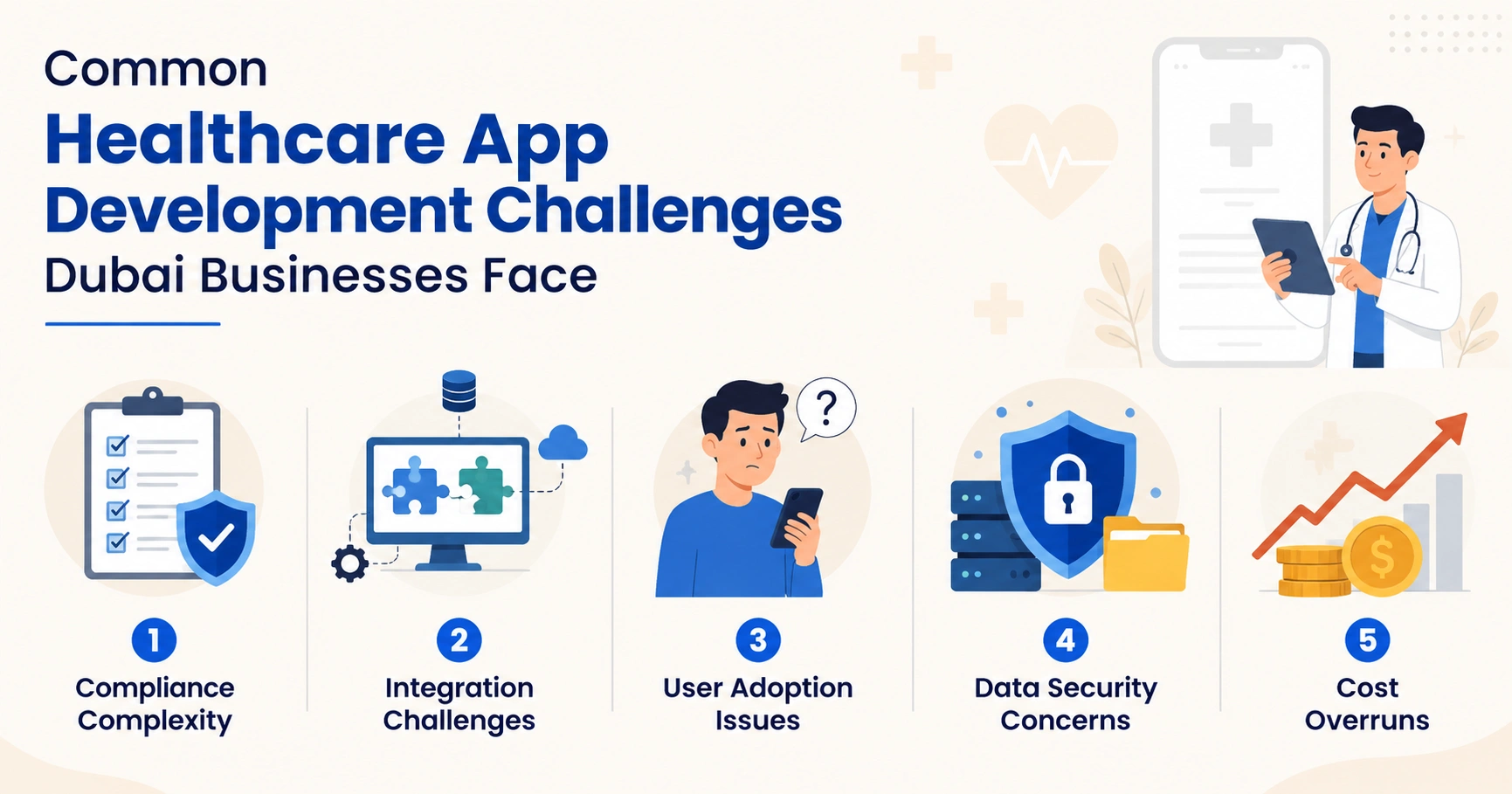
The healthcare app development challenges Dubai organizations face are both technical and organizational, and the most sophisticated projects encounter all of them simultaneously.
Compliance Complexity
Navigating the overlapping requirements of UAE health regulations, federal data protection law, emirate-specific health authority standards, and applicable international frameworks requires specialized regulatory expertise that most organizations do not have in-house. Organizations that treat compliance as a project phase to be completed rather than an ongoing architectural and operational commitment consistently encounter problems — whether in the form of regulatory rejection, required redesigns, or enforcement actions — that could have been avoided with proper planning.
The compliance landscape is also evolving continuously. Regulatory requirements that applied when a project began may have been updated by the time it launches. Organizations need development partners and compliance advisors who track these changes and proactively update their architectures and processes to remain current.
Integration Challenges
Healthcare IT environments in Dubai are highly heterogeneous. A typical hospital operates dozens of specialized clinical and administrative systems, many of which were built decades ago, some of which have limited or poorly documented integration capabilities, and few of which were designed with the kind of data exchange standards that modern integration work assumes. Building reliable integrations in this environment requires patience, expertise, and realistic expectations about timeline and cost.
Organizations that underestimate integration complexity — treating it as a technical detail rather than a core project workstream — consistently experience the most significant schedule overruns and budget overages in their development projects. Proper integration planning, including thorough discovery of existing system capabilities before development begins, is one of the highest-value investments a project can make.
User Adoption Issues
Even technically excellent healthcare applications fail to deliver their expected value when they are not adopted by the users they were designed to serve. Clinical staff who find an application difficult to use, poorly aligned with their actual workflows, or insufficiently integrated with their existing tools will find ways to work around it — reverting to manual processes, creating shadow systems, or simply refusing to use features that seem more burdensome than helpful.
Patient adoption is equally challenging. Healthcare applications compete for attention in an environment where patients are already managing multiple apps, skeptical of digital health promises, and concerned about the privacy of their health information. Applications that do not deliver a genuinely superior experience to the processes they replace will not achieve the engagement rates needed to justify their development investment.
Data Security Concerns
Healthcare organizations in Dubai face a sophisticated and persistent threat landscape. The value of healthcare data to malicious actors — for insurance fraud, identity theft, and blackmail — makes healthcare applications high-priority targets. The consequences of security failures in healthcare are also particularly severe, combining regulatory penalties, reputational damage, patient harm, and operational disruption in ways that compound the financial impact.
Security must be treated as a continuous operational discipline rather than a one-time development consideration. Organizations that staff security functions appropriately, conduct regular security assessments, and maintain active threat monitoring programs are meaningfully more resilient than those who treat security as a development-phase checkbox.
Cost Overruns
Healthcare technology projects are among the most complex software development initiatives in any industry, and they have a well-documented tendency to exceed initial budget estimates when scope, compliance requirements, or integration complexity is inadequately understood at the outset. The organizations that most reliably deliver projects within budget are those that invest seriously in requirements definition and architecture design before development begins, maintain realistic contingency reserves for the inevitable unexpected challenges, and work with development partners who have enough healthcare experience to anticipate the problems that typically arise.
How Healthcare Apps Generate Revenue
The commercial case for healthcare app development investment is strengthened significantly when organizations clearly understand the revenue channels that digital platforms create and manage their investment decisions accordingly.
Subscription Models allow healthcare organizations to generate predictable, recurring revenue from patients or corporate clients who pay a regular fee for access to digital health services — remote monitoring programs, wellness platforms, premium care tiers, or enhanced care coordination services. Subscription revenue is commercially valuable not just for its predictability but for the patient engagement and retention it drives.
Telehealth Fees generate direct per-consultation revenue that can be processed seamlessly through the digital platform, eliminating the friction and delay of traditional billing processes. Teleconsultation fees frequently carry higher margins than equivalent in-person consultations when the platform infrastructure is properly designed and the volume of consultations is sufficient to achieve operating leverage.
Appointment Booking Revenue represents both the direct revenue from services delivered through the platform and the indirect revenue from improved appointment adherence and reduced no-show rates. A reduction in no-show rates from industry-average levels to best-in-class levels can generate significant incremental revenue for high-volume practices.
Premium Services — expedited appointments, specialist second opinions, concierge care programs, advanced health monitoring packages — are commercial offerings that are difficult to scale through traditional care delivery models but that can be effectively managed and delivered through digital platforms. These services frequently command premium pricing from patient segments willing to pay for enhanced access and convenience.
Corporate Wellness Programs have become a significant and growing revenue category for healthcare organizations with digital health capabilities. Employers across the UAE are increasingly willing to contract directly with healthcare providers to deliver comprehensive digital health services to their employee populations — a market that was inaccessible to providers without digital platforms.
Data-Driven Operational Savings reduce costs in ways that directly improve operating margins even when they do not generate new revenue lines. Optimized scheduling, reduced administrative overhead, lower no-show rates, more efficient resource allocation, and automated billing processes all contribute to the financial performance of healthcare organizations with mature digital platforms.
Why Choosing the Right Development Partner Impacts Revenue Growth
The development partner an organization selects shapes not just the quality of the initial application but the long-term trajectory of the entire digital health investment. The difference between the right partner and the wrong one is measured not just in technical quality but in compliance outcomes, time to market, maintenance cost, and the organization's ability to adapt and grow its digital capabilities over time.
Industry Expertise
Development teams with genuine, deep healthcare experience understand clinical workflows, regulatory requirements, patient behavior, and the specific technical challenges of healthcare data integration in ways that generalist developers simply do not. This expertise manifests in better architecture decisions, more accurate cost and timeline estimates, fewer compliance surprises, and products that clinical staff and patients actually want to use. Healthcare software development is a specialized discipline, and the gap between specialist and generalist capability is meaningful and measurable.
Faster Time-to-Market
Experienced healthcare technology partners have already solved many of the standard challenges that healthcare development projects encounter — compliance framework implementation, common EMR integrations, security architecture patterns, clinical workflow design. Teams that are encountering these challenges for the first time must discover and solve them from scratch, which takes time that translates directly into delayed revenue generation and extended competitive disadvantage. Working with a telemedicine app development services with a strong track record in the UAE market significantly compresses time-to-market.
Lower Technical Debt
Healthcare applications built by teams without deep domain expertise frequently accumulate technical debt — architectural shortcuts, security gaps, integration compromises, and scalability limitations — that makes every subsequent update more expensive and every new integration more difficult. A Healthcare Software Company that builds on solid healthcare-specific architectural foundations produces systems that remain maintainable, extensible, and secure over the multi-year lifecycle that healthcare platforms require.
A development partner that has navigated UAE health regulations, Dubai Health Authority requirements, and international compliance standards on multiple previous projects
Better Compliance Management
provides guidance that is qualitatively different from a team encountering these requirements for the first time. This experience translates directly into fewer regulatory surprises, faster compliance review processes, and more defensible compliance documentation when regulatory scrutiny occurs.
Higher User Retention
Applications designed with genuine clinical and patient insight — developed through real engagement with clinical workflows, real testing with actual patient populations, and real-world performance optimization — achieve meaningfully higher adoption and retention rates than applications built without this investment. Higher retention rates directly drive the commercial returns that justify the development investment.
Improved Scalability
The architecture decisions made during initial development determine how easily and economically the application can grow as patient volume increases, as new features are added, as new markets are entered, and as new integrations are required. Partners with healthcare scaling experience design systems that accommodate growth without requiring expensive architectural rebuilds — a significant advantage as organizations' digital health ambitions expand.
Mistakes Businesses Make When Budgeting Healthcare Projects
Learning from the mistakes that healthcare technology projects most commonly make is one of the highest-value activities any organization planning a digital health investment can undertake.
Underestimating Compliance Costs
Compliance is the most frequently underestimated cost category in healthcare technology projects. Organizations that have not previously built regulated healthcare software routinely treat compliance as a phase to be completed rather than an ongoing architectural commitment. The result is applications that require expensive redesigns when compliance gaps are identified, regulatory delays that extend time-to-market by months, and ongoing compliance debt that accumulates interest in the form of regulatory risk and maintenance cost.
Building compliance requirements into the project from the earliest stages of architecture design — rather than treating them as a separate concern to be addressed later — is consistently the most cost-effective approach. The cost of compliance-by-design is a fraction of the cost of compliance-by-remediation.
Ignoring Security Requirements
Every decision to reduce security investment creates a corresponding increase in risk exposure that is rarely quantified honestly in budget discussions. Healthcare data breaches carry regulatory penalties that can be substantial, litigation exposure that can extend for years, patient notification costs that scale with breach size, and reputational damage that affects patient acquisition and staff recruitment for extended periods after the incident.
The organizations that have suffered the most damaging healthcare data breaches are not generally those that lacked sophisticated security knowledge — they are those that made deliberate decisions to defer security investments in favor of feature development or cost reduction. Those decisions reliably prove to be false economies.
Choosing Based on Lowest Price
The cheapest development option available rarely represents the most economical choice when the full lifecycle cost of the application is considered. Development teams that lack healthcare-specific expertise produce applications that require more expensive remediation, more extensive compliance rework, more frequent security patching, and more difficult maintenance than applications built by experienced healthcare technology specialists. The apparent savings at project inception frequently materialize as multiples of that amount in downstream costs.
Skipping Scalability Planning
Healthcare applications that are designed only for their launch-day user base require expensive architectural rework when patient volume grows, when new clinical programs are added, or when the organization's digital health ambitions expand beyond the original scope. Scalability planning at the outset costs a fraction of what reactive architectural remediation requires after the fact.
Delaying Maintenance Investments
Ongoing maintenance is a predictable, manageable cost that must be explicitly planned and budgeted from the beginning of a healthcare technology project. Organizations that fail to plan for maintenance consistently allow their applications to deteriorate — accumulating security vulnerabilities, falling behind on operating system and device compatibility, and drifting out of alignment with evolving regulatory requirements — until the accumulated technical debt forces a costly platform rebuild that a well-maintained application would never have required.
What Should Businesses Do Before Starting Development?
The quality of the decisions made before development begins determines the trajectory of the entire project. Organizations that invest seriously in pre-development planning consistently deliver better applications, on more predictable timelines, within more accurately estimated budgets.
Define Business Objectives
Clear, specific business objectives are the foundation of every good technology investment decision. What problems does the application need to solve? Which patient outcomes does it need to improve? Which operational inefficiencies does it need to address? Which revenue channels does it need to open? What does success look like twelve months after launch, and three years after launch? Organizations that cannot answer these questions clearly before development begins build applications that reflect their confusion and rarely achieve meaningful commercial outcomes.
Prioritize Core Features
Not every feature belongs in the first version of the application. The most commercially successful healthcare applications are typically those that do a focused set of things exceptionally well rather than trying to do everything adequately. A well-prioritized minimum viable product that genuinely solves a real problem for a specific user group is more valuable — and generates revenue sooner — than an overbuilt platform that tries to serve every possible use case and ends up serving none of them particularly well.
Priority decisions should be guided by the features that generate the strongest business value, the features that are most important to target users, and the features that create the technical foundation on which additional capabilities can be built reliably.
Assess Compliance Needs
Understanding which specific regulatory requirements apply to the application being built — and what those requirements mean in terms of architectural decisions, operational processes, and documentation obligations — is essential groundwork that must be completed before development begins. Compliance requirements discovered late in development are dramatically more expensive to address than those incorporated into initial architecture design.
This assessment should involve regulatory and legal expertise specific to UAE health law, not just generic compliance knowledge. The specific requirements of the Dubai Health Authority and the broader UAE regulatory framework have nuances that only practitioners with direct experience in this market can navigate reliably.
Select Technology Stack
Technology decisions — programming languages, application frameworks, cloud infrastructure providers, database systems, integration platforms — have long-term implications for security, performance, compliance, maintenance cost, and the cost of future feature development. These decisions should be made deliberately, informed by healthcare-specific requirements rather than general technology preferences, and validated by practitioners who have built healthcare applications at scale in similar regulatory environments.
Plan Long-Term Growth
The most commercially successful healthcare applications are designed with a multi-year product vision in mind. The architecture decisions made today should accommodate the features, integrations, user volumes, and market opportunities the organization expects to pursue over the next three to five years. Organizations that design only for their current requirements frequently find themselves rebuilding core infrastructure when their ambitions grow — an expensive and disruptive process that erodes the returns on the original investment.
Choose the Right Development Partner
The selection of a development partner is one of the most consequential decisions in the entire project. It should be made with the same rigor that any other strategic business decision receives. Evaluate potential partners on their specific healthcare technology experience, their demonstrated compliance knowledge, their security practices and certifications, their approach to long-term partnership and support, their track record of delivering complex healthcare projects successfully in the UAE market, and their ability to provide references from healthcare organizations whose experiences you can validate independently.

Conclusion
Healthcare technology investment in Dubai has moved from an optional enhancement to a strategic imperative. The organizations that will define the next decade of healthcare in the UAE are those that are making smart, well-informed investment decisions today — building digital platforms that are clinically sound, commercially viable, regulatory-compliant, and designed to grow as their ambitions and the healthcare environment around them evolve.
The principles that distinguish successful healthcare technology investments from unsuccessful ones are not secrets. Invest adequately in security and compliance from the beginning, not as afterthoughts. Prioritize the features that generate the strongest business value and patient outcomes. Build integration infrastructure that connects your application to the clinical data it needs to be genuinely useful. Choose development partners with deep healthcare expertise rather than the lowest price tag. Plan for the long-term lifecycle of the application, including maintenance, security, and feature evolution, rather than treating development cost as a one-time expense.
Organizations that invest in AI healthcare solutions Dubai 2026, telemedicine, remote patient monitoring, and intelligent clinical workflow tools are not chasing technology trends — they are building the capabilities that patients increasingly expect, that clinical staff genuinely need, and that the regulatory environment is actively encouraging. The question is not whether to invest in these capabilities, but how to invest in them wisely.
The healthcare organizations that will lead in this market are those that approach digital investment with both ambition and discipline — investing boldly in the capabilities that create genuine clinical and commercial value, while maintaining rigorous standards for security, compliance, and architectural quality that protect their patients, their staff, and their long-term business performance. Working with the right healthcare app development company and the right Healthcare Software Company partners makes the difference between a technology investment that transforms a healthcare business and one that merely consumes resources without delivering commensurate returns.
Build with purpose. Invest strategically. And build on foundations that will support the growth and ambitions you have not yet imagined.