17 Years of Software Expertise — 500+ Happy Clients | Across 25+ Industries.
EXPLORE NOW!
17 Years of Software Expertise — 500+ Happy Clients | Across 25+ Industries. EXPLORE NOW!17 Years of Software Expertise — 500+ Happy Clients | Across 25+ Industries.EXPLORE NOW!17 Years of Software Expertise — 500+ Happy Clients | Across 25+ Industries.17 Years of Software Expertise — 500+ Happy Clients | Across 25+ Industries. EXPLORE NOW!17 Years of Software Expertise — 500+ Happy Clients | Across 25+ Industries.EXPLORE NOW!17 Years of Software Expertise — 500+ Happy Clients | Across 25+ Industries.
Last-Mile Delivery Software Development Services in the UAE
SISGAIN builds custom last-mile delivery software for UAE businesses, combining workflow management, dispatch control and operational visibility in one platform.
Custom Last-Mile Delivery Software Development Services for UAE Businesses
SISGAIN develops tailored software for delivery operations, from dispatch tools and courier systems to driver apps and integrations, shaped around your own workflows rather than a fixed, one-size-fits-all product template.
Custom Last-Mile Delivery Software Development
Custom last-mile delivery software development starts with your service model, user roles, business rules and reporting needs, so the platform reflects how your operation actually works instead of forcing teams into generic workflows.
Delivery Management Software Development
Delivery management software development in the UAE focuses on coordinating orders, dispatch operations, driver assignments, status updates, exception handling and reporting within one connected system that dispatchers and managers can use daily.
Courier Delivery Software Development
Courier delivery software development for UAE operations can cover parcel registration, pickup scheduling, courier allocation, shipment tracking, proof of delivery and administration, with the final feature set defined during requirements analysis.
Last-Mile Delivery App Development
Our custom last mile delivery app development services in UAE can include driver applications, customer-facing apps and dispatcher or admin interfaces, with the number of applications and features depending on your business model and priorities.
Route Planning and Dispatch Management Software
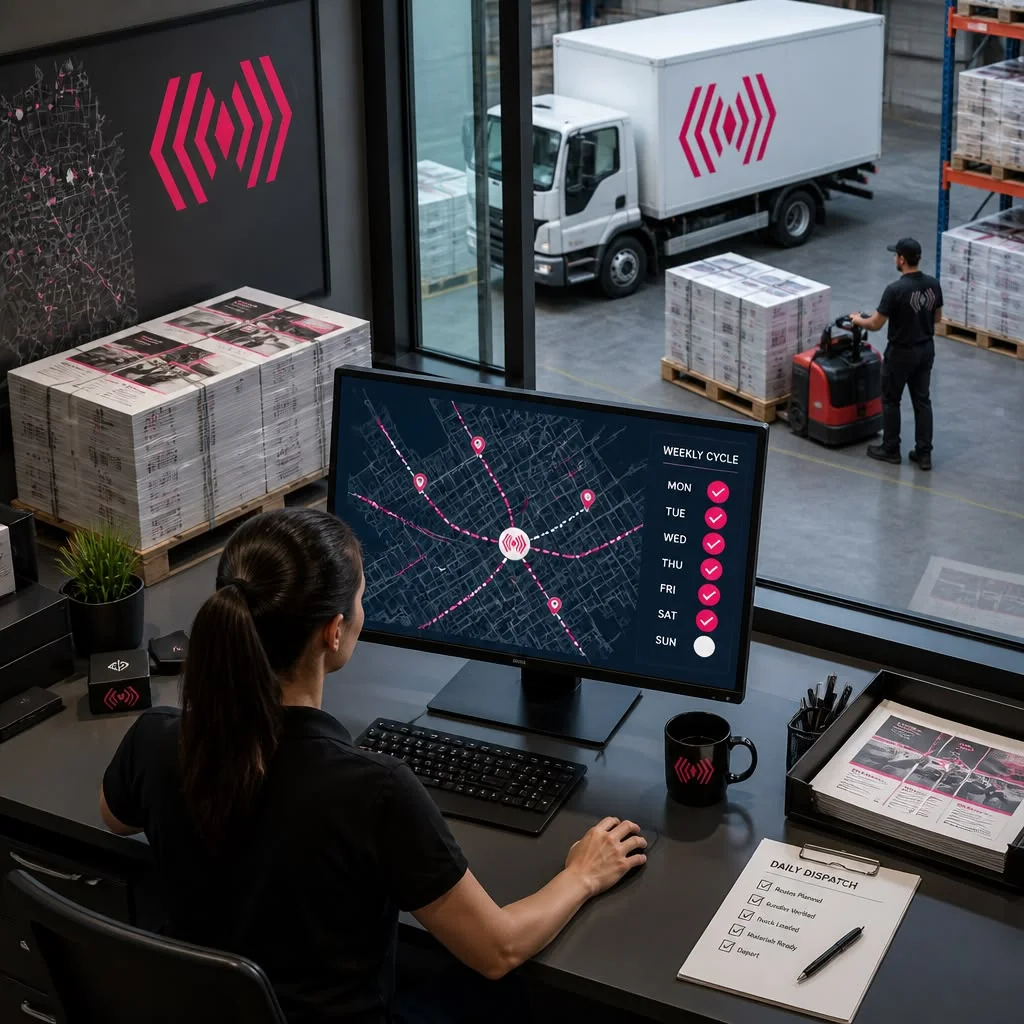
Dispatchers can use software to plan delivery sequences, assign orders, monitor progress and manage exceptions, with routing logic configured to your rules while keeping dispatcher judgement central rather than promising perfect optimization.
Delivery Tracking and Proof of Delivery
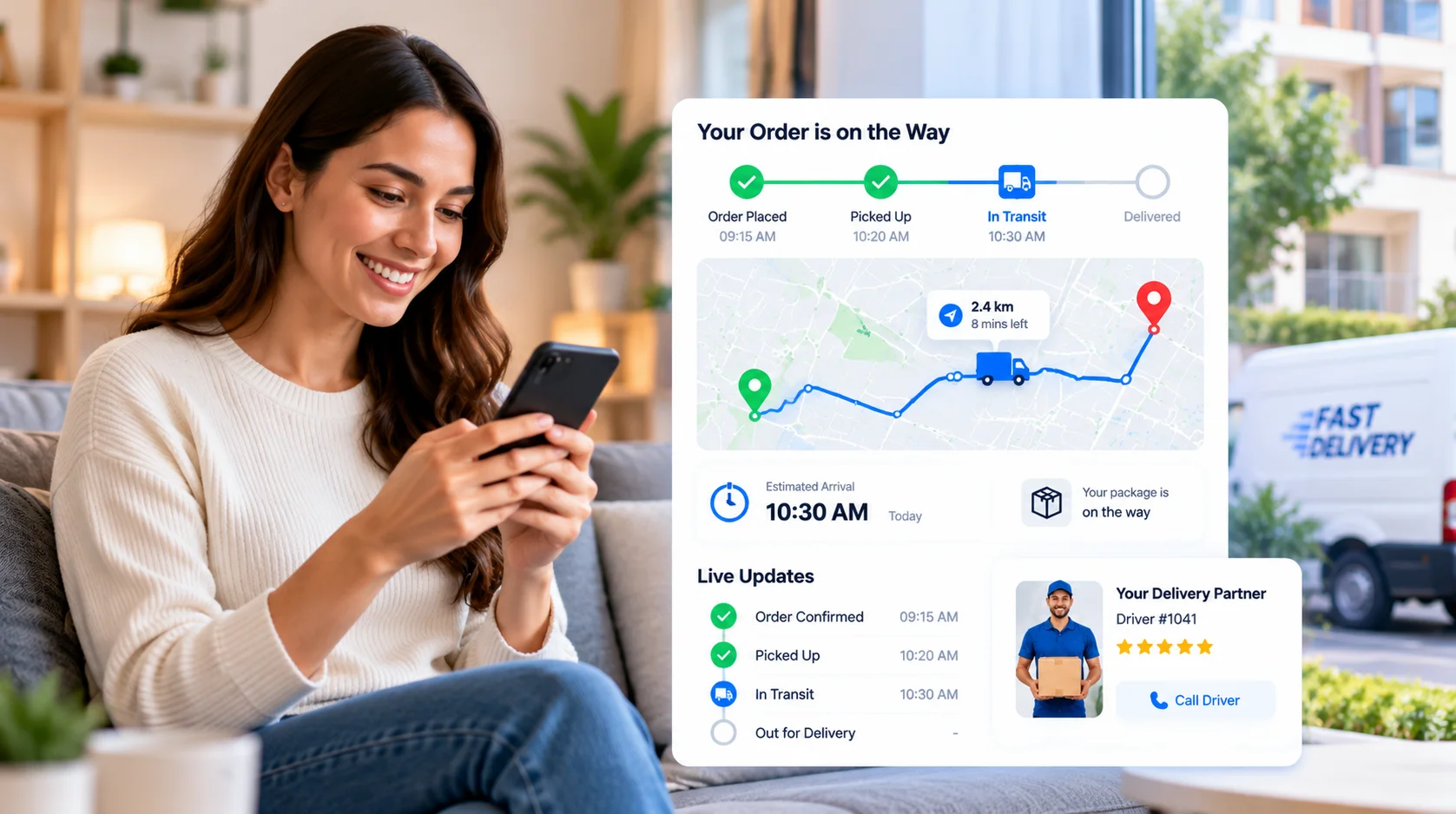
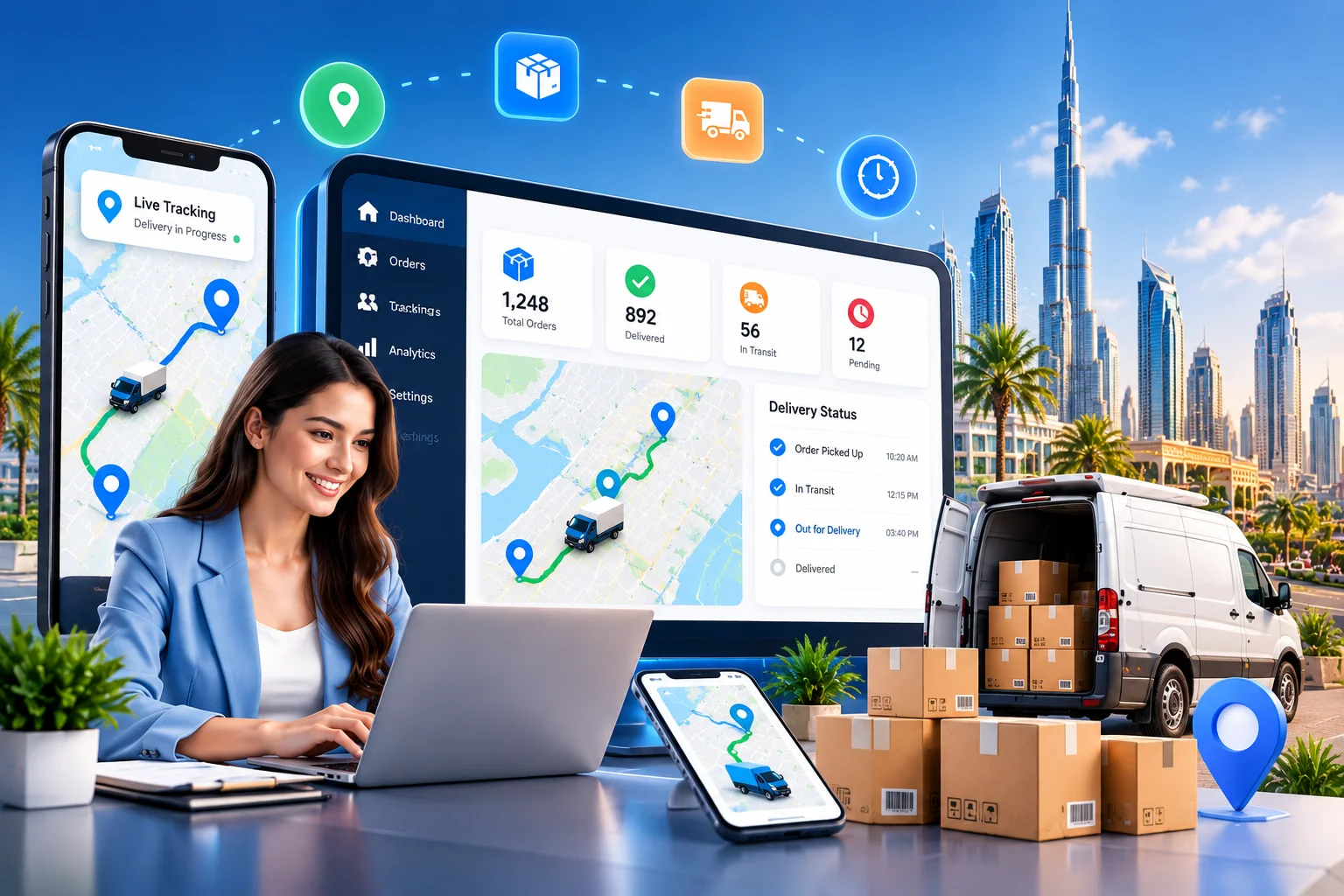
Delivery tracking features can provide status visibility, configurable notifications and delivery confirmation with timestamps, plus optional photos or signatures; live location tracking is available only where a suitable GPS integration is configured.
Integration and Legacy System Modernization
We assess your existing order systems, business applications and operational workflows to determine what can be integrated or modernized, confirming technical feasibility for each third-party platform before committing to scope.
01/07
Delivery Management System Development Built Around Your Operations
A centralized delivery platform can support the full delivery workflow from order receipt to assignment, execution, confirmation, exceptions and reporting, designed around your specific operational requirements, integrations and user roles.
Order Management and Delivery Assignment
Delivery management system development for Dubai operations begins with order intake, grouping and allocation, supported by priority rules, status changes and exception workflows that match how your dispatch team prioritizes and assigns work.
Driver and Delivery Coordination
Role-based access gives drivers clear task lists and delivery instructions while giving managers the visibility they need, with operational communication handled inside the system instead of scattered across calls, messages and spreadsheets.
Route Planning and Delivery Sequencing
Route planning features, as part of route optimization and last mile delivery software in Dubai, can support stop sequencing, delivery windows and dispatcher overrides, and can use traffic data where a suitable provider is integrated, so planners retain control over final delivery decisions.
Real-Time Delivery Status and Visibility
Status events such as assigned, picked up and delivered provide basic visibility on their own, while live location requires configured GPS or telematics integration; we scope each separately so expectations stay accurate.
Proof of Delivery and Exception Management
Digital delivery confirmation, recorded failed attempts, rescheduling, issue reporting and proof records give operations teams a consistent way to handle exceptions and resolve customer queries with documented delivery information, when included in scope.
Dashboards and Delivery Performance Reporting
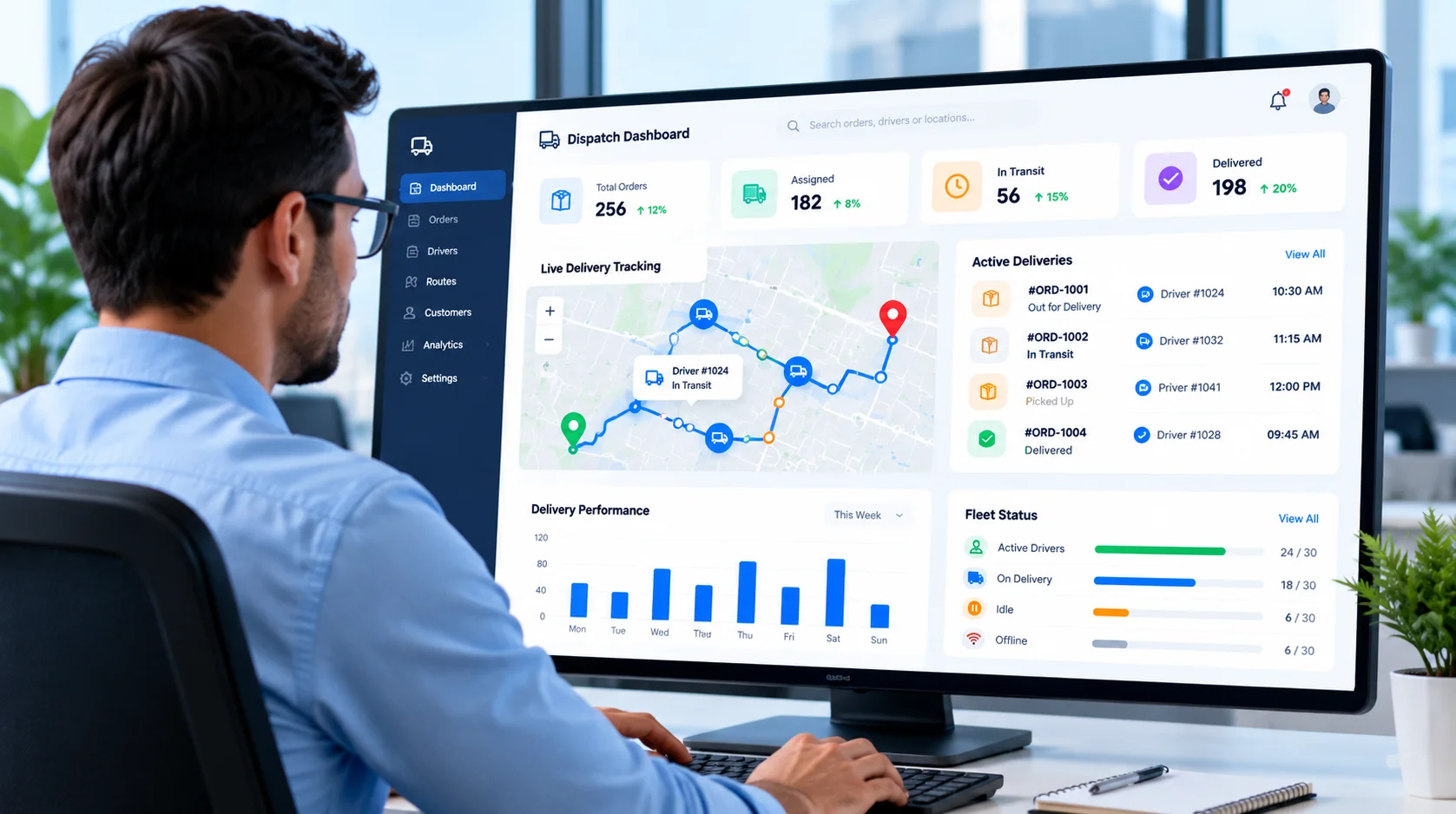
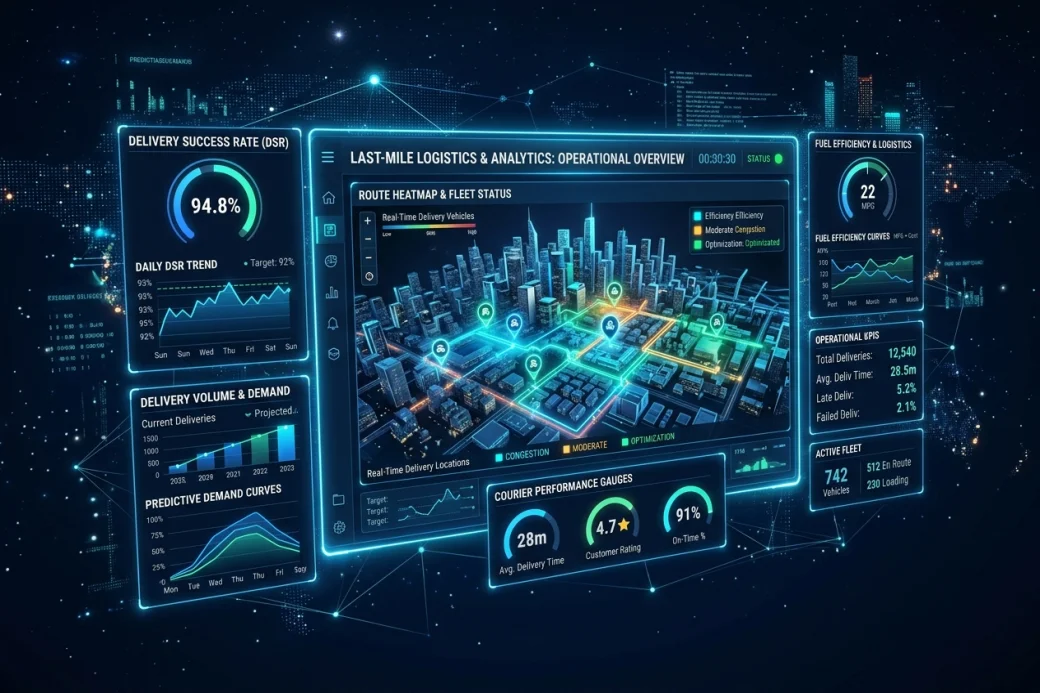
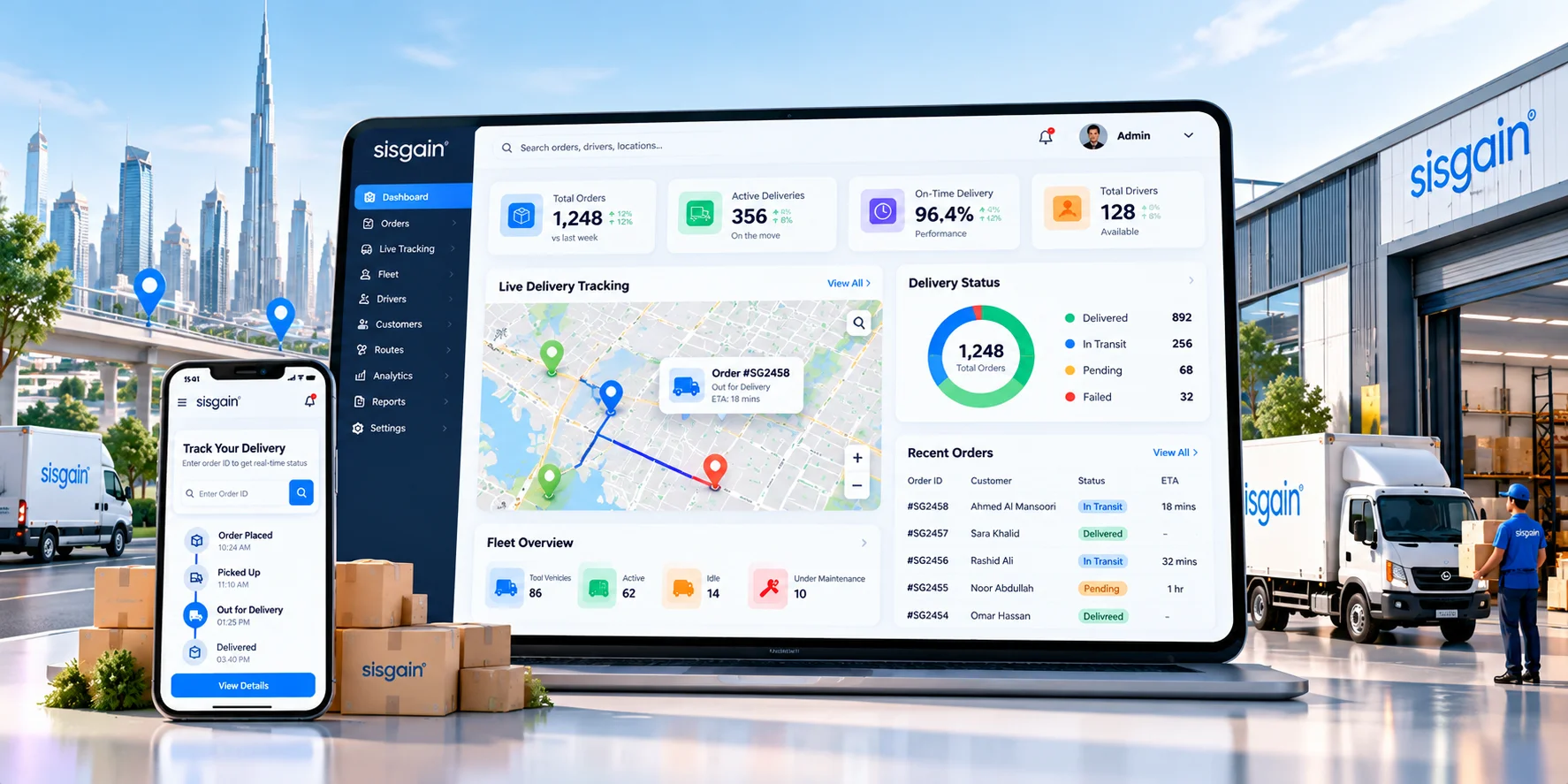
Configurable dashboards and reports can show order status, completed and pending deliveries, exceptions, driver activity and other project-specific metrics, helping managers review operations using the measures that matter to your business.
Solve Last-Mile Delivery Challenges with Custom Software
Common delivery-operation problems point to specific software capabilities. This section links each challenge to a practical solution that can be scoped, configured and integrated according to your workflows and systems.
Challenge
Software capability
What it can involve
Fragmented delivery information
Centralized operational visibility
One shared view of orders, assignments and statuses for each role
Manual order allocation
Configurable dispatch workflows
Assignment rules, priorities and dispatcher overrides
Limited tracking
Integrated location and delivery-status updates
Status events, plus GPS or telematics where integrated
Difficult delivery confirmation
Digital proof of delivery
Timestamps, with photos or signatures where in scope
Disconnected applications
Integration planning
API review, data mapping and feasibility checks
Limited operational reporting
Configurable dashboards and reports
Project-specific metrics for managers and administrators
Integrate Your Delivery Software with Existing Business Systems
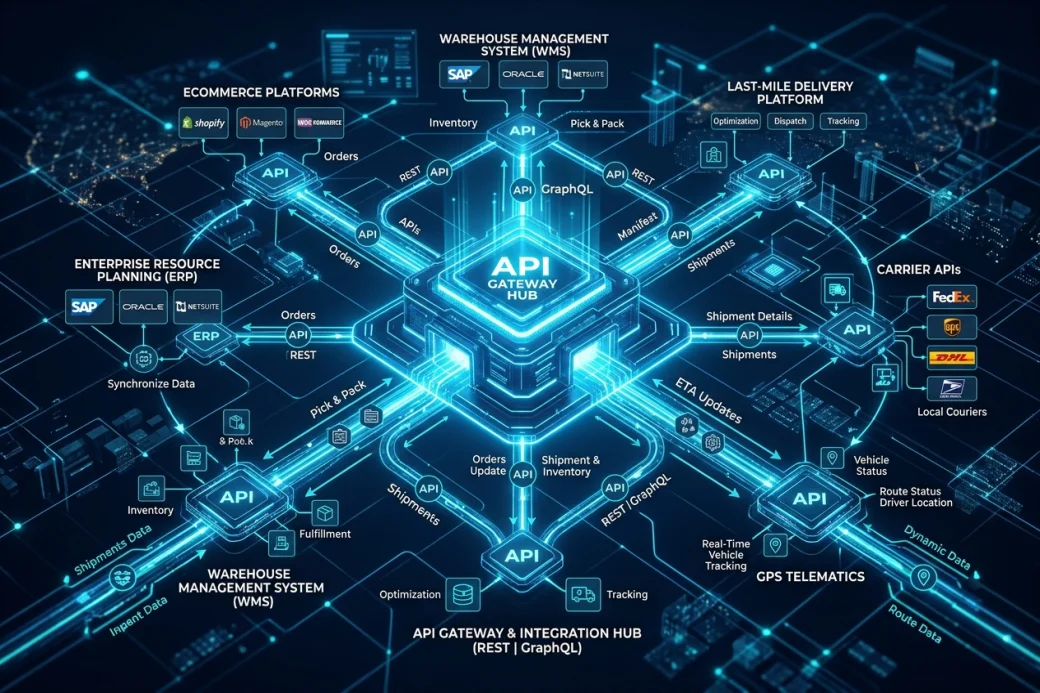
Integration choices depend on your existing architecture, data access, API availability, business rules and technical feasibility, so we review these factors before defining how delivery software connects with your systems.
GPS, Maps and Telematics Integrations
Where requirements call for it, the platform can connect to suitable mapping, navigation, location or telematics services; provider selection and availability are confirmed during technical assessment rather than assumed in advance.
eCommerce, ERP and Order Management Integrations
Order and business data can be exchanged with existing eCommerce, ERP and order management applications through available APIs, connectors or other suitable methods, subject to access, security requirements and technical review of each system.
Configurable Workflows and Business Rules
Delivery zones, assignment rules, service types, delivery windows, user permissions and exception handling can be configured around your business rules, so operational changes do not always require rebuilding core functionality.
Data Migration and Existing System Modernization
Legacy data and systems are reviewed, mapped and, where appropriate, migrated or integrated after technical assessment, helping teams move to a modern delivery platform while keeping the historical records they need.
Delivery Software for Dispatchers, Drivers and Customers
Delivery software is designed around distinct users, tasks, permissions and devices. Dispatchers, drivers and customers each need different information, so interfaces are scoped individually rather than assumed from a template.
Dispatcher Dashboard
A web-based dashboard gives administrators and dispatchers order oversight, assignment workflows, delivery statuses, reporting and exception management, with configurable access levels so each team member sees only the information relevant to their role.
Driver Mobile App
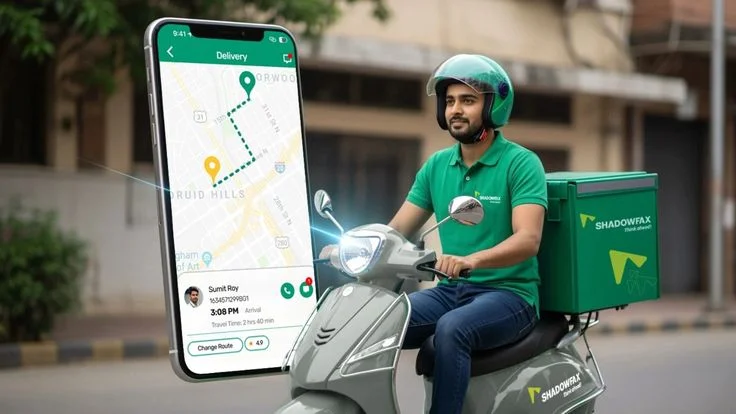
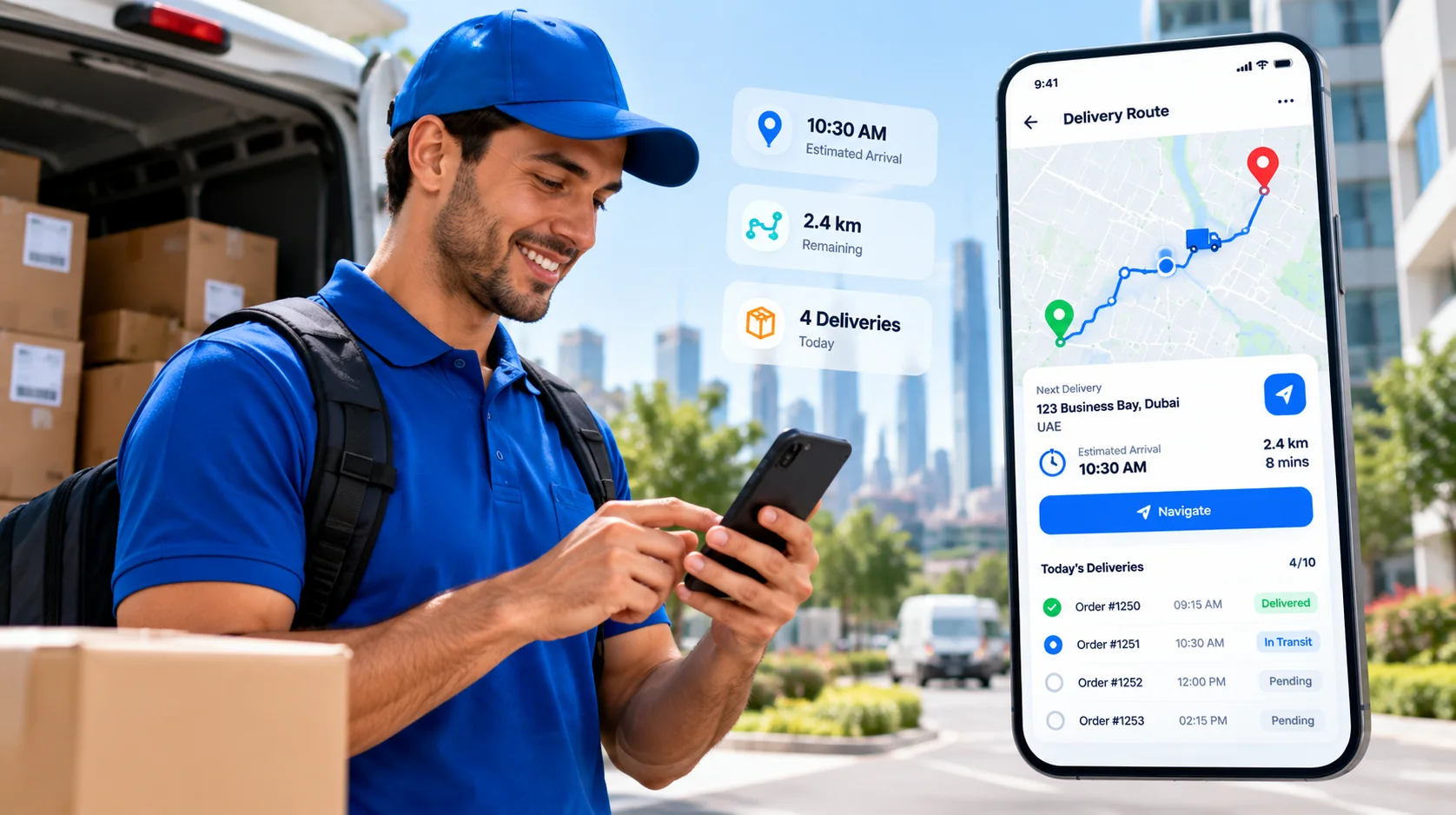
Driver applications in on-demand last mile delivery software development in the UAE can present assigned tasks, delivery instructions and navigation links, and let drivers update statuses and capture proof of delivery, with exact functionality defined by the scope agreed for your project.
Customer Tracking Portal
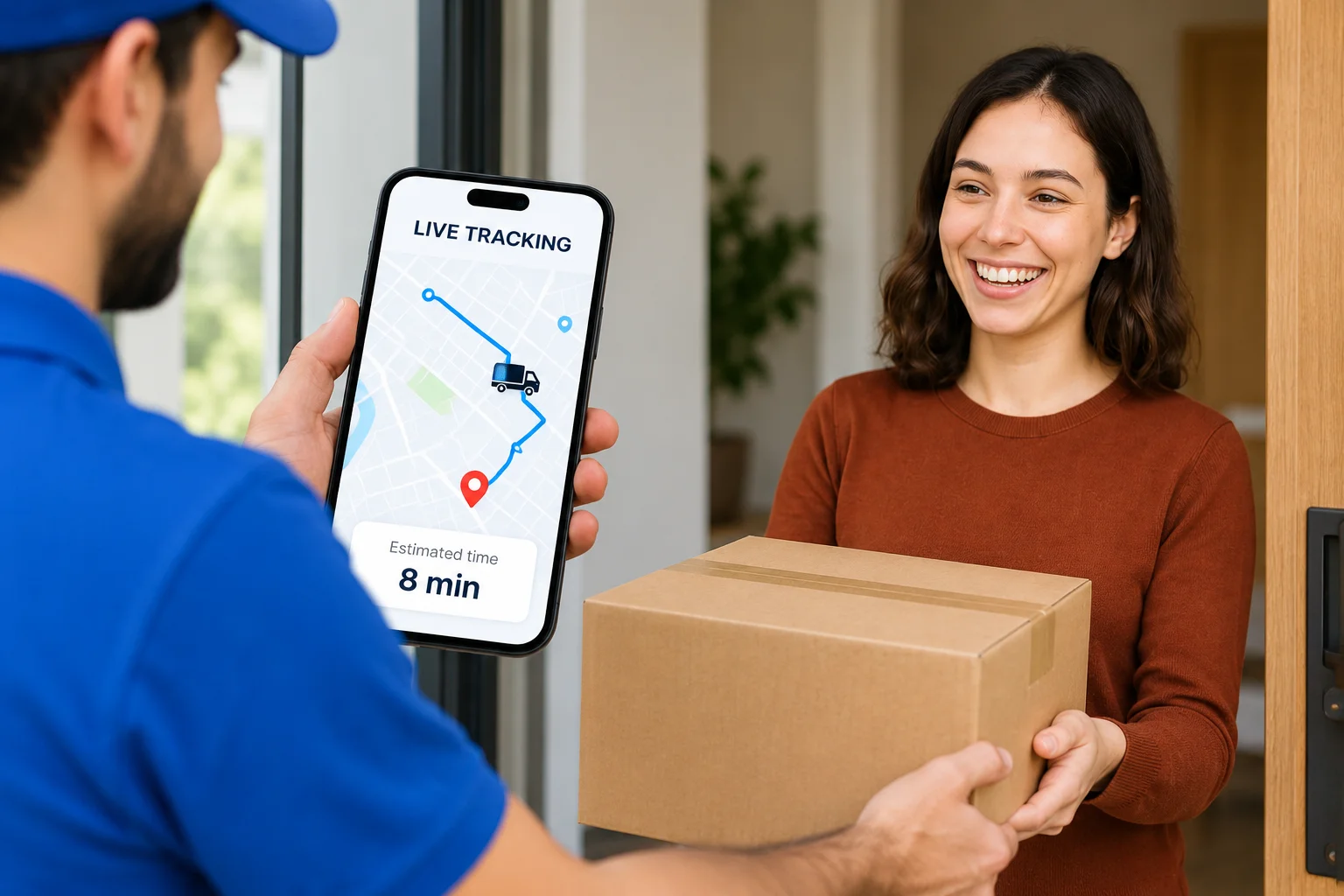
Customer-facing apps or tracking portals can offer delivery updates, notifications, tracking information and delivery instructions, depending on your business model; not every project needs three separate applications, so scope follows requirements.
Advanced Technologies for Last-Mile Delivery Software Development
We leverage modern technologies such as AI, machine learning, IoT, blockchain, and cloud computing to develop intelligent delivery solutions tailored to your business workflows, operational requirements, and growth objectives.
Enable smarter delivery operations with AI-powered capabilities for demand forecasting, delivery volume prediction, route recommendations, and operational analytics. Machine learning models can help identify patterns in historical delivery data and support better planning and decision-making.
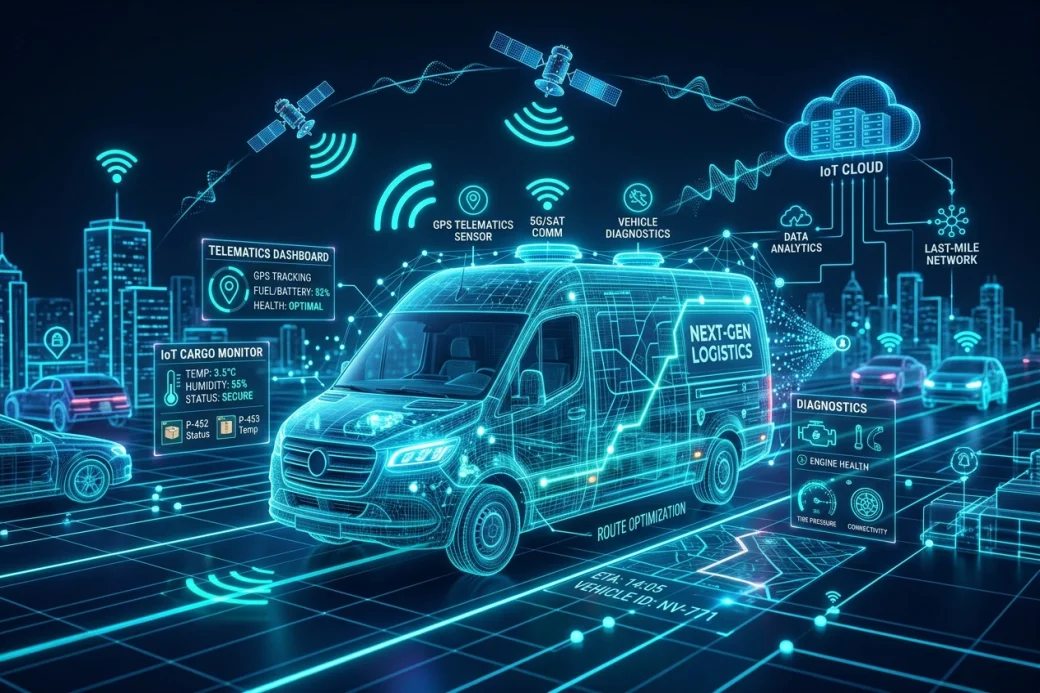
Connect compatible GPS devices, vehicle sensors, and telematics systems with last mile delivery management software for fleets in UAE to improve fleet visibility and monitor delivery operations. Depending on the available hardware and integrations, IoT-enabled solutions can support location tracking, vehicle monitoring, and operational alerts.
Explore blockchain-based capabilities for tamper-evident delivery records, shipment traceability, and multi-party transaction verification where a shared, auditable record provides business value. Blockchain implementation depends on the delivery ecosystem, participating stakeholders, and data governance requirements.
Build scalable delivery management platforms using cloud infrastructure suited to your application requirements. Cloud-based deployments can support centralized data access, application availability, system integrations, monitoring, and infrastructure scaling as delivery operations evolve.
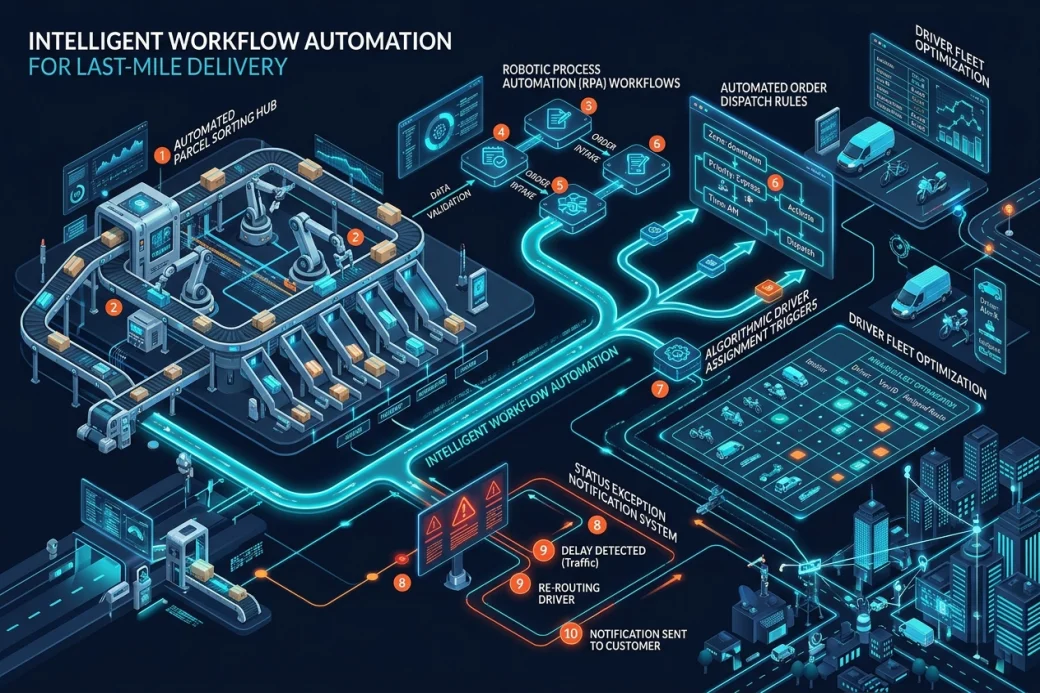
Automate repetitive delivery workflows, including order assignment rules, status notifications, exception alerts, and reporting processes. Workflow automation can reduce manual coordination and help teams manage high-volume operations more consistently.
Turn delivery data into actionable operational insights through customized dashboards and reports. Track relevant indicators such as delivery status, completed orders, unsuccessful attempts, driver activity, and route performance to support informed business decisions.
Connect delivery software with compatible eCommerce platforms, ERP systems, CRM applications, warehouse solutions, mapping services, and third-party logistics tools through suitable APIs and integration methods.
Our Last-Mile Delivery Software Development Process
Our structured process aligns software scope with your business workflows, technical constraints, user requirements, testing needs and deployment objectives, giving stakeholders clear checkpoints from first discussion through launch and support.
1
Discovery and Requirements Analysis
We begin with stakeholder discussions and current workflow analysis to clarify business objectives, user roles and requirements, then document the findings and define a scope that everyone involved can review and approve.
2
Solution Architecture and Technical Planning
Technical planning covers system architecture, data flows, integration requirements, permissions and scalability considerations, and confirms technical feasibility early so that design decisions reflect real constraints rather than assumptions made late in the project.
3
UI/UX Design and Prototyping
User journeys, wireframes and interactive prototypes let stakeholders review the intended experience for dispatchers, drivers and customers before development begins, reducing misunderstandings and helping refine requirements while changes are still straightforward.
4
Development and System Integration
Development proceeds iteratively against the agreed feature scope, with integration work, regular progress reviews and managed scope changes, so stakeholders can see the system take shape and give feedback along the way.
5
Quality Assurance and User Acceptance Testing
Quality assurance includes functional testing, integration testing, usability checks and defect resolution, followed by user acceptance testing against agreed criteria so your team can confirm the system works as intended before release.
6
Deployment, Training and Ongoing Support
Deployment planning, documentation and user onboarding prepare your team for launch, while maintenance options and post-launch support are arranged according to the engagement agreed; timelines are confirmed by SISGAIN after scoping, not assumed.
Delivery Software Solutions Designed for Real Business Requirements
Matching software capabilities to measurable operational requirements helps delivery platforms solve real problems. Verified project examples help buyers evaluate relevant experience, scope, features and outcomes before contacting our project team.
Last-Mile Delivery Software Development for Businesses in Dubai and the UAE
Software can be configured around local operating areas, workflows, customer expectations, language needs, integrations and applicable requirements, so Dubai and UAE delivery teams use a platform that fits their market.
Last-mile delivery software development in Dubai usually begins by defining service areas, delivery windows and notification preferences with your operations team, while last-mile delivery software development across the UAE adds multi-zone coverage and consistent reporting.
Configurable delivery zones and service areas
Arabic and English interfaces when required
AED-related workflows where relevant
Local delivery windows and operational schedules
Customer notification preferences
Data handling, hosting and security requirements based on the project
Relevant legal or regulatory requirements, verified for your specific use case (no certification or government integration is claimed)
Why Choose SISGAIN for Last-Mile Delivery Software Development?
Buyers choosing a development partner need clarity on approach, integration capability, quality control and support. These factors show how SISGAIN plans and delivers custom delivery software projects for UAE businesses.
Software Designed Around Your Business Requirements
As a last-mile delivery software company in the UAE, SISGAIN uses discovery, workflow mapping and scope definition to align the proposed solution with your business priorities before development work begins.
Integration-Led Development Approach
Our integration-led approach starts with technical assessment of APIs, data exchange and compatibility, so integration scope reflects what your systems actually allow; we do not promise universal support for every third-party platform.
Structured Development and Quality Assurance
Development milestones, testing, review cycles and agreed acceptance criteria make project progress more transparent, giving your stakeholders clearer visibility into what has been built, what is being tested and what remains.
Maintenance and Post-Launch Support Options
Maintenance and post-launch support options are discussed during project planning and depend on the agreed scope and service arrangement, so you know what ongoing assistance is available before committing to development.
Technology Stack for Last-Mile Delivery Software Development
We select technologies based on your delivery workflows, application requirements, integration needs, security priorities, and scalability goals to build maintainable delivery software.
Recommended technology stack
Technology layer
Recommended technologies
Application
Frontend development
React.jsNext.js
Delivery management dashboards, admin portals and dispatcher interfaces
Mobile app development
FlutterReact Native
Driver apps and customer-facing delivery applications
Backend development
Node.js.NETPython
APIs, delivery workflows, dispatch logic and business rules
Database
PostgreSQLMySQL
Orders, delivery records, users, assignments and operational data
Real-time communication
WebSocketsSocket.IO
Live status updates and operational notifications
Maps and route planning
Google Maps PlatformMapbox
Geocoding, navigation, route visualization and distance calculations
GPS and telematics
Compatible GPS tracking and telematics APIs
Vehicle location and tracking integrations
Cloud infrastructure
AWSMicrosoft AzureGoogle Cloud
Hosting, deployment, storage, monitoring and scalability
APIs and integrations
REST APIsGraphQLwebhooks
Connecting eCommerce, ERP, CRM and order management systems
Notifications
Firebase Cloud MessagingSMS and email APIs
Delivery alerts, driver updates and customer notifications
Suitable for parcel allocation, route planning, courier tracking and delivery exception management.
Discuss Your Last-Mile Delivery Software Requirements
Share your challenges, target users, required features, existing systems and project priorities, and our team will assess the opportunity and discuss how a delivery software solution could support your business.
Frequently Asked Questions About Last-Mile Delivery Software Development
These answers address the questions prospective buyers typically raise when evaluating delivery software development projects, covering scope, integrations, cost factors, timelines and support, with specifics confirmed after a requirements discussion.
Scope depends on your requirements and may include order management, dispatch, route planning, tracking integrations, driver applications, proof of delivery, reporting and administrative tools. During discovery, we define which capabilities your operation needs, which can be phased, and which integrations are technically feasible for your environment.
Yes, SISGAIN approaches custom delivery software through a requirements-led process. We review your workflows, users and systems, then define the scope. Feasibility, integrations and deliverables depend on that project assessment, so recommendations reflect your operation rather than a standard package.
Yes. Depending on your business model, a project may include driver applications, customer-facing apps and dispatcher or admin interfaces. Some businesses need all three, others need one or two, so the number of applications and features is defined during requirements analysis.
Often, yes, but it depends on feasibility. We review API availability, third-party access, data formats, security requirements and technical compatibility for each system before confirming integration scope. Some platforms may offer limited or no integration options, so assessment comes first.
Cost depends on functionality, the number of applications, integrations, architecture, security requirements, data migration and ongoing support. We do not quote a price range without understanding scope, so share your requirements and we can discuss a scoped estimate for your project.
Timelines depend on scope, complexity, integrations, target platforms, testing, stakeholder availability and project dependencies. A focused workflow tool differs greatly from a multi-application platform, so we confirm a schedule only after discovery rather than offering an unverified estimate of weeks or months.
Yes, courier workflows can be developed for Dubai-based operations, including parcel registration, pickup scheduling, courier assignment, delivery tracking, exception handling and proof of delivery. The final feature set depends on your requirements, service model, operating areas and any integrations needed.
Yes, maintenance and support arrangements can be discussed during project planning. What is included depends on the agreed scope and service terms, so we outline expectations for updates, issue resolution and ongoing assistance before development begins, helping you plan for life after launch.