
Safety Management
System Software
for UAE Businesses
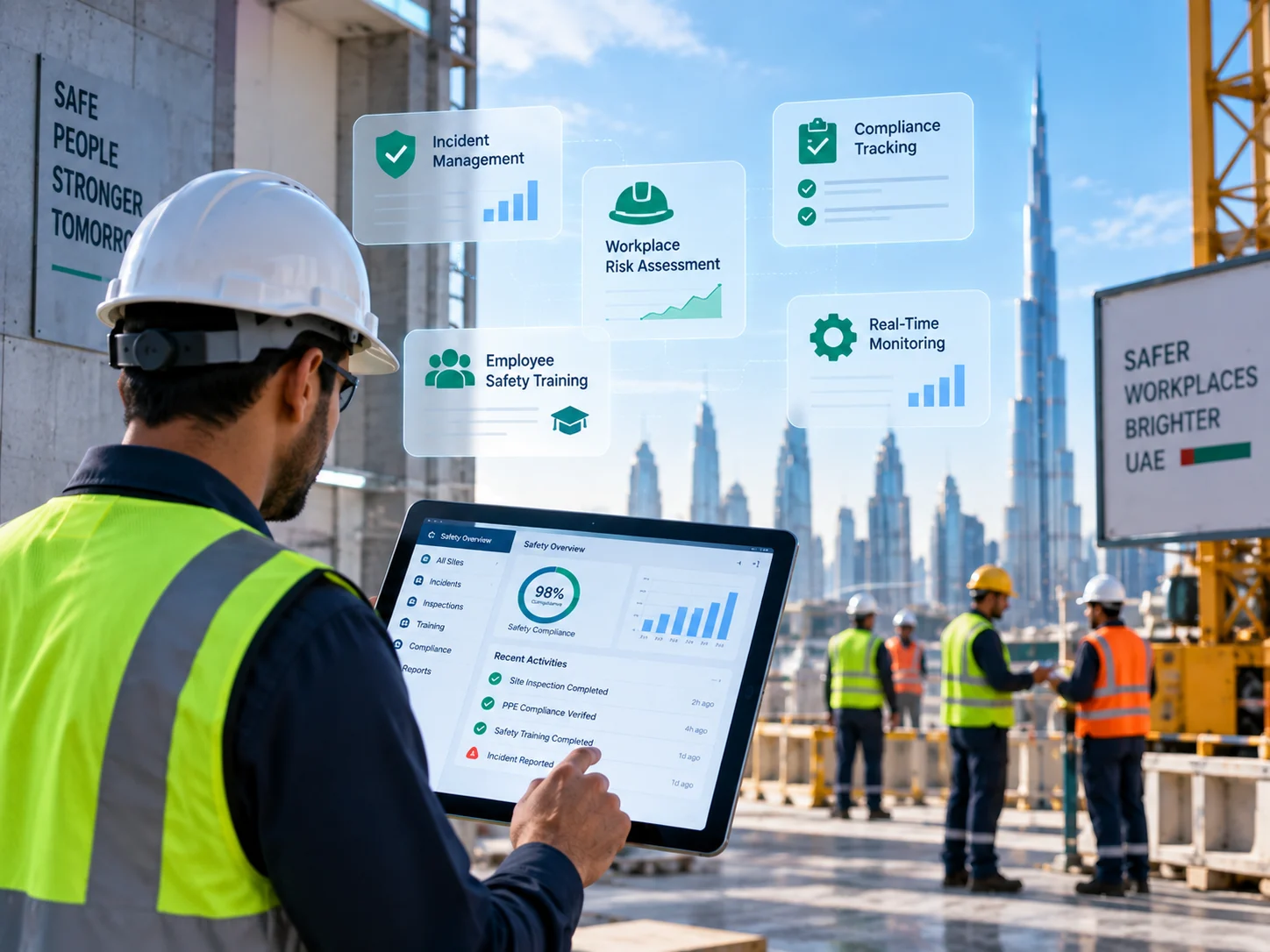
Transform safety operations with a customizable safety management platform that centralizes incidents, risks, inspections, audits, compliance, contractors, and corrective actions.
Safety Operations
Compliance (UAE)
Insights
& Contractors
All good at Site A
reporting
Stronger Tomorrow
Safety Software Built for Enterprise and Operational Safety Teams
Safety management software sits at the intersection of two disciplines: operational safety and enterprise software engineering. Getting it right requires both — a platform that understands how incidents, risk, inspections and CAPA actually flow through an organization, and the engineering discipline to build something secure, integrable and stable enough to run a business on.
Our team works on custom and configured enterprise software, which includes safety management platforms built around the workflows organizations already use — not the other way around. That covers solution architecture, mobile application development, systems integration, and long-term support after go-live.
We work with organizations across construction, oil & gas, manufacturing, logistics, facilities management and other operationally intensive sectors in the UAE, where safety data needs to hold up to scrutiny and where downtime isn’t an option.
Move Beyond Spreadsheets and Fragmented Safety Processes
Safety teams need more than spreadsheets, emails, and paper checklists to manage growing operational risks. Our safety management software centralizes incidents, inspections, risk assessments, corrective actions, and compliance records, helping UAE organizations improve visibility, accountability, and control across every workplace and site.

Delayed incident reporting
By the time an incident is logged centrally, details are missing and root cause becomes guesswork.
No real hazard visibility
Risk registers exist in isolated files, so management can’t see which hazards are trending upward until something goes wrong.
Inspections without follow-through
Findings get recorded but corrective actions aren’t tracked to closure, so the same issues resurface.
Contractor documentation chaos
Training certificates, permits and insurance documents sit in email threads instead of a system that flags expiry.
Inconsistent processes across sites
One site tracks near-misses properly; another doesn’t track them at all. Management has no comparable data.
Slow, manual reporting
Preparing a monthly safety report means someone manually pulling numbers from five different sources.
Centralize Safety Management with One Connected Software Platform
A safety management system isn’t just software that stores safety records. It’s the operating layer that connects how a hazard gets identified to how it gets resolved, and it gives management a live view of what’s happening across every site, without waiting for someone to compile a report.
The core workflow the platform is built around looks like this:
Capture
Incidents, near-misses, hazards and inspection findings are logged directly from the field, through web or mobile, with photos and location data attached at the point of capture.
Assess
Risks are scored using configurable criteria, so severity and likelihood aren’t judged inconsistently from one reviewer to the next.
Investigate
Incidents route to the right investigator automatically, with structured fields for root cause rather than a blank text box.
Correct
Corrective and preventive actions get assigned with an owner, a due date and an escalation path if that date is missed.
Monitor
Open items, overdue actions and recurring hazards surface on a dashboard instead of staying buried in a spreadsheet.
Report
Management gets a real-time view across sites, instead of a report that’s already three weeks out of date by the time it’s compiled.
Safety Management Software Features
Incident & Accident Management
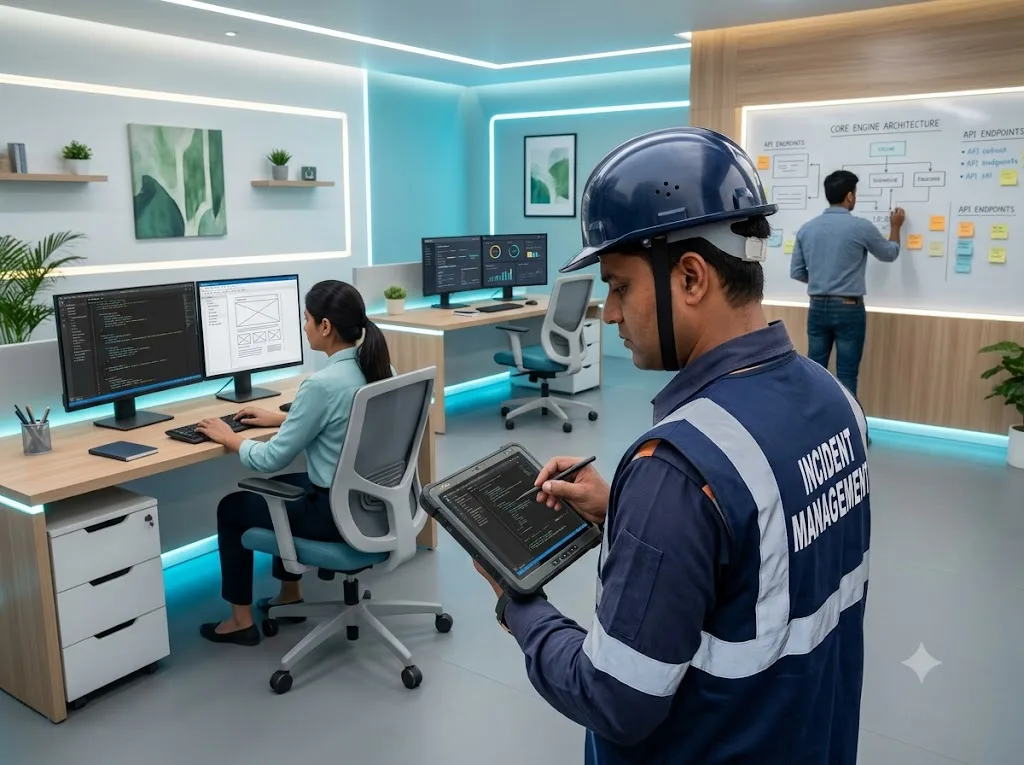
Field teams report incidents, accidents and near-misses from a phone or tablet, at the point where they happen — not from memory, hours later, at a desk. Photo and video evidence attaches directly to the report.
Once submitted, the incident routes into a structured investigation workflow: root-cause analysis fields, witness statements, and a clear link between what was found and what corrective action follows. Nothing closes without a resolution attached to it.
For safety managers, this means incident data that’s accurate because it was captured close to the event, and an audit trail that shows exactly what happened between the report and the closure — useful when leadership asks, and useful when a similar incident happens again and you need the history.
Risk & Hazard Management
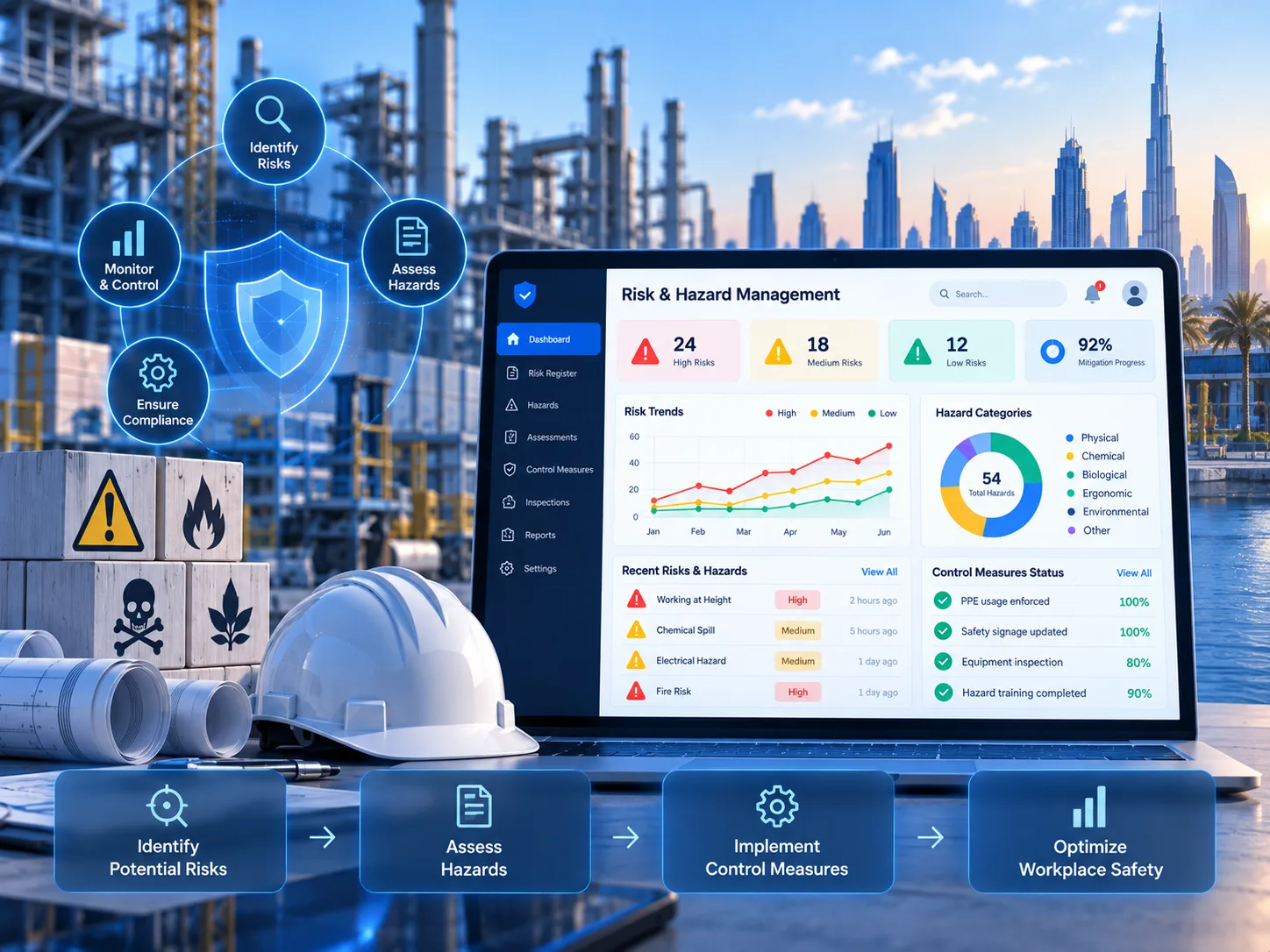
Hazards get logged as they’re identified, in the field or during planning, and feed into a structured risk register rather than a static document nobody revisits. Risk assessments follow a configurable scoring method — likelihood and severity, mapped to your organization’s risk matrix — so two different assessors reach comparable scores for comparable risks.
Control measures get attached to each identified risk, along with the residual risk once controls are applied. The register updates as new hazards are added or controls change, so it reflects current conditions instead of a snapshot from six months ago.
The operational payoff is a risk register that management actually trusts, because it’s current, and safety teams can prioritize based on where risk is actually trending, not where it was last quarter.
Safety Inspection Management
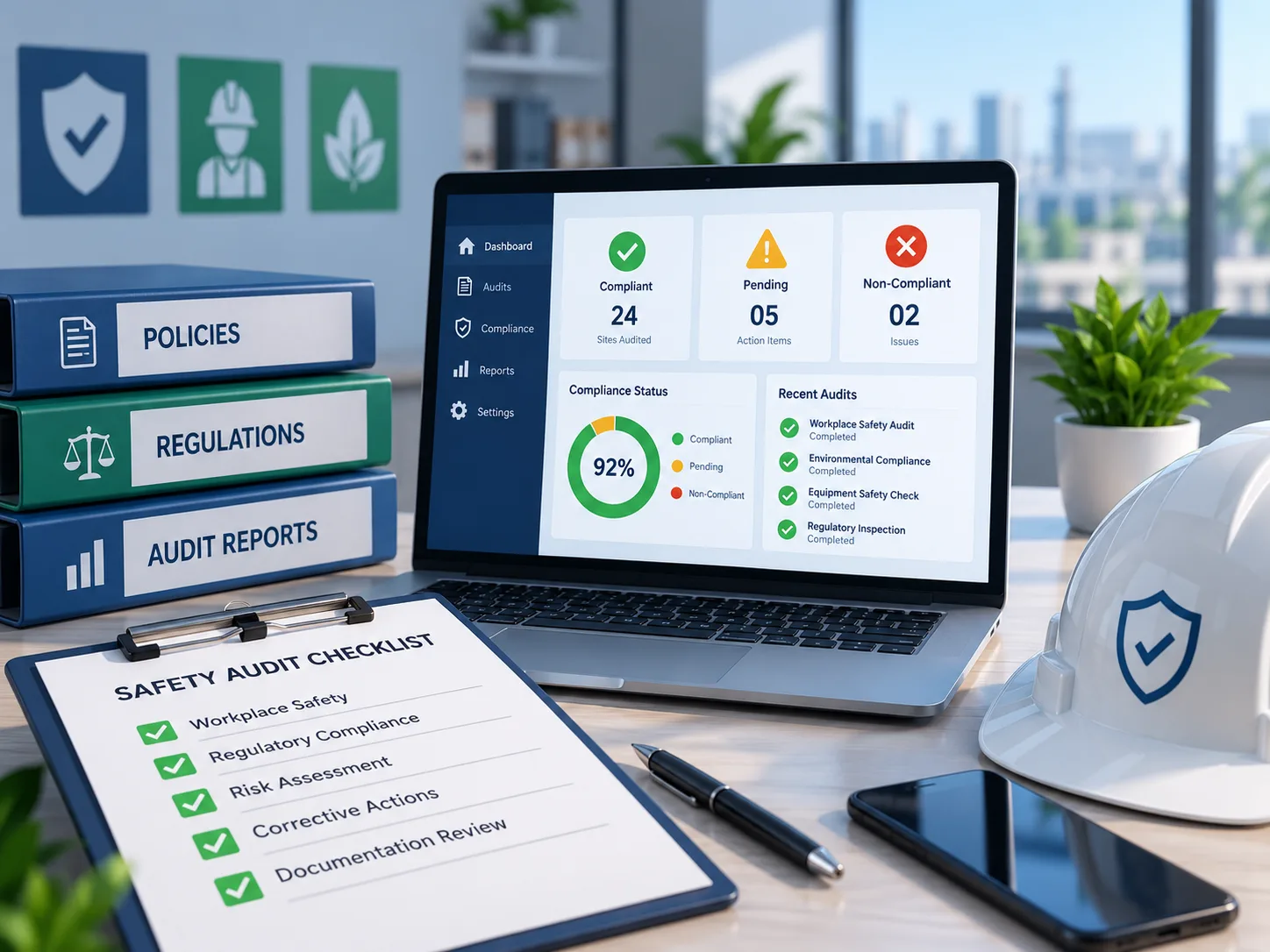
Checklists move from paper to mobile, scheduled automatically by site, area or asset. Inspectors work through structured digital checklists, attach photos to findings, and assign corrective actions on the spot rather than writing a note to follow up later.
Every inspection builds a history — searchable by site, inspector, checklist type or finding — so patterns across time become visible instead of living in a filing cabinet.
For operations teams, this cuts the administrative lag between an inspection happening and its findings actually being acted on. For safety leadership, it means inspection compliance across multiple sites is something you can check in minutes instead of chasing down.
Safety Audit & Compliance Management
Internal audits follow a structured process: findings get logged against defined criteria, evidence attaches directly to each finding, and every finding links to a corrective action with an owner and a deadline. Audit history stays searchable, so preparing for a follow-up audit doesn’t mean rebuilding the file from scratch.
The platform organizes and tracks the documentation your audit and compliance processes generate. It supports the operational side of compliance management — it doesn’t replace the judgment of a qualified compliance or safety professional, and it isn’t a substitute for legal or regulatory advice.
Corrective & Preventive Action Management
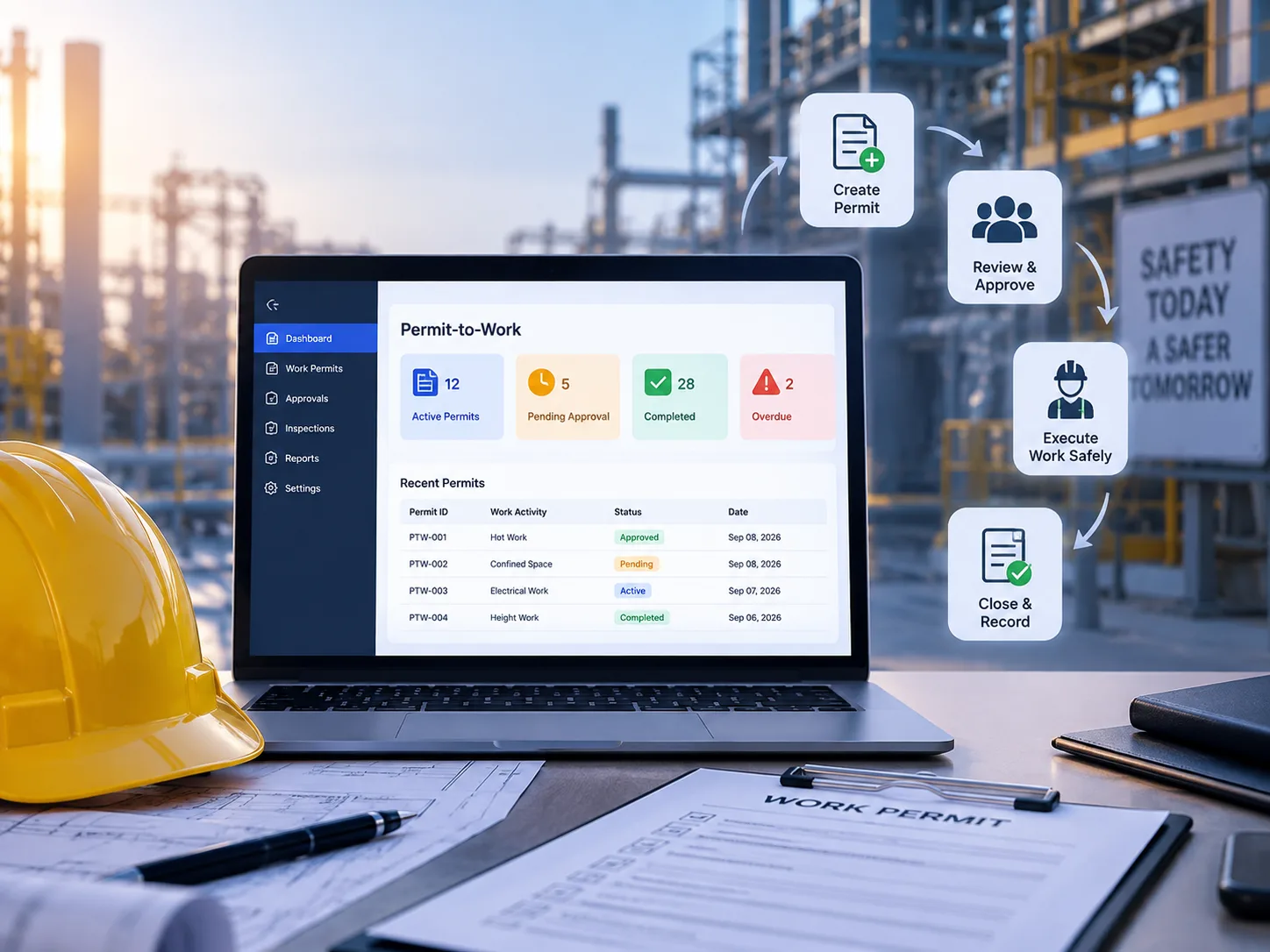
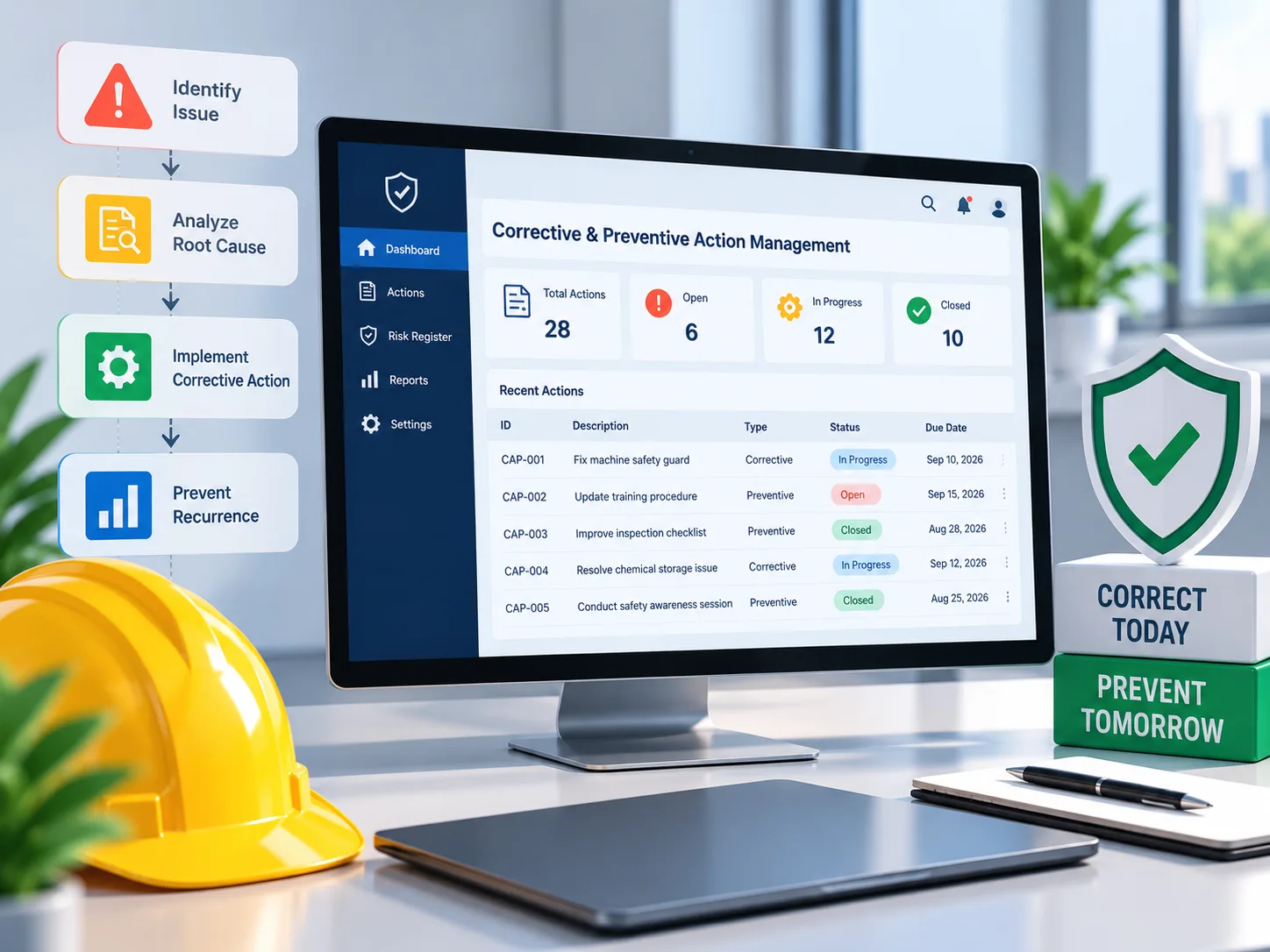
Every corrective action generated from an incident, inspection or audit gets a named responsible person, a due date, and an escalation trigger if that date passes without resolution. Evidence of completion — a photo, a document, a sign-off — attaches before the action can be closed.
This is where a lot of safety programs quietly break down: findings get recorded, but nobody tracks whether they were actually fixed. Structured CAPA management closes that loop, with a full audit trail from the original finding to verified closure.
Permit-to-Work Management
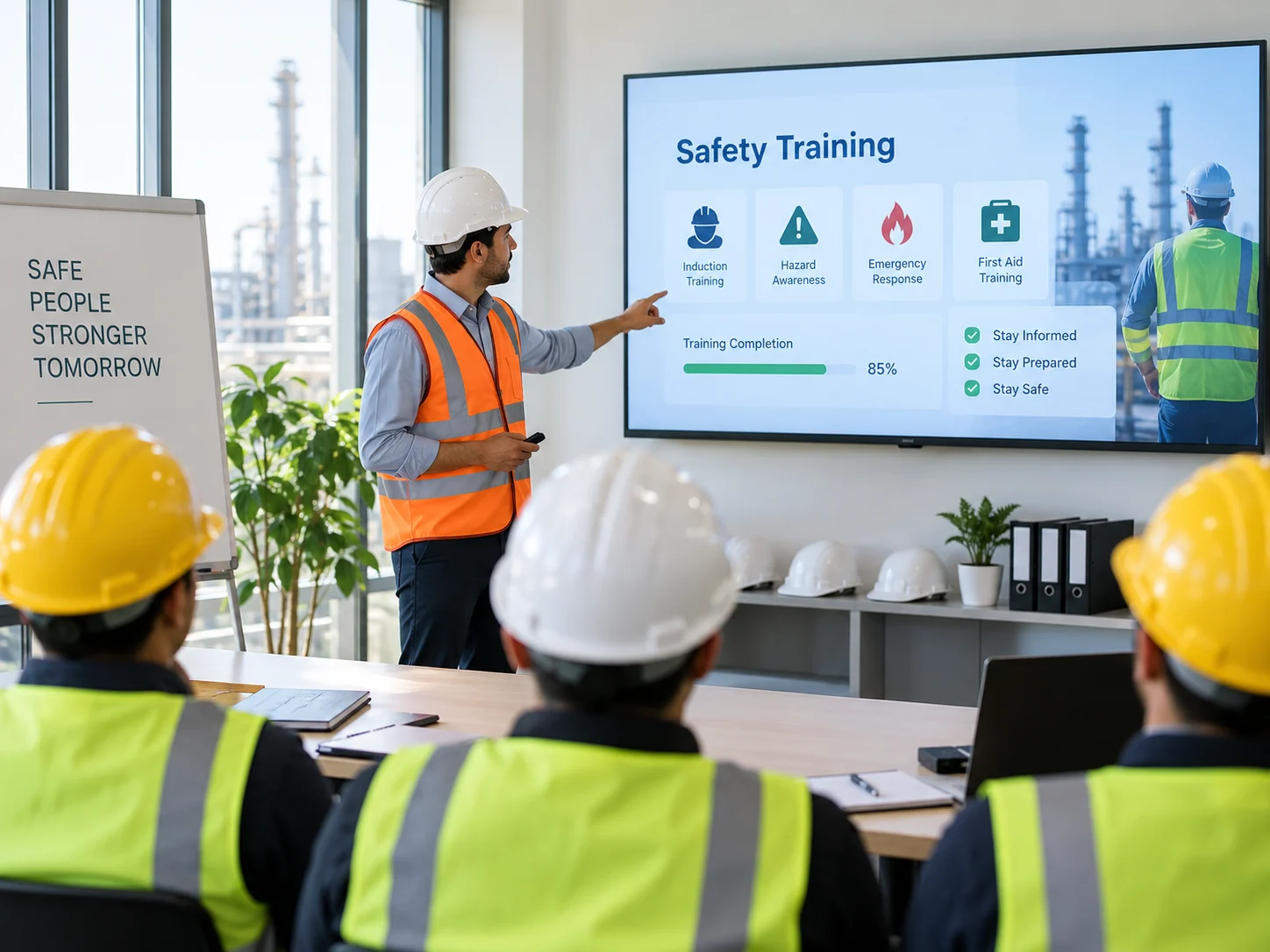
Permit workflows are configured around the work types your organization actually performs — commonly hot work, confined space entry, electrical work, excavation and work at height, though the exact permit types and approval chains depend on your site’s requirements.
Approvals route to the right authorizer, permits carry validity periods and required conditions, and expiring or active permits are visible on a dashboard rather than tracked on a clipboard at the site office. The specific workflow — who approves what, what conditions apply, how permits expire — gets configured to match how your organization currently manages permit-to-work, not a generic template.
Safety Training Management

Employee training records, certifications and toolbox talk attendance live in one place, with expiry alerts triggered before a certification lapses rather than after. Competency requirements can be tied to specific roles or work types, so a scaffolder’s certification status is visible before they’re assigned to a job that requires it.
Training history stays attached to the individual employee record, which matters when a client, auditor or regulator asks for evidence of competency on a specific date.
Contractor Safety Management
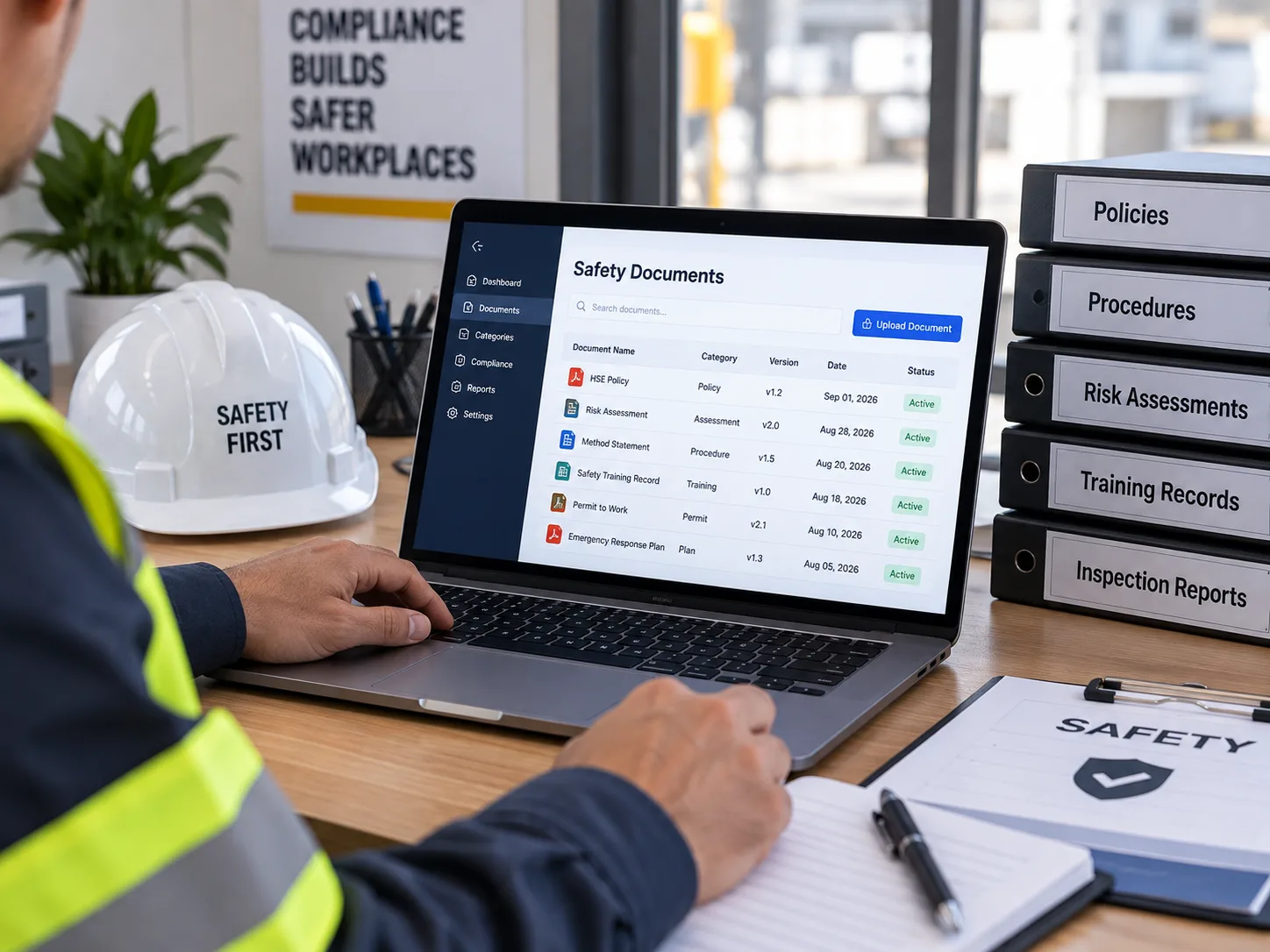
Contractor safety gets treated as an ongoing workflow, not a one-time approval at onboarding. Documentation — insurance, licenses, training certificates, method statements — gets collected and tracked for expiry. Contractors complete required assessments before mobilization, and their permits and site access link back to their current documentation status.
Ongoing performance and compliance monitoring stays visible to the safety team, so a contractor whose insurance lapses mid-project or whose incident rate is climbing doesn’t slip through unnoticed. This matters most for organizations running multiple contractors across multiple sites simultaneously, where manually cross-checking documentation status becomes impractical past a certain scale.
Safety Document Management
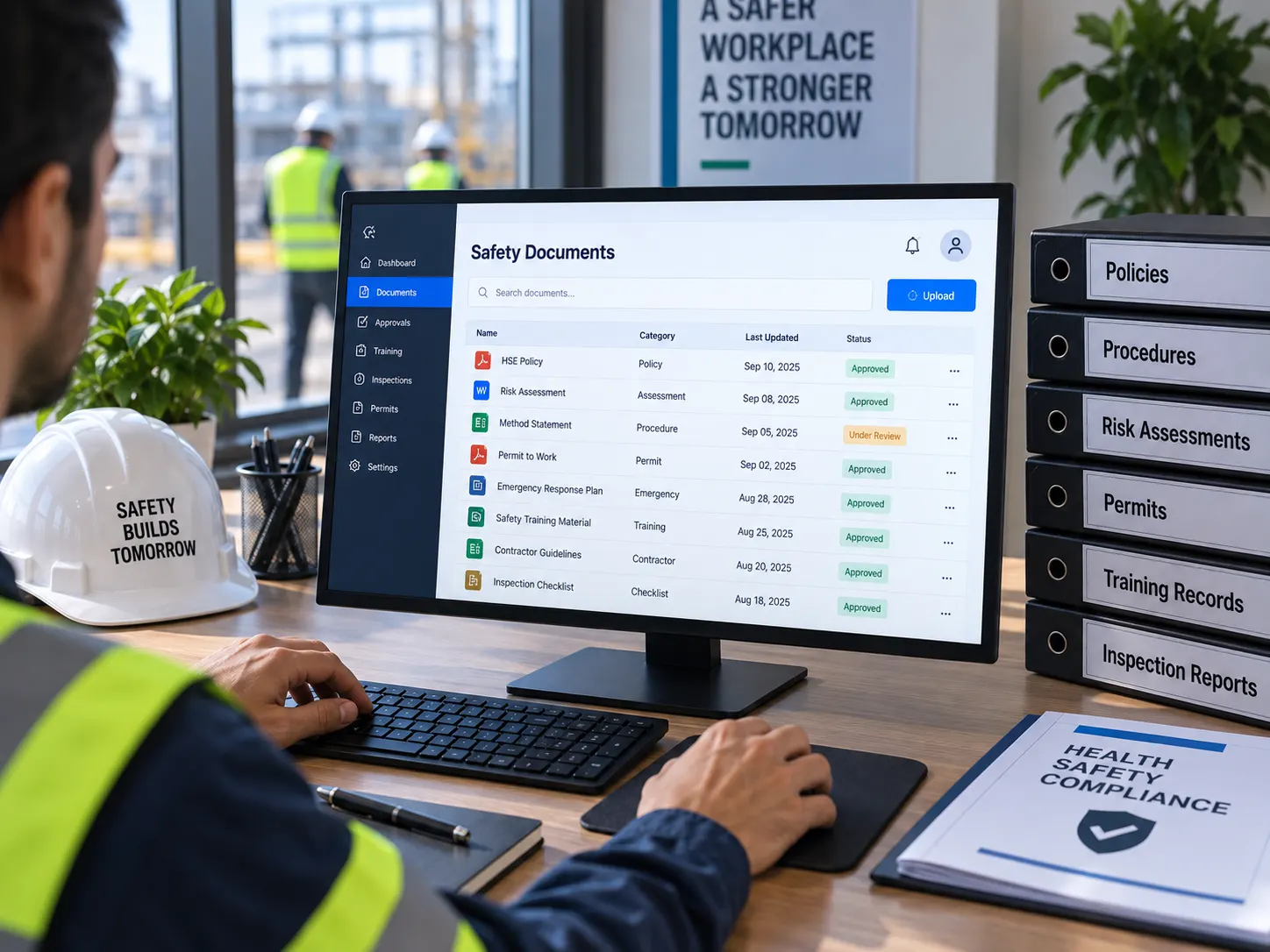
Policies, procedures, SOPs, certificates and safety records are stored with version control, so teams are always working from the current approved document, not an outdated copy someone saved locally two years ago. Access is controlled by role, so sensitive documents stay restricted to the people who need them.
Safety Analytics & Dashboards
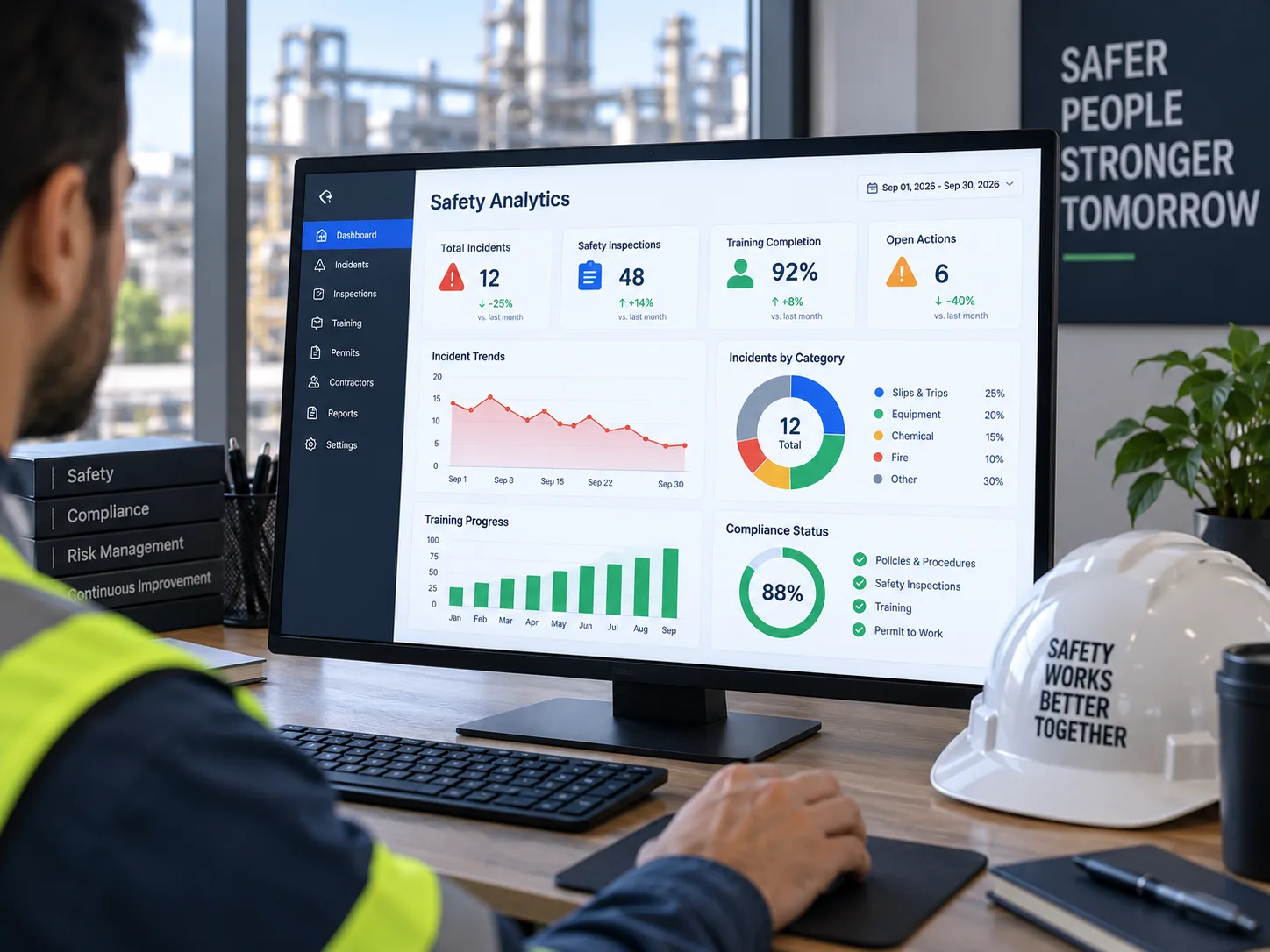
Incident trends, risk trends, open corrective actions, audit findings and compliance metrics surface on configurable dashboards, built around the KPIs that matter to your organization. Site-to-site comparison becomes possible because the underlying data is structured the same way across every location.
Management reporting stops being a manual export-and-format exercise the night before a meeting. The numbers are current because the underlying data is current.
Mobile Safety Management
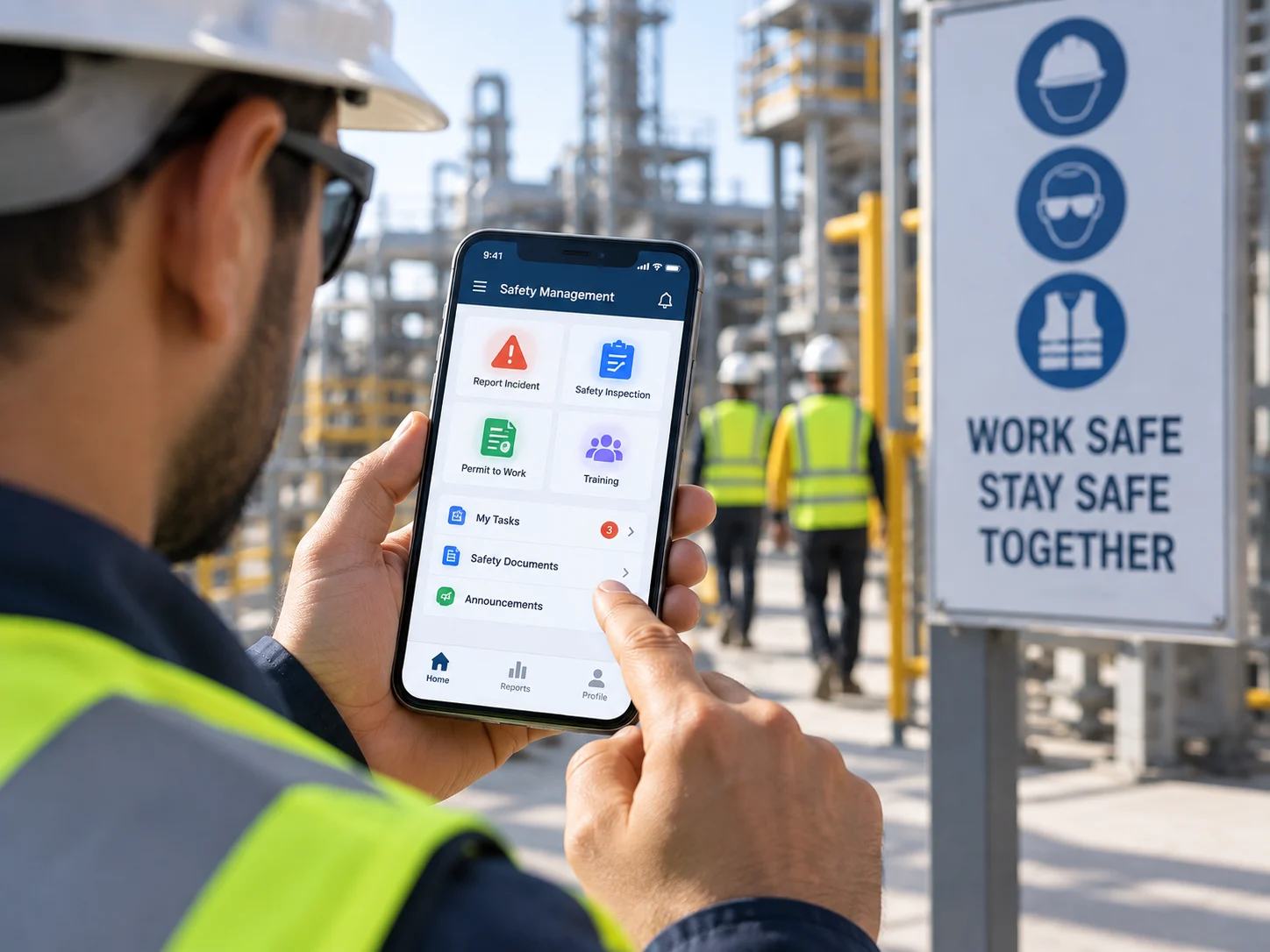
Field teams can report incidents and hazards, complete inspections and checklists, and capture photo evidence directly from a mobile device, at the location where the work is happening. This matters most for construction sites, warehouses, plants and other environments where staff aren’t sitting at a desk with access to a browser.
Mobile reporting shortens the gap between something happening and it being recorded — which is usually where safety data quality breaks down. Specific mobile capabilities, including offline functionality, depend on the platform configuration and will be confirmed during scoping.
Safety Management Software Solutions We Provide
Different organizations need different things from a safety platform, depending on scale, industry and how mature their existing safety processes already are. Here’s how that typically breaks down.
Workplace Safety Software
The general-purpose foundation — incident reporting, hazard tracking, inspections — suited to organizations that need to move off spreadsheets and paper without a heavy customization requirement.
EHS Management Software
Extends that scope to environmental tracking alongside health and safety, useful for organizations managing environmental permits, waste tracking or emissions reporting alongside occupational safety.
HSE Management Software
The common terminology across UAE industrial and construction sectors for the same combined scope — health, safety and environment managed through one connected system.
Occupational Safety Management Software
Focuses specifically on employee health and safety in the workplace, without the environmental scope — a fit for organizations whose risk profile is primarily about worker safety rather than environmental compliance.
Health & Safety Management Software
Covers organizations that need structured incident, risk and inspection management but operate in lower-hazard environments — offices, retail, hospitality — where the module set can be lighter than a heavy-industry deployment.
Safety Compliance Management Software
Built around organizations whose priority is documentation, audit trails and evidence of process — typically driven by client, insurer or internal governance requirements rather than a single regulatory mandate.
Contractor Safety Management Software
Works as a standalone module or full platform for organizations where contractor safety is the primary risk exposure — facilities management, construction, and multi-vendor industrial sites.
Custom Safety Management Software
Built when none of the above fit as-is — when your approval hierarchy, site structure, reporting requirements or existing systems need the platform built around them rather than the reverse. This makes sense for larger, multi-site organizations with established safety processes that a standard configuration would force them to abandon or work around.
Safety Management Software for High-Risk and Multi-Site Industries
Construction
Multiple contractors, changing site conditions and high-consequence hazards like work at height and excavation mean incident and permit tracking has to hold up under constant site turnover.
Oil & Gas
Permit-to-work discipline, hazard identification and emergency preparedness carry higher stakes in this sector than almost anywhere else.
Manufacturing
Machine-related hazards, near-miss patterns and recurring inspection cycles are the daily reality on a production floor.
Facilities Management
Multi-site, multi-client operations mean contractor safety and inspection consistency are the core operational challenge.
Marine
Vessel operations, confined space entry and emergency preparedness create a hazard profile with limited margin for error.
Safety Management Software for UAE Workplace Operations
Implement safety management software in the UAE to centralize incidents, risk assessments, inspections, audits, corrective actions, contractor records, training, and compliance documentation. Give HSE teams real-time visibility, standardized workflows, stronger accountability, and scalable safety operations across multiple sites and locations.
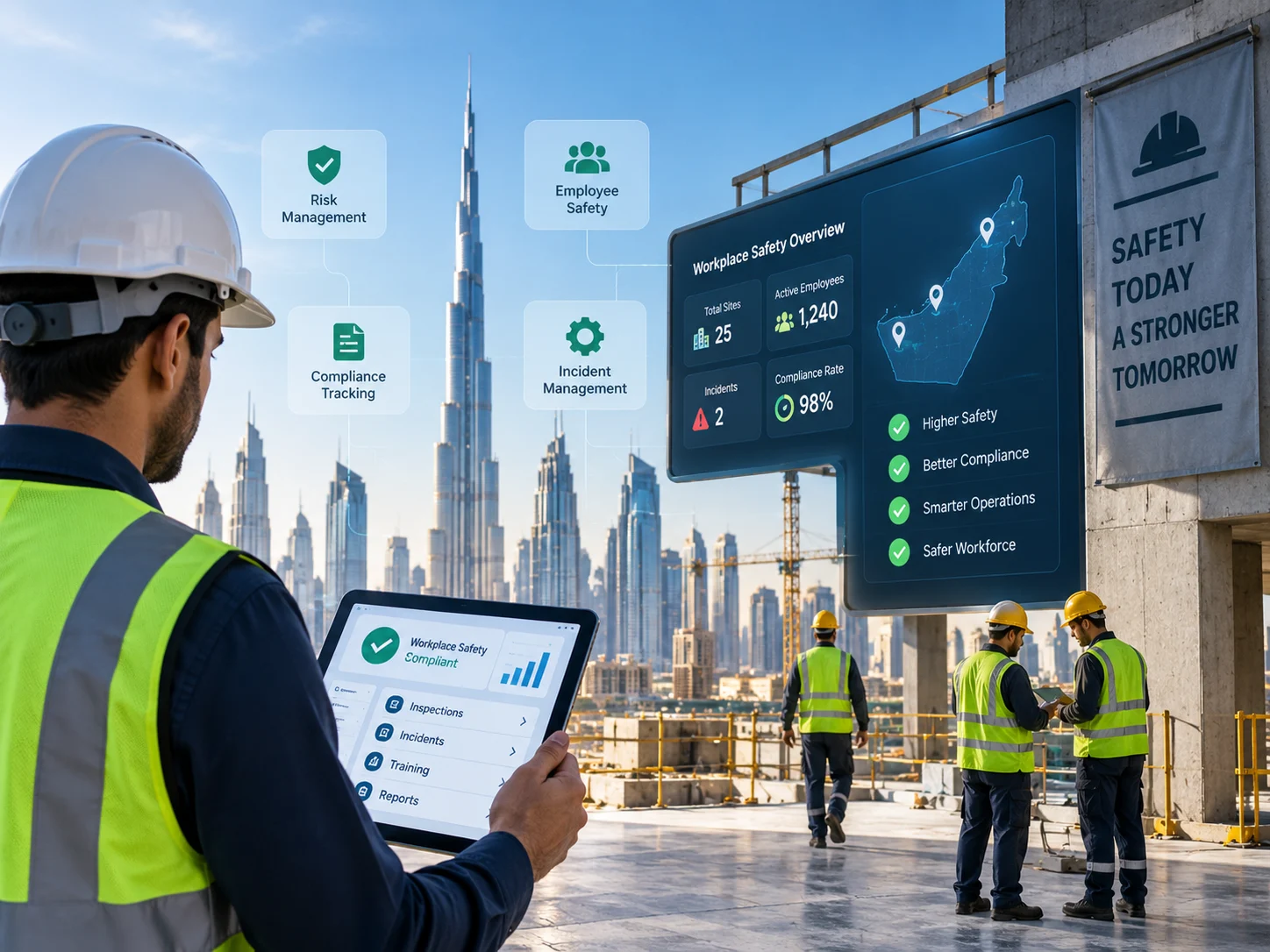
Custom Safety Management Software Built Around Your Workflows
Your safety software should adapt to your business—not force your HSE team to change how they work. We build custom safety management software around your workflows, approval structures, reporting requirements, and site operations.
When Custom Development Makes Sense
- Complex approval workflows: Configure multi-level reviews, approvals, and escalations around your organizational structure.
- Multi-site operations: Standardize safety processes across Dubai, Abu Dhabi, Sharjah, and other locations while supporting site-specific requirements.
- Industry-specific processes: Build custom risk models, inspection checklists, permits, forms, and safety workflows, including airport compliance apps development.
- Enterprise reporting: Create dashboards and reports aligned with management, client, or parent-company requirements, including predictive insights built with an ai development company in uae team.
- Business system integrations: Connect safety data with ERP, HRMS, payroll, IoT, identity, and other enterprise platforms.
- Mobile field operations: Deliver mobile workflows for inspections, incident reporting, audits, corrective actions, and field safety teams.
Built Around Your Business
From user roles and approval chains to dashboards, notifications, workflows, and mobile applications, every component can be configured to match how your organization operates.
Not sure whether you need a standard platform or custom development? Our team can assess your requirements and recommend the most practical approach—without pushing unnecessary customization.
Discuss Your Safety Software RequirementsIntegrate Safety Management with Your Existing Business Systems
Integrate safety management software with your existing business systems to eliminate duplicate data entry, unify records, streamline workflows, and give teams secure access to consistent safety data.
ERP systems
Linking safety data to operational and asset records.
HRMS/HR systems
Syncing employee records, so training and competency data stays tied to current employment status.
CMMS/EAM systems
Connecting maintenance and asset data to inspection findings and hazard reports.
LMS platforms
Syncing training completions and certifications automatically.
Identity management and SSO
So employees use existing corporate credentials rather than a separate login.
BI and reporting tools
Feeding safety data into existing enterprise dashboards and reporting pipelines.
IoT devices and sensors
Where relevant, connecting environmental or equipment sensor data to hazard and risk workflows.
APIs for other enterprise systems
Custom integration points for whatever else runs your business.
Integration requirements get scoped during discovery, based on what systems you’re already running and what data actually needs to move between them. We don’t build integrations for the sake of a feature list — only where they solve a real duplication or visibility problem.
Secure, Scalable Technology for Safety-Critical Operations
Our safety management software is built on a scalable technology architecture designed to support secure data management, multi-site operations, mobile access, integrations, and growing user volumes. The technology stack can be tailored to your infrastructure, business requirements, and deployment model, and secured end to end through our DevSecOps consulting services in UAE. For data protection across your wider environment, explore our information security solutions dubai.
Technology Stack
Frontend
React.js, Angular, Vue.js, HTML5 / CSS3, JavaScript / TypeScript
Backend & APIs
Node.js, .NET, Java, Python, REST APIs, GraphQL
Mobile
Flutter, React Native, Native Android, Native iOS
Databases
PostgreSQL, MySQL, Microsoft SQL Server, MongoDB, Redis
Cloud & Infrastructure
AWS, Microsoft Azure, Google Cloud, Docker, Kubernetes, CI/CD
Security & Identity
OAuth 2.0, OpenID Connect, SSO, Role-Based Access Control (RBAC), Encryption in transit and at rest, Audit logging
Integrations
ERP & HRMS, CRM platforms, SSO / Identity providers, IoT devices, Business intelligence tools, Third-party REST APIs
Turn Safety Data Into Better Operational Decisions
Digitizing safety management isn’t about generating more reports. It’s about making the information your safety team already collects actually usable for decisions — by management, by operations, and by the safety team itself.
| Capability | Operational improvement | Business value |
|---|---|---|
| Digital incident reporting | Faster, more accurate information capture from the field | Better visibility into what’s actually happening on-site |
| Structured risk management | Consistent risk scoring and a live risk register | More informed prioritization of safety investment |
| Mobile inspections | Faster field workflows, findings assigned on the spot | Less administrative lag between finding and fix |
| CAPA management | Clear ownership and due dates on every action | Faster resolution, fewer repeat issues |
| Contractor tracking | Automated visibility into documentation and expiry | Reduced exposure from lapsed contractor compliance |
| Dashboards & analytics | Centralized KPIs across every site | Better-informed management decisions, faster |
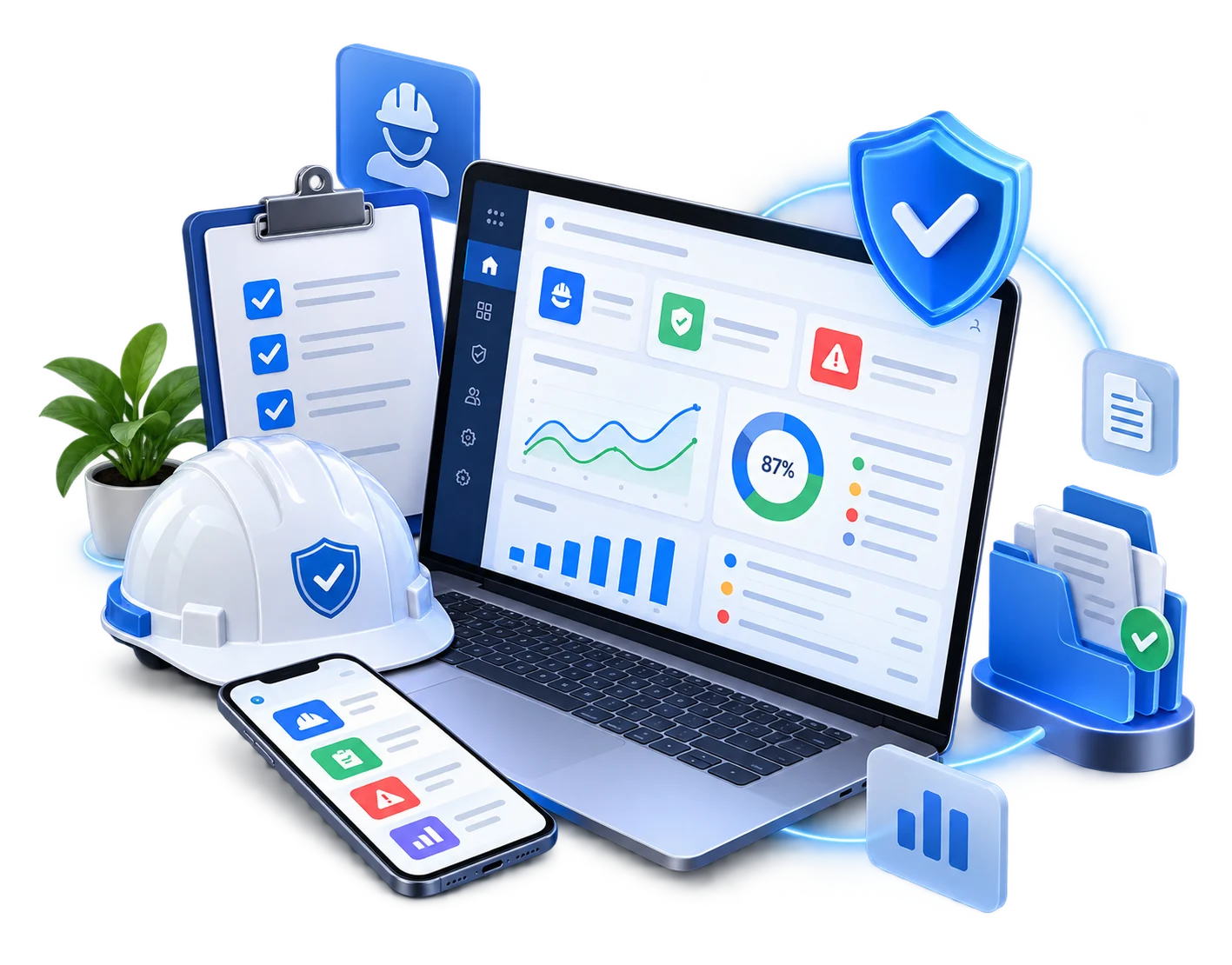
Our Safety Management Software Implementation Process
-
01
Requirements Discovery
We start by understanding your current safety processes — how incidents get reported today, how risk gets assessed, what your approval chains look like, and what’s genuinely broken versus what just needs digitizing as-is.
-
02
Safety Workflow Analysis
Your existing workflows get mapped in detail, so the platform gets configured around how your organization actually operates rather than a generic template you’d have to adapt to.
-
03
Solution Architecture
We define the technical architecture — deployment model, integration points, module scope and mobile requirements — based on what discovery surfaced.
-
04
UI/UX Design
Interfaces get designed around the people who’ll actually use them daily — field workers on mobile devices, safety managers on dashboards, executives reviewing summary reports — not a one-size-fits-all screen.
-
05
Software Development
Custom modules, workflows and integrations get built according to the agreed architecture, with regular checkpoints so you can review progress before final delivery.
-
06
Enterprise Integrations
Connections to your existing ERP, HRMS, CMMS or other systems get built and tested, so safety data flows where it needs to without manual re-entry.
-
07
Testing
The platform gets tested for functionality, security and performance under realistic usage conditions before anyone outside the project team touches it.
-
08
Data Migration
Existing safety records — historical incidents, risk assessments, training records — get migrated into the new system, so you’re not starting from a blank slate.
-
09
Deployment
The platform goes live, typically phased by site or department rather than all at once, to manage the transition without disrupting active safety operations.
-
10
User Training
Field teams, safety managers and administrators get trained on the parts of the system relevant to their role, so adoption doesn’t stall on unfamiliarity in the first weeks.
-
11
Support & Maintenance
Post-launch support covers technical issues, configuration adjustments as your processes evolve, and ongoing maintenance to keep the platform running as your organization scales.
Why Choose Us as Your Safety Management Software Provider?
Choose a technology partner that understands both enterprise software and real-world safety operations. We build scalable safety management solutions designed around your workflows, systems, and business goals.
UAE-focused approach
Built around the needs of UAE organizations and multi-site operations.
Custom-built flexibility
Adapt workflows, approvals, dashboards, modules, and mobile experiences to your requirements.
Enterprise integrations
Connect safety systems with your existing ERP, HRMS, cloud, and business applications.
Scalable architecture
Support growing teams, multiple sites, contractors, and expanding operations.
Long-term support
Get ongoing enhancements, maintenance, integrations, and technical assistance beyond deployment.
Business-first implementation
We recommend the right level of customization instead of adding unnecessary complexity.
Safety Software Solutions in Action
Every implementation is built around a real workflow, not a demo script. Walking through the platform against your own incident, inspection and permit processes is the fastest way to see whether a standard configuration covers what you need, or where custom development earns its place.
How Much Does Safety Management Software Cost?
There’s no honest single price for safety management software, and any vendor quoting one without understanding your operation first is guessing. Cost depends on a combination of factors specific to your organization:
Number of users
Field staff, safety managers, admins and viewers typically have different licensing implications.
Number of locations
A single-site deployment costs differently than a fifteen-site rollout.
Modules required
Incident management alone is a different scope than incident, risk, inspection, audit, CAPA, PTW, training and contractor management combined.
Level of customization
A standard configuration versus custom workflows, custom modules or a branded mobile app.
Integrations
Connecting to ERP, HRMS or other existing systems adds development and testing scope.
Deployment model
Cloud versus on-premise, and any specific data residency requirements.
Data migration
How much historical data needs to move from your current spreadsheets or legacy systems.
Ongoing support level
The scope of post-launch support and maintenance you need.
Ready to Digitize Your Safety Management Processes?
If your safety team is still reconciling incident records across email, spreadsheets and paper checklists, that’s worth a conversation. Tell us about your current workflows — how many sites you’re managing, how many users need access, which processes are the most painful right now, and whether you need this to integrate with systems you’re already running.
We’ll help you figure out whether a standard configuration covers what you need, or whether your operation is complex enough to justify custom development — and give you a clear, scope-based path to either one.

Frequently Asked Questions About Safety Management Software
It’s a digital platform that centralizes the core processes of workplace safety management — incident reporting, risk assessment, inspections, audits, corrective actions, contractor safety and safety documentation — into one connected system, replacing spreadsheets, paper forms and scattered files.
Core components typically include incident and near-miss reporting, risk and hazard management, inspection and audit management, corrective and preventive action (CAPA) tracking, permit-to-work workflows, training and competency records, contractor safety management, document control, and analytics dashboards. The exact module set depends on your organization’s needs.
It gives organizations a structured way to centralize safety records, standardize processes across multiple emirates or sites, and maintain documentation that supports their safety and governance requirements. It’s particularly useful for organizations managing operations across Dubai, Abu Dhabi and other emirates where consistency between sites is otherwise hard to maintain.
EHS software includes environmental management — waste tracking, emissions, environmental permits — alongside health and safety. Safety management software can be scoped narrower, focusing specifically on occupational safety without the environmental component. Many platforms, including ours, can be configured for either scope depending on what your organization actually needs to manage.
Yes, though how much customization makes sense depends on your organization’s complexity. Standard configurations work well for straightforward, single-site operations. Custom development becomes worthwhile when your approval hierarchy, reporting structure or operational workflows don’t map onto a standard setup — we’ll advise honestly on which route fits during scoping.
Yes. Incidents and near-misses can be reported from the field with photo evidence, routed into a structured investigation workflow, and tracked through to a corrective action and closure, with a full audit trail attached.
Yes. Digital checklists can be scheduled by site, area or asset, completed on mobile devices in the field, and findings assigned as corrective actions immediately rather than after the fact.
It can, depending on your existing systems and what data needs to flow between them. Common integration points include ERP, HRMS, CMMS/EAM and LMS platforms, along with SSO for authentication. Integration scope gets defined during discovery based on your specific technology stack.
Yes — incident reporting, hazard reporting, inspections and checklist completion can all be done from a mobile device in the field. Specific mobile capabilities, including any offline functionality, depend on the platform configuration and get confirmed during scoping.
It depends on the number of users, sites, required modules, level of customization, integrations and deployment model. We provide a scope-based estimate after understanding your specific requirements rather than a generic flat rate.
Timelines vary based on scope — a standard configuration for a single site deploys faster than a custom, multi-site platform with several enterprise integrations. We provide a project timeline as part of the scoping process once we understand what’s being built.
Reach out through the demo request form on this page, or contact us directly. We’ll walk through the platform based on your actual industry and operational context, rather than a generic canned demo.