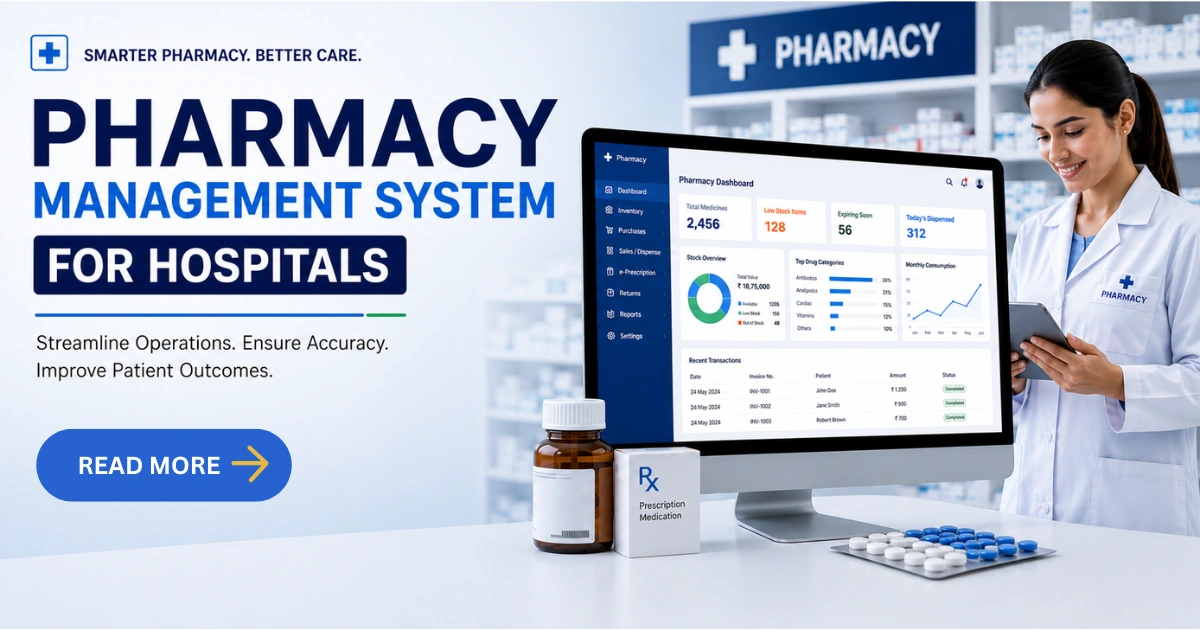

In today's rapidly evolving healthcare landscape, implementing a robust Hospital Management System (HMS) is imperative for hospitals and clinics aiming to enhance operational efficiency and deliver superior patient care. Managing a hospital is an intricate process that involves several departments working in harmony, from patient registration to medical record maintenance, billing, and compliance with regulatory policies.
A Hospital Management System streamlines these processes by providing a unified platform to manage hospital operations efficiently. It reduces human error, speeds up workflow, and ensures that patients receive the best possible care. Whether you own a small clinic or a multi-specialty hospital, an HMS is an indispensable tool for smooth operations and quality healthcare delivery.
This article explores why hospitals need a Hospital Management System, covering its key features, benefits, challenges, and future scope.
Understanding Hospital Management Systems
A Hospital Management System (HMS) is an integrated software solution designed to manage all hospital operations, including patient registration, appointment scheduling, billing, electronic medical records, laboratory management, and inventory tracking. This software eliminates the need for paperwork, automates routine tasks, and provides real-time access to data for better decision-making.
In the past, hospitals relied on paper-based systems to store patient information, manage billing, and handle administrative processes. However, these manual methods were time-consuming and prone to errors. The evolution of digital Hospital Management Systems has revolutionized the healthcare industry by providing seamless coordination between departments, ensuring faster and more accurate service delivery.
Modern Hospital Management Systems come with multiple modules, such as outpatient and inpatient management, pharmacy and laboratory integration, billing and invoicing, and data analytics. These features not only enhance efficiency but also improve patient satisfaction by reducing waiting times and providing accurate medical information.
Key Benefits of Implementing an HMS
Improved Operational Efficiency
One of the most significant advantages of an HMS Hospital Management System is its ability to enhance operational efficiency. Hospitals and clinics handle large volumes of patient data daily, which requires accurate and quick processing. An HMS automates routine tasks such as appointment scheduling, billing, and reporting, allowing healthcare providers to focus more on patient care.
By integrating various departments within a single system, an HMS reduces duplication of work and minimizes administrative burdens. Doctors can access patient histories instantly, nurses can update treatment records in real-time, and administrative staff can track bed occupancy with ease. This seamless coordination improves the hospital's overall efficiency and productivity.
Enhanced Patient Care and Experience
An HMS Hospital Management System plays a crucial role in improving patient care and experience. With electronic medical records (EMRs) readily available, doctors can make informed decisions quickly, reducing the chances of errors and misdiagnoses.
Additionally, HMS solutions enable better communication between different departments, ensuring that laboratory results, prescriptions, and medical reports are updated in real-time. Patients benefit from faster appointment scheduling, shorter wait times, and seamless billing, enhancing their overall healthcare experience.
Financial Management and Revenue Optimization
Financial management is a critical aspect of hospital administration. An HMS Hospital Management System automates billing processes, tracks revenue, and ensures accurate financial reporting. By integrating insurance claims processing, hospitals can reduce errors and prevent revenue leakage.
With real-time financial tracking, hospital administrators can analyze expenses, monitor cash flow, and optimize budget allocation. Automated invoicing and payment reminders further reduce financial discrepancies and improve revenue collection.
Regulatory Compliance and Data Security
Hospitals must comply with various healthcare regulations and data privacy laws. An HMS Hospital Management System ensures compliance by maintaining accurate records, generating regulatory reports, and enforcing security protocols.
Modern HMS solutions come with robust security features, such as access controls, encryption, and audit trails, protecting patient data from breaches. Compliance with regulations such as HIPAA (Health Insurance Portability and Accountability Act) and GDPR (General Data Protection Regulation) ensures legal adherence and protects the hospital from potential legal issues.
Case Studies: Successful HMS Implementations
TeleTracking’s Impact on UK Hospitals
Several hospitals worldwide have successfully implemented Hospital Management Software to improve efficiency and patient care. A notable example is the UK’s National Health Service (NHS), which adopted TeleTracking’s cloud-based software to enhance bed management and patient flow.
By utilizing real-time data, hospitals reduced bed occupancy delays, optimized resource allocation, and improved emergency response times. The system’s ability to provide predictive analytics further enhanced patient care by identifying trends and optimizing staff deployment.
Royal Hobart Hospital’s Digital Transformation
Another example is the Royal Hobart Hospital in Australia, which replaced its outdated paper-based patient management system with an advanced hospital management software solution. This transition led to increased efficiency, improved patient safety, and enhanced clinical decision-making.
The implementation of an HMS allowed hospital staff to access patient information instantly, reducing administrative workload and ensuring timely interventions for critical cases.
Challenges in HMS Implementation
Integration with Existing Systems
One of the primary challenges hospitals face when implementing an HMS Hospital Management System is integrating it with existing legacy systems. Many hospitals still use outdated software that may not be compatible with modern HMS solutions. Ensuring seamless integration requires careful planning and collaboration with IT specialists.
User Training and Adoption
Another challenge is staff training and adoption. Transitioning from a traditional system to a digital hospital management software requires hospital staff to undergo training sessions. Some employees may resist change due to a lack of technical knowledge or fear of job redundancy.
To address this issue, hospitals must invest in comprehensive training programs, provide ongoing support, and emphasize the benefits of automation in reducing workload and improving efficiency.
Data Security Concerns
With the rise of cyber threats, protecting patient data is a top priority. Hospital management software must comply with stringent data security protocols to prevent unauthorized access and data breaches. Implementing multi-factor authentication, data encryption, and regular security audits are essential steps in safeguarding hospital data.
The Role of HMS in Future Healthcare
Artificial Intelligence and Predictive Analytics
The future of hospital management software is closely linked with advancements in artificial intelligence (AI) and predictive analytics. AI-powered HMS solutions can analyze vast amounts of data to predict patient outcomes, optimize resource allocation, and enhance decision-making processes.
Telemedicine Integration
With the growing demand for telehealth services, integrating telemedicine features within hospital management software is becoming a necessity. Hospitals can offer virtual consultations, remote patient monitoring, and digital prescription services, making healthcare more accessible and efficient.
Selecting the Right HMS for Your Facility
Assessing Organizational Needs
Selecting the right hospital management software requires a thorough assessment of your hospital’s specific needs. Factors such as hospital size, patient volume, and specialized departments should be considered when choosing an HMS.
Vendor Evaluation Criteria
When evaluating HMS providers, it is crucial to consider scalability, ease of use, customer support, and compliance with healthcare standards. Choosing a reliable vendor ensures long-term efficiency and seamless integration with existing hospital infrastructure.
Conclusion
The adoption of hospital management software is no longer an option but a necessity for modern healthcare facilities. With its ability to streamline operations, enhance patient care, ensure regulatory compliance, and optimize financial management, an HMS is an indispensable tool for hospitals and clinics.
Investing in the right hospital management software ensures improved efficiency, reduced administrative burdens, and a better healthcare experience for patients and medical staff alike. As technology advances, hospitals must stay ahead by embracing digital transformation and leveraging HMS solutions to provide top-tier healthcare services.
Implementing an HMS Hospital Management System today will not only improve hospital operations but also ensure sustainability and growth in the rapidly evolving healthcare industry.