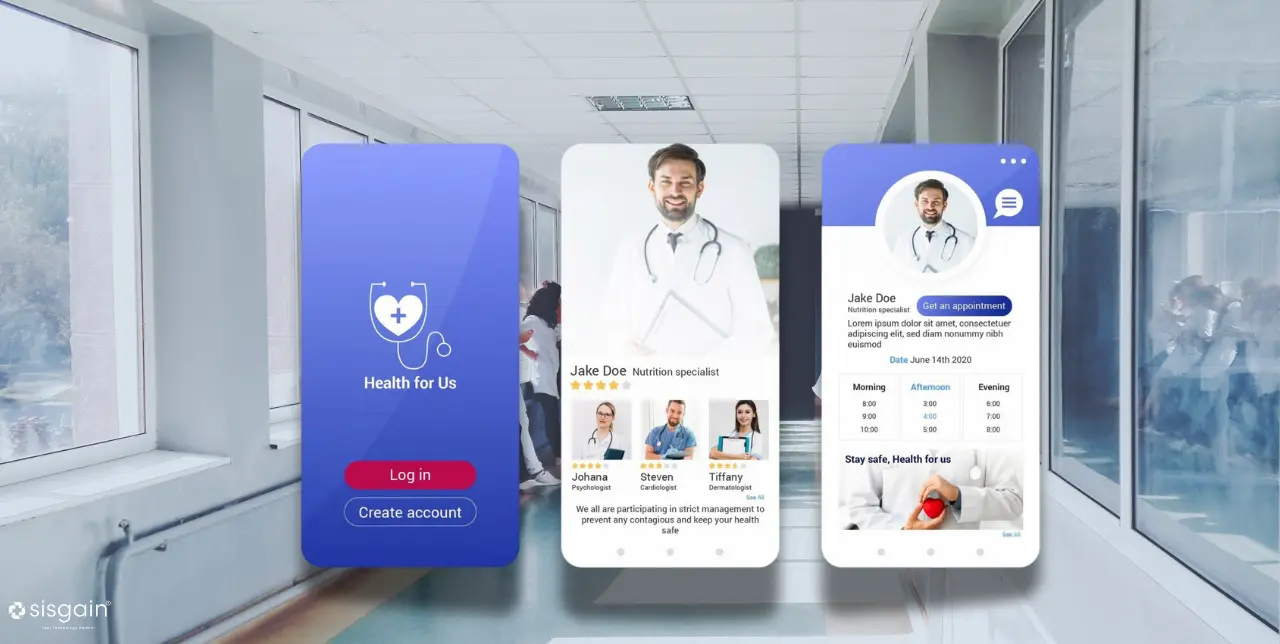

The healthcare industry is experiencing a fundamental shift driven by digital transformation, with mobile health (mHealth) applications playing a central role in how care is delivered, managed, and accessed. As we move into 2025, patients and providers alike are demanding healthcare solutions that are more personalized, secure, and accessible—without compromising compliance or data privacy.
For healthcare startups, this evolving landscape presents both opportunity and complexity. Building a successful healthcare app today requires more than just clean design and basic functionality. It involves navigating regulatory requirements, integrating emerging technologies, ensuring data security, and delivering real clinical and operational value to users.
This guide is created specifically for startups planning healthcare app development in 2025. It breaks down current industry trends, emerging technologies, compliance considerations, and practical monetization models—providing a clear roadmap to help you design, launch, and scale a healthcare app that meets market expectations and earns long-term user trust.
The Growing Importance of Healthcare App Development in 2025
The global mHealth apps market is projected to reach USD 86.37 billion by 2030, growing at a compound annual growth rate (CAGR) of 14.8% from 2025 to 2030 (Grandview Research). This growth is particularly pronounced in regions like the Middle East and North Africa (MENA), including the UAE, where digital health adoption is accelerating. Key drivers include:
-
Remote Care and Telemedicine: The shift to virtual consultations and remote patient monitoring has made telemedicine apps indispensable, reducing the need for in-person visits.
-
On-Demand Access: Patients expect seamless access to healthcare services, such as booking appointments or viewing medical records, directly from their smartphones.
-
Personalized Healthcare: Advances in technology enable apps to deliver tailored health recommendations, improving patient outcomes and satisfaction.
The rise of health care app development reflects the growing need for solutions that bridge the gap between patients and providers, making it a prime opportunity for startups to innovate.
Role of IoT, AI, and Wearables in Medical App Development
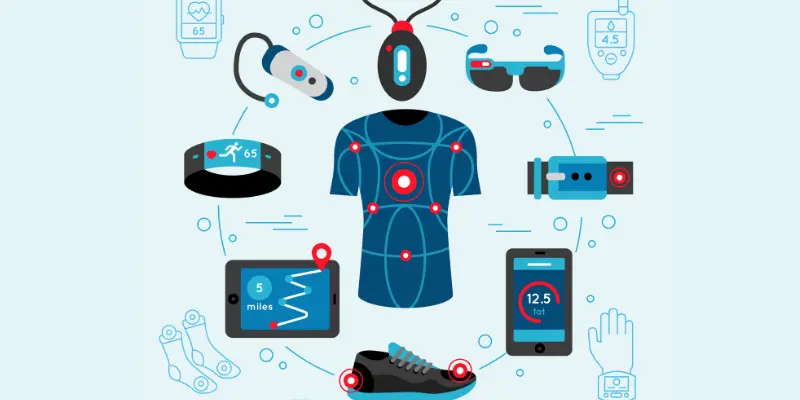
In 2025, technologies like the Internet of Things (IoT), Artificial Intelligence (AI), and wearables are reshaping medical app development. As a custom healthcare software development company, SISGAIN leverages these technologies to create innovative, patient-centric solutions.
-
IoT for Real-Time Monitoring: IoT devices, such as continuous glucose monitors (CGMs) and wearable ECG devices, enable real-time health tracking. These devices reduce hospital readmissions by 15% and boost patient compliance by 25% (Tateeda).
-
AI for Predictive Analytics: AI algorithms analyze health data to predict disease risks, recommend treatments, and enhance patient engagement. For example, AI-powered virtual assistants handle routine inquiries with 94% accuracy.
-
Wearables for Engagement: Wearables like smartwatches and fitness trackers encourage patients to monitor their health metrics, fostering healthier lifestyles and better communication with providers.
SISGAIN’s expertise in integrating these technologies ensures that your app is equipped with features like AI-driven diagnostics and IoT-enabled monitoring, setting it apart in the competitive healthcare market.
Step-by-Step Process for Mobile Health App Development
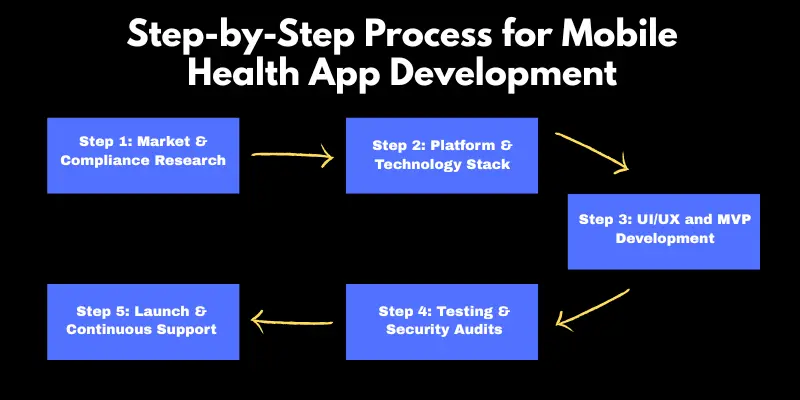
Building a successful mobile health app requires a structured approach that balances innovation with compliance. Here’s a detailed process:
Step 1: Market & Compliance Research
-
Understand Your Audience: Identify your target users—patients, doctors, or administrators—and define clear objectives, such as improving patient engagement or streamlining operations.
-
Compliance Requirements: Ensure compliance with regulations like HIPAA (US), GDPR (Europe), NPHIES (UAE), and CBAHI (Saudi Arabia) to protect patient data and avoid legal issues.
Step 2: Platform & Technology Stack
-
Platform Selection: Choose between android healthcare app development, healthcare app development iOS, or cross-platform solutions based on your target market and budget. Cross-platform frameworks like Flutter and React Native offer cost-effective scalability.
-
Technology Stack: Use Swift for iOS, Kotlin for Android, or Flutter/React Native for cross-platform apps. Backend solutions like Firebase or AWS ensure robust data management.
Step 3: UI/UX and MVP Development
-
Healthcare-Specific Design: Create intuitive, compliance-ready interfaces tailored to healthcare users, ensuring ease of use for patients and providers.
-
Minimum Viable Product (MVP): Develop an MVP to test core features and gather user feedback, allowing for iterative improvements before full-scale development.
Step 4: Testing & Security Audits
-
Comprehensive Testing: Conduct unit, API, load, and penetration testing to ensure reliability and security.
-
Data Protection: Implement encryption, secure authentication, and regular audits to safeguard sensitive patient data.
Step 5: Launch & Continuous Support
-
App Store Submission: Prepare your app for submission to the Apple App Store and Google Play Store, adhering to all guidelines.
-
Ongoing Support: Use analytics to monitor performance and plan updates based on user feedback and technological advancements.
Also Read - SaaS or On-Premise: What’s Best for Healthcare Software Development?
Monetization Models for Medical Apps
Monetizing a medical app requires a strategy that aligns with its purpose and audience. Here are effective models for medical app development services:
|
Model |
Description |
Best For |
|---|---|---|
|
Freemium |
Offer basic features for free and charge for premium features. |
Apps with broad appeal, like fitness trackers |
|
Subscription |
Charge recurring fees for access to advanced features or services. |
Telemedicine or coaching apps |
|
Contextual Ads |
Display relevant ads, such as pharma offers, based on user location or behavior. |
Apps with high user engagement |
|
Premium Content |
Sell educational content or CME courses within the app. |
Apps targeting professionals or patients seeking education |
Choosing the right model depends on your app’s goals and target market. For example, a telemedicine app might benefit from a subscription model, while a fitness app could leverage freemium.
Key Features to Include in a Healthcare App
To ensure your app meets user needs and provides value, include these essential features:
|
Feature |
Benefit |
|---|---|
|
Appointment Booking |
Simplifies scheduling for patients and providers |
|
EMR/EHR Integration |
Enables seamless access to patient records |
|
Medication Tracker |
Improves compliance and reduces errors |
|
Teleconsultation |
Facilitates remote healthcare access |
|
Health Analytics |
Provides insights for better diagnosis |
These features, developed by expert health app developers, ensure your app is functional, user-friendly, and compliant with healthcare standards.
Why SISGAIN is the Right Partner for Medical App Development
With over 18 years of experience, SISGAIN is a trusted medical app development company serving clients in the UAE, Saudi Arabia, USA, and India. Our strengths include:
-
Compliance Expertise: Specializing in standards like HIPAA, HL7, FHIR, and regional regulations like NPHIES and CBAHI.
-
Advanced Technology: Integrating IoT, AI, and blockchain to create cutting-edge solutions.
-
Proven Success: Delivering award-winning apps and success stories across diverse markets.
Also Read - How to Find the Right Healthcare Software Development Company
Conclusion
As we move into 2025, mobile health apps are set to redefine healthcare delivery, offering unparalleled opportunities for startups to innovate. With trends like AI-powered diagnostics, IoT-enabled monitoring, and blockchain for data security, the potential for impact is immense. By partnering with SISGAIN’s expert team of medical app developers, you can transform your healthcare vision into a secure, scalable, and user-centric mobile solution.