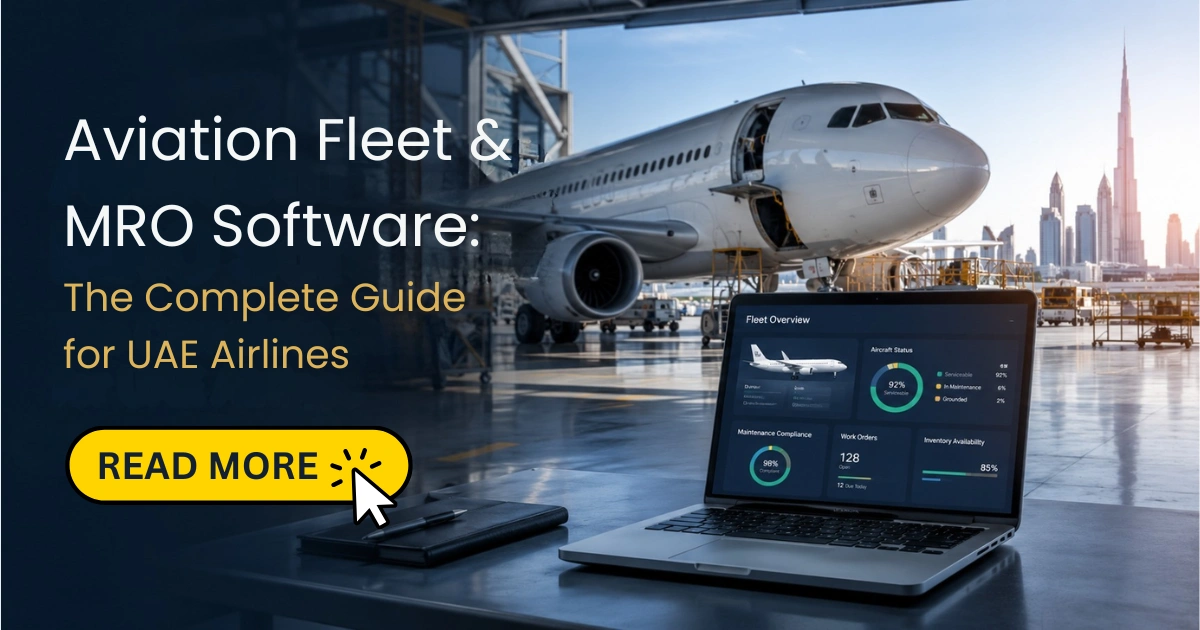

The aviation industry is built on precision, safety, and efficiency. Every flight depends on accurate coordination between aircraft systems, maintenance teams, inventory managers, schedulers, and regulatory authorities. As aviation operations become more complex and data-driven, digital transformation is no longer optional. This is where aviation software development becomes a critical enabler of operational success.
Modern airlines, airports, fleet operators, and MRO providers rely on intelligent aviation software solutions to manage aircraft maintenance, spare parts, scheduling, and fleet performance. This SEO-friendly guide explains aviation software in depth, its types, benefits, development process, challenges, and future trends—making it valuable for both industry professionals and decision-makers.
What Is Aviation Software Development?
Aviation software development is the process of designing and building specialized software systems that support aviation-specific operations. Unlike generic enterprise software, aviation software must meet strict safety standards, handle real-time data, and comply with global aviation regulations.
These systems are developed to manage complex workflows such as aircraft maintenance tracking, inventory control, flight scheduling, and fleet monitoring. Well-designed aviation software improves operational visibility, minimizes errors, and ensures regulatory compliance across all aviation activities.
Why Aviation Software Is Essential for Modern Aviation Operations?
The aviation industry operates in a high-risk, high-cost environment where inefficiencies directly impact safety and profitability. Aviation software addresses these challenges by automating manual processes and enabling data-driven decision-making.
One of the biggest advantages of aviation software is improved safety. Real-time monitoring and predictive analytics help detect potential issues before they become critical. Additionally, automation reduces human error in maintenance logging, inventory tracking, and scheduling.
From a business perspective, aviation software reduces operational costs by minimizing aircraft downtime, optimizing resource usage, and improving fleet utilization. It also ensures compliance with aviation authorities by maintaining accurate records and audit trails.
Aviation Inventory Software for Aircraft Parts Management

Aircraft rely on thousands of components, each with strict certification and traceability requirements. Aviation inventory software helps aviation organizations manage spare parts, tools, and consumables efficiently.
This software provides real-time visibility into inventory levels across multiple locations, ensuring critical parts are always available when needed. It tracks part numbers, serial numbers, shelf life, warranties, and usage history. By integrating inventory data with maintenance systems, aviation organizations can avoid aircraft-on-ground situations and reduce excess stock.
Aviation inventory software also supports regulatory compliance by maintaining complete documentation for audits and inspections, ensuring only approved parts are used in aircraft maintenance.
Aviation Maintenance Software for Safety and Compliance
Aircraft maintenance is one of the most regulated aspects of aviation. Aviation maintenance software is designed to manage inspections, repairs, servicing schedules, and compliance documentation.
This software enables maintenance teams to plan tasks, assign work orders, record findings, and track corrective actions digitally. Predictive maintenance features use historical and real-time data to identify potential failures before they occur, reducing unexpected breakdowns.
By digitizing maintenance records, aviation maintenance software improves accuracy, reduces paperwork, and ensures continuous airworthiness. It also shortens maintenance turnaround times, allowing aircraft to return to service faster without compromising safety.
Aviation Fleet Management Software for Operational Efficiency
Managing an aircraft fleet requires constant monitoring of utilization, performance, and maintenance status. Aviation fleet management software provides centralized control over all fleet-related activities.
Fleet managers use this software to track flight hours, fuel consumption, aircraft availability, and operational costs. With access to real-time data, organizations can optimize fleet deployment, plan routes more efficiently, and extend aircraft lifespan.
When integrated with maintenance and scheduling systems, aviation fleet management software ensures aircraft assignments align with maintenance requirements and regulatory limits, reducing operational disruptions.
Aviation MRO Software for Maintenance, Repair, and Overhaul
Maintenance, Repair, and Overhaul operations involve complex workflows, strict compliance requirements, and coordination between multiple teams. Aviation MRO software is specifically built to support these operations.
This software manages work orders, labor scheduling, parts procurement, quality inspections, and certification records. It provides complete visibility into MRO activities, helping service providers improve turnaround times and maintain high-quality standards.
Aviation MRO software also ensures regulatory readiness by maintaining detailed digital records required for audits, making compliance simpler and more reliable.
Aviation Scheduling Software for Flight and Crew Planning
Scheduling is one of the most challenging tasks in aviation due to constantly changing variables. Aviation scheduling software automates the planning of aircraft assignments, crew rosters, and operational timelines.
This software considers multiple constraints such as crew duty limits, aircraft availability, maintenance schedules, and airport slot availability. Real-time updates allow operators to manage delays, weather disruptions, and unexpected technical issues effectively.
By improving coordination and reducing manual planning errors, aviation scheduling software enhances on-time performance and passenger satisfaction while ensuring regulatory compliance.
Integrated Aviation Software Solutions for Unified Operations
Many aviation organizations struggle with disconnected systems that create data silos. Integrated aviation software solutions bring inventory, maintenance, fleet management, and scheduling into a single ecosystem.
This integration allows seamless data sharing across departments, improving collaboration and decision-making. Managers gain access to unified dashboards that provide real-time insights into operational performance, costs, and risks. As a result, aviation businesses can respond faster to challenges and plan more strategically.
Aviation Software Development Process Explained
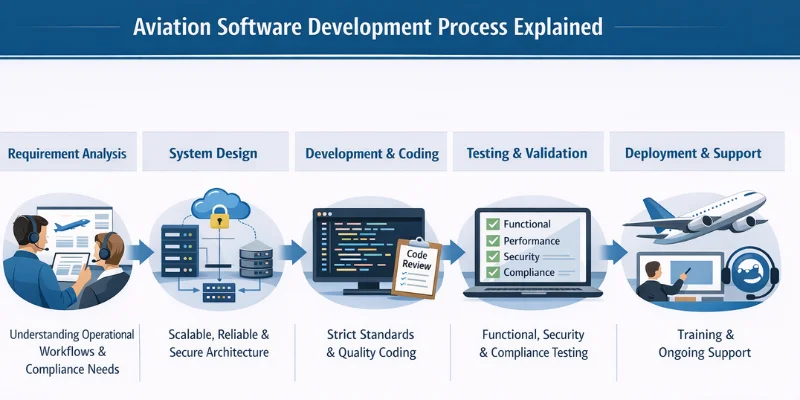
The aviation software development lifecycle begins with requirement analysis, where developers work closely with aviation experts to understand operational workflows and compliance needs. This step is crucial to ensure the software aligns with real-world aviation operations.
System architecture is then designed with a focus on scalability, reliability, and security. Development follows strict coding standards to minimize errors and ensure system stability. Testing is extensive and includes functional, performance, security, and compliance testing to ensure the software performs reliably in real operational environments.
Once deployed, user training and continuous support ensure successful adoption and long-term performance.
Technologies Used in Modern Aviation Software Development
Advanced technologies power today’s aviation systems. Artificial intelligence and machine learning enable predictive maintenance, operational forecasting, and optimization. Internet of Things (IoT) sensors provide real-time aircraft health data, improving monitoring and safety.
Cloud computing allows aviation software to scale easily and support remote access while maintaining strong security. Mobile solutions empower technicians and crew with instant access to critical information. Emerging technologies like blockchain improve parts traceability and data integrity across aviation supply chains.
Challenges in Aviation Software Development
Despite its benefits, aviation software development faces several challenges. Regulatory requirements vary across regions, requiring flexible and adaptable systems. Integration with legacy systems can be complex, as many aviation organizations still use outdated infrastructure.
Cybersecurity is another major concern, as aviation software handles sensitive operational and passenger data. Developers must implement robust security measures to protect against cyber threats. Additionally, the high cost of development and maintenance can be a challenge, especially for smaller operators.
Future Trends in Aviation Software Development
The future of aviation software is driven by automation, intelligence, and sustainability. Predictive analytics will continue to evolve, enabling proactive decision-making and reduced downtime. Augmented reality will assist technicians with interactive maintenance guidance, improving accuracy and training efficiency.
Sustainability will also play a major role, with aviation software helping organizations reduce fuel consumption, emissions, and environmental impact through optimized operations.
Why Choose SISGAIN for Aviation Software Development
SISGAIN is a trusted aviation software development company delivering advanced, scalable, and secure digital solutions for airlines, MRO providers, fleet operators, and aviation service businesses. With deep industry understanding and a technology-driven approach, SISGAIN builds customized aviation systems that streamline maintenance operations, optimize inventory management, enhance fleet visibility, and ensure regulatory compliance. Our solutions are designed to integrate seamlessly with existing aviation workflows while supporting long-term scalability, performance, and operational efficiency.
Conclusion:
Aviation software has become the backbone of modern aviation operations, enabling organizations to manage complexity with accuracy, efficiency, and compliance. From aviation inventory software and aviation maintenance software to aviation fleet management software, aviation MRO software, and aviation scheduling software, each solution plays a vital role in ensuring safe, reliable, and cost-effective aviation operations.
As aviation continues to evolve, the demand for scalable, secure, and intelligent aviation software solutions will only grow. Investing in well-planned aviation software development helps aviation businesses reduce operational risks, improve asset utilization, and stay compliant with global regulatory standards.
At SISGAIN, we specialize in delivering custom aviation software solutions tailored to the unique needs of airlines, MRO providers, and aviation enterprises. With a strong focus on innovation, reliability, and industry compliance, SISGAIN helps aviation organizations build future-ready digital systems that drive operational excellence and long-term growth.