

In the fast-paced digital landscape of 2026, launching a mobile application is far more than a mere technical endeavor—it's a pivotal strategic move that can define a business's trajectory. For startups and emerging companies, selecting the appropriate technology stack is critical, as missteps can result in skyrocketing costs, protracted development timelines, suboptimal performance, and barriers to scaling that stifle long-term growth.
With intensifying market competition, accelerated product cycles, and ever-rising user demands for seamless experiences, React Native has solidified its position as a go-to framework for mobile app development among new businesses globally. This open-source powerhouse allows entrepreneurs to create robust, cross-platform apps efficiently and economically, all while maintaining high standards of quality and user satisfaction. Whether it's rolling out a minimum viable product (MVP) to test market waters or building scalable solutions for enterprise-level demands, React Native has demonstrated its versatility across diverse sectors.
This comprehensive guide delves into the reasons behind React Native's popularity among new businesses, explores how it fuels startup expansion, and outlines scenarios where it shines—or where alternatives might be more suitable. By understanding these factors, founders can make informed decisions that align with their goals for speed, cost-efficiency, and innovation in 2026.
What Is React Native?
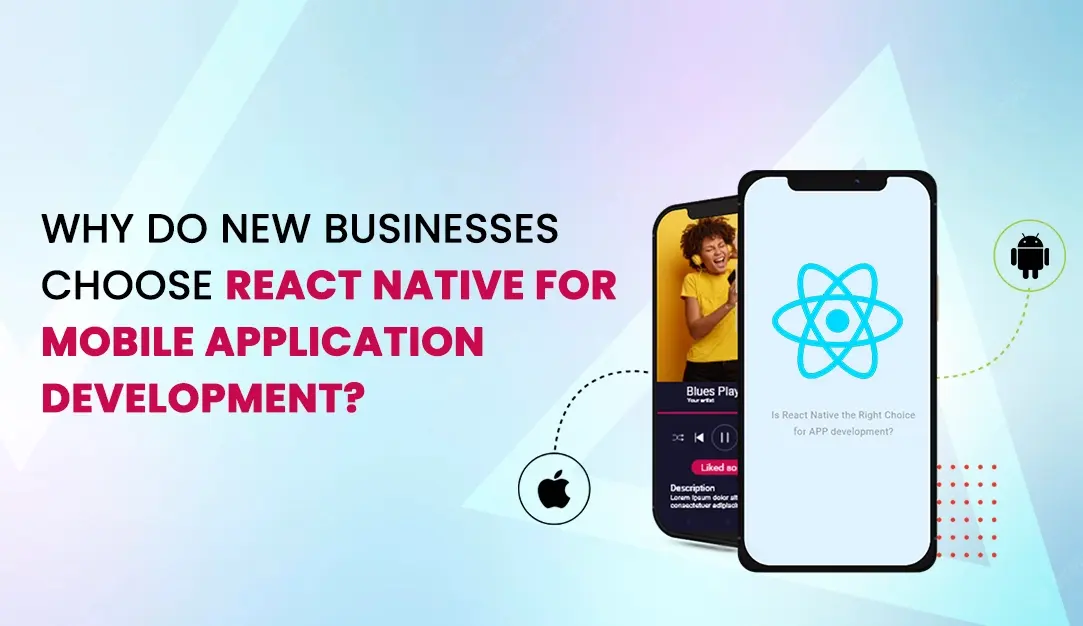
React Native is an open-source framework originally developed by Meta (formerly Facebook) and now actively maintained by a vibrant global community. It empowers developers to craft mobile applications for iOS, Android, and even web platforms using JavaScript and React principles, delivering experiences that feel authentically native.
Unlike older hybrid frameworks that depend on web views—which often lead to sluggish performance—React Native leverages genuine native components. This approach ensures apps run smoothly, with responsive interfaces and optimal resource utilization. At its heart, React Native embodies the principle of "learn once, write anywhere," enabling a single codebase to power multiple platforms without redundant efforts.
In 2026, React Native has evolved further with enhancements in performance optimization, better integration with emerging technologies like AI and AR, and improved tools for debugging and deployment. These updates make it even more appealing for businesses navigating the complexities of modern app ecosystems.
Why Technology Choice Matters for New Businesses
For startups operating in 2026's volatile economy, the initial technology selection isn't just about building an app—it's about laying a foundation for sustainable success. Poor choices can drain limited resources, delay market entry, and erode competitive edges.
Key areas influenced by this decision include:
- Time to Market: In a world where trends shift rapidly, getting to users first can capture market share and secure funding.
- Development Costs: With venture capital tightening, efficient spending is non-negotiable.
- App Performance: Users expect lightning-fast, glitch-free experiences; anything less leads to high churn rates.
- Scalability: As user numbers grow—from thousands to millions—the app must handle increased loads without major overhauls.
- Maintenance and Updates: Ongoing support should be straightforward to adapt to new OS versions or features.
- User Experience (UX): Intuitive, engaging interfaces drive retention and positive reviews.
- Investor Appeal: A solid tech stack signals foresight and reduces perceived risks.
React Native addresses these priorities head-on, offering a balanced blend of agility, affordability, and reliability that resonates with resource-conscious new businesses.
Also Read - How Much Does It Cost to Develop an App in 2026?
Key Reasons New Businesses Choose React Native
Here are the primary drivers propelling React Native's adoption, backed by real-world insights and data from 2026.
1. Accelerated Time-to-Market: A Startup's Lifeline
In startup culture, speed equates to survival. React Native streamlines development, allowing teams to go from concept to launch in record time. By sharing up to 90% of code between iOS and Android, it minimizes duplication and accelerates iterations.
Features like hot reloading enable instant previews of changes, while pre-built components facilitate quick prototyping. For instance, startups can deploy an MVP in weeks rather than months, gather feedback, and pivot swiftly. Real-world example: Discord, a communication platform that started as a startup, leveraged React Native to rapidly update features for its growing user base, cutting release cycles by up to 67% in some cases.
2. Cost-Effective Development Without Compromises
Financial prudence is paramount for bootstrapped or funded startups. React Native slashes expenses by eliminating the need for dual development teams—one for iOS (Swift/Objective-C) and another for Android (Kotlin/Java). This unified approach can reduce overall costs by 30-50%, according to industry benchmarks.
Maintenance is also simplified, with a single codebase meaning fewer bugs to fix and easier updates. Shopify, an e-commerce giant that began as a small venture, uses React Native to manage its mobile seller app, reporting 40% easier maintenance and substantial savings on operational overheads.
3. Unified Codebase for Cross-Platform Efficiency
Managing separate codebases is a nightmare for small teams. React Native's single codebase supports Android, iOS, tablets, and even web extensions, reducing complexity and ensuring feature parity across devices.
This leads to fewer inconsistencies, streamlined testing, and better quality control. In 2026, with the rise of foldables and wearables, this flexibility is invaluable for startups aiming for broad accessibility without inflated budgets.
4. Native Performance and Superior User Experience
Performance isn't optional—it's expected. React Native bridges the gap between hybrid and native apps by compiling to native code, offering smooth animations, quick load times, and responsive UIs.
Users often can't tell the difference from purely native apps. Instagram, built partially on React Native, handles billions of interactions daily with seamless performance, proving its capability for high-traffic scenarios.
5. Perfect for MVP Development and Market Validation
Startups thrive on experimentation. React Native excels in building MVPs, allowing rapid feature testing and validation. Once proven, the app can scale without a complete rewrite.
Coinbase, a fintech startup turned powerhouse, utilized React Native for its mobile wallet, enabling quick iterations based on user data and achieving faster market fit.
6. Robust Community and Ongoing Support
Backed by Meta and a massive developer ecosystem, React Native receives frequent updates, security enhancements, and community contributions. In 2026, this includes better AI integrations and performance tweaks, ensuring longevity.
This support mitigates risks for new businesses, providing access to forums, tutorials, and ready-made solutions.
7. Abundant Talent Pool for Easy Scaling
JavaScript's ubiquity means React Native developers are plentiful and affordable compared to native specialists. Startups can hire globally, onboard quickly, and scale teams without talent shortages.
8. Modular Design with Reusable Components
Its component-based structure promotes reusability, consistency, and easier debugging. This modularity supports agile development, ideal for iterative startup environments.
9. Extensive Third-Party Ecosystem
Thousands of plugins cover everything from payments (e.g., Stripe) to analytics (e.g., Firebase), letting startups add sophisticated features affordably.
10. Scalable Foundations for Future Growth
React Native's architecture integrates with microservices, cloud platforms, and APIs, allowing seamless scaling. As seen with Bloomberg's mobile app, it handles enterprise-level demands efficiently.
Security and Stability in React Native Apps
In an era of rising cyber threats, security is foundational. React Native facilitates encrypted storage, secure APIs, and authentication protocols. With best practices, apps can comply with standards like GDPR or HIPAA, making it suitable for sensitive industries.
Industries Embracing React Native for Startups
From healthcare (fitness trackers) to fintech (mobile banking), e-commerce, food delivery, logistics, education, and on-demand services, React Native's adaptability shines. Its cross-platform nature helps startups target diverse audiences quickly.
React Native vs. Native Development: A Startup Lens
| Aspect | Native Development | React Native |
|---|---|---|
| Development Cost | High (separate teams) | Lower (unified codebase) |
| Time to Market | Slower | Faster (code reuse) |
| Code Reuse | None | Up to 90% |
| Team Size | Larger | Smaller |
| Maintenance | Complex | Simplified (40% easier) |
| Scalability | High | High |
| Performance | Excellent | Native-like for most uses |
For startups, React Native typically yields superior ROI during early and growth phases.
When to Opt for React Native
Choose it for fast launches, budget constraints, MVPs, cross-platform needs, scalability plans, and UX focus.
When React Native Might Not Fit
Avoid it for apps requiring deep hardware access, intensive graphics (e.g., AAA games), or heavy platform-specific customizations, where native or alternatives like Flutter may excel.
Why Partner with SISGAIN for React Native Development
SISGAIN stands out as a reliable technology partner specializing in React Native solutions for startups and enterprises. Our offerings include:
- Seasoned developers with proven expertise.
- Custom scalable architectures.
- Sector-specific insights.
- Secure, high-performance apps.
- Full-cycle support from ideation to deployment.
We empower businesses to transform ideas into market-ready apps that drive success.
Final Thoughts
As 2026 unfolds, new businesses must prioritize agility without skimping on quality. React Native enables faster launches, smarter budgeting, confident scaling, and exceptional user experiences—making it the preferred framework for innovative entrepreneurs worldwide. Selecting a skilled partner like SISGAIN maximizes its potential, turning technical choices into strategic advantages.
